
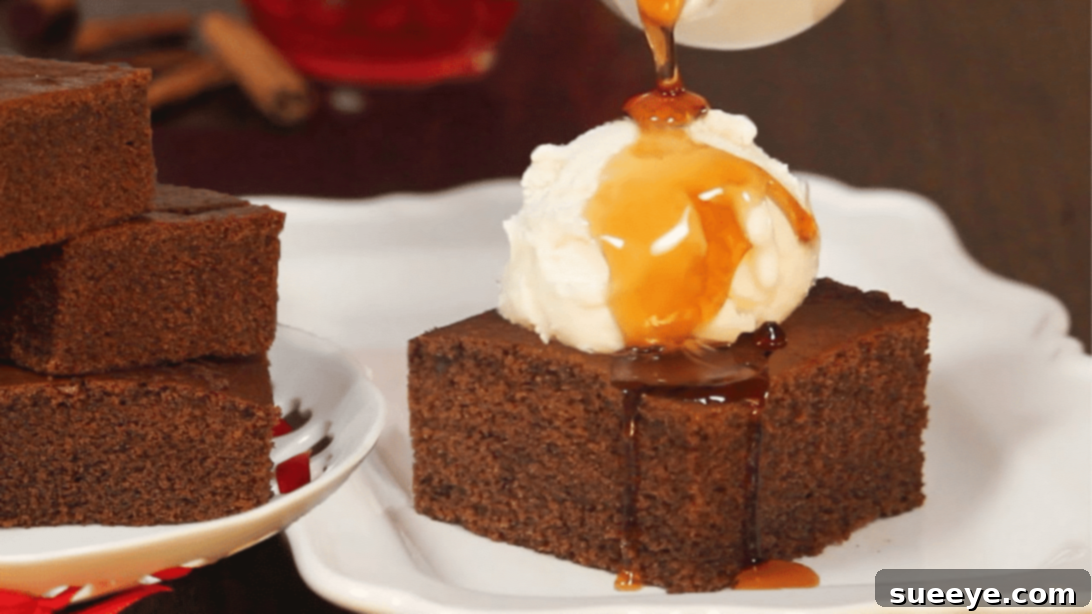
Few treats capture the essence of the holiday season quite like gingerbread. While gingerbread cookies are undeniably charming and a beloved classic, imagine transforming those comforting, spiced flavors into a moist, tender cake – a true centerpiece for any festive gathering. This spectacular gingerbread cake recipe offers all the nostalgic warmth and delightful aroma you adore, but in a form that’s incredibly easy to share with friends and family. It’s a delightful departure from the traditional cookie, ensuring everyone gets a generous slice of holiday cheer without the extensive decorating time.
RELATED: Easy Gingerbread Blondies Recipe
Inspired by the culinary experts at How Tasty on YouTube, this gingerbread cake is designed to be both incredibly flavorful and surprisingly simple to prepare. Whether you’re hosting a grand holiday party or simply looking for a cozy dessert to enjoy with your loved ones, this cake version promises to impress. Its rich, aromatic spices and perfectly balanced sweetness make it an irresistible choice that embodies the very spirit of winter festivities. Get ready to fill your kitchen with the enchanting scent of ginger, cinnamon, and cloves, and create a dessert that will be remembered long after the last crumb is gone.
Why This Gingerbread Cake Is Your Next Holiday Baking Obsession
There’s something uniquely magical about gingerbread during the colder months. It’s more than just a dessert; it’s a feeling, a memory, a tradition. This particular gingerbread cake recipe stands out for several compelling reasons, making it an ideal addition to your holiday baking repertoire:
- Unforgettable Flavor Profile: It masterfully blends the sweet warmth of molasses with the vibrant kick of ginger, the comforting embrace of cinnamon, and the subtle depth of cloves and nutmeg. Each bite is a symphony of classic holiday spices.
- Moist and Tender Texture: Thanks to the careful balance of ingredients and precise baking instructions, this cake boasts an incredibly moist and tender crumb that practically melts in your mouth. Say goodbye to dry, crumbly cakes!
- Perfect for Sharing: Unlike individual cookies, a cake is effortlessly shared, making it ideal for larger gatherings, potlucks, or simply serving multiple guests at your holiday table. It’s a crowd-pleaser that minimizes effort and maximizes enjoyment.
- Simple to Master: Even if you’re a novice baker, the clear, step-by-step instructions provided here will guide you to success. The process is straightforward, focusing on proper mixing techniques and ingredient temperatures to ensure a flawless result every time.
- Versatile Serving Options: While delicious on its own, this gingerbread cake serves as an excellent canvas for various toppings – from a simple dusting of powdered sugar to a decadent cream cheese frosting, a dollop of whipped cream, or a scoop of vanilla ice cream.
- Fills Your Home with Holiday Aroma: The moment this cake starts baking, your entire home will be enveloped in the most inviting and festive fragrance, instantly putting everyone in the holiday spirit.
The Roots of Gingerbread: A Sweet History
Before we dive into the delicious details of baking, let’s appreciate the rich history behind gingerbread. The story of gingerbread is as old and fascinating as its flavor. Its origins can be traced back to ancient times when ginger, a spice native to Asia, was first cultivated. It made its way to Europe through the Silk Road, and by the Middle Ages, ginger was a prized commodity, often used in sweets and medicines.
The earliest forms of gingerbread weren’t cakes or cookies but rather dense, spiced bread. These early versions were often sweetened with honey and mixed with various nuts and spices. It was in Germany and France that gingerbread truly began to evolve into the forms we recognize today, especially during the 15th and 16th centuries. Monasteries were often the centers of gingerbread production, and specialized gingerbread bakers, known as “Lebkuchler” in Germany, created intricate molds to shape their creations.
Gingerbread made its way to America with European colonists, and it quickly became a staple, particularly around Christmas. The association with the holidays likely stems from the fact that spices were more readily available and celebrated during festive times, and the warmth of ginger was particularly comforting during cold winters. Today, gingerbread continues to be a symbol of warmth, comfort, and celebration, evolving into countless delightful variations like this incredible cake.
Ingredients for Gingerbread Cake:
Crafting the perfect gingerbread cake begins with selecting the right ingredients and understanding their roles. Here’s what you’ll need, along with some helpful tips:
- ⅓ cup of unsalted butter, at room temperature: Using unsalted butter allows you to control the salt content in your recipe. Ensuring it’s at room temperature is crucial for proper creaming with the sugar, creating a light and airy base.
- ¼ cup of brown sugar: Brown sugar contributes not only sweetness but also moisture and a subtle caramel note, enhancing the deep flavor profile of the gingerbread. Its molasses content complements the liquid molasses in the recipe.
- 1 egg, at room temperature: A room temperature egg emulsifies better with the butter and sugar, leading to a smoother batter and a more evenly textured cake.
- ½ cup of molasses or honey or maple syrup: Molasses is the quintessential ingredient for gingerbread, providing its distinctive dark color, rich flavor, and moist texture. Dark molasses will yield a stronger, more traditional gingerbread flavor, while light molasses is milder. If you prefer a less intense flavor or don’t have molasses, honey or maple syrup can be substituted for sweetness, though they will alter the classic gingerbread depth.
- 1+⅔ cups of all-purpose flour: The foundational structure of your cake. Sifting it with the other dry ingredients ensures a lump-free mixture and an even distribution of leavening agents and spices.
- 1 tsp of baking soda: This leavening agent reacts with the acidic molasses (or brown sugar) to create carbon dioxide bubbles, giving the cake its lift and tender crumb.
- A pinch of salt: Essential for balancing the sweetness and enhancing all the other flavors in the cake. Don’t skip it!
- ¾ tsp of cinnamon powder: A warm, sweet spice that is a cornerstone of gingerbread flavor.
- ¼ tsp of ground cloves: Adds a pungent, aromatic depth that beautifully complements ginger and cinnamon.
- ⅛ tsp of ginger powder: The star spice! Provides that characteristic spicy, warm kick that defines gingerbread. Fresh ginger can be used for an even more intense flavor, but ground ginger is standard for baking.
- A pinch of nutmeg: Offers a sweet, delicate, and slightly woodsy note that rounds out the spice blend.
- ⅓ cup of hot water: The hot water helps to activate the baking soda and creates a thin batter, which can contribute to a lighter, more moist cake texture. It also helps to fully dissolve the molasses and sugar.
How to Make Gingerbread Cake: Your Step-by-Step Guide
Ready to bake? Follow these detailed instructions to create a truly spectacular gingerbread cake. Precision in each step ensures the best possible outcome.
Step 1: Creaming the Wet Ingredients
Begin by preparing your foundational wet ingredients. In a large mixing bowl, combine the softened unsalted butter with the brown sugar. Using an electric mixer (handheld or stand mixer), beat these two ingredients together for approximately 3 minutes. You’re looking for a mixture that becomes noticeably light in color and fluffy in texture. This creaming process incorporates air into the butter and sugar, which is crucial for a light and tender cake crumb. Next, crack in the room temperature egg and continue mixing just until it is fully incorporated into the butter and sugar mixture. Be careful not to overmix at this stage; as soon as the egg is blended, stop. Finally, add the molasses (or your chosen substitute like honey or maple syrup) and mix again, just until combined. Scrape down the sides of the bowl with a spatula to ensure all ingredients are fully integrated. Set this beautifully aromatic mixture aside.
Step 2: Combining Dry and Wet Ingredients
While your wet ingredients are resting, prepare your dry components. In a separate, clean mixing bowl, take your all-purpose flour, baking soda, a pinch of salt, cinnamon powder, ground cloves, ginger powder, and nutmeg. It’s essential to sift these ingredients together. Sifting not only removes any lumps but also aerates the flour and ensures that all the leavening agents and spices are evenly distributed. Once sifted, use a whisk to gently combine them further until they appear uniform in color. Now, it’s time to integrate these dry ingredients with your wet mixture. Add the flour mixture to the egg and molasses mixture in three separate batches. Between each addition of dry ingredients, alternately add a portion of the hot water. This alternating method helps to prevent the batter from becoming too stiff or overmixed, leading to a more tender cake.
Step 3: Preparing the Pan and Mixing the Batter
With each addition of flour and water, use a spatula to gently fold the ingredients until they are just incorporated. The key here is to mix until no streaks of dry flour remain, but absolutely avoid overmixing. Overmixing can develop the gluten in the flour too much, resulting in a tough, dense cake. Once your batter is smooth and well-combined, it’s time to prepare your baking vessel. Take an 8-inch square pan. Thoroughly grease the pan with butter or a nonstick cooking spray to prevent sticking. For an extra measure, line the bottom of the pan with parchment paper, allowing some overhang on the sides to create “handles.” This makes for easy removal of the baked cake. Carefully transfer your gingerbread cake batter into the prepared pan, spreading it evenly with the spatula.
Step 4: Baking and Cooling Your Gingerbread Masterpiece
Preheat your oven to 180°C (350°F). Once heated, gently place the filled cake pan into the preheated oven. Allow it to bake for approximately 25 minutes. The precise baking time can vary slightly depending on your oven, so keep an eye on it. To check for doneness, insert a toothpick into the center of the cake; if it comes out clean, your cake is perfectly baked. Once baked, remove the cake from the oven and let it cool completely in the pan on a wire rack. Resist the temptation to cut into it warm, as cooling allows the cake’s structure to set and its flavors to meld beautifully. After it has fully cooled, use the parchment paper overhang to carefully lift the cake out of the pan. You can then trim any uneven edges for a neat presentation, and finally, cut the cake into 9 equal squares. Serve this delightful gingerbread cake and enjoy the fruits of your labor!
Enhancing Your Gingerbread Cake Experience
While this gingerbread cake is absolutely divine on its own, there are many ways to elevate its flavor and presentation. Consider these delightful additions to make your cake even more special:
- Classic Powdered Sugar Dusting: A simple, elegant dusting of confectioners’ sugar adds a touch of sweetness and a beautiful snowy appearance, perfect for the holidays.
- Lemon Glaze: A tangy lemon glaze made with powdered sugar and fresh lemon juice provides a bright contrast to the rich spices of the cake.
- Cream Cheese Frosting: A decadent cream cheese frosting is a match made in heaven for gingerbread. Its creamy texture and slight tang perfectly complement the spice.
- Whipped Cream: A dollop of freshly whipped cream adds a light, airy texture and a cooling counterpoint to the warm spices.
- Vanilla Ice Cream: Serve a warm slice with a scoop of premium vanilla bean ice cream for an indulgent dessert that contrasts hot and cold.
- Candied Ginger: Finely chopped candied ginger sprinkled on top or folded into the batter adds an extra burst of spicy-sweet flavor and a delightful chew.
- Citrus Zest: Grate some orange or lemon zest into the batter or sprinkle it over the finished cake for a fragrant, zesty lift.
For beverages, this gingerbread cake pairs wonderfully with a hot cup of coffee, a steaming mug of tea, or even a glass of mulled wine or cider on a chilly evening.
Storing Your Homemade Gingerbread Cake
Proper storage is key to keeping your gingerbread cake fresh and delicious for as long as possible:
- At Room Temperature: If unfrosted, store the cake in an airtight container at room temperature for up to 3-4 days. The molasses helps to keep it moist.
- Refrigeration: If the cake is frosted with cream cheese frosting or other perishable toppings, it should be stored in an airtight container in the refrigerator for up to 5-7 days. Bring it to room temperature before serving for the best flavor and texture.
- Freezing: Gingerbread cake freezes exceptionally well. Wrap individual slices or the entire unfrosted cake tightly in plastic wrap, then an additional layer of aluminum foil. It can be frozen for up to 2-3 months. Thaw overnight in the refrigerator before bringing to room temperature and serving.
Common Questions About Gingerbread Cake
Can I make this gingerbread cake ahead of time?
Absolutely! Gingerbread cake often tastes even better the day after it’s baked, as the flavors have more time to meld and deepen. You can bake it up to 2-3 days in advance and store it in an airtight container at room temperature. If you plan to frost it, you can do so a day before serving.
What if I don’t have all the spices listed?
While the combination of ginger, cinnamon, cloves, and nutmeg creates the classic gingerbread flavor, you can certainly adapt it based on what you have. The most crucial spice is ginger. If you’re missing cloves or nutmeg, the cake will still be delicious with just ginger and cinnamon, though the flavor profile will be slightly different. You could also use a pre-mixed “pumpkin pie spice” blend if you have it, which typically contains similar warm spices.
Why is my gingerbread cake dry or dense?
Several factors can lead to a dry or dense cake. Common culprits include overmixing the batter (which develops gluten too much), baking at too high a temperature, or baking for too long. Ensure your ingredients are at room temperature, follow the mixing instructions carefully (mix *just* until combined), and use an oven thermometer to verify your oven’s temperature. Always test for doneness with a toothpick and remove the cake promptly once it comes out clean.
Can I make this recipe in a different pan size?
Yes, you can, but you may need to adjust the baking time. For example, if using a 9×13 inch pan, the cake will be thinner and might bake faster (check around 20-22 minutes). If using a round pan, an 8 or 9-inch round pan will work, but again, monitor baking time closely. Always ensure the toothpick test comes out clean.
Your Ultimate Holiday Gingerbread Cake Awaits
This gingerbread cake is more than just a recipe; it’s an invitation to create lasting holiday memories. Its rich, aromatic spices and wonderfully moist texture make it an irresistible treat that embodies the warmth and joy of the festive season. Whether you’re a seasoned baker or just starting your culinary journey, this straightforward guide ensures a perfectly baked cake every time.
Imagine the smiles around your table as you present this stunning, homemade gingerbread cake. It’s perfect for a cozy evening by the fire, a bustling Christmas dinner, or a simple afternoon tea. So gather your ingredients, preheat your oven, and prepare to fill your home with the intoxicating aroma of freshly baked gingerbread. This truly is the best gingerbread cake recipe you’ll find, promising a taste of pure holiday bliss in every single slice. Enjoy the baking, and savor the moments!
*All image credit belongs to How Tasty via YouTube. Follow and subscribe to their channel for more inspiring recipes!