
Meta Description: Discover how to effectively keep squirrels off your bird feeder with this ingenious and inexpensive DIY PVC baffle. Learn step-by-step instructions, essential materials, and additional tips to protect your bird seed and enjoy peaceful backyard bird watching.
Mastering Your Backyard Haven: How to Effectively Keep Squirrels Off Your Bird Feeder
There’s an undeniable charm in observing the vibrant life that a backyard bird feeder brings. The sight of colorful finches, energetic chickadees, and majestic cardinals flitting about, especially during your morning coffee or an afternoon break, offers a serene escape from the daily grind. The cheerful chirping and graceful movements of these feathered friends are a constant source of joy and relaxation, transforming your yard into a lively wildlife sanctuary. However, this idyllic scene often faces a formidable adversary: the ever-present, incredibly agile, and notoriously persistent squirrel.
The moment squirrels discover your bird feeder, what was once a peaceful haven for birds can quickly become a battleground. These clever creatures, driven by an insatiable appetite, are not just content with a few fallen seeds; they’ll often scare away the very birds you’re trying to attract and deplete your feeder’s contents at an astonishing rate. The primary reason for their relentless pursuit? Their love for highly nutritious black oil sunflower seeds, a staple in most quality bird seed mixes. If you’re tired of funding a squirrel buffet and want to reclaim your bird feeder for its intended beneficiaries, you’re in the right place. We’ll explore effective strategies, including a brilliant, budget-friendly DIY solution, to ensure your backyard remains a true bird paradise.
RELATED: DIY Plastic Bottle Bird Feeder: A Creative Way to Attract Birds
The Perennial Problem: Squirrels and Your Bird Feeder
Squirrels are more than just a nuisance; they are intelligent, adaptable, and incredibly determined foragers. Their natural instinct drives them to seek out high-energy food sources, and a bird feeder overflowing with seeds is an irresistible jackpot. While it might seem harmless at first, the presence of squirrels can have several negative impacts:
- Scaring Off Birds: Squirrels are often larger and more aggressive than many songbirds. Their sudden movements and territorial behavior can easily intimidate smaller birds, causing them to abandon the feeder and seek food elsewhere.
- Rapid Seed Depletion: A single squirrel can empty a feeder in a surprisingly short amount of time. This not only wastes expensive bird seed but also leaves nothing for the birds you intended to feed.
- Feeder Damage: Their sharp claws and teeth, combined with their persistent efforts, can chew through plastic or even wooden components of bird feeders, leading to costly replacements.
- Spread of Disease: A high concentration of animals at a feeder, including squirrels, can increase the risk of disease transmission among wildlife.
Many homeowners grapple with this issue, trying various methods to deter these furry bandits. Common approaches include greasing the pole supporting the feeder, which can be messy and requires frequent reapplication. Others resort to purchasing commercially available “squirrel-proof” bird feeders, which, while sometimes effective, often come with a hefty price tag and may not be completely foolproof against the most cunning squirrels. The good news is that there’s a simpler, more affordable, and highly effective DIY solution that can make a significant difference.
Introducing the DIY Squirrel Baffle: A Cost-Effective Solution
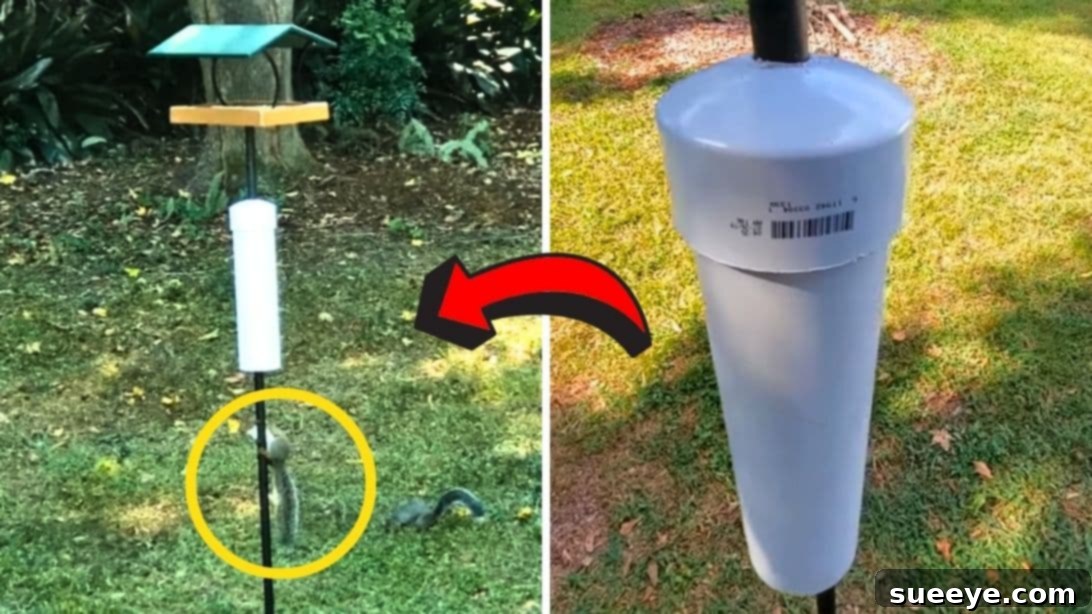
If you’re dealing with the ongoing battle of keeping squirrels away from your bird feeder, a brilliant and inexpensive idea by Brandon K offers a practical and sustainable solution. Instead of resorting to expensive specialized feeders or labor-intensive daily deterrents, you can construct a highly effective squirrel baffle using readily available materials. This DIY project is designed to create a physical barrier that squirrels simply cannot navigate, ensuring your bird feed remains exclusively for your avian visitors. The concept is straightforward: a wide, smooth barrier that prevents squirrels from climbing up the pole to reach the feeder. Let’s delve into the materials you’ll need and the simple steps to assemble your own squirrel-proof bird feeder system.
Essential Materials for Your Inexpensive Squirrel-Proof Bird Feeder
Gathering the right materials is the first step to a squirrel-free bird feeder. The beauty of this project lies in its simplicity and the affordability of its components. You likely won’t need to visit a specialty store; most items can be found at your local hardware store.
- 4-inch PVC Pipe: This forms the main body of your squirrel baffle. The smooth, wide surface is difficult for squirrels to grip, making it an excellent climbing deterrent. Ensure it’s long enough to create an effective barrier when installed. A length of about 2-3 feet is usually sufficient.
- 4-inch PVC End Cap: This cap will sit on top of the PVC pipe and attach to the feeder pole, creating the initial barrier that squirrels cannot bypass from below.
- Screw or Hose Clip: Depending on your feeder pole’s material, you’ll need either a sturdy screw (for wooden or drillable metal poles) or a hose clip (for solid metal poles where drilling is impractical). This component is crucial for supporting the baffle in its position.
- Drill: A power drill will be necessary for creating a precise hole in the PVC end cap and for securing the screw into the pole if applicable. Make sure to have a drill bit appropriate for the size of your feeder pole.
Having these materials ready will make the assembly process quick and straightforward, allowing you to enjoy a squirrel-free feeder in no time.
How to Keep Squirrels Away From Bird Feeders: A Step-by-Step Guide
Building your own squirrel baffle is a simple and rewarding project that requires minimal tools and effort. Follow these easy steps to construct an effective barrier that will protect your bird feeder from unwanted visitors.
Step 1: Prepare the PVC End Cap
Begin by drilling a hole precisely in the center of the 4-inch PVC end cap. The size of this hole is critical; it must be just large enough to snugly fit over the pole of your bird feeder. A tight fit will ensure the baffle remains stable and securely positioned. Use an appropriate drill bit for the material of the end cap and ensure a clean, smooth hole to prevent any snagging during installation.
Step 2: Position the End Cap on the Feeder Pole
Once the hole is drilled, insert the end cap onto the pole of your bird feeder. It’s important that the open side of the end cap faces downwards, resembling an inverted bowl. This orientation is crucial for the baffle’s effectiveness, as it prevents squirrels from getting any purchase underneath it. Slide it up the pole to the desired height, keeping in mind that the baffle should be high enough off the ground to prevent squirrels from jumping over it, typically around 5-6 feet.
Step 3: Secure the Baffle’s Support
To prevent the end cap (and subsequently the entire baffle) from sliding down the pole, you need to install a support mechanism. Drill a sturdy screw into the top part of the feeder pole, just above where the end cap will rest. This screw will act as a sturdy stop, holding the end cap firmly in place. If your bird feeder pole is made of solid metal or a material that’s difficult to drill, an excellent alternative is to use a strong hose clip. Tighten the hose clip securely around the pole, just above the end cap’s resting position, to provide the necessary support. Ensure whichever method you choose is robust enough to bear the weight of the baffle and withstand squirrels attempting to dislodge it.
Step 4: Install the PVC Pipe
With the end cap secured by its support, it’s time to add the main deterrent: the PVC pipe. Insert the 4-inch PVC pipe into the feeder pole, allowing it to rest directly on top of the secured end cap. The smooth, wide surface of the PVC pipe creates an insurmountable barrier for squirrels attempting to climb the pole. They won’t be able to get a grip on its slick surface, effectively stopping their ascent before they reach the feeder. Ensure the pipe sits firmly on the end cap and is relatively stable.
Pro Tip for Aesthetics: If you’re bothered by the manufacturing lettering often found on PVC pipes, don’t worry! You can easily remove these markings. A simple break cleaner or carb cleaner applied with a cloth will typically wipe away the printed letters, leaving you with a clean, unobtrusive baffle. Always use these chemicals in a well-ventilated area and follow product safety instructions.
Optimizing Your Squirrel Baffle for Maximum Effectiveness
While the DIY PVC baffle is incredibly effective on its own, its success largely depends on its placement. Squirrels are master acrobats and opportunistic jumpers. To ensure your new baffle works perfectly, consider the following:
- Strategic Placement: Position your bird feeder at least 8-10 feet away from any potential launch pads. This includes trees, fences, deck railings, or even your house. Squirrels are capable of impressive leaps, and a baffle on the pole won’t help if they can simply jump over it from a nearby structure.
- Ideal Height: Ensure the bottom of the baffle is at least 5 feet off the ground. This height makes it very difficult for squirrels to jump onto the baffle from below.
- Clear Surroundings: Regularly trim any branches or foliage that might grow close enough to provide squirrels with a bridge to your feeder.
Complementary Strategies for Ultimate Squirrel Deterrence
While your new DIY baffle will be your primary defense, integrating other strategies can further enhance your success in keeping squirrels away and ensuring your feeder remains a bird-only zone:
- Choose Your Seeds Wisely: While many birds adore black oil sunflower seeds (and so do squirrels), some birds enjoy seeds that squirrels tend to dislike. Safflower seeds, for instance, are a favorite of cardinals, chickadees, and grosbeaks, but squirrels often find them bitter. Consider offering safflower in a separate feeder or as part of your main mix. Nyjer (thistle) seeds are also generally ignored by squirrels.
- Practice Good Feeder Hygiene: Spilled seeds on the ground are an open invitation for squirrels (and other rodents). Regularly clean up any dropped seeds beneath your feeder. A tray underneath your feeder can help catch fallen seeds, but remember to empty and clean it frequently.
- Consider a Dedicated Squirrel Feeder: This might seem counterintuitive, but sometimes giving squirrels their own food source a good distance away from your bird feeder can divert their attention. Offer them whole corn, peanuts in the shell, or specific squirrel mixes. The idea is to give them an easier, more appealing alternative, hoping they’ll leave the bird feeder alone.
- Motion-Activated Sprinklers: For persistent problems, some homeowners use motion-activated sprinklers that harmlessly spray water when squirrels approach. While effective, ensure placement doesn’t drench your birds or surprise other wanted wildlife.
Reaping the Rewards of a Squirrel-Free Bird Feeder
Implementing these strategies, especially the ingenious DIY PVC baffle, will transform your bird feeding experience. You’ll quickly notice a significant increase in the number of birds visiting your feeder, as they feel safe and unthreatened. The expensive bird seed you purchase will last much longer, providing better value and more consistent food for your feathered friends. Most importantly, you’ll regain the peace of mind and enjoyment that comes with backyard bird watching, observing the beauty of nature without the stress of constant squirrel intrusions.
So, take charge of your backyard sanctuary. With a few simple materials and a little effort, you can create an environment where birds thrive, and squirrels are effectively, and humanely, kept at bay. Enjoy the serenity and vibrant life your squirrel-proof bird feeder will bring!
For more creative DIY ideas to enhance your backyard, check out: Unique Squirrel-Proof Bird Feeder Designs and Solutions