
Natural Shower Door Cleaning: Banish Stubborn Soap Scum and Hard Water Stains Forever
Are you tired of battling stubborn soap scum and unsightly hard water stains that cling to your shower doors, dimming their shine and making your bathroom look less than pristine? You’re not alone. Over time, these mineral deposits and soap residues can build up, creating a cloudy film that seems impossible to remove with ordinary cleaners. But what if we told you that the secret to sparkling, crystal-clear shower doors lies in a few simple, all-natural ingredients you likely already have in your pantry? This comprehensive guide, inspired by the brilliant tips from Andrea Jean Cleaning on YouTube, will walk you through an effective and eco-friendly method to restore your shower doors to their former glory, using only natural products.
Many commercially available cleaning products promise quick fixes but often contain harsh chemicals that can be harmful to your health and the environment. Moreover, they might not even fully tackle those persistent hard water stains. Our natural approach leverages the power of everyday household items like cleaning vinegar, baking soda, and fresh lemons to dissolve grime, cut through soap scum, and leave your glass gleaming without any harsh fumes or toxic residues. This isn’t just a cleaning hack; it’s a sustainable way to maintain a healthier, cleaner bathroom environment.
Understanding the Enemy: Soap Scum and Hard Water Stains
Before diving into the solution, it’s helpful to understand what we’re up against. Soap scum is a sticky, unsightly residue formed when the fatty acids in soap react with the minerals (calcium and magnesium) present in hard water. This reaction creates a difficult-to-remove, insoluble film that adheres to surfaces like shower doors, tiles, and fixtures. Hard water stains, on the other hand, are primarily mineral deposits left behind when water evaporates. These minerals crystalize on surfaces, forming white, chalky spots or streaks that can become incredibly stubborn over time.
The combination of these two nuisances creates a double challenge for anyone striving for a clean bathroom. Traditional scrubbing often proves insufficient, and the use of harsh chemical cleaners can sometimes etch surfaces or leave behind their own residue. This is where the acidic power of vinegar and lemon, combined with the gentle abrasive nature of baking soda, truly shines.
Why Choose Natural Cleaning Solutions?
Opting for natural cleaning methods offers a multitude of benefits:
- Eco-Friendly: Reduces the amount of harsh chemicals released into waterways and the atmosphere.
- Healthier Home: Minimizes exposure to irritants, allergens, and toxic fumes, creating a safer environment for you, your family, and pets.
- Cost-Effective: Ingredients like vinegar, baking soda, and lemons are inexpensive and readily available, saving you money in the long run compared to specialized cleaning products.
- Gentle Yet Effective: While powerful against grime, these natural ingredients are generally safer for a variety of surfaces and won’t strip finishes or cause damage when used correctly.
- Sustainable Living: Promotes a lifestyle that is mindful of resource consumption and environmental impact.
Essential Supplies for Sparkling Shower Doors
Gathering your supplies is the first step towards achieving a spotless shower. The beauty of this method lies in its simplicity and the accessibility of its ingredients. You might already have everything you need right at home!
- Cleaning Vinegar: White distilled vinegar, specifically formulated for cleaning, is highly acidic and effective at dissolving mineral deposits.
- Fresh Lemons: The citric acid in lemons not only helps to break down stains but also leaves a refreshing, natural scent.
- Baking Soda: A gentle abrasive and alkaline compound that reacts with acids to create a powerful cleaning action.
- Non-Scratch Sponge or Scrubber: Essential for applying the paste and scrubbing away grime without damaging your glass.
- Squeegee (Optional, but Recommended): For achieving a streak-free finish after rinsing.
- Bucket of Warm Water (If no detachable sprayer): For thorough rinsing.
- Rubber Cleaning Gloves: To protect your hands from prolonged exposure to acids, especially if you have sensitive skin.
- Microfiber Cloths: Useful for drying and polishing, especially if you don’t use a squeegee.
- Small Mixing Bowl or Container: For preparing your cleaning paste.
Step-by-Step Directions to Banish Shower Grime
Follow these detailed steps to transform your dull, grimy shower doors into gleaming, transparent surfaces. Remember, patience and thoroughness are key to achieving the best results.
Step 1: Prepare Your Workspace and Gather Your Tools
Before you begin, ensure your bathroom is well-ventilated by opening a window or turning on the exhaust fan. Clear any shampoo bottles, soaps, or other items from the shower area to give yourself ample space to work. Put on your cleaning gloves to protect your hands.
Step 2: The Lemon Pre-Treatment – Unleashing Citric Acid Power
Take a fresh lemon and cut it in half. Starting from the top, generously rub the cut side of the lemon directly onto your entire shower door. Pay special attention to areas with heavy soap scum and hard water buildup. The natural acidity of the lemon begins to break down mineral deposits and fatty soap residues immediately. Allow the lemon juice to sit on the glass for about 5-10 minutes. This pre-treatment significantly enhances the effectiveness of the subsequent cleaning paste.
Step 3: Crafting the Dynamic Cleaning Paste
While the lemon juice works its magic, prepare your powerful cleaning paste. In your mixing bowl, combine a generous amount of baking soda with cleaning vinegar. Start with about half a cup of baking soda and slowly add vinegar, stirring constantly. You’ll notice a fizzing reaction – this is the acetic acid in the vinegar reacting with the alkaline baking soda, creating carbon dioxide gas and a powerful cleaning agent. Continue adding vinegar until you achieve a thick, spreadable paste consistency, similar to toothpaste or pancake batter. There are no precise measurements; aim for a consistency that will cling to the vertical surface of your shower door without immediately dripping off.
Step 4: Applying the Paste and Letting it Work
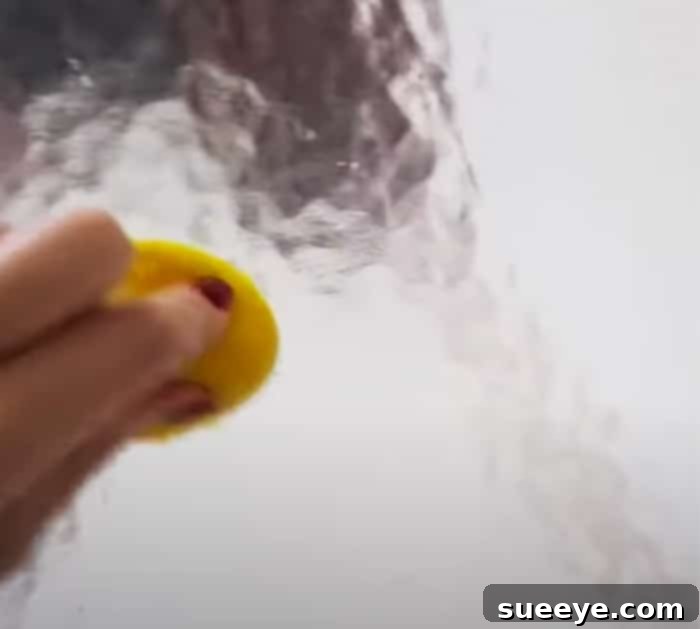
Once your paste is ready, scoop a liberal amount onto your non-scratch sponge or scrubber. Apply the paste directly over the lemon-treated shower door, working in circular motions to ensure even coverage. Make sure to cover every inch of the glass, paying extra attention to the bottom edges and corners where grime tends to accumulate most heavily. The baking soda provides a gentle abrasive action to scrub away loosened residue, while the vinegar continues to dissolve mineral deposits. For average grime, let the cleaning mixture sit on the door for at least 15-20 minutes. For heavily soiled doors with significant buildup, extend the sitting time to 30 minutes or even an hour. The longer it sits, the more time the natural acids and abrasives have to break down the stains.
Step 5: Targeted Scrubbing for Stubborn Spots
After the designated waiting period, re-scrub the shower door with your sponge, focusing on any areas where soap scum or hard water stains are still visible. Apply a bit more pressure, still using circular motions. The combination of the paste and the friction from scrubbing will help dislodge even the most stubborn grime that has been softened by the treatment.
Step 6: Thorough Rinsing – Washing Away the Grime
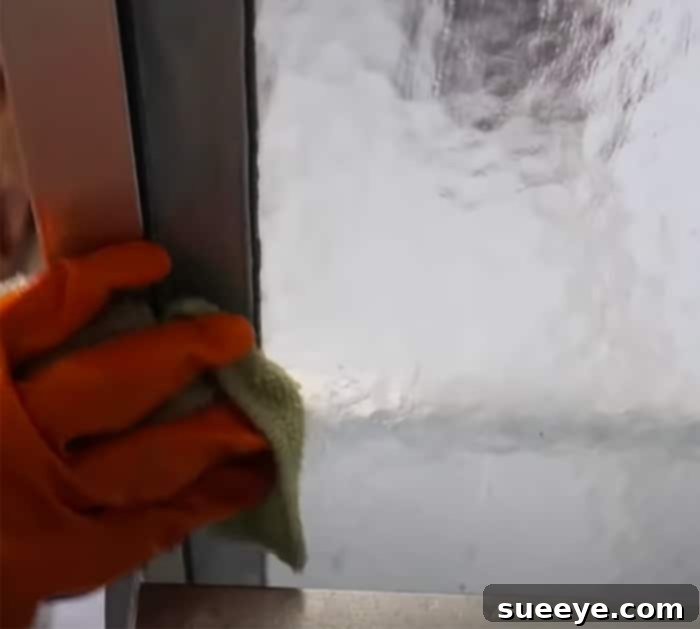
Now it’s time to rinse all that grime away. If you have a detachable shower sprayer, this step is straightforward: simply rinse the entire door with warm water until all traces of the paste and scum are gone. If you don’t have a sprayer, fill a bucket with warm water and use a clean rag or large sponge to thoroughly wipe down the door, rinsing and wringing out the rag frequently. It’s crucial to remove all the cleaning solution to prevent any new residues from forming. Warm water helps in dissolving and carrying away the loosened dirt more effectively.
Step 7: The Squeegee Finish for a Streak-Free Shine (Optional but Recommended)
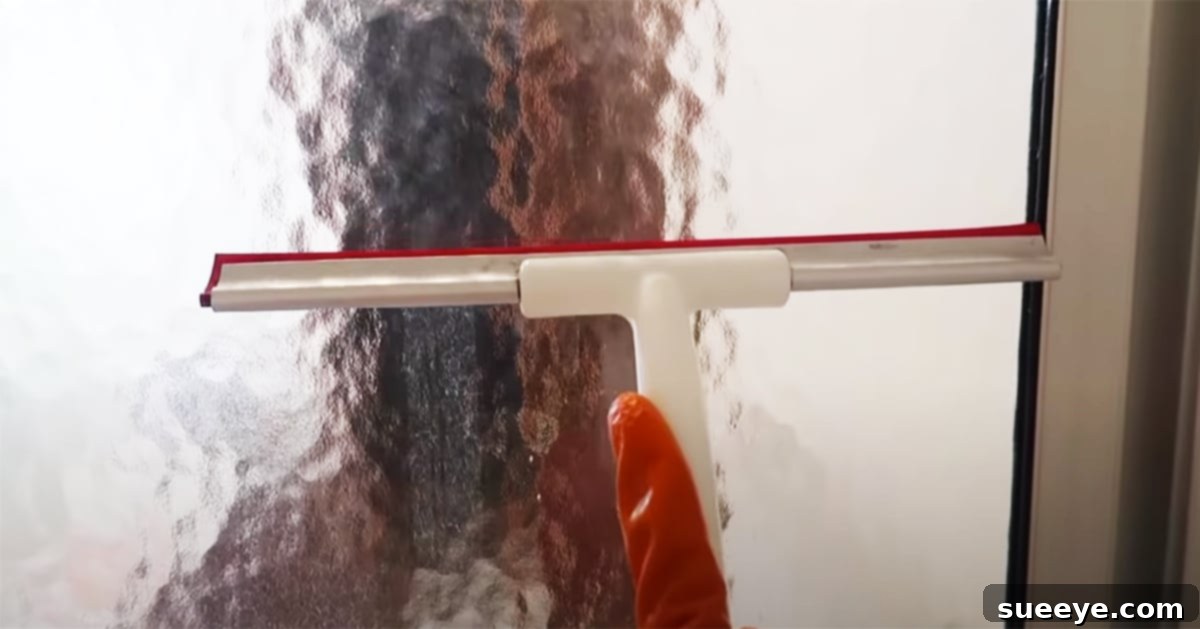
For an impeccable, streak-free finish, grab your squeegee. Starting from the top of the shower door, pull the squeegee in overlapping strokes down to the bottom, wiping the blade after each pass with a clean cloth. This step removes excess water and prevents water spots from forming as the door dries, leaving your glass sparkling. If you don’t have a squeegee, you can dry the door immediately with a clean, dry microfiber cloth to achieve similar streak-free results.
Beyond Shower Doors: Versatile Cleaning Power
The beauty of this natural cleaning paste extends far beyond just shower doors. Its powerful yet gentle formula makes it an excellent choice for various other bathroom cleaning tasks:
- Shower Walls and Tiles: Apply the paste to your shower walls, especially around grout lines, to tackle soap scum and mildew. Let it sit, scrub, and rinse for a truly sparkling shower enclosure.
- Grout Cleaner: The baking soda acts as a mild abrasive, while the vinegar penetrates and cleans discolored grout. Apply, let sit, scrub with a brush, and rinse.
- Bathtubs: Say goodbye to bathtub rings and general grime by using this paste to scrub down your tub.
- Sinks and Faucets: Restore the shine to your bathroom sink and faucets, removing water spots and soap residue. It can even help to unclog minor sink blockages if left to sit in the drain.
- Toilets: For a natural toilet bowl cleaner, sprinkle baking soda into the bowl, add vinegar, let it fizz, scrub with a toilet brush, and flush. The lemon can be rubbed along the rim for extra freshness.
Prevention is Key: Maintaining a Sparkling Shower
While this deep cleaning method is incredibly effective, consistent maintenance can drastically reduce the frequency of intensive cleanings. Incorporate these habits into your routine:
- Squeegee After Every Use: This is perhaps the most impactful tip. A quick squeegee of your shower doors and walls after each shower prevents water spots and soap scum from forming.
- Improve Ventilation: Use your bathroom exhaust fan during and after showers to reduce humidity, which contributes to mold, mildew, and hard water buildup.
- DIY Daily Shower Spray: Mix equal parts white vinegar and water in a spray bottle, optionally adding a few drops of essential oil (like tea tree or lemon for added cleaning power and scent). Lightly mist your shower doors and walls after each shower (after squeegeeing) – do not rinse.
- Regular Light Cleaning: Aim for a quick wipe-down of your shower doors with a microfiber cloth and an all-purpose natural cleaner once a week to prevent heavy buildup.
- Consider a Water Softener: If you live in an area with extremely hard water, investing in a water softener can significantly reduce mineral deposits throughout your home, including your shower.
Troubleshooting Common Issues
While this method is highly effective, some shower doors may present unique challenges:
- Persistent Stains: For very old, heavily embedded hard water stains, you may need to repeat the process, extending the sitting time of the paste or applying more pressure during scrubbing. A specialized hard water stain remover (natural, if possible, such as a stronger citric acid solution) might be necessary as a last resort.
- Etched Glass: If hard water has been left to sit for years, it can actually etch the surface of the glass, leaving permanent marks. This method will clean off the buildup, but cannot repair etched glass. Prevention is truly the best cure here.
- Cloudy Finish After Rinsing: Ensure you are thoroughly rinsing off all the paste. Any remaining residue can dry to a cloudy finish. Also, make sure to dry the door immediately with a squeegee or microfiber cloth.
Conclusion: Embrace the Power of Natural Cleaning
Achieving a spotless, streak-free shower door doesn’t have to be a daunting task involving harsh chemicals and endless scrubbing. By harnessing the natural cleaning power of vinegar, baking soda, and lemon, you can effectively tackle even the toughest soap scum and hard water stains. This method, popularized by experts like Andrea Jean Cleaning, offers an efficient, cost-effective, and environmentally friendly solution to a common household problem.
So, stop being lazy and give this fantastic cleaning hack a try! You’ll be amazed at the transformative results and the fresh, clean scent left behind. Not only will your shower doors sparkle like new, but you’ll also enjoy the peace of mind that comes from using safe, natural products in your home. Say goodbye to store-bought solutions that fall short and embrace the simplicity and efficacy of natural ingredients for a cleaner, healthier bathroom.