
10 Essential Driving Hacks to Drastically Save Gas Money and Boost Fuel Efficiency
In an era where fuel prices seem to be on a relentless upward trajectory, finding smart and effective ways to manage your gas budget is no longer a luxury but a necessity. The cost of transportation can significantly impact your monthly expenses, making every drop of fuel count towards your bottom line. Fortunately, there are numerous practical strategies and driving habits you can adopt to drastically reduce your consumption and save a substantial amount of money at the pump. Inspired by expert insights, including valuable tips from sources like BRIGHT SIDE, this comprehensive guide will walk you through ten proven driving hacks designed to enhance your vehicle’s fuel economy and keep more cash in your wallet.
From simple adjustments to your driving style to crucial maintenance practices, these tips cover a wide spectrum of approaches to maximize your miles per gallon (MPG). By integrating these strategies into your daily routine, you’ll not only contribute to a healthier budget but also foster safer and more environmentally conscious driving habits. This article aims to provide a clear, actionable roadmap for anyone looking to optimize their fuel usage and gain greater control over their transportation costs. Let’s dive into these essential hacks that will transform the way you think about and spend your hard-earned gas money.
#1 Master Defensive Driving: Stay Alert and Anticipate Road Conditions
One of the most fundamental yet effective ways to save on gas is to cultivate a proactive and defensive driving style. This means consistently scanning the road ahead, being acutely aware of your surroundings, and anticipating potential obstacles, traffic changes, or upcoming stops well in advance. When you maintain a high level of alertness, you can avoid abrupt braking and sudden acceleration – two major culprits for excessive fuel consumption. Every time you slam on the brakes, you’re essentially dissipating the kinetic energy that your engine expended to get your vehicle up to speed, converting it into wasted heat. Conversely, rapid acceleration demands a significant surge of fuel, often leading to inefficient combustion and lower MPG.
By anticipating traffic flow, recognizing a red light far off, or seeing a turn approaching, you can gently decelerate and accelerate, maintaining a smoother, more consistent pace. This not only reduces the strain on your engine, transmission, and brakes but also optimizes your vehicle’s fuel efficiency, often improving it by 10-15%. Think of driving as a constant rhythm, rather than a series of abrupt jolts. This smooth, controlled approach is not just about saving fuel; it’s also a fundamental principle of safe driving, making your journeys more comfortable and significantly reducing the risk of accidents for everyone on the road. The less you stop and start, the more fuel you conserve.
#2 Become a Savvy Shopper: Keep a Close Eye on Gas Prices
In today’s interconnected world, there’s no longer an excuse for paying more than you have to for gasoline. Fuel prices can vary remarkably from one gas station to another, even within the same neighborhood, city, or along a short stretch of highway. These prices also fluctuate throughout the day, week, and in response to global events. Making it a consistent habit to monitor local gas prices can lead to surprisingly considerable savings over time, especially for frequent drivers.
Leverage the power of dedicated gas price comparison websites and mobile applications, such as GasBuddy, Waze, or even integrated features within mapping services like Google Maps. These invaluable tools provide real-time fuel price data, empowering you to pinpoint the most affordable stations in your immediate vicinity or conveniently along your planned route. By planning your fuel stops strategically and taking advantage of momentary price drops or “gas wars” between competing stations, you can easily avoid impulse fill-ups at overpriced locations. Over the course of a year, the accumulated savings from consistently choosing the cheapest gas can be surprisingly substantial, freeing up more money for other essential expenses or even a well-deserved treat. This simple habit requires minimal effort but yields tangible and recurring financial benefits, directly impacting your overall driving costs.
#3 Lighten the Load: Remove Unnecessary Weight from Your Vehicle
The fundamental physics of driving dictate that the heavier your car, the harder its engine has to work to propel it forward, and consequently, the more fuel it will consume. This direct relationship between vehicle weight and fuel consumption is a crucial factor in your overall fuel economy. Many drivers unknowingly carry around dozens, if not hundreds, of pounds of unnecessary items in their trunks, back seats, or cargo areas. This can include anything from old sports equipment, unused tools, accumulated junk, extra heavy-duty winter gear, or items that were transported and simply never removed.
While essential items like a spare wheel, a tire jack, and basic emergency tools are, of course, necessary for safety and preparedness, anything beyond that should be regularly evaluated and removed if not needed for your immediate journey. Take a moment to declutter your vehicle regularly, especially before long trips. Even seemingly small reductions in weight add up over time. Studies suggest that for every 100 pounds of extra weight, a car’s fuel efficiency can decrease by 1-2%. While this might seem minor on a single tank, over thousands of miles, these small percentages translate into significant wasted fuel and money. Regularly cleaning out your trunk and cabin will not only save you gas but also create a more organized, spacious, and pleasant driving environment.
#4 Maximize Efficiency: Monitor Your Tire Pressure Regularly
Properly inflated tires are absolutely crucial for achieving optimal fuel efficiency, ensuring vehicle safety, and extending the lifespan of your tires. Underinflated tires are a silent thief of fuel efficiency; they increase rolling resistance, meaning your engine has to exert more effort to keep the car moving at a given speed. This extra effort directly translates into higher fuel consumption and reduced miles per gallon. Furthermore, underinflated tires can lead to premature wear on the outer edges of the tire, compromise handling, and increase the risk of a blowout, especially at higher speeds.
Conversely, tires that are inflated to the manufacturer’s recommended pressure (which can typically be found on a sticker inside the driver’s side door jamb, in your owner’s manual, or sometimes on the fuel filler flap) maintain their optimal shape, reduce friction with the road, and ensure a more efficient and even contact patch. Checking your tire pressure should be a monthly habit, and always before embarking on long road trips. Do not rely solely on visual inspection, as tires can appear adequately inflated even when they are significantly below the recommended PSI. While some might believe overinflating tires can save more fuel, this practice is dangerous; it can compromise handling, increase wear on the center of the tire, lead to a harsher ride, and significantly heighten the risk of tire failure. Sticking to the recommended pressure ensures the best balance of safety, tire life, and fuel economy, potentially improving your gas mileage by up to 3%.
#5 Choose Wisely: Avoid Driving When It Rains (If Possible)
Driving in adverse weather conditions, particularly heavy rain, can have a noticeable and detrimental impact on your fuel consumption, in addition to significantly increasing the inherent risk of accidents. When roads are wet, several factors combine to reduce overall fuel efficiency. Firstly, there’s increased resistance as your tires cut through standing water or wet surfaces, which requires more engine power to maintain speed. Secondly, drivers tend to use their wipers, headlights, and defrosters more frequently; these electrical components all draw power from the engine’s alternator, thus increasing the fuel needed to generate that power.
More importantly, driving in the rain necessitates slower speeds, more cautious maneuvers, and often leads to increased stop-and-go traffic, especially in urban areas – conditions well-known for being highly inefficient for fuel consumption. The constant acceleration and braking in heavy rain significantly burn more fuel than steady cruising. If your schedule allows for flexibility, consider delaying your trip until the rain subsides, opting for public transport, or carpooling with someone whose schedule aligns with yours. While not always a feasible option for everyone, minimizing non-essential driving during heavy rainfall can contribute to tangible fuel savings and, more importantly, ensure your safety on the roads. Prioritizing safety should always come first, and reducing unnecessary fuel consumption is an advantageous secondary benefit that comes with it.
#6 Plan Ahead: Make Your Route Logistically Efficient
Spontaneous detours, getting lost, and aimless driving are major drains on your fuel tank and your wallet. By taking just a few minutes to meticulously plan your route efficiently, you can significantly reduce your gas expenses and save valuable time. Modern navigation applications like Google Maps or Waze are indispensable tools for this, providing real-time traffic updates, identifying potential road closures, and suggesting the most fuel-efficient routes, often prioritizing pathways with fewer stops, less congestion, and smoother traffic flow. Actively avoiding traffic jams means less time idling (which consumes fuel for zero distance covered) and less stop-and-go driving, both of which are highly inefficient for fuel consumption.
Furthermore, an often-overlooked aspect of route planning is combining multiple errands into a single, longer trip. A cold engine consumes substantially more fuel during the first five miles or so of operation because it runs on a richer fuel mixture until it reaches its optimal operating temperature. By consolidating your errands into one comprehensive journey, you allow your engine to warm up properly and operate at its peak efficiency for a longer duration, rather than making several short trips with a constantly cooling and reheating engine. Strategic route planning is a powerful, yet often overlooked, hack for substantial long-term fuel savings that requires minimal effort upfront for significant returns.
#7 Power Down: Turn Off the Air Conditioning Strategically
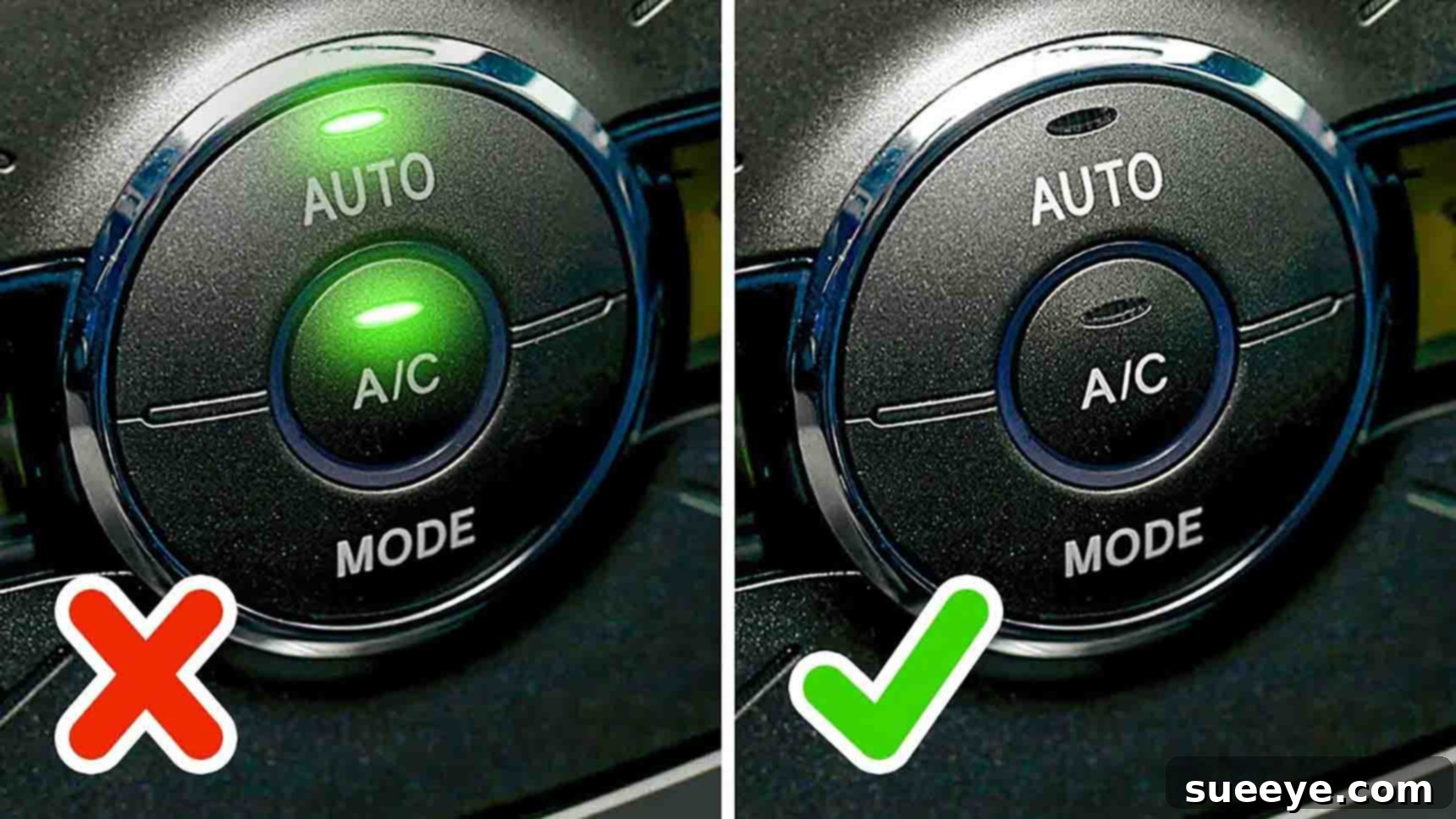
The use of your car’s air conditioning (AC) system is a direct draw on your engine’s power, as the AC compressor requires energy to operate. This additional load on the engine translates directly into increased fuel consumption. While the exact percentage of increased consumption varies depending on your vehicle type, outside temperature, and the AC settings (e.g., fan speed, temperature), using your air conditioner can increase your fuel consumption by an average of 10-20%. For instance, conscientious use of your AC could save you approximately 1 gallon of gas for every 100 miles driven, making it a significant factor in your overall fuel economy.
Deciding whether to use the AC is often a trade-off between personal comfort and maximizing fuel economy. However, there are smart ways to minimize its impact. On cooler days or at lower speeds (typically below 40 mph), opening your windows might be a more fuel-efficient way to cool down, as the aerodynamic drag created by open windows is less significant than the mechanical load placed on the engine by the AC compressor. Conversely, on highways at higher speeds, closing windows and using the AC sparingly can sometimes be more efficient than battling increased aerodynamic drag from open windows. Use the AC when genuinely necessary, but consider turning it off, using the fan-only setting, or utilizing fresh air ventilation when temperatures are mild or for short periods. Strategic use is key.
#8 Stay Maintained: Undergo Servicing on Time
A well-maintained vehicle is inherently more fuel-efficient than one that is neglected. Skipping regular service appointments, as recommended by your car’s manufacturer, can lead to a cascade of issues that collectively drain your fuel tank and, inevitably, your wallet. Components like dirty air filters, worn spark plugs, unbalanced tires, loose or worn belts, clogged fuel injectors, and old, degraded engine oil all force your engine to work harder than necessary, directly increasing fuel consumption. For example, a severely clogged air filter restricts airflow to the engine, leading to an inefficient air-fuel mixture, while worn spark plugs can cause misfires, incomplete combustion, and a noticeable drop in power and efficiency.
Regular maintenance ensures that all systems are operating optimally. This includes timely oil changes with the correct viscosity oil, filter replacements (air, oil, fuel), spark plug inspections and replacements, tire rotations and balancing, wheel alignments, and comprehensive engine diagnostics to catch potential issues early. Addressing minor issues before they escalate into major problems not only prevents costly repairs down the line but also guarantees your vehicle is performing at its peak fuel efficiency. Think of scheduled servicing as a crucial investment in both your car’s longevity and your ongoing fuel savings; it keeps the engine running smoothly and efficiently, ensuring every drop of fuel is utilized effectively.
#9 Embrace Consistency: Use Cruise Control on the Highway
For extensive highway driving, cruise control is an invaluable tool for optimizing fuel efficiency. Its primary function is to maintain a constant speed, eliminating the subtle accelerations and decelerations that drivers often make unintentionally. These minor fluctuations in speed, when accumulated over a long journey, can significantly impact fuel consumption by requiring the engine to constantly adjust power output. Cruise control ensures a smooth, steady pace, which is scientifically proven to be the most fuel-efficient way to travel on flat, open roads.
By preventing you from “creeping up” on the accelerator, even unconsciously, cruise control helps your vehicle operate at its most economical engine RPM for a given speed. However, it’s important to use it wisely. On hilly or mountainous terrain, cruise control might excessively accelerate up inclines, using significantly more fuel than if you manually controlled the speed with a light and consistent foot. Similarly, in heavy or stop-and-go traffic, constant braking and acceleration by the system can negate its benefits and even increase fuel consumption. Ideal for long stretches of relatively flat highway with consistent speed limits and light traffic, cruise control is a simple yet powerful hack to keep your fuel gauge moving slower and your journey more relaxed.
#10 Master the Art of Smoothness: Don’t Put the Pedal to the Metal
The valuable lesson learned in driving school about smooth acceleration and braking isn’t just about passenger comfort or protecting your vehicle’s components; it is a fundamental and critical principle of fuel-efficient driving. Aggressive driving – characterized by rapid, jackrabbit acceleration, hard braking, and excessive speeding – is arguably one of the biggest enemies of good gas mileage. Each time you “put the pedal to the metal,” your engine is forced to inject a larger amount of fuel to generate immediate power, much of which is then wasted when you have to brake sharply just moments later.
Aim for gentle, progressive starts and gradual, controlled stops. A useful mental exercise is to visualize an egg placed under your accelerator pedal, and your goal is not to “break” it with sudden movements. Maintain a consistent speed, ideally within the 50-60 miles per hour range, which is often cited as the sweet spot for many vehicles’ fuel economy. Furthermore, strive to drive in the highest possible gear appropriate for your speed, as higher gears allow the engine to operate at lower, more fuel-efficient RPMs, reducing strain and consumption. By adopting a smooth, calm, and deliberate driving style, you’ll not only save a substantial amount of fuel but also significantly reduce wear and tear on your brakes, tires, and engine, thereby prolonging the life of your vehicle and enhancing overall safety for yourself and others on the road.
Conclusion: Drive Smarter, Save More
Saving money on gas doesn’t require drastic lifestyle changes or complex, expensive modifications to your vehicle. Instead, it’s primarily about adopting smarter, more mindful driving habits and consistently practicing basic, yet crucial, car maintenance. By thoughtfully incorporating these ten essential driving hacks into your daily routine, you can significantly boost your car’s fuel efficiency, reduce your carbon footprint, and ultimately keep more of your hard-earned money in your pocket.
From maintaining a vigilant awareness on the road and planning your routes effectively to ensuring your tires are properly inflated and your engine is well-maintained, each of these tips contributes to a more economical, safer, and environmentally friendly driving experience. The cumulative effect of these seemingly small changes can lead to substantial savings over time. Start implementing these straightforward strategies today and witness the tangible difference they make at the pump. Drive smarter, save more, and enjoy the journey with the added peace of mind that comes from being financially savvy and responsible on the road.