
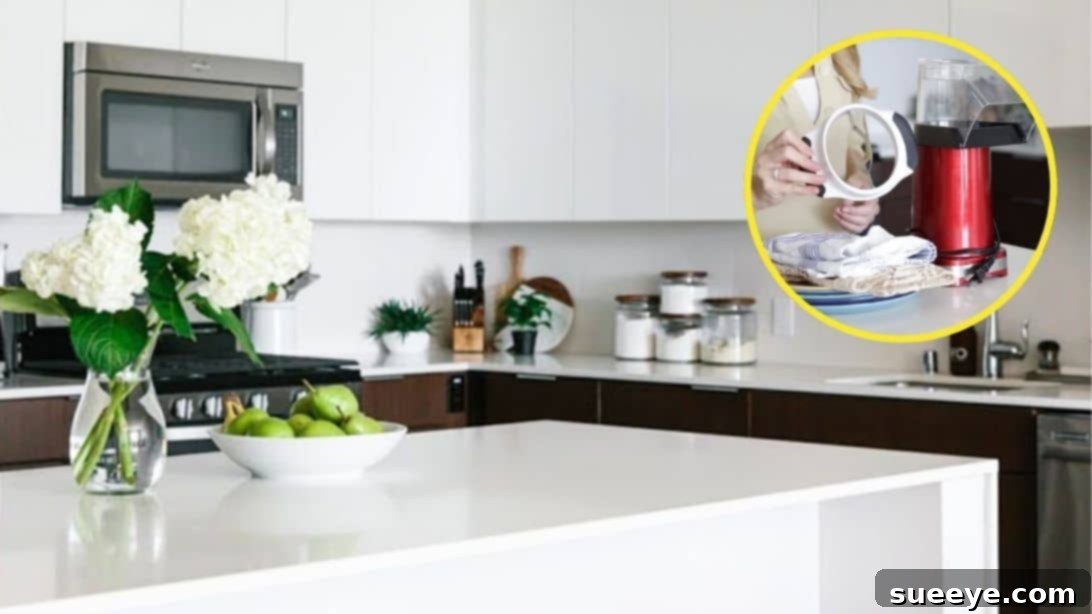
Are you constantly battling kitchen clutter? Does the thought of cooking in a disorganized space leave you feeling overwhelmed? You’re not alone. A busy kitchen can quickly become a source of stress, especially in homes with active families. But imagine a kitchen where everything has its place, surfaces are clear, and daily cleaning is a breeze. It’s not just a dream! Inspired by expert advice from channels like Downshiftology, we’ve compiled 8 essential tips to help you declutter, simplify, and reclaim your kitchen as a functional and enjoyable heart of your home.
RELATED: 15 Things Your Kitchen Doesn’t Need
For many families, the kitchen is more than just a place to prepare meals; it’s a hub for gatherings, homework, and creative culinary adventures. This constant activity can easily lead to a buildup of items and a feeling of chaos. The good news is that achieving a serene and efficient kitchen isn’t about grand overhauls, but rather about establishing simple, sustainable habits and creating smart storage solutions. By following these practical strategies, you can transition from a cluttered kitchen to a calm, organized, and truly minimalist space that supports your lifestyle.
Here are some additional insights that might inspire your organizing journey: 4 Small Kitchen Organizing Tips and Hacks
How to Declutter and Simplify Your Kitchen Effectively
A well-organized kitchen not only looks better but also makes cooking and meal preparation significantly more enjoyable and efficient. Fewer distractions, clear workspaces, and easy access to tools mean less time searching and more time creating. Let’s dive into practical steps to achieve this transformation and maintain a harmonious kitchen environment.
1 – Keep Your Surfaces Spotlessly Clean and Clear
The first and most impactful step to a less cluttered kitchen begins with your countertops and all other visible surfaces. Resist the natural urge to use these areas as temporary holding zones for mail, keys, school papers, or miscellaneous gadgets. Instead, commit to finding a permanent and appropriate home for every single item that doesn’t belong. Clear countertops instantly make a kitchen feel more spacious, cleaner, and less overwhelming. They also provide essential, uninterrupted workspace for meal preparation, making your cooking process smoother and more enjoyable, and improving overall kitchen hygiene.
This principle extends beyond just your main counters. The front of your refrigerator, often adorned with magnets, notes, and calendars, is another prime candidate for decluttering. While these can hold sentimental value or serve a quick purpose, they often contribute significantly to visual noise and a cluttered appearance. Consider transitioning to digital solutions for notes, grocery lists, and family calendars. Modern apps and shared digital calendars offer convenient access from anywhere, reducing the need for physical paper clutter. For cherished artwork or photos, designate a specific, less prominent spot, perhaps inside a cabinet door or on a bulletin board in another room, to keep your kitchen’s central command center visually serene and tidy.
2 – Evaluate and Optimize Countertop Appliances
Kitchen appliances, while incredibly useful and time-saving, can quickly become visual and physical obstructions on your precious countertop real estate. It’s easy to accumulate a collection of blenders, toasters, coffee makers, food processors, and more, each demanding a spot. Take a critical look at what truly earns its place on your counter. The golden rule here is simple: only keep one or two appliances that you use most frequently, ideally on a daily basis. These are your indispensable workhorses.
For items like a stand mixer used once a week, a slow cooker that sees action monthly, or a specialized juicer used seasonally, consider storing them in a cabinet, pantry, or even a designated appliance garage if your kitchen design allows. When making decisions, think about multi-functional appliances that can replace several single-purpose gadgets. Be honest with yourself about usage frequency. If you haven’t touched an appliance in months, it might be better off stored away, lent to a friend, or donated to someone who will use it regularly. Regularly assessing and rotating your countertop appliances helps maintain visual order, maximizes your workspace, and reduces the cleaning effort required for stationary items.
3 – Ruthlessly Discard or Thoughtfully Donate Unused Items
This step involves a deep dive into the hidden corners of your kitchen: your cabinets, drawers, and pantry. It’s often where forgotten treasures and neglected clutter reside, accumulating over years. Dedicate a specific block of time to go through every single item. Ask yourself a crucial question for each piece: “Have I used this tool, gadget, dish, or appliance in the last year?” If the honest answer is no, it’s a strong indicator that it’s no longer serving a valuable purpose in your daily kitchen routine.
Items that are broken, chipped, stained, or otherwise damaged beyond repair should be immediately discarded responsibly. There’s no value in keeping things that don’t function properly or pose a safety risk. For items that are still in good condition but simply aren’t used, consider their next life. Can they be donated to a local charity or thrift store, given to a friend or family member who would genuinely use and appreciate them, or even sold online through marketplaces? Releasing these unused items frees up valuable storage space, making it infinitely easier to find and access the tools you actually use and love. This periodic purge is crucial for maintaining an organized and efficient kitchen long-term, preventing clutter from silently creeping back in.
4 – Implement Smart Drawer Organizers and Cabinet Solutions
Once you’ve pared down your belongings through a thorough decluttering process, the next essential step is to give everything a dedicated and organized home. Drawer organizers are absolute game-changers for maintaining neatness and preventing items from shifting around in a jumbled mess. Clear organizers and bins not only keep things tidy but also allow you to easily see what’s inside, significantly reducing rummaging time and frustration. Think beyond just the basic cutlery trays.
For spices, a tiered drawer insert, a dedicated in-drawer spice rack, or even small, labeled containers can transform a chaotic collection into an accessible, alphabetized (or categorized) display. Similarly, consider using non-slip liners for drawers to prevent items from sliding around and causing disarray. For larger cabinets, adjustable shelves, pull-out drawers, or stackable bins can maximize vertical space and dramatically improve accessibility, especially for awkward items like pots, pans, and food storage containers. The ultimate goal is to make every item easy to find, easy to grab, and equally easy to put back, reinforcing your tidy habits and ensuring your kitchen remains functional and inviting.
5 – Clean Pots and Pans Immediately After Use
This seemingly simple habit can save you immense effort, frustration, and even help prolong the life of your cookware. There’s nothing more daunting or discouraging than facing a sink full of dried-on food. Food residues, especially those that have been allowed to dry and harden onto surfaces, are ten times harder to scrub off compared to fresh messes. Make it a conscious point to clean your pots and pans as soon as you’re done cooking or eating. If immediate, full cleaning isn’t feasible at that moment, at least fill them with hot, soapy water to prevent food from caking on. This short soak time will significantly reduce scrubbing effort later and prevent permanent stains.
Beyond the sheer ease of cleaning, this practice also contributes significantly to a cleaner kitchen aesthetic and a more positive mental space. A clear, empty sink is just as important as clear countertops for fostering a feeling of calm and order in your kitchen. It also helps preserve your valuable cookware, preventing stubborn stains, potential pitting, and damage that can result from prolonged exposure to food acids or harsh scrubbing required for dried-on messes. Adopt this habit, and you’ll find your kitchen stays tidier with less effort.
6 – Invest in Smart, Space-Saving Cookware Sets
When it comes to essential kitchen items like pots, pans, and bakeware, prioritizing quality and efficiency often goes hand-in-hand with smart, space-saving design. Investing in cookware sets that are specifically designed to nest neatly inside each other can dramatically reduce the amount of cabinet space required. These thoughtful sets typically include a range of different sizes, ensuring you have the right pot or pan for almost any culinary task, all while storing compactly in a fraction of the usual footprint.
Beyond just traditional cookware, consider applying the nesting principle to other kitchen essentials such as mixing bowls, measuring cups, and even food storage containers. The beauty of nesting sets is that they not only maximize vertical storage within your cabinets but also help to eliminate the common clutter of mismatched lids, awkward handles, and oddly shaped items. This thoughtful approach to selecting kitchen essentials directly contributes to a more organized, functional, and visually appealing cooking environment, making everything easier to find, use, and store away efficiently after use.
7 – Optimize Your Pantry and Cabinet Storage with Zones
Your pantry and cabinets are prime real estate for effective kitchen organization, but simply stuffing items in misses their full potential. Beyond just tidying, think strategically about creating designated “zones” for different categories of food and supplies. Group similar items together: all baking supplies in one area, spices and seasonings together, canned goods on another shelf, and breakfast items accessible for busy mornings. This clear zoning makes grocery shopping easier (as you instantly know what you have and what you need) and cooking significantly more efficient (since you know exactly where everything is located).
Maximize your available vertical space with stackable containers, tiered shelves, and even over-the-door organizers where appropriate. Transfer dry goods like pasta, rice, flour, oats, and cereals into clear, airtight containers. This not only keeps food fresher for longer but also makes it easy to see quantities at a glance, deters pests, and creates a uniform, aesthetically pleasing look. Implement a “first-in, first-out” system for pantry staples to ensure older items are used before they expire, minimizing waste and maintaining freshness across your entire inventory. A well-organized pantry saves time, money, and reduces stress.
8 – Establish a Consistent Daily Tidy-Up Routine
While periodic deep decluttering sessions are vital for major overhauls, maintaining an organized and serene kitchen ultimately relies on consistent daily habits. This doesn’t mean spending hours cleaning every day, but rather incorporating small, manageable tasks into your routine. After every meal, take a few dedicated minutes to wipe down countertops, load dishes into the dishwasher (or wash them immediately, as per tip #5), and put away ingredients or cooking tools as soon as you are finished using them. A quick sweep or vacuum of the kitchen floor can prevent crumbs and debris from accumulating throughout the day.
Think of it as “resetting” your kitchen to a clean slate after each use. This immediate “reset” prevents small messes from snowballing into overwhelming clutter that feels insurmountable. Involving all family members in this routine makes it even more effective, fostering a sense of shared responsibility. By embedding these simple daily practices, you’ll find that your kitchen stays cleaner, more organized, and perpetually ready for action without the constant need for infrequent, monumental cleaning efforts. A tidy kitchen fosters a tidy mind, making your home a more peaceful place.
Transform Your Kitchen into a Haven of Order and Efficiency
Embracing and consistently applying these 8 practical tips will fundamentally change your relationship with your kitchen. From maintaining clear countertops and optimizing appliance usage to creating intelligent storage solutions and developing quick daily habits, each strategy contributes to a more efficient, enjoyable, and stress-free cooking and living space. You’ll not only save precious time previously spent on cleaning and searching for items but also create a visually appealing and functional environment that fosters calm, creativity, and culinary joy.
Don’t feel pressured to implement all changes at once. Start small, perhaps by tackling just one drawer, one cabinet, or committing to clear countertops for a single day, and gradually expand your efforts. Consistency is key, and every small step forward builds momentum. By implementing these practical habits, inspired by experts like Downshiftology, you’ll be well on your way to a beautifully organized, highly functional, and simplified kitchen that truly is the heart of your home.