
Conquer Clutter Fast: Master the FLAT Rule for a Tidy Home in Minutes
Does the thought of tackling your messy home leave you feeling utterly paralyzed? Are you constantly battling a lack of energy and time, making comprehensive cleaning seem like an insurmountable mountain? You’re not alone. Many individuals and families struggle with keeping their living spaces tidy, especially when life gets busy. But what if there was a simple, highly effective method to dramatically improve your home’s appearance without requiring hours of exhaustive effort?
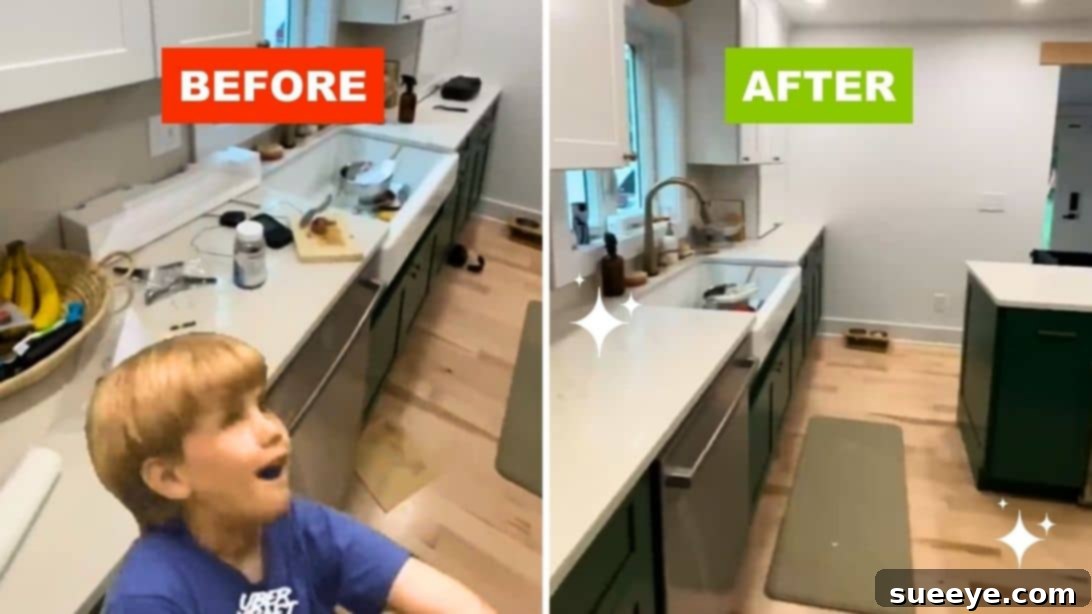
Enter the revolutionary FLAT Rule, a brilliant strategy shared by But First, Coffee on YouTube. This isn’t about deep cleaning or perfection; it’s about achieving significant visual impact and restoring a sense of calm to your environment with minimal investment. Having personally put this rule to the test, I can attest to its power. While it won’t scrub every corner, it promises to make a remarkable difference in your space, providing a much-needed breath of fresh air. If you find yourself overwhelmed by clutter and unsure where to begin, these actionable tips are your secret weapon. They are particularly invaluable for busy parents navigating the daily chaos that comes with children at home.
Understanding the FLAT Rule: Your Blueprint for Rapid Tidying
The FLAT Rule is an ingenious acronym designed to guide you through a quick and impactful tidying session. Each letter represents a crucial step that, when followed in sequence, helps you cut through the clutter efficiently. Let’s break down each component and see how you can apply this game-changing approach to your home, transforming overwhelming mess into manageable tasks.
F – Focus on Flat Surfaces
The first and arguably most visually impactful step in the FLAT Rule is to concentrate your efforts entirely on flat surfaces. Think of your kitchen countertops, dining tables, coffee tables, desks, bedside tables, and even the open floor space. These are the areas that quickly accumulate stray items, mail, forgotten toys, and general debris, contributing most significantly to a home feeling messy and chaotic. By making it your primary goal to simply clear items from these horizontal planes, you achieve an immediate and profound visual transformation.
When flat surfaces are clear, a room instantly appears tidier, more spacious, and inviting. Don’t worry about where everything “should” go just yet; the objective here is to remove items from sight, even if temporarily. Gather stray papers, forgotten toys, empty cups, and random trinkets. Put them in a designated “holding zone” or simply move them to a less visible spot for later sorting. This initial focus dramatically reduces visual noise and gives you an immediate sense of accomplishment, propelling you forward and making the entire cleaning process feel less daunting. This quick win is a powerful motivator for the subsequent steps.
L – Localize Your Effort
The second pillar of the FLAT Rule is “Localize,” which means tackling one room at a time. This strategy is essential for preventing overwhelm and maintaining focus. When faced with an entire house full of clutter, it’s easy to jump from one task to another, scattering your energy and ultimately achieving very little in any single area. By dedicating yourself to completing one room before moving to the next, you build momentum and experience tangible, measurable progress.
Choose a room, perhaps the one that causes you the most stress or the most frequently used, and commit to applying the “F” (Focus on Flat Surfaces) principle within that confined space. This localized approach prevents the common pitfall of starting multiple tasks simultaneously and finishing none. It helps manage the scope of your work, making the task feel less daunting and more achievable. By seeing one room visibly tidier, you gain the psychological boost needed to continue through the rest of your home, saving significant time and energy in the long run. It’s a strategic way to conquer clutter without feeling scattered.
A – Avoid Side Tasks
This might be the most challenging, yet most critical, step for many embarking on a quick tidy. “Avoid Side Tasks” means rigorously resisting the urge to get sidetracked by secondary chores that naturally arise during your tidying burst. The primary goal of the FLAT Rule is rapid visual improvement and decluttering, not deep cleaning, organizing, or completing other household duties. Getting distracted by tangential tasks is the number one killer of momentum and efficiency when trying to tidy quickly, often leading to burnout before the main objective is met.
For example, if you encounter dirty dishes on a counter, your instinct might be to wash them. But the “A” rule dictates: put the dishes *in the sink* or *in the dishwasher*, but do not wash them *right now*. If you find scattered toys on the floor, gather them and take them to the playroom, but do not start organizing them by color or type. If you pick up laundry, put it in the hamper, but do not begin sorting, washing, or folding. Even clearing mail from a table means putting it into a single pile, not opening or processing each piece. This strict focus on the primary task – clearing flat surfaces within a localized area – ensures that you complete the rapid tidy and avoid falling down a “rabbit hole” of endless chores. It’s about triage: getting the most impactful tasks done first, leaving deeper organization for another time when you have more energy and dedicated focus. This laser-like approach ensures maximum impact in minimum time.
T – Take 5 Minutes Per Room
The final component of the FLAT Rule is “Take 5 Minutes Per Room.” This seemingly small time commitment is where the magic truly happens, making tidying achievable for anyone, regardless of their energy levels. Setting a strict, short timer for each room makes the task feel incredibly manageable, even when you’re feeling utterly drained or facing a colossal mess. Five minutes is a remarkably forgiving timeframe; it’s a period most people can easily spare, even on their busiest or most exhausted days.
Using a timer not only keeps you incredibly focused but also provides a clear endpoint, preventing procrastination and the feeling of a never-ending task. During these five minutes, you apply the “F,” “L,” and “A” principles: clear flat surfaces, stay within the designated room, and rigorously avoid side tasks. What if you don’t finish everything in five minutes? That’s perfectly fine! The goal isn’t perfection, but progress. You’ll be amazed at how much you can accomplish in such a short, focused burst. This method transforms a potentially overwhelming task into a series of achievable micro-goals, building confidence and significantly reducing the feeling of paralysis that often accompanies a messy home. The cumulative effect of several 5-minute sprints across different rooms will leave your entire living space looking dramatically better with minimal effort and maximum efficiency.
Beyond the FLAT Rule: Sustaining Your Tidy Home
While the FLAT Rule is an exceptionally powerful tool for quick tidying and overcoming initial overwhelm, its true potential lies in its ability to foster new habits and maintain a consistently tidier home. After you’ve applied the FLAT Rule, your space will already feel significantly lighter, more organized, and visibly calmer, setting the stage for deeper cleaning or organization tasks if you choose to pursue them later. However, the immediate and most profound benefit is the elimination of that paralyzing feeling, allowing you to move on to other activities with a clearer mind and a less cluttered environment.
To sustain the tidiness achieved through the FLAT Rule, consider integrating a few additional, simple strategies into your daily routine. The “touch it once” rule, for instance, encourages you to immediately put items away when you’re done using them, preventing new clutter from accumulating on your newly cleared flat surfaces. Implementing a quick “FLAT sprint” at the end of each day for common areas can keep mess at bay. Moreover, involving family members, especially children, in these short daily tidying bursts can also instill a sense of shared responsibility and make tidying a collaborative effort rather than a solo burden. For instance, dedicate 5 minutes before dinner for everyone to clear a flat surface in a common area. This teaches valuable habits without making it feel like a monumental chore and significantly reduces the daily accumulation of clutter.
It’s important to remember that the FLAT Rule is primarily a decluttering strategy, not a deep cleaning regimen. It brilliantly prepares your home for actual cleaning by removing obstacles and making surfaces accessible. By consistently applying these simple tricks, you’ll find that maintaining a clean and orderly home becomes a much less daunting task. The psychological benefits are immense: reduced stress, increased focus, and a greater sense of peace within your own space. This method empowers you to regain control over your home, transforming it from a source of anxiety into a sanctuary where you can truly relax and thrive.
Simple Tricks To Get Tidy Quick: Your Path to a Calmer Home
In conclusion, the FLAT Rule—Focus on Flat Surfaces, Localize your effort, Avoid Side Tasks, and Take 5 Minutes per Room—is a game-changing approach to tackling home clutter and overwhelm. It provides a straightforward, actionable framework that delivers immediate visual results and profound psychological relief. By implementing these simple tricks consistently, you can swiftly transform your living space from a chaotic mess into an organized haven, making significant progress with minimal time and effort. Give it a try; you’ll be amazed at how quickly you can reclaim your home and your peace of mind, making tidiness a sustainable and enjoyable part of your daily life.