
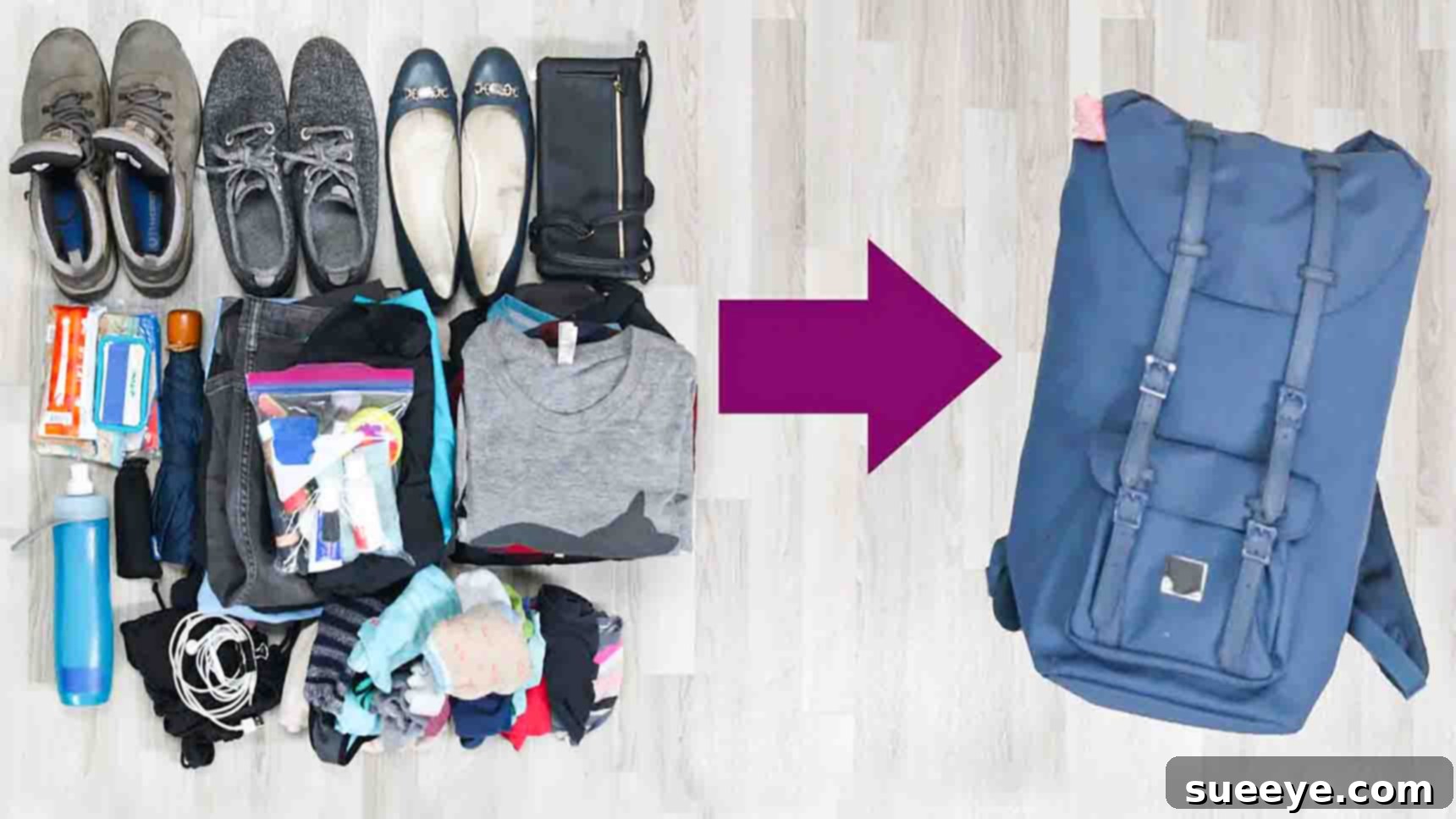
Are you an aspiring minimalist traveler or simply tired of lugging around heavy suitcases on your adventures? Overpacking is a common pitfall, especially when preparing for extended journeys, often leading to unnecessary stress, extra baggage fees, and restricted mobility. Imagine the freedom of effortlessly navigating airports, public transport, and various accommodations with just a single, lightweight bag. This guide is your ultimate resource to master the art of packing light for a long trip, ensuring you have everything you need without the burden of excess. Drawing inspiration from expert travel hacks, we’ll dive deep into ingenious strategies for maximizing every inch of your luggage, streamlining your wardrobe, and making smart choices about your travel essentials. Get ready to transform your travel experience from cumbersome to wonderfully carefree.
The Philosophy of Light Travel: A Mindset Shift
Before you even open your suitcase, cultivating the right mindset is crucial for successful light packing. It’s about shifting from “what if I need it?” to “do I absolutely need it?” This philosophy encourages thoughtful preparation, focusing on versatility and necessity. Start by thoroughly researching your destination’s climate, local customs, and planned activities. This will help you curate a truly essential wardrobe and avoid packing items that won’t see the light of day. Consider your itinerary: will you have access to laundry facilities? This can drastically reduce the number of clothes you need to bring. Embrace the idea of a ‘capsule wardrobe’ where every item can be mixed and matched to create multiple outfits, maximizing your options with fewer pieces. This proactive planning is the foundation upon which all successful light packing strategies are built.
1. Smart Shoe Selection and Ingenious Packing
Shoes are often the bulkiest and heaviest items in any traveler’s bag, making them prime candidates for strategic planning. The golden rule for a long trip is to limit yourself to a maximum of two to three pairs. Choose versatile options: one comfortable walking shoe (or sturdy boot, depending on your destination), one dressier or versatile shoe that can be dressed up or down, and possibly a pair of sandals or flip-flops if appropriate for the climate. Prioritize comfort and functionality over fashion trends, remembering that you’ll be spending a lot of time on your feet.
Once you’ve made your selections, it’s time to get creative with how you pack them. The empty space inside your shoes is valuable real estate. Utilize it to store smaller, soft items such as extra socks, underwear, swimsuits, belts, scarves, or even small electronic chargers. Roll these items tightly and tuck them snugly into the toe and heel areas. This not only saves space in your main bag but also helps your shoes maintain their shape. To protect your clothes from dirt and prevent your shoes from getting scuffed, always place each pair in a dedicated shoe bag or wrap them in a plastic bag. When positioning them in your backpack or suitcase, place them heel-to-toe at the very bottom, along the back or sides. This method distributes weight evenly, providing a stable base and preventing your bag from becoming top-heavy and uncomfortable to carry.
2. Mastering the Art of Clothing Organization
Packing clothes efficiently is perhaps the biggest challenge and opportunity for saving space. Forget traditional folding for most items; rolling is your new best friend for many garments. The rolling method, particularly effective for t-shirts, jeans, pajamas, and lightweight items, not only saves significant space but also helps to minimize wrinkles. For pants, fold them in half lengthwise. For shirts, lay them flat, fold the sleeves in, and then roll tightly from the bottom hem upwards. You can even create individual outfits by laying out a pair of pants, a shirt, and then placing socks or underwear in the middle before rolling everything together. This strategy makes getting dressed each day incredibly easy and organized.
For bulkier items like jackets, sweaters, or delicate fabrics, a modified folding or ‘bundle wrapping’ technique might be more suitable to prevent excessive creasing. For a jacket, lay it flat, fold the bottom hem up by about 4-5 inches, then bring the arms into the middle to form a straight rectangle. Turn it over, and then roll it tightly from the bottom where the hem was folded up, tucking other parts in as you go. This creates a compact, self-contained bundle. Alternatively, consider wearing your bulkiest jacket or coat on the plane to free up valuable luggage space.
Beyond rolling and folding, consider incorporating packing cubes into your strategy. These zippered fabric containers are game-changers for organization and can offer a degree of compression. Use them to categorize your clothes – one cube for tops, another for bottoms, one for underwear and socks, and so on. This makes it incredibly easy to find specific items without rummaging through your entire bag, keeping your backpack tidy throughout your journey. For truly bulky items like heavy sweaters or extra outer layers, vacuum-sealable compression bags can be incredibly effective, but remember that while they reduce volume, they don’t reduce weight, so use them judiciously.
3. Essential Accessories and Smart Toiletries
Accessories, though small, can quickly add up in weight and bulk if not chosen wisely. Focus on multi-functional items and smart alternatives.
- Hydration: Always bring a lightweight, reusable water bottle. Collapsible options are excellent for saving space when empty. This not only saves you money on bottled water but also significantly reduces plastic waste, contributing to more sustainable travel.
- Day Bag: A small, packable day bag or crossbody purse is indispensable for exploring your destination without needing your entire backpack. Opt for one that folds down compactly or serves a dual purpose.
- Wallet & Valuables: Leave your bulky wallet at home. A slim travel wallet or even a mint tin can serve as a secure, minimalist holder for essential credit cards, ID, and a small amount of cash. Consider a money belt or an RFID-blocking wallet for added security against pickpockets and digital theft.
- Weather Preparedness: A compact, travel-sized umbrella is a must-have for unexpected rain showers. Alternatively, a lightweight poncho can offer more coverage and often packs down smaller, making it a great space-saving option.
- Toiletries: This is where many travelers make packing mistakes. Ditch the full-sized bottles! Invest in reusable travel-sized containers and decant your favorite shampoo, conditioner, and body wash. Solid toiletries are another fantastic option: shampoo bars, conditioner bars, solid soap, and toothpaste tablets eliminate the risk of leaks and are incredibly space-efficient. For liquid toiletries, add an extra layer of protection by placing a small piece of plastic wrap over the bottle opening before screwing on the cap. Then, place all toiletries in a clear, leak-proof toiletry bag. Only bring essential medications and a small first-aid kit, considering where you can purchase items locally if needed.
- Electronics: Streamline your gadgets. Bring only the chargers you absolutely need, and consider a multi-port USB charger to reduce the number of adapters. A universal travel adapter is crucial for international trips. Pack all electronics and their accessories in a small, organized pouch to keep them protected and easily accessible.
The Art of Backpack Assembly: Final Loading Tips
Once you’ve gathered and organized all your meticulously chosen items, the way you load your backpack or suitcase makes a significant difference in comfort and accessibility. The key is strategic weight distribution and logical placement. Place heavier items, such as shoes and bulkier clothing (perhaps in packing cubes), at the bottom and closest to your back. This helps stabilize the pack and prevents it from pulling away from your body, making it feel lighter and more comfortable to carry. Lighter, more compressible items like rolled t-shirts and soft garments should fill the middle and top sections, acting as padding around more fragile items if needed.
For items you’ll need to access frequently or immediately upon arrival – like a jacket, toiletries, or travel documents – place them at the very top or in easily accessible outer pockets. Utilize every nook and cranny; tuck small items into gaps to eliminate dead space. For example, socks can be stuffed into shoes, and smaller pouches can be used to organize electronics or medications. If you’re using a backpack, ensure that any straps are tightened to compress the load and keep everything secure, preventing items from shifting during transit. This final step in careful assembly ensures your light packing efforts pay off in a genuinely comfortable and stress-free travel experience.
Conclusion: Embrace the Freedom of Light Travel
Packing light for a long trip isn’t just about fitting everything into a smaller bag; it’s about embracing a more conscious and enjoyable way to travel. By adopting a minimalist mindset, making smart choices about your wardrobe and essentials, and employing ingenious packing techniques, you unlock a level of freedom and flexibility that overpackers can only dream of. No more struggling with heavy luggage, no more exorbitant baggage fees, and certainly no more wasted time waiting at the carousel. Instead, you’ll experience easier navigation, greater mobility, and a profound sense of liberation. These comprehensive tips, from maximizing shoe space to mastering the roll, are designed to empower you to pack smarter, not harder. So, for your next extended adventure, challenge yourself to pack light. You’ll not only streamline your journey but also discover that less truly is more. Happy travels, and may your bags be light and your adventures boundless!