
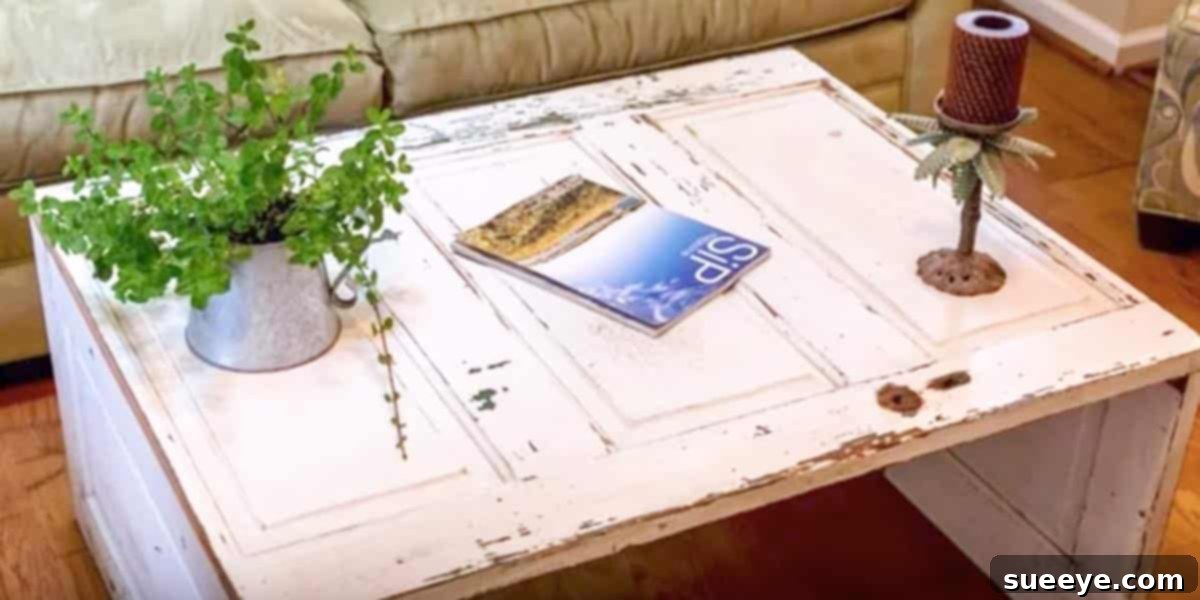
Transform Your Space: The Ultimate Guide to DIY Vintage Door Coffee Tables
Are you looking to infuse your home with character, save money, and unleash your creative spirit? If you’re furnishing a new home, refreshing an existing space, or simply tired of generic, mass-produced furniture, then you’ve stumbled upon a brilliant solution! This comprehensive guide will walk you through the exciting process of transforming an old, forgotten door into a breathtaking and functional coffee table. Not only is this an incredibly rewarding DIY project, but it’s also an exceptional way to add a unique, story-filled piece to your living room without breaking the bank.
Why Choose a Repurposed Door Coffee Table?
The allure of a vintage door coffee table isn’t just about its charming aesthetic; it’s a statement piece that embodies sustainability, creativity, and smart budgeting. In an era dominated by disposable trends, upcycling offers a refreshing alternative, allowing you to craft something truly special that reflects your personal style.
1. Unbeatable Savings and Budget-Friendly Decor
Imagine browsing furniture stores or online marketplaces, only to find stylish coffee tables priced anywhere from $200 to upwards of $1000. While beautiful, these prices can quickly deplete your decor budget. The beauty of a DIY vintage door coffee table lies in its cost-effectiveness. The primary material – an old door – can often be sourced for free or for a minimal cost. Add in a few hardware components, some basic finishing supplies, and you’re looking at a fraction of the cost of a brand-new, comparable piece. For instance, we’ve seen similar finished pieces retail for $300 or more, highlighting the incredible value you gain by making it yourself.
2. A Unique Statement Piece with Character
One of the most compelling reasons to embark on this project is the unparalleled uniqueness it offers. Every vintage door has a history, a story etched into its wood grain, its faded paint, or its antique hardware. When you transform it into a coffee table, you’re not just creating furniture; you’re preserving a piece of the past and giving it a vibrant new life in your home. This inherent character is something mass-produced items simply cannot replicate. Your finished coffee table will be a conversation starter, a testament to your ingenuity, and a reflection of your individual taste.
3. Embrace Eco-Friendly Upcycling and Sustainability
In today’s environmentally conscious world, reducing waste and promoting sustainability are more important than ever. Repurposing an old door is a fantastic example of upcycling – taking an item destined for the landfill and giving it a higher purpose. This practice minimizes your carbon footprint, conserves natural resources, and reduces the demand for new manufacturing. By choosing to upcycle, you contribute positively to the environment while simultaneously beautifying your home.
4. The Satisfaction of DIY: Crafting Something with Your Own Hands
There’s an undeniable sense of accomplishment that comes with creating something beautiful and functional with your own hands. The DIY journey, from hunting for the perfect door to the final coat of sealant, is incredibly rewarding. It allows you to develop new skills, exercise your creativity, and personalize every aspect of your furniture piece. This isn’t just a coffee table; it’s a tangible representation of your effort and vision.
The Hunt: Finding Your Perfect Vintage Door
The foundation of your stunning coffee table is, of course, the door itself. While some fortunate individuals might have an old door tucked away in an attic, basement, or shed, many of us will need to go on a treasure hunt. Don’t worry, finding the ideal door is often part of the fun!
Where to Look for Antique Doors:
- Craigslist & Facebook Marketplace: These online platforms are fantastic resources for local finds. Many people are eager to get rid of old building materials, and you might find doors listed for free or at very low prices. Use search terms like “old door,” “vintage door,” “antique door,” “salvage door,” or even “barn door.” We’ve seen countless viable options on Craigslist alone.
- Local Thrift Stores & Secondhand Shops: While less common for full doors, some larger thrift stores or building supply specific second-hand shops (like Habitat for Humanity ReStore) occasionally carry them. It’s always worth a look!
- Architectural Salvage Yards: These specialized businesses are goldmines for unique architectural elements, including a wide array of vintage and antique doors. You might pay a bit more here, but the selection and quality can be exceptional for a truly unique piece.
- Garage Sales & Estate Sales: Keep an eye out for sales in older neighborhoods. Homeowners renovating or downsizing might be selling off old doors from their properties.
- Family & Friends: Spread the word! You never know who might have an unused door collecting dust in their garage, eager to give it a new purpose.
- Construction Sites (with permission!): Sometimes older homes being renovated or demolished might have salvageable doors. Always ask for permission before taking anything.
What to Consider When Choosing Your Door:
- Condition: Inspect for structural integrity. Minor cosmetic flaws like scratches or small dents are often desirable and add character, but major cracks, severe rot, or extensive damage might be too challenging to repair.
- Size: Measure your desired coffee table dimensions. Most interior doors are 30-36 inches wide, which is a good width for a coffee table. The height will determine the length of your table. Consider your living space and seating arrangement.
- Style: Doors come in various styles – panel doors (with recessed panels), flush doors (smooth surface), French doors (with glass panes), louvered doors, or even intricately carved antique doors. Consider which style best complements your home decor. A flat, flush door might be easier to work with if you plan to add a glass top.
- Wood Type: While often hard to determine precisely with old painted doors, generally solid wood doors are preferred for durability and ease of sanding/finishing. They hold up better over time and offer a more substantial feel.
- Hardware: Don’t dismiss a door just because it has old hinges or knobs; these can often be removed or incorporated into the design for an extra touch of vintage charm. Sometimes, the original hardware can even be cleaned up and reused as decorative accents.
Bringing Your Vision to Life: The Transformation Process
Once you’ve secured your perfect door, the real fun begins! While the exact steps might vary based on your door’s condition and desired aesthetic, here’s a general overview of transforming it into a functional coffee table.
1. Preparation is Key
- Cleaning: Thoroughly clean the door to remove all dirt, grime, and cobwebs. A stiff brush, warm water, and a mild detergent usually do the trick. Ensure it’s completely dry before proceeding.
- Hardware Removal: Carefully remove all existing hardware – hinges, doorknobs, strike plates. You might want to save some of these if they’re particularly attractive and can be repurposed elsewhere, or even reattached for decorative purposes.
- Sanding: This is crucial for a smooth finish and proper adhesion of paint or stain. Start with a coarser grit sandpaper (e.g., 80-100 grit) to remove old paint or smooth rough areas, then progress to finer grits (e.g., 150-220 grit) for a silky smooth surface. For doors with multiple layers of old paint, especially from older homes, consider testing for lead paint and taking appropriate safety precautions if present. Always wear a mask and work in a well-ventilated area.
- Repairs: Fill any significant holes (from doorknobs or hardware) or deep gouges with wood filler. Let it dry completely and sand smooth. Address any loose panels or structural weaknesses to ensure a sturdy table.
2. Finishing Touches: Painting, Staining, or Distressing
- Painting: A fresh coat of paint can completely revitalize an old door. Choose a color that complements your existing decor. Use a good quality primer first, especially if painting over dark wood or old finishes, then apply two thin coats of your chosen paint for a durable finish. Consider a semi-gloss or satin finish for easy cleaning.
- Staining: If you’ve uncovered beautiful wood grain after sanding, a wood stain can enhance its natural beauty. Apply stain evenly and wipe off excess according to product instructions. Follow with several coats of a clear protective topcoat (polyurethane, varnish) for durability, especially since it will be a high-use surface.
- Distressing/Antiquing: To enhance the vintage appeal, consider distressing techniques. This could involve light sanding on edges to reveal underlying wood or previous paint layers, or applying a dark wax or glaze to create an aged, time-worn look. This technique truly highlights the door’s history.
3. Adding Stability: Attaching Legs or a Base
This step is essential for converting your door into a functional piece of furniture. There are several options, each offering a distinct style:
- Hairpin Legs: These minimalist, industrial-style legs are very popular and easy to attach with screws. They come in various heights and colors, offering a sleek, modern contrast to a rustic door.
- Turned Wood Legs: For a more traditional, elegant, or farmhouse look, you can purchase pre-made turned wood legs and attach them using mounting plates. These can be painted or stained to match your door.
- Casters/Wheels: Adding locking casters makes your coffee table mobile, which can be incredibly practical for cleaning or reconfiguring your living space. Ensure they are heavy-duty and can support the weight of the door.
- Custom Wood Base: If you’re skilled in woodworking, you could build a custom box base or a more elaborate frame to support the door. This allows for integrated storage or a unique structural design.
- Important Note: Ensure the legs or base are securely attached and provide adequate stability. A coffee table needs to be sturdy enough to hold drinks, books, and potentially even feet! Use appropriate screws for the thickness of your door and consider pre-drilling pilot holes.
4. Optional: Adding a Glass or Acrylic Top
If your door has recessed panels, intricate carvings, or an uneven surface, you might consider adding a custom-cut glass or acrylic top. This provides a smooth, level surface for drinks and decor, and also protects the door’s finish from spills and scratches. Measure precisely and have the glass cut by a professional for safety, ensuring polished edges. Secure it with clear adhesive bumpers or small L-brackets if needed.
Beyond the Coffee Table: More Ingenious Door Repurposing Ideas
Once you’ve experienced the joy of transforming a door into a coffee table, you might find yourself looking at old doors with a whole new perspective! The possibilities for repurposing antique doors are truly endless, extending their life and adding unique flair throughout your home. Here are just a few ideas to spark your imagination:
- Stunning Headboards: Cut a door to size, clean, paint or stain, and attach it securely behind your bed frame for a unique and grand headboard that becomes an instant focal point in your bedroom.
- Functional Desks or Workstations: With the addition of sturdy legs or filing cabinets as a base, a door can become a spacious and characterful desk, perfect for a home office or creative studio.
- Charming Shelving Units or Bookcases: Cut a door lengthwise, add shelves between the two halves, or use sections of doors as backing for custom shelving that exudes rustic elegance.
- Stylish Room Dividers: Multiple doors can be hinged together to create an elegant and movable screen to define spaces within an open-plan room, offering both privacy and architectural interest.
- Unique Console or Entryway Tables: A narrower section of a door can be mounted on legs or a wall for a rustic console table in a hallway or entryway, providing a practical and artistic landing spot.
- Decorative Mirrors or Art Frames: Cut out panels from a door and insert mirrors or artwork for a stunning gallery-style display that leverages the door’s existing framework.
- Practical Potting Benches: For garden enthusiasts, an old door can form the top of a rustic outdoor potting bench, offering a durable and charming workspace for all your planting needs.
- Kitchen Island Tops: For a farmhouse or rustic kitchen aesthetic, a sturdy door can be prepped, sealed, and securely mounted to serve as a unique kitchen island top, adding warmth and character.
- Garden Gates or Decor: A smaller door or a section can be used as a charming gate for a garden path, or simply as a decorative element leaned against a wall outdoors, blending seamlessly with natural surroundings.
Monetize Your Creativity: The Etsy Opportunity
Having successfully created a beautiful vintage door coffee table for your own home, you might just have discovered a hidden talent and a potential source of income! There’s a burgeoning market for unique, handmade, and upcycled furniture, and many people are willing to pay a premium for pieces that offer character and history they can’t find in big box stores.
Platforms like Etsy are perfect for showcasing such creations. Think about it: while you relish the process of saving money and building something yourself, there are countless individuals who lack the time, tools, or inclination for DIY projects. They appreciate the aesthetic of vintage and repurposed items but prefer to buy them ready-made. This is where your craftsmanship comes in!
By creating a few more of these stunning door coffee tables – perhaps experimenting with different finishes, leg styles, or door types – you could build a small inventory. Photograph your creations beautifully, write compelling descriptions highlighting the unique story and eco-friendly aspect of each piece, and list them for sale. You might be surprised at the demand! This venture not only allows you to continue exploring your creativity but also offers a tangible way to earn from your passion, turning a simple DIY project into a thriving small business. Imagine the satisfaction of knowing your upcycled art is adorning someone else’s home!
Conclusion: Your Next Great DIY Adventure Awaits!
The journey from an overlooked, dusty old door to a magnificent, custom-made coffee table is a testament to the power of imagination and the joy of DIY. This project offers an incredible blend of practicality, aesthetic appeal, and environmental responsibility, making it a win-win for your home and the planet.
You’ll not only save a considerable amount of money compared to purchasing new furniture, but you’ll also infuse your living space with a piece that tells a story, sparks conversation, and truly reflects your individual style. So, gather your tools, find that perfect vintage door, and prepare to embark on a truly rewarding creative adventure. There’s no limit to what you can achieve when you dare to look at “old stuff” with fresh eyes!
For a visual step-by-step guide to bring this concept to life, we highly recommend watching the detailed tutorial by DIY Steps. They provide an excellent walkthrough that complements these written instructions, making your DIY journey even smoother and more enjoyable. Happy building!