
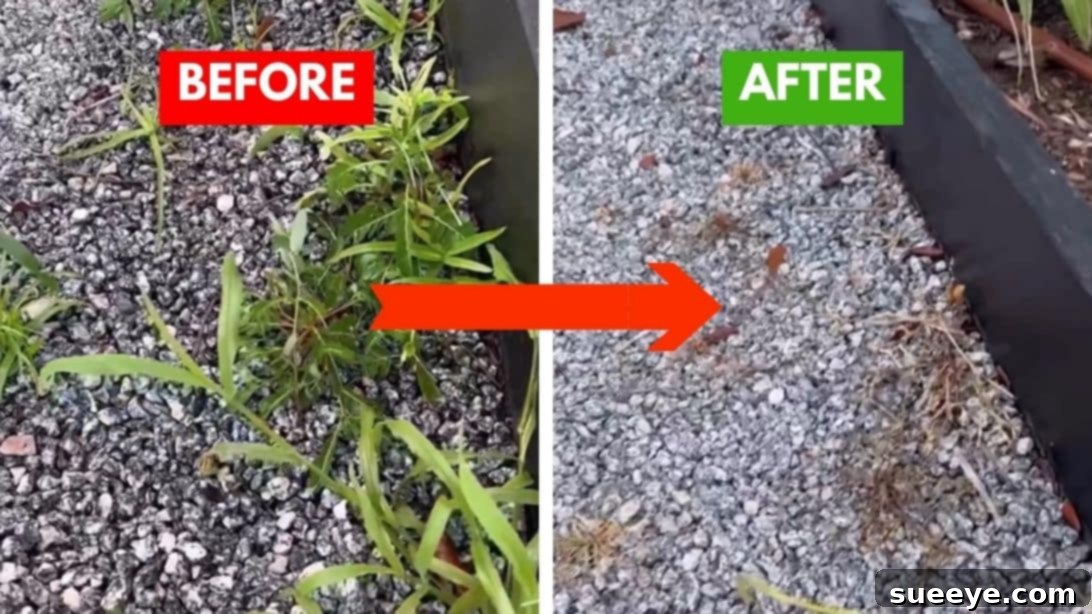
Weeds are more than just an eyesore; they are persistent invaders that pose a significant threat to the health and beauty of your garden. These unwanted plants relentlessly compete with your cherished flowers, vegetables, and lawn for essential resources like sunlight, water, and vital nutrients from the soil. Their aggressive growth and rapid reproductive capabilities mean they can quickly spread, turning a pristine garden into an unruly patch in a remarkably short time. Beyond garden beds, weeds can also infiltrate your carefully designed landscaping rocks, crack through driveways, and emerge defiantly along pathways, diminishing the overall aesthetic appeal of your outdoor spaces.
If you’re weary of the constant battle, spending countless hours pulling weeds only for them to return days later, it’s time to explore sustainable and effective solutions. While chemical herbicides offer a quick fix, they often come with environmental concerns and potential risks to pets, children, and beneficial insects. Fortunately, nature offers a powerful arsenal of methods to combat these persistent pests. In this comprehensive guide, inspired by expert tips from Safer® Brand, we’ll delve into 8 highly effective natural ways to kill weeds and prevent their resurgence, helping you cultivate a healthier, happier, and chemical-free garden.
RELATED: Gardening Hacks: How To Replant Vegetables
Successfully controlling weeds often requires a multi-faceted approach and an understanding of their life cycles. It’s crucial to remember that some natural weed-killing techniques can be incredibly potent and may harm desirable plants if not applied carefully. Before widespread application, always test new methods in small, inconspicuous areas, especially when dealing with weeds growing close to your beloved garden plants. This allows you to gauge effectiveness and ensure safety without risking your entire landscape.
For more innovative gardening ideas and tips to transform your outdoor space, explore these valuable resources: 5 Life-Saving Gardening Hacks That You Must Know
Mastering Natural Weed Control: 8 Powerful Strategies
Embracing natural methods for weed control is not only beneficial for the environment but also for the long-term health of your garden ecosystem. Here’s how you can take back control, naturally:
1 – Start Smart: Choose Clean Seeds and Quality Compost
The first line of defense against weeds often begins before you even put a shovel in the ground. Many gardeners unknowingly introduce weed seeds into their plots through contaminated planting materials. To avoid this common pitfall, always prioritize purchasing high-quality, reputable seeds and compost. When selecting grass seed, for instance, diligently check the label. Look for products that clearly state a very low percentage—ideally less than two percent—of weed seeds. This includes common nuisances like grassy or broadleaf weed seeds, as well as ‘crop seeds’ such as corn or wheat, which can sprout unexpectedly. Furthermore, ensure the inert matter content, which refers to non-living materials like chaff or soil particles, is also minimal. Investing a little more in premium, clean products can save you significant time and effort in weed removal down the line, ensuring a healthier start for your desired plants.
2 – Craft Your Own Potent Natural Weed Killer with Vinegar
Vinegar, a common household staple, transforms into an incredibly effective natural herbicide due to its acetic acid content. This acid works by drawing moisture out of plant cells, causing them to dehydrate rapidly. To create your own DIY weed killer, combine two parts white distilled vinegar with one part water in a clean spray bottle. Add a few drops of dish soap – this acts as a surfactant, helping the mixture adhere better to the weed leaves, rather than just running off. Shake the solution thoroughly before each use. For optimal results, apply this homemade concoction generously to the weeds on a dry, hot, and sunny morning. The warmth of the sun will intensify the vinegar’s drying effect, leading to quicker wilting. However, extreme caution is vital: this powerful DIY solution is non-selective and will kill most plants it comes into contact with, including your prized garden specimens. Target only the weeds, being mindful of drift, and avoid spraying on windy days. This method is particularly effective for weeds in cracks, on pathways, or in areas where you want to clear all vegetation.
3 – Strategic Salting: A Targeted Approach to Weed Elimination
Salt, another common household item, can be a surprisingly effective, albeit extreme, natural weed killer. Its mechanism of action involves disrupting the water balance within plant cells through osmosis, effectively dehydrating the plant from the inside out. To prepare a salt solution, mix approximately 3 tablespoons of table salt with just enough warm water to fully dissolve it, creating a thick liquid. Apply this solution directly onto the target weeds. While effective, the critical drawback of salt is its ability to render soil barren, making it unsuitable for future plant growth for extended periods. Therefore, this method should be reserved exclusively for areas where you desire no vegetation whatsoever, such as cracks in concrete, gravel driveways, or unplanted pathways. Never use salt in garden beds or near desirable plants, as it will sterilize the soil and cause severe damage to anything you wish to grow there. Consider this a permanent solution for specific problem areas, used with utmost care and precision.
4 – Smother Weeds with the Power of Mulch
One of the simplest yet most effective ways to prevent and kill weeds naturally is by smothering them with a thick layer of mulch. Weeds, like all plants, require sunlight to photosynthesize and grow. By blocking out this essential light source, mulch effectively starves them. A variety of materials can serve as excellent mulch, including organic options like wood chips, shredded bark, straw, leaves, and even newspaper, or inorganic choices like black landscape fabric or tarps. The key is to apply a sufficiently thick layer – typically 3 to 4 inches for organic mulches – over the weed-prone areas. This physical barrier prevents weed seeds from germinating and emerging, and it suffocates existing young weeds. Beyond weed suppression, mulch offers additional benefits, such as conserving soil moisture, regulating soil temperature, and, in the case of organic mulches, gradually enriching the soil as it decomposes. Regular replenishment of mulch layers will ensure continuous protection and maintain a neat, weed-free appearance in your garden beds and pathways.
5 – Give Your Weeds a Scalding Hot Bath: The Boiling Water Method
For an immediate and chemical-free assault on young, tender weeds, nothing beats the power of boiling water. This method works by rapidly cooking the plant cells, causing them to rupture and die. It is particularly effective on annual weeds and young perennials whose root systems are not yet deeply established. Simply bring a pot of water to a rolling boil and carefully pour it directly onto the foliage of the weeds you wish to eliminate. You’ll often see immediate wilting and discoloration. Be extremely cautious to avoid splashing yourself or any desirable plants nearby, as boiling water is non-selective. This technique is ideal for weeds that sprout in cracks on driveways, patios, sidewalks, or between pavers, where you don’t have to worry about harming surrounding vegetation or soil structure. While effective for surface growth, it may not completely eradicate weeds with extensive taproots, which might require repeated applications or a combination with other methods.
6 – Crowd Out Weeds with Healthy, Vigorous Plants
A thriving garden is inherently more resistant to weed invasions. One of the best natural weed prevention strategies is to maintain a dense, healthy population of your desired plants, effectively crowding out any opportunistic weeds. This strategy encompasses several key gardening practices:
- Proper Mowing Height: For lawns, avoid cutting grass too short. Taller grass (typically 2.5-3 inches) creates shade that blocks sunlight from reaching weed seeds on the soil surface, inhibiting their germination.
- Balanced Soil pH: Regularly test your soil’s pH and amend it as needed to create optimal growing conditions for your specific plants. Healthy soil leads to robust plants that can outcompete weeds.
- Optimal Watering: Water deeply and infrequently rather than shallowly and frequently. This encourages your plants to develop strong, deep root systems, making them more resilient and better able to access water and nutrients, leaving less for weeds.
- Dense Planting: In garden beds, space your plants appropriately to ensure they grow together to form a canopy that shades the soil. This minimizes open ground where weed seeds can land and germinate.
- Strategic Cover Cropping: For vegetable gardens, consider using cover crops during off-seasons. These crops suppress weeds, improve soil health, and prevent erosion, preparing the bed for your next planting cycle.
By focusing on the overall health and density of your garden, you create an environment where weeds struggle to establish themselves, making them much easier to manage.
7 – Leverage Corn Gluten Meal for Natural Weed Prevention
For gardeners seeking a natural, pre-emergent herbicide, corn gluten meal is an excellent solution. Derived from corn, this organic product works by preventing the germination of weed seeds. It releases peptides that inhibit the root development of germinating seeds, effectively stopping them before they even emerge from the soil. The beauty of corn gluten meal is its selectivity: it has no adverse effect on already established plants, making it a safe choice for existing lawns, garden beds with established perennials, and even vegetable gardens before new seeds are sown. The optimal time to apply corn gluten meal is in early spring before weed seeds have a chance to sprout, or in the fall for winter annuals. It’s also safe for use around pets and children, offering a worry-free approach to natural weed prevention. Remember, it prevents *new* weeds from emerging, but won’t kill existing ones, so it’s best used as a proactive measure.
8 – Employ Fast-Acting, Targeted Natural Weed and Grass Killers
While DIY solutions are fantastic, sometimes you need a convenient, ready-to-use option that offers fast results without resorting to synthetic chemicals. This is where commercially available natural weed and grass killers, such as those offered by Safer® Brand, come into play. These products are formulated with naturally derived ingredients, often fatty acids, essential oils, or horticultural vinegars, that rapidly break down plant tissues. A key advantage of high-quality natural weed killers is their precise action: they typically work on contact and do not travel through the soil to impact nearby plants. This makes them ideal for targeted applications around desirable plants, fences, or in areas where you need to quickly clear unwanted vegetation without affecting the surrounding ecosystem. Always read the label carefully for specific application instructions and ensure the product aligns with your organic gardening principles.
Adopting these natural strategies for weed control will not only help you maintain a beautiful, pristine garden but also foster a healthier, more sustainable environment. With a little effort and the right approach, you can significantly reduce the presence of weeds and enjoy the full beauty of your outdoor oasis, free from the constant struggle and the need for harsh chemicals.