
Embrace the Art of Free Motion Quilting: Discover the “Little Tongues” Design
The world of quilting is an endless tapestry of creativity, offering countless ways to express your unique artistic voice. Today, we’re diving into a particularly captivating corner of this world, exploring a playful yet sophisticated design that promises to elevate your quilting projects. We’re talking about the distinctive “Little Tongues” echoing design, a brilliant creation by renowned quilter Leah Day, featured prominently in her exquisite “Express Your Love” quilt series.
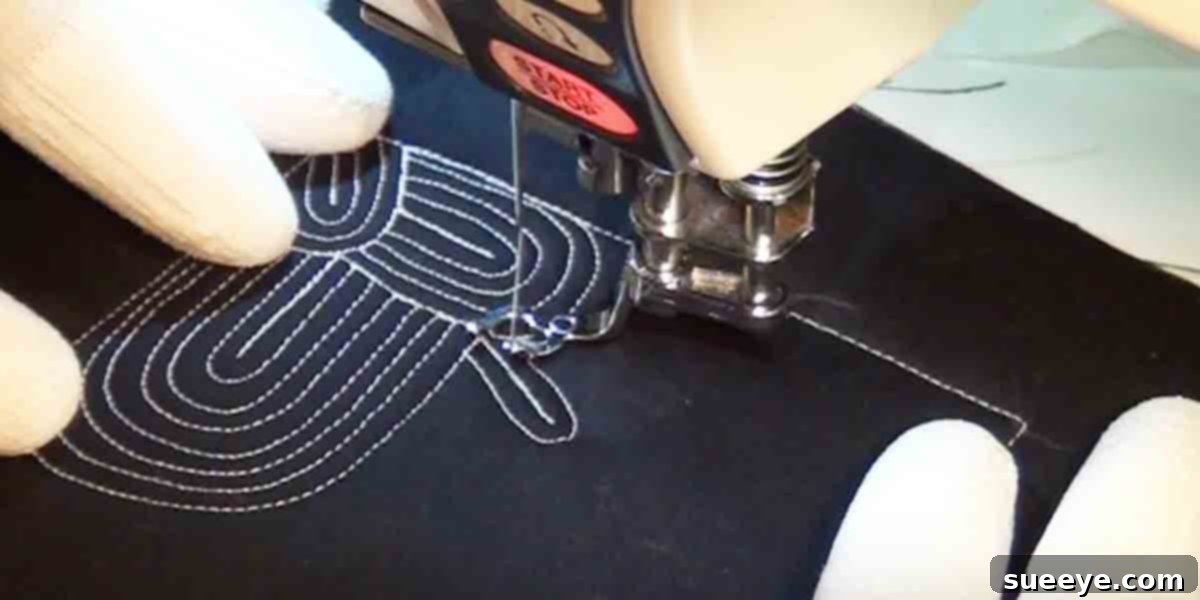
This design is not just a pattern; it’s an invitation to explore the fluid, organic possibilities of Free Motion Quilting. When you first encounter the “Little Tongues,” you might wonder about its whimsical name. However, once you see the elegant, undulating curves and playful shapes emerge under the needle, the name instantly makes sense. These shapes indeed resemble tiny, rhythmic tongues, creating a vibrant texture that brings any quilt to life.
Unveiling the Charm of “Little Tongues”
The “Little Tongues” design is a true testament to the versatility and visual impact that Free Motion Quilting (FMQ) can achieve. Unlike traditional straight-line quilting, which relies on rulers and even spacing, FMQ allows the quilter to move the fabric freely under the needle, essentially “drawing” with thread. This freedom is precisely what gives the “Little Tongues” its unique character – each ‘tongue’ is a small, curved motif that can be echoed and repeated to fill backgrounds, borders, or even stand alone as a central design element.
What makes this design particularly appealing is its adaptability. As Leah Day herself demonstrates, you have complete control over the size and density of these motifs. Whether you prefer bold, expansive tongues that dominate a section, or delicate, tightly packed ones that create a subtle, intricate texture, the choice is entirely yours. This flexibility makes it suitable for a wide array of projects, from large bed quilts to smaller wall hangings or decorative accents.
Beyond its engaging visual appeal, the “Little Tongues” design, especially within the context of the “Express Your Love” quilt, evokes a sense of movement and warmth. It’s a design that feels modern, fresh, and perfectly suited for contemporary home decor, adding a touch of sophisticated artistry to any living space. Yet, its playful nature also brings a delightful sense of nostalgia, perhaps even reminding some of the iconic, graphic art of the past – a truly timeless design.
Demystifying Free Motion Quilting (FMQ)
The Essence of Free Motion Quilting
At its heart, Free Motion Quilting is a technique that empowers quilters to move beyond the constraints of traditional linear stitching. Instead of guiding the fabric with a walking foot or rulers, you use a darning or free-motion quilting foot, which hovers slightly above the fabric, allowing you to move the quilt sandwich in any direction. This freedom translates directly into endless design possibilities, transforming your sewing machine into an artistic tool for drawing with thread.
Many find the idea of FMQ daunting at first, fearing a lack of control or uneven stitches. However, with practice and the right guidance – such as Leah Day’s comprehensive tutorials – anyone can master the fundamentals. The key is consistent speed between your hands and the machine, smooth movements, and a willingness to embrace imperfection as part of the creative journey.
Why “Free Motion”?
The name “Free Motion Quilting” isn’t a whimsical moniker for a specific quilt or design; it precisely describes the technique itself. It refers to the “free motion” of the fabric under the needle, controlled entirely by the quilter’s hands rather than the machine’s feed dogs (which are typically lowered or disengaged). This distinction is crucial, as it’s what liberates the quilter to create flowing curves, intricate swirls, and bespoke designs like the “Little Tongues” without having to turn the quilt constantly or rely on predetermined stitch paths.
This technique adds more than just visual appeal; it also serves a vital structural purpose. Quilting stitches, whether free motion or straight-line, secure the three layers of a quilt (top, batting, and backing) together, preventing the batting from shifting and giving the quilt its characteristic durability and drape. With FMQ, you get the added benefit of creating unique texture and dimension that can dramatically enhance the overall aesthetic of your piece.
Leah Day: A Master of Machine Quilting
Leah Day stands as a beacon in the modern quilting community, renowned for her innovative designs, extensive tutorials, and tireless dedication to making complex techniques accessible to all. Her methodical, step-by-step approach to teaching Free Motion Quilting has inspired countless quilters to pick up their machines and explore their creative potential. When she breaks down a design like “Little Tongues,” she doesn’t just show you how; she explains the “why” behind each movement, fostering a deeper understanding of the craft.
Her commitment to clear, detailed instruction makes her tutorials an invaluable resource, especially for those venturing into FMQ for the first time or looking to refine their skills. She emphasizes practice, patience, and the joy of the process, reminding us that every stitch contributes to a unique piece of textile art.
Elevating Your Quilt with Contrast and Texture
One of the most striking aspects of the “Little Tongues” design, especially as demonstrated, is the powerful visual impact created by contrasting colors. The choice of a dark, perhaps black, fabric juxtaposed with crisp, white stitching is simply stunning. This high contrast doesn’t just make the design “pop”; it transforms the quilting stitches themselves into a prominent design element, allowing the organic shapes of the “Little Tongues” to truly shine.
While this bold contrast is incredibly effective, the “Little Tongues” design is equally captivating when quilted with threads that blend more subtly into the fabric. A monochromatic approach can create a sophisticated texture that reveals itself upon closer inspection, adding depth and tactile interest without overwhelming the fabric pattern. This versatility means you can adapt the design to complement any fabric choice, from vibrant prints to serene solids.
The texture added by designs like “Little Tongues” is what truly distinguishes a quilted piece. It moves beyond a simple fabric top to become a tactile artwork, inviting touch and adding warmth and dimension to any setting. The echoing nature of the “Little Tongues” naturally builds this texture, creating a visually dynamic surface that catches the light and adds a professional finish.
Integrating “Little Tongues” into Your Projects
The application of the “Little Tongues” design extends far beyond just backgrounds. Consider these ideas for incorporating this versatile motif:
- Border Design: Use it to create a flowing, continuous border around your quilt, framing the central motif beautifully.
- Block Filler: Instead of traditional stippling, fill individual quilt blocks with variations of the “Little Tongues” for a modern, cohesive look.
- Accent Pieces: Quilt it onto smaller projects like placemats, table runners, or throw pillows to add a designer touch.
- Wholecloth Quilts: For a truly stunning effect, create an entire wholecloth quilt (a quilt with a solid fabric top, allowing the quilting to be the main design) using only the “Little Tongues” in varying sizes and densities.
- Applique Embellishment: Echo around applique shapes with the “Little Tongues” to make them stand out even more.
No matter where you decide to apply it, remember that the goal of Free Motion Quilting is not just perfect stitches, but expressive movement. Allow the design to flow naturally, finding your rhythm and enjoying the creative process.
Tips for Your Free Motion Quilting Journey
Ready to give the “Little Tongues” design a try? Here are some essential tips to help you on your Free Motion Quilting adventure:
- Practice Makes Progress: Start with small quilt sandwiches (a few layers of fabric and batting) to get a feel for the machine and the motion. Don’t immediately jump into your prized quilt top.
- Machine Setup: Ensure your machine is set up correctly for FMQ. This typically involves lowering or disengaging your feed dogs, attaching a free-motion quilting foot (sometimes called a darning foot), and selecting the appropriate needle and thread for your fabric.
- Proper Ergonomics: Position your chair and machine so you are comfortable and can move the quilt with ease. Quilting gloves can help you grip the fabric better.
- Visualize the Path: Before you start stitching, try to visualize the path of your design on the fabric. You can even lightly mark guides with a washable fabric marker if needed, especially for repeating motifs or consistent echoing.
- Consistent Speed: Aim for a consistent speed with both your sewing machine and your hands moving the fabric. This helps create even stitch lengths. Too fast with the machine and too slow with your hands results in tiny stitches; the opposite creates large stitches.
- Start Simple: Begin with basic meandering or stippling to build confidence before tackling more intricate designs like “Little Tongues.”
- Embrace Imperfection: Your stitches won’t be perfectly identical, and that’s okay! Hand-guided quilting has a unique charm that machine-guided quilting lacks.
- Watch Tutorials: Leah Day’s step-by-step tutorials are invaluable. Watch them, pause, practice, and re-watch. Seeing the motion demonstrated is incredibly helpful.
- Patience is Key: Free Motion Quilting is a skill that develops over time. Be patient with yourself, celebrate small victories, and most importantly, have fun!
Conclusion: Your Next Quilting Adventure Awaits
The “Little Tongues” design, as brilliantly presented by Leah Day, is more than just a background filler; it’s a gateway to unlocking your potential in Free Motion Quilting. It offers a perfect balance of organic flow and modern aesthetic, capable of transforming any fabric into a work of art. Whether you’re aiming to complete the magnificent “Express Your Love” quilt or simply looking for a fresh, engaging design to infuse into your next project, “Little Tongues” provides endless creative possibilities.
So, gather your fabrics, thread your machine, and prepare to embark on a delightful journey of stitches and creativity. Watch how Leah Day masterfully brings this cool quilt block to life in her detailed tutorial. There’s no better time to give this captivating technique a shot and add a unique, personalized touch to your quilts. Let your needle dance and express your love for quilting, one elegant “Little Tongue” at a time!