
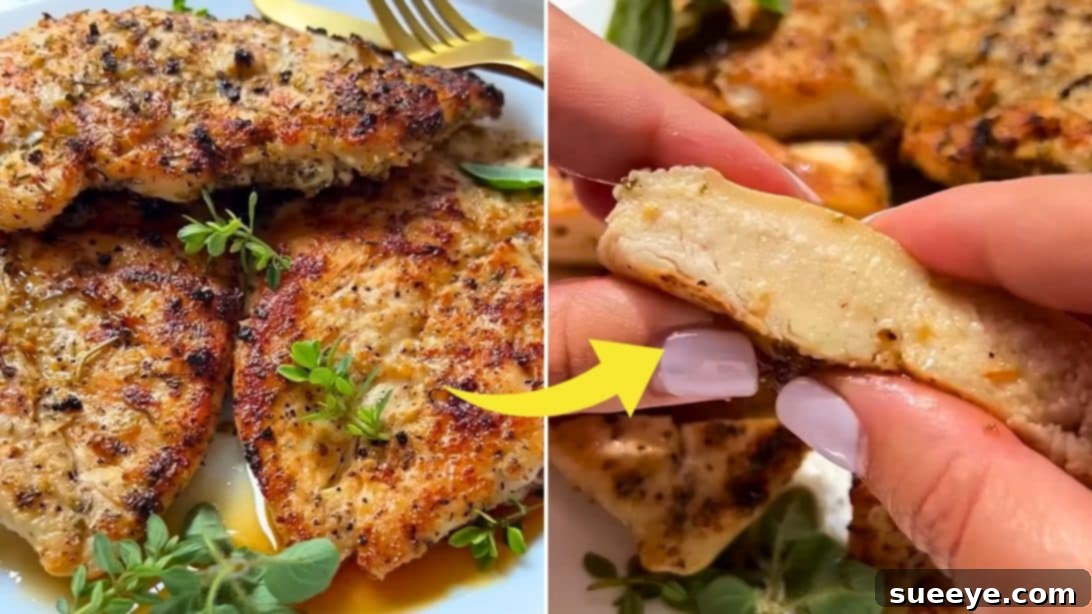
Chicken breast is a culinary staple revered for its lean protein content and remarkable versatility. It’s often the go-to choice for those seeking a healthy meal option, especially if you’re managing your calorie intake or simply aiming for a nutritious diet. Rich in protein and exceptionally low in fat, it’s an undeniable powerhouse for muscle building and satiety. However, despite its many merits, the chicken breast often gets a bad rap for being notoriously dry and lacking in flavor, particularly when not prepared with precision. Unlike darker cuts of chicken, its lean nature means it can easily become tough and unappetizing if overcooked.
If your attempts at cooking chicken breast consistently result in a dry, uninspiring dish, you’re not alone. Many home cooks face this challenge. But what if we told you there’s a simple, foolproof method to transform this humble ingredient into an extraordinarily juicy, tender, and flavorful centerpiece for any meal? This comprehensive guide, inspired by the expert techniques of The Modern Nonna, will equip you with the knowledge to achieve perfectly succulent chicken breast every single time, ensuring your healthy meals are anything but boring.
RELATED: 15-Minute Pan-Roasted Chicken Breast with Rosemary Butter Sauce
Why Chicken Breast Is a Culinary Hero
Beyond its exceptional health benefits, chicken breast stands out as a true culinary hero due to its affordability, widespread availability, and incredible adaptability. These qualities make it an ideal choice for busy weeknights, meal prepping, or spontaneous dinner parties. Its mild flavor profile acts as a blank canvas, eagerly absorbing a myriad of seasonings, marinades, and sauces, allowing for endless culinary creativity. From vibrant Mediterranean flavors to bold Asian spices, or comforting creamy textures, chicken breast effortlessly adapts to almost any cuisine you can imagine.
The ease of cooking chicken breast further solidifies its status as a favorite among home cooks. Whether you prefer baking, grilling, pan-searing, or slow-cooking, it lends itself well to various cooking methods, making it accessible for cooks of all skill levels. This simplicity, combined with its nutritional value and versatility, ensures that chicken breast remains a top choice for creating wholesome, delicious, and convenient meals. Here are just a few flavor profiles you might want to explore to elevate your chicken breast dishes:
- Baked Butter Chicken Breast: A rich, aromatic, and comforting dish inspired by classic Indian flavors.
- Creamy Garlic Chicken Breast: Indulgent and savory, perfect for a decadent weeknight meal.
- Honey Garlic Chicken Breast: A delightful balance of sweet and savory, offering a sticky, glazed finish.
Perfect Pairings for Your Juicy Chicken Breast
Once you’ve mastered the art of cooking a perfectly juicy chicken breast, the possibilities for building a complete meal are endless. Its neutral yet satisfying taste makes it an excellent companion for a vast array of side dishes. Consider pairing it with fluffy rice, al dente pasta, a crisp green salad, or a medley of roasted vegetables for a balanced and fulfilling meal. For example:
- Grains: Brown rice, quinoa, couscous, or even a flavorful risotto can provide a hearty base.
- Pasta: Toss sliced chicken breast with your favorite pasta and a light pesto, creamy Alfredo, or a fresh marinara sauce.
- Salads: Cube the chicken breast and add it to a Caesar salad, a Mediterranean-inspired salad with feta and olives, or a vibrant mixed greens salad with a vinaigrette dressing.
- Vegetables: Roasted asparagus, steamed broccoli, sautéed spinach, grilled zucchini, or a baked sweet potato make excellent healthy sides.
- Other Options: Serve alongside mashed potatoes, polenta, or even tucked into warm pita bread with tzatziki for a quick gyro-style meal.
Juicy Chicken Breast Ingredients
Achieving a truly juicy and flavorful chicken breast doesn’t require a complex list of ingredients. In fact, simplicity is often the key. With just a few staple items, you can unlock incredible taste and texture. The magic lies in the quality of your ingredients and how you prepare them.
- Chicken Breast: Opt for fresh, boneless, skinless chicken breasts. The quality of your chicken significantly impacts the final taste and texture.
- Salt: A fundamental seasoning that enhances all other flavors. Use fine sea salt or kosher salt for even distribution.
- Lemon Pepper Seasoning: This blend adds a bright, zesty kick that perfectly complements chicken, preventing any blandness. Its citrus notes also help to tenderize the meat slightly.
- Avocado Oil: Chosen for its high smoke point and neutral flavor, avocado oil is excellent for pan-searing, ensuring a beautiful crust without imparting unwanted taste. Olive oil or grapeseed oil can also be used.
Essential Tools for the Perfect Chicken Breast
While the ingredients are simple, having the right tools on hand can make the cooking process smoother and ensure better results. You won’t need anything fancy, just a few kitchen basics:
- Meat Tenderizer or Rolling Pin: Crucial for evening out the thickness of the chicken breast, ensuring uniform cooking.
- Parchment Paper or Plastic Wrap: Used to cover the chicken while pounding, keeping your workspace clean and hygienic.
- Large Skillet or Griddle: A heavy-bottomed pan, like cast iron or stainless steel, is ideal for achieving a consistent sear and even heat distribution.
- Tongs: For safely flipping the chicken without piercing it, which could release precious juices.
- Instant-Read Meat Thermometer: Absolutely essential for checking the internal temperature of the chicken and preventing overcooking, guaranteeing both juiciness and food safety.
- Cutting Board and Sharp Knife: For slicing the cooked chicken after it rests.
How to Make Juicy Chicken Breast: Step-by-Step Guide
Follow these precise steps to transform your chicken breast from potential dry disappointment to a succulent, flavor-packed meal that will impress every time.
Step 1: Flattening for Even Cooking and Tenderness
One of the most common pitfalls when cooking chicken breast is its uneven thickness. Typically, one side is much thicker than the other, leading to certain parts drying out while others are still cooking. To combat this, the first crucial step is to flatten the chicken breast to a uniform thickness. This ensures that every part cooks at the same rate, resulting in a perfectly tender and juicy piece from edge to edge.
Begin by placing a single chicken breast on a clean cutting board or directly onto a piece of parchment paper. Lay another sheet of parchment paper or plastic wrap over the top of the chicken. Using a meat tenderizer, or the flat side of a heavy pan, or even a rolling pin, gently but firmly pound the chicken breast. Focus on the thicker parts, working your way outwards until the entire breast is about ¾ to 1 inch thick. Be careful not to tear the meat. This process not only promotes even cooking but also helps to tenderize the fibers, making the chicken incredibly soft and palatable.
Step 2: Seasoning for Maximum Flavor
Proper seasoning is paramount for a flavorful chicken breast. This isn’t just about adding taste; it’s about building layers of flavor that penetrate the meat. Once your chicken breast is uniformly flattened, it’s ready to absorb all the delicious seasonings.
Generously season both sides of the chicken with salt and lemon pepper seasoning. Don’t be shy; the amount will depend on the size of your chicken breast. After seasoning, drizzle a light coat of avocado oil over both sides. Now, using your hands, massage the seasonings and oil into the chicken really well. This massage not only helps to distribute the spices evenly but also helps them adhere better to the meat, ensuring every bite is bursting with flavor. The oil also assists in creating a beautiful golden crust during cooking. If time allows, letting the seasoned chicken rest for 10-15 minutes at room temperature can further enhance flavor absorption.
Step 3: The Art of Cooking and Resting
The cooking process itself is straightforward, but precision is key to achieving that perfect juicy texture and safe consumption. Heat your griddle or a heavy-bottomed skillet over medium-high heat. Add a tiny bit more avocado oil, just enough to lightly coat the bottom of the pan. You want the pan to be hot enough to create a sizzle when the chicken hits it, but not smoking.
Once the pan is properly hot, carefully add the seasoned chicken breasts. Cook for 3 to 4 minutes on the first side, allowing a beautiful golden-brown crust to form. Resist the urge to move or flip the chicken too soon, as this crust contributes significantly to both flavor and texture. After 3-4 minutes, flip the chicken and cook for another 3 to 4 minutes on the second side. The exact cooking time will vary slightly depending on the thickness of your chicken and the heat of your pan. The most critical factor is reaching an internal temperature of 165°F (74°C).
Use an instant-read meat thermometer inserted into the thickest part of the breast to confirm the temperature. As soon as it hits 165°F, remove the chicken from the heat. This is where many go wrong: they slice it immediately. To ensure your chicken breast stays incredibly juicy, do not slice it immediately after cooking. Transfer the chicken to a clean cutting board and let it rest for a minimum of 5 to 10 minutes. This resting period is vital. During cooking, the muscle fibers contract and push the juices to the center of the meat. If you cut into it too soon, these precious juices will run out onto your board, leaving you with dry chicken. Resting allows the juices to redistribute evenly throughout the meat, resulting in a super tender, moist, and fully cooked chicken breast. After resting, slice against the grain and serve immediately.
Beyond the Basics: Tips for Chicken Breast Perfection
While the steps above are foundational, here are some additional tips to ensure your chicken breast is always a masterpiece:
- Brining for Ultimate Juiciness: For an extra layer of moisture and flavor, consider a quick brine. A simple solution of water, salt, and a touch of sugar for 15-30 minutes can work wonders, especially if you’re prone to overcooking.
- Marinate for Flavor Depth: While lemon pepper is great, don’t hesitate to experiment with marinades. Acidic ingredients like lemon juice, vinegar, or yogurt can help tenderize the chicken while infusing it with flavor.
- High Heat, Short Time: For pan-searing, ensure your pan is adequately hot before adding the chicken. This creates a beautiful sear quickly and helps lock in juices. Avoid crowding the pan, which lowers the temperature and steams the chicken instead of searing it.
- Don’t Fear the Thermometer: An instant-read thermometer is your best friend. It takes the guesswork out of cooking and is the surest way to prevent both undercooking (food safety risk) and overcooking (dry chicken).
- Meal Prep Savvy: Cook a batch of juicy chicken breasts at the beginning of the week. Slice them and store them in an airtight container in the fridge for quick additions to salads, wraps, pasta dishes, or grain bowls throughout the week.
- Freezing Cooked Chicken: If you have leftovers, cooked chicken breast freezes well. Slice or cube it, store it in freezer-safe bags or containers, and it will be ready for future meals. Thaw in the refrigerator overnight before reheating.
Mastering the Art of Juicy Chicken Breast
Gone are the days of enduring dry, flavorless chicken breast. By understanding and implementing these straightforward techniques—from flattening the breast for even cooking, to proper seasoning, precise searing, and the indispensable resting period—you can consistently achieve perfectly juicy, tender, and delicious results. This simple yet profound transformation will elevate your everyday meals and make healthy eating an absolute joy.
Embrace these tips and discover the true potential of this versatile protein. Whether it’s for a quick weeknight dinner, a healthy lunch prep, or a sophisticated meal, your perfectly cooked, extra juicy chicken breast will become a celebrated staple in your kitchen. So, grab your chicken and get ready to cook the best chicken breast you’ve ever tasted!