
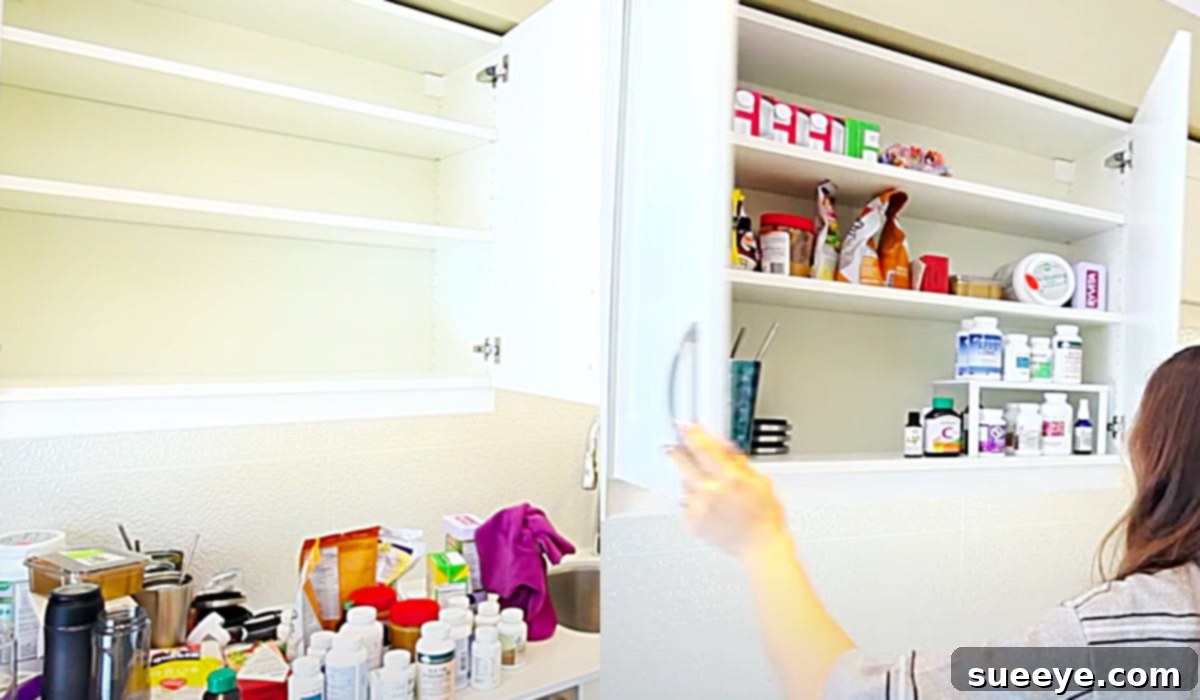
Transforming your kitchen cupboards is more than just tidying up; it’s a profound first step towards mastering the organization of your entire home. Think of it as a secret weapon, a foundational trick that empowers you to manage your living space with greater fluidity and efficiency. A clutter-free kitchen brings a sense of calm, enhances productivity, and even makes cooking more enjoyable. This comprehensive guide, inspired by expert insights like those shared by Clean My Space on YouTube, will walk you through every aspect of decluttering, organizing, and maintaining your kitchen cabinets. We all have a natural inclination to accumulate possessions, often surrounding ourselves with a multitude of items we believe we need. The journey to a truly organized kitchen begins with an honest assessment: do you truly utilize everything you own? Perhaps you have two meatloaf pans, yet you rarely make one meatloaf, let alone two. This critical self-reflection is the cornerstone of effective organization, not just for your kitchen, but for every corner of your home that feels overwhelming.
The core philosophy is simple: identify what serves a purpose, what brings you joy, and what truly needs to stay. Anything else is just taking up valuable space. Your first actionable step, and arguably the most crucial, is to prepare donation bags. You will embark on a thorough exploration of every nook and cranny within your cabinets, confronting each item and making those often-tough decisions. It’s essential to remember that you will always have enough of what you truly need. Let go of the worry and embrace the liberation that comes with intentional living.
Why an Organized Kitchen Matters: Beyond Aesthetics
A well-organized kitchen offers far more than just visual appeal. It directly impacts your daily life, reducing stress, saving time, and even encouraging healthier eating habits. When everything has its designated place, meal preparation becomes a seamless activity rather than a frustrating treasure hunt for the right utensil or ingredient. Imagine opening a cabinet and instantly finding what you need, rather than rummaging through a chaotic jumble. This efficiency translates to less time spent on chores and more time enjoying meals with loved ones or pursuing other passions. Furthermore, a clutter-free environment has a positive psychological effect, promoting a sense of peace and control that can permeate into other areas of your home and life. It empowers you to be more intentional about your purchases, reducing waste and fostering a sustainable lifestyle.
Step 1: Embrace the Decluttering Mindset
The biggest hurdle in organizing is often the emotional attachment we have to our belongings. We live in an abundant society, and it’s easy to accumulate items, often more than we truly need or use. The key to successful decluttering is to shift your mindset from “what if I need this someday?” to “do I use this now, and does it add value to my life?” This video tutorial expertly highlights the temptation to clutter our cabinets with “stuff.” To truly realize that you possess everything you need, you must take a rigorous, honest look at your inventory. Ask pointed questions: How often do I use this? When was the last time I used it? Do I have duplicates? Is it broken or worn out?
The Power of Donation Bags: Making Tough Choices Easier
Starting with donation bags provides a clear goal. As you go through each cabinet, drawer, and shelf, create three piles: Keep, Donate, and Discard. The “Keep” pile should consist only of items you regularly use, love, or absolutely need. The “Donate” pile is for functional items in good condition that someone else could benefit from. The “Discard” pile is for anything broken, expired, or beyond repair. It’s crucial to be ruthless but realistic. If you only used something once in the past year, or if you have multiple items that serve the same purpose (like those two meatloaf pans!), it’s probably a candidate for donation. You will have enough stuff – quit worrying about future “what-ifs” and focus on creating a functional, joyful kitchen today.
Step 2: Empty, Clean, and Assess Every Surface
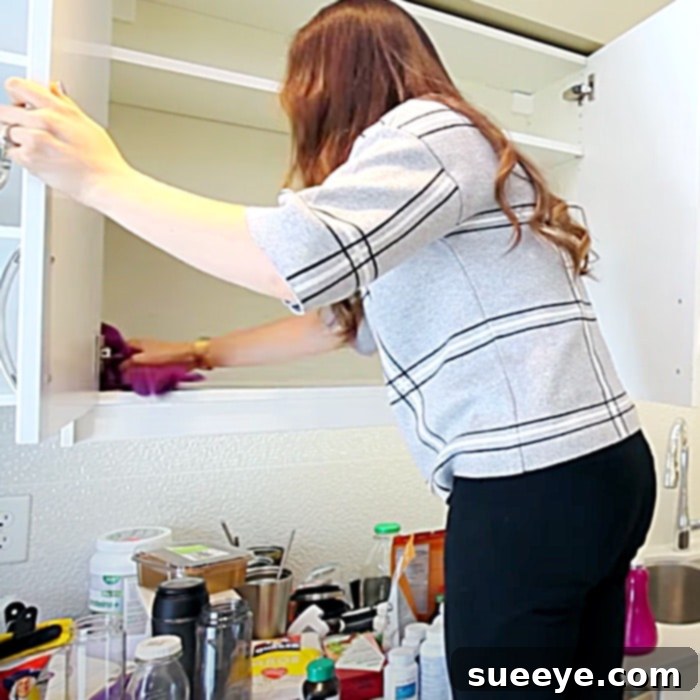
Once you’ve made your initial decluttering decisions, the next step is to completely empty your cabinets. This might seem like a daunting task, but it’s essential for a thorough reorganization. Pull everything out of each cabinet, drawer, and pantry shelf. As you do this, you might even discover items you forgot you had! This also provides a pristine canvas for your new organizational scheme. With the cabinets completely clear, take the opportunity to give them a deep clean. Wipe down the insides with an appropriate cleaner, paying attention to crumbs, spills, and sticky residue. This is also a good time to inspect for any damage, such as loose shelves or worn-out liners, and address them if necessary. Consider adding new, easy-to-clean shelf liners for a fresh start and added protection.
Step 3: Categorize for Clarity and Efficiency
With your cabinets clean and empty, it’s time to categorize your “Keep” pile. Grouping similar items together is fundamental to efficient organization. Create logical categories such as:
- **Cookware:** Pots, pans, baking sheets, lids.
- **Bakeware:** Muffin tins, cake pans, mixing bowls, measuring cups.
- **Dinnerware:** Plates, bowls, mugs, glasses.
- **Food Storage:** Containers (plastic/glass), wraps, foils, baggies.
- **Small Appliances:** Toaster, blender, food processor, coffee maker.
- **Spices & Condiments:** Spices, oils, vinegars, sauces.
- **Utensils:** Cooking spoons, spatulas, whisks, ladles.
- **Pantry Items:** Dry goods, canned goods, snacks.
This categorization process helps you visualize exactly how much of each type of item you have and will guide your decisions on where to store them. It also highlights any remaining duplicates or items that might still be candidates for donation.
Step 4: Optimize Your Storage Solutions
Now that your items are categorized and your cabinets are clean, it’s time to put everything back in an organized, efficient manner. This is where clever storage solutions come into play, maximizing every inch of space and ensuring easy access. There’s a vast array of organizational tools available, but choose those that best suit your specific needs and cabinet types.
Maximize Vertical Space with Shelf Risers and Stackable Containers
Many cabinets have ample vertical space that goes unused. Shelf risers are simple yet effective tools that create an additional “shelf” within a cabinet, perfect for stacking plates, bowls, or mugs without creating precarious towers. Similarly, clear, stackable containers are excellent for pantry items, dry goods, or even small appliances. They keep items contained, visible, and prevent them from spilling or toppling over. Investing in matching containers for dry goods like pasta, rice, and flour not only looks aesthetically pleasing but also creates a uniform system that is easy to maintain.
Drawer Dividers and Inserts for Small Items
Drawers can quickly become catch-all spaces for miscellaneous items. Drawer dividers are a game-changer for keeping utensils, small gadgets, measuring spoons, and even spices neatly separated. Adjustable dividers offer flexibility, allowing you to customize compartments to fit your specific items. Consider dedicated inserts for knives or cutlery to keep them safe and organized.
The Genius of Pull-Out Shelves and Lazy Susans
Deep cabinets, especially corner cabinets, can be black holes where items disappear. Pull-out shelves or baskets bring the back of the cabinet to you, making every item accessible. Lazy Susans (turntables) are another brilliant solution for corner cabinets or even regular shelves, especially for oils, vinegars, and condiments. A quick spin brings everything within reach, preventing items from being forgotten at the back.
Innovative Pot and Pan Organizers
Pots, pans, and their lids are notoriously difficult to store neatly. Vertical racks allow you to store pans on their sides, preventing scratches and making them easy to grab. Lid holders, either mounted on cabinet doors or standing independently, keep lids from cluttering cabinet shelves. Another popular solution is stackable pot and pan inserts that help separate each piece, protecting their surfaces and keeping them tidy.
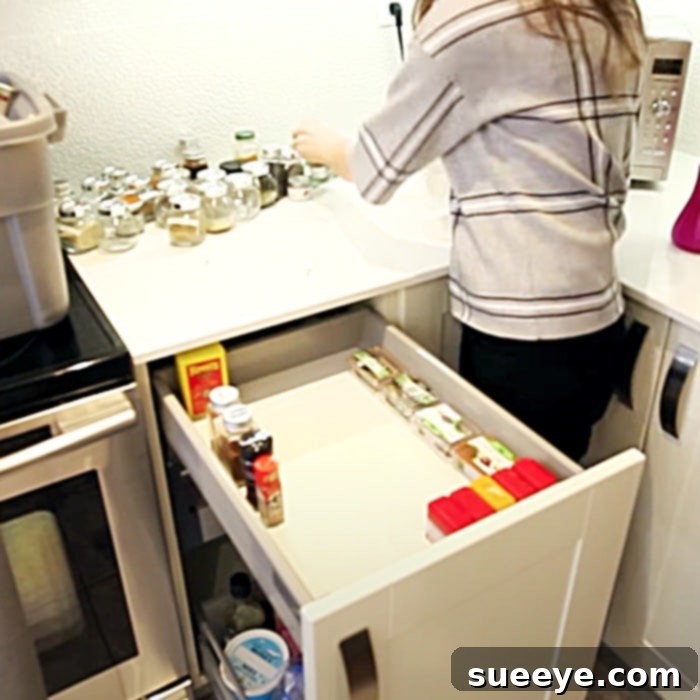
Arranging Your Spices in a Drawer: A Game Changer
As highlighted in the video tutorial, arranging your spices in a drawer is a truly brilliant idea that I also plan on adopting soon. Storing spices horizontally in a shallow drawer, ideally with a tiered insert, allows you to see every label at a glance. No more rummaging through a dark cabinet, pulling out half a dozen jars to find the one you need. This method not only saves time but also prevents you from buying duplicates of spices you already own but couldn’t find. Ensure your spices are fresh; toss any that are older than one year for ground spices or two years for whole spices.
Step 5: Strategic Placement – A Place for Everything and Everything in Its Place
Once you have your categories and chosen your organizational tools, the final step is to strategically place items within your cabinets. The goal is to create “zones” based on function and frequency of use. Items you use daily should be stored in easily accessible locations, typically at eye level or in the first layer of a drawer. Heavier items like cast iron pots should be placed in lower cabinets to prevent strain and for stability. Less frequently used items, such as holiday platters or specialized baking equipment, can be stored on higher shelves or in more out-of-the-way cabinets.
- **Cooking Zone:** Near the stove, store pots, pans, cooking utensils, and frequently used spices/oils.
- **Baking Zone:** Near your prep counter, keep baking sheets, mixing bowls, measuring cups, and baking ingredients.
- **Dishware Zone:** Close to the dishwasher or sink, store plates, bowls, and glasses for easy loading and unloading.
- **Food Storage Zone:** Keep food containers, wraps, and foils together, preferably near a food prep area.
Thinking about how you move around your kitchen and what items you need at each station will guide your placement decisions, making your kitchen workflow intuitive and effortless.
Maintaining Your Organized Kitchen
Organization isn’t a one-time event; it’s an ongoing process. To keep your kitchen cabinets pristine, adopt a few simple habits:
- **The “One-In, One-Out” Rule:** When you buy a new item, commit to donating or discarding an old one that serves the same purpose.
- **Regular Mini-Declutters:** Once a month or quarter, quickly scan your cabinets for anything that has migrated out of place, expired, or is no longer needed.
- **Clean As You Go:** Wipe up spills immediately to prevent buildup.
- **Involve the Family:** Teach everyone in the household where things belong and encourage them to put items back in their designated spots.
The Lasting Impact of an Organized Kitchen
By following these steps, you won’t just have clean cupboards; you’ll have a kitchen that functions as a harmonious extension of your home. The psychological benefits of a clutter-free space are immense, leading to reduced stress, increased peace of mind, and a greater sense of control over your environment. An organized kitchen fosters creativity in cooking, makes meal prep a joy, and transforms your home’s heart into a truly welcoming and efficient space. Embrace this journey, and you’ll discover that an organized kitchen truly is the secret trick to a smoother, happier home.