
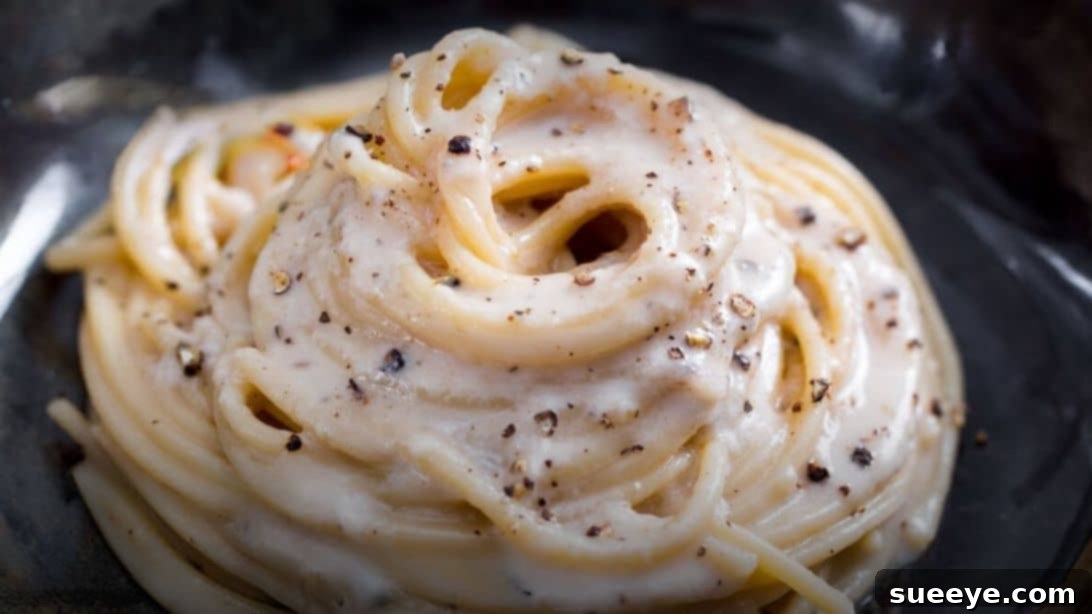
Mastering the Art of Cacio e Pepe: The Ultimate 4-Ingredient Roman Pasta
Cacio e Pepe, an iconic dish hailing from the heart of Rome, stands as a testament to the profound beauty of Italian cuisine’s simplicity. Its name, translating directly to “cheese and pepper,” perfectly encapsulates the essence of this profoundly delicious pasta. Far from being just another recipe, Cacio e Pepe is an experience—a harmonious blend of creamy, cheesy richness with a delightful kick of freshly ground black pepper, all coating perfectly cooked spaghetti. Many are intimidated by its seemingly complex creamy texture, but the truth is, making authentic Cacio e Pepe is far easier and quicker than you might imagine, relying on masterful technique rather than a lengthy ingredient list.
This culinary masterpiece requires only four essential components, each playing a crucial role in crafting its signature flavor and texture: high-quality spaghetti, pungent Pecorino Romano cheese, robust black peppercorns, and perhaps the most vital, starchy pasta water. The pasta water acts as the magical emulsifier, transforming the cheese and pepper into a silky, luscious sauce that clings to every strand of pasta. It’s a culinary alchemy that, once mastered, will have you recreating this Roman classic time and time again. Forget heavy creams or butter; the secret to Cacio e Pepe’s irresistible creaminess lies in the perfect marriage of starch, fat, and heat.
RELATED: Homemade Classic Creamy Italian Dressing – Elevate your salads with this simple, fresh recipe.
The first encounter with a perfectly executed Cacio e Pepe is often a revelation. The sheer depth of flavor achieved with so few ingredients is astounding, leaving a lasting impression that often exceeds all expectations. It’s a dish that embodies the very spirit of Italian cooking: using humble, fresh ingredients to create something truly extraordinary. This recipe, inspired by traditional techniques and perfected over generations, promises to deliver an authentic taste of Rome right in your own kitchen. You’ll be amazed at how quickly you can whip up this restaurant-quality dish, often in under 30 minutes from start to finish.
Here’s another Italian recipe you might want to try: Italian Yogurt Cake Recipe – A light and moist dessert perfect for any occasion.
Essential Ingredients for Authentic Cacio e Pepe
While the list of ingredients is short, the quality of each component is paramount to the success of your Cacio e Pepe. Don’t compromise on these essentials for the most authentic experience.
- 3/4 lb (approximately 340g) of Spaghetti: While spaghetti is traditional, other long, robust pasta shapes like tonnarelli (a thicker, egg-based spaghetti from Lazio) or bucatini can also work beautifully, offering slightly different textures for the sauce to cling to. Choose a good quality, bronze-die pasta for a rougher surface that better absorbs the sauce.
- 1 3/4 cups (approximately 175g) of Finely Grated Pecorino Romano Cheese: This is non-negotiable. Pecorino Romano, a hard, salty sheep’s milk cheese from Lazio, is the heart of Cacio e Pepe. Its sharp, tangy, and slightly pungent flavor is distinct and cannot be truly replicated by Parmesan. Grate it finely just before use to ensure it melts smoothly into the sauce without clumping.
- 1/5 oz (approximately 5-6g) Freshly Ground Black Peppercorns: The “pepe” in Cacio e Pepe is more than just a seasoning; it’s a co-star. Using whole black peppercorns and grinding them fresh just before toasting is crucial. This releases their full aromatic and spicy potential, delivering a much more vibrant flavor than pre-ground pepper.
- Starchy Pasta Water: Often overlooked, this is the true secret weapon. The starches released from the pasta during cooking are essential for emulsifying the Pecorino Romano into a creamy, luscious sauce. Resist the urge to drain all your pasta water; you’ll need plenty.
Step-by-Step Guide to Crafting the Perfect Cacio e Pepe
Follow these detailed steps carefully, paying close attention to timing and temperature, and you’ll achieve a Cacio e Pepe that rivals any Roman trattoria.
Step 1: Prepare Your Pecorino Romano
Begin by grating your Pecorino Romano cheese. You’ll need a generous 1 3/4 cups. For the smoothest sauce, grate it as finely as possible, ideally using a microplane or the smallest holes on a box grater. Transfer the finely grated cheese into a large, heatproof bowl. It’s important that the cheese is at room temperature, as this helps it melt more evenly and prevents clumping.
Step 2: Cook the Spaghetti to Perfection
Bring a large pot of water to a rolling boil. Add a generous amount of salt – it should taste like the sea. Then, add 3/4 lb of spaghetti. Cook the spaghetti until it is very al dente, meaning it’s still quite firm to the bite, even slightly undercooked compared to your usual preference. This is crucial because the pasta will continue to cook in the pan with the sauce. Remember to reserve at least 2-3 cups of the starchy pasta water before draining the spaghetti; this water is gold for your sauce.
Step 3: Prepare the Black Pepper
While the pasta cooks, prepare your black pepper. Place the 1/5 oz of whole black peppercorns in a mortar and pestle and grind them coarsely. If you don’t have a mortar and pestle, you can crush them using the flat side of a heavy pan or a meat mallet, or use a spice grinder set to a coarse setting. The goal is a mix of finely ground and slightly larger pieces for maximum flavor and textural interest.
Step 4: Toast the Pepper and Deglaze with Pasta Water
Place a large, heavy-bottomed pan (preferably stainless steel or non-stick that can hold all the pasta) over medium heat. Add the freshly ground black pepper to the dry pan. Toast the peppercorns for 1-2 minutes, stirring constantly, until they become incredibly fragrant and slightly smoky. Be careful not to burn them. Once toasted, immediately deglaze the pan with a ladle (about 1/2 cup) of the reserved hot pasta water. The water will sizzle and turn slightly dark as it absorbs the peppery essence, creating a flavorful base for your sauce. Remove the pan from the heat momentarily to prevent overcooking the pepper.
Step 5: Finish Cooking the Spaghetti in the Pepper Water
Using tongs, transfer the very al dente spaghetti directly from its cooking pot into the pan with the toasted pepper and pasta water. Do not drain it completely; let some of the starchy water cling to the strands. Place the pan back over medium heat. Continue to cook the spaghetti in this flavorful liquid, stirring constantly and adding more reserved pasta water by the ladleful as needed, until the pasta is perfectly al dente and has absorbed much of the liquid. This process allows the pasta to soak up the peppery flavor and release more starch directly into your nascent sauce.
Step 6: Create the Pecorino Cream
While the pasta finishes cooking, turn your attention to the cheese. Add a ladle (about 1/2 cup) of the hot reserved pasta water to the bowl of grated Pecorino Romano. Begin to mix vigorously with a whisk or a fork. The goal is to create a smooth, thick, and lump-free cream. The heat from the pasta water will slowly melt the cheese, and the whisking action, combined with the starch from the water, will emulsify it into a glossy, velvety paste. If it’s too thick, add a tiny bit more pasta water; if too thin, add a pinch more grated cheese. Consistency is key here—it should be like a thick, pourable cream.
Step 7: Combine Pasta and Sauce for Creamy Perfection
Once the spaghetti is perfectly al dente and has absorbed most of the liquid in the pan, remove the pan completely from the heat. This step is critical to prevent the cheese from clumping or seizing. Immediately pour the Pecorino cream into the pan with the spaghetti. Using tongs, rapidly toss and mix the spaghetti with the cheese sauce until every strand is beautifully coated and the sauce is uniformly creamy and glossy. The residual heat from the pasta and the pan will finish melting the cheese and create a truly emulsified sauce.
Step 8: Final Touches and Serving
Add a final sprinkle of freshly grated Pecorino Romano on top of the pasta and give it another quick toss. If you prefer an extra kick, a dash more freshly ground black pepper can be added at this stage. Serve immediately while hot, as Cacio e Pepe is best enjoyed fresh off the stove. The beauty of this dish lies in its simplicity and the immediate gratification it offers.
Tips for Cacio e Pepe Success: Mastering the Roman Classic
Achieving the perfect Cacio e Pepe consistently can be tricky, but these tips will guide you:
- Quality Ingredients are Non-Negotiable: As highlighted, the limited ingredient list means each component shines. Invest in good quality bronze-die spaghetti, authentic Pecorino Romano (look for DOP certification), and whole black peppercorns.
- The Power of Pasta Water: Never underestimate the role of starchy pasta water. It’s the binder, the emulsifier, and the key to creaminess. Make sure to reserve plenty and use it judiciously.
- Temperature Control is Crucial: The cheese sauce must be made off the direct heat or at very low heat. High heat will cause the Pecorino to seize and become lumpy or stringy, rather than melting into a smooth cream.
- Freshly Ground Pepper: Toasting whole peppercorns before grinding them unlocks their essential oils and deepens their flavor profile dramatically. Don’t skip this step.
- Work Quickly: Cacio e Pepe comes together fast. Have all your ingredients prepped and ready to go before you start cooking the pasta.
- Don’t Rinse Pasta: Rinsing pasta removes the precious starch on its surface, which is vital for the sauce to adhere properly and emulsify.
- Experiment with Pasta Shapes: While spaghetti is traditional, don’t be afraid to try other long pasta shapes like bucatini or tonnarelli which can also hold the sauce beautifully.
Common Mistakes to Avoid When Making Cacio e Pepe
Even seasoned cooks can stumble with Cacio e Pepe. Here are pitfalls to steer clear of:
- Using Pre-Grated Cheese: Pre-grated cheeses often contain anti-caking agents that prevent them from melting smoothly, resulting in a grainy or lumpy sauce.
- Adding Cold Pasta Water to Cheese: Cold water won’t melt the cheese effectively, leading to lumps. The water must be hot enough to encourage melting and emulsification.
- Adding Cheese Directly to Hot Pan: Introducing Pecorino directly to a very hot pan will cause it to seize and separate. Always remove the pan from heat or lower it significantly before adding the cheese cream.
- Over-Salting: Pecorino Romano is naturally quite salty, and your pasta water should also be seasoned. Taste as you go and adjust carefully.
- Using Too Much or Too Little Pasta Water: This is a delicate balance. Too much, and your sauce will be watery; too little, and it will be dry and clumpy. Add it gradually until you reach the desired consistency.
- Under-Toasting or Over-Toasting Pepper: Under-toasted pepper won’t release its full aroma, while burnt pepper will impart a bitter taste. Watch it carefully.
The Enduring Charm of the 4-Ingredient Cacio e Pepe Recipe
Cacio e Pepe is more than just a dish; it’s a culinary legend, a testament to the ingenuity of Roman cuisine. Its minimalist ingredient list belies the complexity of flavor and texture it delivers. Originating from the hearty meals of Roman shepherds, who needed a simple, high-energy, and non-perishable meal for their time away from home, Cacio e Pepe embodies rustic elegance.
The beauty of this recipe lies in its emphasis on technique and the quality of its few components. There are no hidden ingredients, no secret sauces—just the pure, unadulterated flavors of cheese, pepper, and pasta, bound together by the magic of starchy water. Once you master this classic, you’ll gain a deeper appreciation for Italian cooking principles and have a truly impressive dish to add to your repertoire. It’s a versatile dish that can be a quick weeknight dinner or an elegant starter for a special occasion. Its timeless appeal ensures it will remain a beloved staple for generations to come, proving that sometimes, the simplest things are indeed the most profound.