
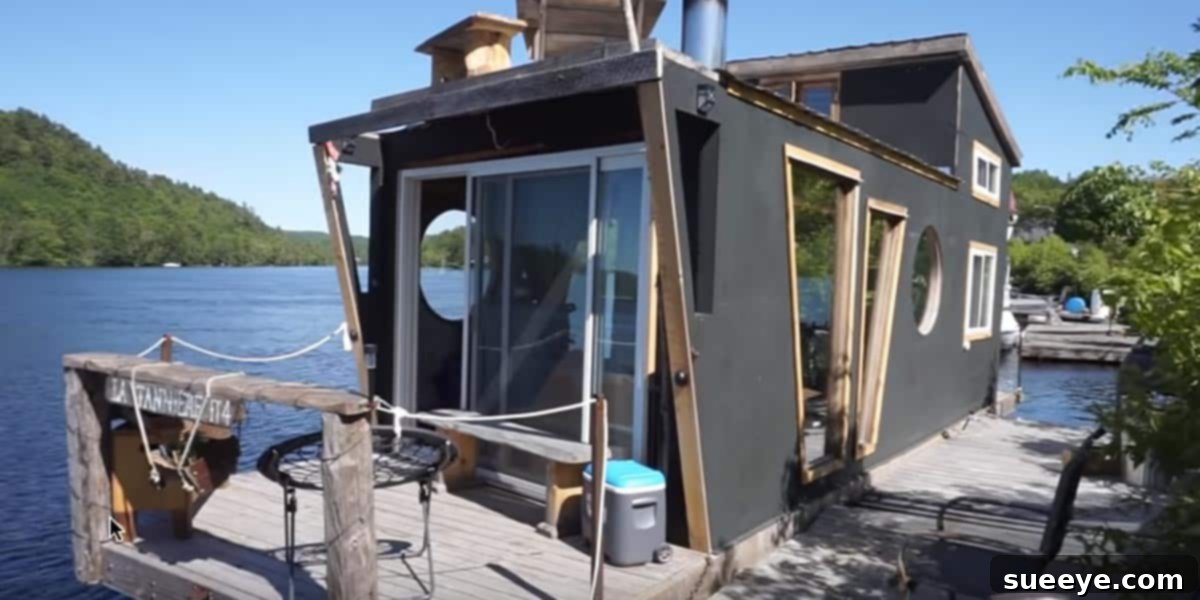
Pontoon Boat Tiny House: Embrace the Freedom of Waterfront Living
Imagine waking up to the gentle lapping of water against your home, the sun rising over a serene lake or a winding river, and the everyday hustle and bustle of city life a distant memory. For many, this dream of a peaceful, water-based retreat remains just that – a dream. However, with the innovative concept of a Pontoon Boat Tiny House, this idyllic vision is becoming an accessible reality for a growing number of enthusiasts seeking both simplicity and adventure.
The allure of a waterfront getaway is undeniable. It offers a unique sanctuary, a place to disconnect, regroup, and immerse oneself in the tranquility of nature. In an era where minimalism and sustainable living are gaining significant traction, the idea of a tiny home has captivated countless imaginations. But what if your tiny home could also float, offering unparalleled mobility and ever-changing vistas? This is where the brilliance of converting a pontoon boat into a fully functional tiny house truly shines, merging the best of both worlds into an extraordinary living experience.
The Rising Tide of Tiny Living and the Houseboat Phenomenon
The tiny house movement has swept across the globe, inspiring individuals to scale down, simplify their lives, and embrace financial freedom. Driven by a desire for reduced environmental impact, lower living costs, and a more intentional way of life, people are transforming everything from old school buses to custom-built trailers into compact, efficient homes. The fascination with clever design and ingenious space-saving solutions within these small footprints has captivated audiences worldwide, demonstrating that less can indeed be more.
While traditional tiny houses offer a profound shift in lifestyle, houseboats take this concept a step further, introducing an element of dynamic living that land-locked homes simply cannot replicate. A houseboat isn’t just a dwelling; it’s a vessel that opens up new horizons, allowing residents to explore diverse waterways, connect with nature on an intimate level, and experience a unique sense of community found among fellow boat dwellers. This distinctive fusion of home and transport appeals deeply to those with a wanderlust spirit and a yearning for an unconventional existence.
Why a Pontoon Boat is the Ideal Platform for Your Tiny House Dream
Among the various types of boats suitable for conversion, pontoon boats stand out as exceptionally well-suited for creating a tiny house. Their inherent design provides a stable, flat, and spacious platform, making them a remarkably practical and cost-effective foundation compared to other boat types or even many land-based tiny house constructions. Pontoons are known for their buoyancy and stability, thanks to their multiple tubular hulls, which distribute weight evenly and offer a smooth ride on calm waters.
The generous deck space of a pontoon boat allows for considerable flexibility in floor plan design. Unlike the narrow confines of traditional sailboats or powerboats, a pontoon offers a wide-open canvas where walls can be erected, rooms configured, and amenities installed with relative ease. Furthermore, used pontoon boats can often be acquired at a reasonable price, providing an accessible entry point for those looking to embark on their DIY houseboat project. This affordability, combined with their robust structure, makes pontoon conversions an increasingly popular choice for aspiring tiny house boaters.
Crafting Your Aquatic Haven: Design and Practicalities of a Pontoon Tiny House
Transforming a pontoon boat into a livable tiny house requires thoughtful planning and creative design. Every inch of space must be maximized, and every system carefully considered to ensure comfort, functionality, and sustainability on the water. The core challenge lies in balancing the aesthetic appeal of a cozy home with the practical demands of a marine environment.
Maximizing Space and Comfort
Interior design for a pontoon tiny house revolves around multi-functional furniture and ingenious storage solutions. Think convertible sofas that transform into beds, dining tables that fold away, and built-in cabinetry that utilizes vertical space efficiently. Large windows are crucial not only for natural light but also to maintain a connection with the surrounding water, making the small space feel larger and more open. Light-colored interiors can further enhance this sense of spaciousness, reflecting light and creating an airy atmosphere.
Essential Utilities for Life on Water
Power: Most pontoon tiny houses aim for a degree of off-grid capability. Solar panels are a popular choice, providing clean, renewable energy to charge battery banks, which in turn power lights, appliances, and electronics. Generators offer a reliable backup, while shore power connections are invaluable when docked at marinas, providing unlimited electricity. The choice of appliances—opting for energy-efficient or 12-volt models—is critical in managing power consumption.
Water: Freshwater supply typically comes from onboard tanks, which can be refilled at marinas or using portable water purification systems. Managing greywater (from sinks and showers) and blackwater (from toilets) is paramount for environmental responsibility. Composting toilets are a popular eco-friendly option for blackwater, minimizing the need for frequent pump-outs, while greywater can often be filtered or stored in separate tanks before proper disposal.
Heating and Cooling: Depending on the climate, efficient heating and cooling solutions are essential. Propane heaters, small wood-burning stoves, or efficient electric heaters can keep the space warm, while strategically placed windows, vents, and small air conditioning units can combat summer heat. Good insulation, using marine-grade materials, is vital for maintaining a comfortable interior temperature year-round.
Material Choices and Safety Considerations
When selecting materials for your tiny house on water, durability, lightweight properties, and resistance to moisture are key. Marine-grade plywood, treated lumber, composite materials, and waterproof sealants are fundamental for ensuring the longevity and structural integrity of your home. Exterior finishes should be chosen for their weather resistance and ease of maintenance.
Safety on a houseboat is non-negotiable. Proper buoyancy calculations are essential to ensure the pontoon can safely support the added weight of the structure and its contents. Fire safety equipment, including smoke detectors, carbon monoxide detectors, and fire extinguishers, must be readily accessible. Navigation lights, horns, life jackets, and a first-aid kit are also crucial for any vessel. Understanding and adhering to local marine regulations for registration, docking, and waste disposal is also paramount for a safe and legal operation.
The Houseboat Lifestyle: Pros and Cons of Life on the Water
Embracing a houseboat lifestyle is an adventure filled with unique rewards and challenges. It’s a choice that reflects a desire for freedom, simplicity, and a deep connection to the natural world.
The Unparalleled Advantages
One of the most significant benefits is the ever-changing scenery. Your backyard can be a new cove every week, a different lake every month. This mobility offers unparalleled freedom for exploration and discovery. The connection to nature is profound; waking up to wildlife, enjoying stunning sunsets, and having immediate access to fishing, swimming, or kayaking become daily routines. Houseboat communities often foster a strong sense of camaraderie and mutual support, sharing resources and experiences. Furthermore, the reduced cost of living, especially when compared to traditional housing in many areas, can free up significant financial resources, allowing for more travel or leisure pursuits.
Navigating the Challenges
However, life on a tiny houseboat is not without its considerations. Space constraints are a constant, requiring discipline in possessions and organization. Maintenance of a boat can be more intensive than a land-based home, requiring regular checks for leaks, hull integrity, and marine systems. Weather dependency plays a larger role; storms and strong winds can impact comfort and safety. Access to amenities like groceries, healthcare, and postal services might require careful planning, especially when anchored in remote locations. Finally, understanding and complying with docking fees, permits, and environmental regulations can be complex and vary widely by location.
Is a Pontoon Tiny House Right for You? Navigating Your Dream
The decision to commit to a pontoon tiny house lifestyle is a significant one, best suited for individuals who genuinely embrace minimalism, adventure, and a flexible approach to life. It appeals strongly to those who yearn for an escape from conventional living, who find solace in nature, and who are willing to navigate the unique demands of living on the water. It requires a certain level of self-sufficiency, adaptability, and a proactive mindset towards problem-solving.
Before embarking on such a journey, it is essential to conduct thorough research, assess your personal needs, and ideally, experience houseboat living firsthand, perhaps by renting one for a vacation. Understanding the practicalities, local regulations, and financial commitments involved will help determine if this unique aquatic adventure truly aligns with your long-term vision for a fulfilling life.
Embarking on Your Journey: First Steps to Houseboat Ownership
If the idea of a pontoon boat tiny house resonates with your spirit, the first step is comprehensive research. Dive deep into online forums, connect with existing houseboat communities, and study various conversion projects for inspiration and practical advice. Develop a realistic budget that encompasses not only the pontoon and construction materials but also potential docking fees, insurance, maintenance, and utility costs.
Next, consider your ideal location and the type of waterway you envision calling home. This will influence the size and capabilities of your pontoon boat. Begin sketching design ideas, focusing on functionality and personal comfort. Engaging with experienced boat builders or DIY enthusiasts can provide invaluable insights. This journey of creating a tiny house on water is one of passion, ingenuity, and a bold step towards an extraordinary, simplified life. It’s about building not just a house, but a lifestyle that continually inspires wonder and connection with the world around you.