
Ultimate Guide: How to Effectively Remove Odor from Kitchen Towels & Sponges
There’s nothing quite as frustrating as reaching for a seemingly clean kitchen towel or sponge, only to be met with an unpleasant, musty odor. Even after a cycle in the washing machine, these essential kitchen tools can harbor persistent smells, signaling the presence of hidden bacteria and grime. If you’ve been battling this common kitchen dilemma, you’re not alone. Many conventional washing methods simply aren’t enough to tackle the deep-seated sources of these offensive odors. But what if there was a simple, incredibly effective method to not only eliminate bad smells but also thoroughly sanitize your kitchen cloths, leaving them wonderfully fresh and germ-free?
We’ve discovered an ingenious cleaning hack, originally shared by Thoughts for Happy Minds on YouTube, that has revolutionized the way we approach kitchen hygiene. This method is surprisingly easy, requires minimal effort, and delivers truly amazing results. Since adopting this technique, our kitchen towels and sponges consistently smell incredible, feeling cleaner than ever before. It’s a game-changer for maintaining a hygienic and pleasant kitchen environment, and it’s a routine we now happily incorporate every few days.
This powerful cleaning secret has been a hit with everyone we’ve shared it with – friends and family alike have been astonished by its effectiveness. It challenges the conventional wisdom that a washing machine is the ultimate solution for all fabric cleaning. Get ready to transform your kitchen cloths from stale to sparkling. Below, you’ll find a detailed, step-by-step tutorial that will guide you through this remarkably effective method. A huge thank you to Thoughts for Happy Minds for sharing this brilliant cleaning hack!
Why Do Kitchen Towels and Sponges Get So Smelly?
Before diving into the solution, it’s helpful to understand the root cause of those stubborn odors. Kitchen towels and sponges are workhorses in our homes, constantly exposed to food particles, grease, moisture, and various types of dirt. This creates a perfect breeding ground for bacteria and mold. When these microorganisms multiply, they release volatile organic compounds (VOCs), which are responsible for the unpleasant, sour, or musty smells we often associate with dirty kitchen cloths.
- Moisture: Kitchen cloths rarely dry out completely between uses, especially sponges. Constant dampness promotes rapid bacterial growth.
- Food Residue: Even after rinsing, tiny food particles can cling to fibers, providing a rich nutrient source for microbes.
- Bacteria: E. coli, Salmonella, and other common kitchen bacteria thrive in warm, damp environments and are a primary source of odor.
- Grease and Oils: These can trap bacteria and dirt within the fabric, making them harder to remove with just water or mild soap.
Traditional washing machines, while effective for general cleaning, sometimes struggle to reach the deepest layers of these materials, especially if they’re heavily soiled or have accumulated a persistent bacterial colony. This is where a more intensive, deep-cleaning approach becomes essential.
The Power of the Boiling Method: An Effective Deep Clean
The method we’re about to explore harnesses the power of high heat and a potent cleaning agent to tackle odors and germs head-on. Boiling water is a natural disinfectant, capable of killing a vast majority of bacteria, viruses, and mold spores. When combined with a dishwashing detergent tablet, which contains powerful enzymes and degreasers designed to break down food residues and cut through grease, you create an incredibly effective sanitizing solution. This combination ensures that your kitchen cloths are not just superficially clean, but truly hygienically fresh from the inside out.
Materials for Odor-Free Kitchen Linens:
Gathering the right tools is the first step towards achieving wonderfully fresh kitchen cloths. This method requires only a few common household items, making it incredibly accessible and cost-effective.
- Tall Pot (Stock Pot): A generously sized pot is crucial to ensure all your cloths can be fully submerged in the boiling water without overflowing. Opt for a pot that can comfortably hold your dirtiest kitchen towels and sponges, allowing them ample space to move and release grime.
- Dishwashing Detergent Tablet (or Laundry Tablet): The star of this cleaning hack! Dishwasher tablets are formulated with powerful enzymes that break down food particles and highly effective degreasing agents. These properties make them exceptionally good at cutting through the hidden grease and organic matter that cling to your kitchen cloths, liberating the odors within. A laundry detergent tablet can be a suitable alternative if a dishwashing tablet isn’t available, offering similar cleaning power.
- Essential Oil or Fabric Conditioner (Optional): For an added touch of freshness and a delightful scent, a few drops of your favorite essential oil (like lemon, tea tree, or lavender) or a splash of fabric conditioner can be incorporated during the final rinse. This step not only imparts a pleasant fragrance but can also leave your towels feeling softer.
- Boiling Water: The primary sanitizing agent. High temperatures are incredibly effective at killing bacteria, viruses, and mold spores, eradicating the source of bad odors at a microbial level.
Directions: Achieve Sparkling Clean and Fresh Kitchen Cloths
Follow these simple steps to banish odors and bring a new level of cleanliness to your kitchen towels and sponges. Remember to exercise caution when working with boiling water.
Step 1: The Powerful Boil and Soak
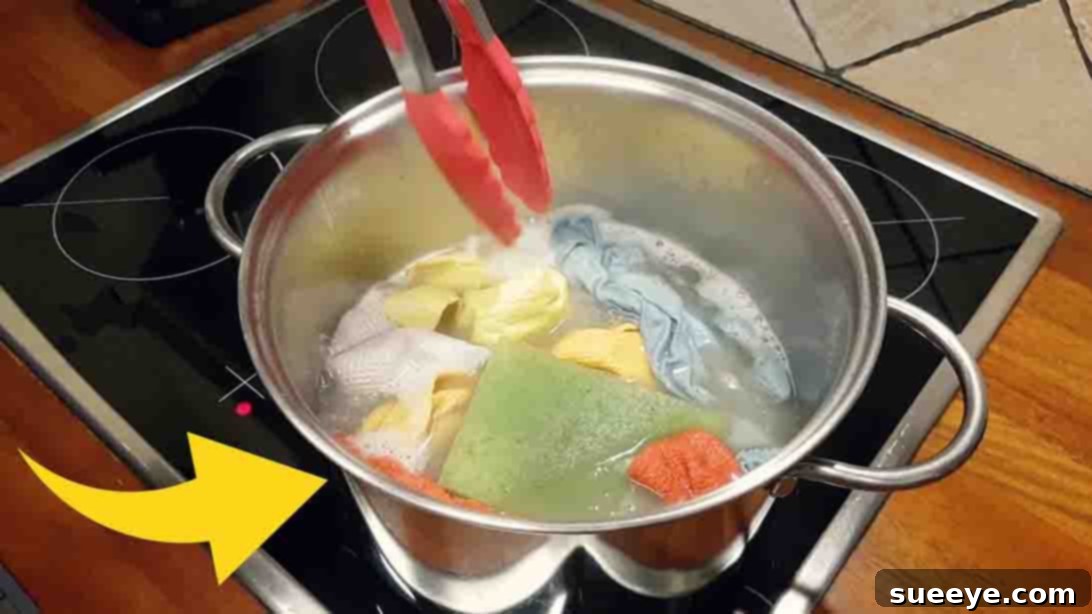
Begin by placing your dirty kitchen cloths, including any smelly sponges and towels, into your tall pot. Ensure they are distributed evenly. Next, carefully fill the pot with boiling water, making sure there’s enough water to completely submerge all the items. The goal is to ensure maximum exposure to the hot water and cleaning solution. Now, add one tablet of dishwashing detergent (or a laundry tablet) into the pot with the cloths. Turn the heat on beneath the pot, bringing the water to a rolling boil. Allow it to boil vigorously for about one to two minutes. This initial intense boil helps to loosen stubborn grime and kickstart the sanitization process. After the initial boil, reduce the heat to a simmer and let the cloths soak and simmer for an additional five to ten minutes. During this time, the detergent works its magic, breaking down grease and food residues, while the sustained heat continues to kill bacteria and thoroughly deep clean the fabric fibers. You’ll likely notice the water turning discolored as dirt and grime are released – a clear sign that the method is working!
Step 2: Rinse, Refresh, and Dry
Once the simmering is complete, carefully remove the pot from the heat. Allow the water to cool slightly before handling the cloths, or use tongs to transfer them to a sink. Discard the dirty, discolored water. Rinse each item thoroughly under clean, running water, repeating this step several times until all detergent residue is gone and the water runs clear. This ensures no chemical traces are left behind. For an extra touch of freshness and softness, you have an optional final step: after the initial rinsing, place the cloths back into a clean basin or sink filled with fresh, clean water. Add a few drops of your favorite essential oil or a small amount of fabric conditioner to the water, and let the cloths soak for approximately five minutes. This infusion will leave them with a beautiful, lasting scent. Finally, give them a quick final rinse if you used essential oil or fabric conditioner, then wring out excess water thoroughly. It’s crucial to dry them completely before storage to prevent any new bacterial growth and ensure they remain fresh. Air drying outdoors in the sun or using a dryer on a high setting are excellent options.
Benefits of This Deep Cleaning Method
Beyond simply removing bad smells, this boiling method offers a multitude of benefits for your kitchen and overall household hygiene:
- Superior Sanitization: The high heat from boiling effectively kills a wide range of bacteria, viruses, and mold spores that thrive in kitchen cloths, drastically reducing the risk of cross-contamination in your kitchen.
- Odor Elimination, Not Masking: Unlike some cleaners that merely cover up smells, this method physically removes the odor-causing bacteria and grime, ensuring a genuinely fresh scent.
- Extends Lifespan of Cloths: By thoroughly cleaning and disinfecting your towels and sponges, you prevent premature degradation caused by bacterial growth, allowing them to last longer and perform better.
- Cost-Effective: Utilizing items you likely already have at home (a pot, water, and a detergent tablet) makes this an economical alternative to constantly buying new cloths.
- Chemical-Free Option (mostly): While it uses a detergent tablet, the primary sanitizing agent is heat. For those sensitive to strong chemical bleaches, this offers a powerful cleaning solution without harsh fumes.
Preventative Measures for Long-Lasting Freshness
While this boiling method is incredibly effective for deep cleaning, consistent prevention is key to keeping your kitchen cloths fresh between washes. Incorporating these simple habits into your daily routine can significantly reduce the frequency of intense cleaning:
- Rinse and Wring Thoroughly After Each Use: This is perhaps the most crucial step. After every use, rinse your towels and sponges under hot water to remove as many food particles and residues as possible. Then, wring them out completely. The drier they are, the less hospitable the environment for bacteria.
- Air Dry Completely: Never leave damp cloths crumpled up or in a dark, enclosed space. Hang towels to air dry, ideally in a well-ventilated area. For sponges, elevate them on a sponge holder or a dish rack so air can circulate all around them.
- Sanitize Regularly: Even with daily rinsing, bacteria can accumulate. A quick soak in a diluted bleach solution (1 part bleach to 9 parts water) for a few minutes, or a zap in the microwave (if wet) for 1-2 minutes, can help sanitize between deep boils.
- Replace Regularly: Even the best cleaning routine can’t make a cloth last forever. Sponges, in particular, should be replaced every 1-2 weeks, depending on usage. Towels can last longer but should be replaced when they start to show signs of wear or persistent odor.
- Use Separate Cloths for Different Tasks: Designate specific towels for specific jobs (e.g., one for dishes, one for wiping counters, one for drying hands). This prevents cross-contamination and can keep heavily soiled cloths from affecting others.
- Don’t Let Them Sit Wet: Avoid leaving wet cloths or sponges in the sink or a closed container for extended periods. This speeds up bacterial growth exponentially.
Considering Alternative Cleaning Methods
While the boiling method with a dishwasher tablet is exceptionally effective, it’s worth noting other popular strategies for maintaining kitchen cloth hygiene. These can serve as complementary routines or alternatives when time is short:
- Vinegar Soak: White vinegar is a natural deodorizer and mild disinfectant. Soaking cloths in a solution of equal parts white vinegar and water for 30 minutes, followed by a regular wash, can help eliminate odors.
- Baking Soda Paste: For stubborn stains and smells, a paste of baking soda and water can be applied directly to the cloth before washing. Baking soda absorbs odors.
- Microwave Sanitization (Sponges Only): Damp sponges can be microwaved on high for 1-2 minutes to kill bacteria. *Caution: Ensure the sponge is thoroughly wet to prevent fire hazards.* This method is not suitable for towels or sponges with metal components.
- Washing Machine with Hot Water and Bleach/Sanitizer: For a less hands-on approach, washing kitchen towels in your machine on the hottest setting with a small amount of bleach (for white towels) or a laundry sanitizer can be effective.
Each method has its merits, but for a truly deep, odor-busting clean that rivals commercial sanitizers, the boiling method stands out for its simplicity and efficacy.
Choosing the Right Kitchen Linens for Longevity and Hygiene
The type of kitchen towel or sponge you use can also impact how quickly it becomes smelly and how easily it can be cleaned. Opting for materials that dry quickly and are durable can significantly improve your kitchen hygiene:
- Cotton Towels: Highly absorbent and durable, cotton towels are excellent for most kitchen tasks. They can withstand high temperatures for cleaning and are readily available. Look for thicker, high-quality cotton for better absorbency and longevity.
- Microfiber Cloths: Known for their exceptional absorbency and ability to trap dirt and grime, microfiber cloths are great for streak-free cleaning. They dry quickly, which helps prevent bacterial growth. However, they may not tolerate extremely high temperatures as well as cotton, so check care labels.
- Cellulose Sponges: These are more absorbent than synthetic sponges and tend to break down more naturally. They can also withstand the boiling method well.
- Silicone Sponges: While less absorbent, silicone sponges are incredibly hygienic as they are non-porous and dry very quickly, making them highly resistant to bacterial growth and odors. They are also dishwasher safe.
Investing in quality cloths and rotating them regularly ensures you always have a fresh, effective tool at hand.
Final Thoughts: Embrace a Fresh and Clean Kitchen!
No one enjoys a kitchen that smells anything less than fresh and inviting. Persistent odors from kitchen towels and sponges can detract from even the most spotless countertop. By implementing this incredibly effective boiling method, you’re not just cleaning your kitchen cloths; you’re elevating your entire kitchen hygiene routine. It’s a simple, powerful hack that eliminates bacteria, eradicates odors, and extends the life of your essential kitchen tools.
So, say goodbye to those lingering, unpleasant smells. Embrace this easy, YouTube-inspired solution and experience the satisfaction of truly clean, wonderfully scented kitchen linens. Your nose, your family, and your kitchen will thank you for it! Don’t hesitate to give this method a try – you’ll be amazed at the difference. For more brilliant household tips and tricks, we encourage you to explore the Thoughts for Happy Minds channel.