
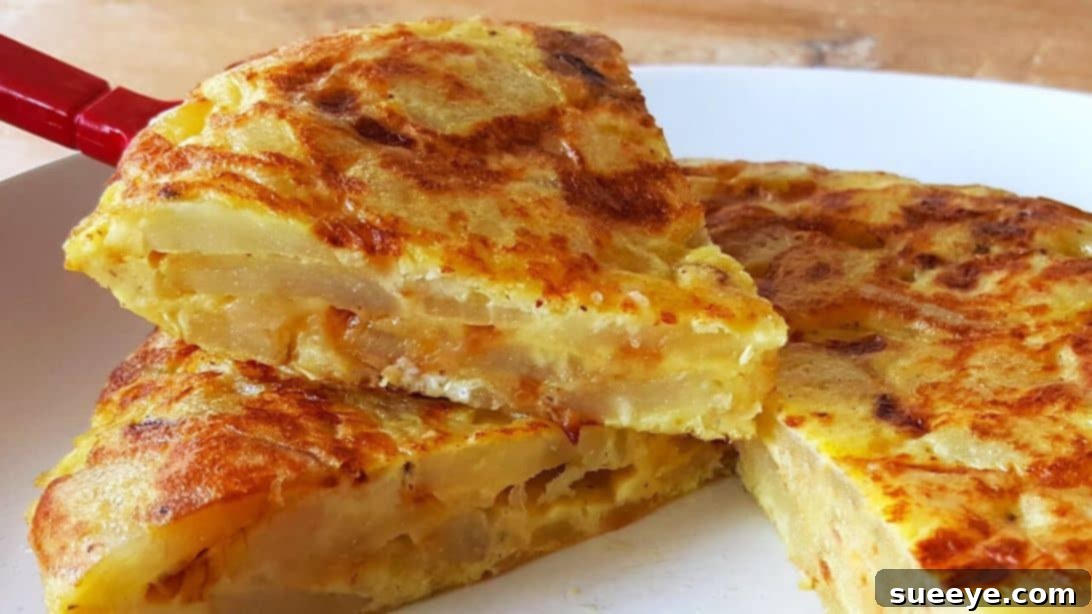
Easy & Authentic Spanish Omelet (Tortilla Española) Recipe – A Hearty Breakfast Delight
Are you searching for an exciting new breakfast recipe to revitalize your morning routine? Look no further than this incredibly simple yet utterly delicious Spanish Omelet recipe, also known as Tortilla Española. This culinary gem, inspired by talented creators like Breakfast For One, transforms humble ingredients into a truly satisfying dish that will quickly become a household favorite.
If your daily breakfast consists of the same plain omelet or sunny-side-up eggs, prepare to be amazed. The Spanish omelet offers a delightful twist, delivering a moist, flavorful, and incredibly filling experience. It’s generously packed with tender potatoes and sweet caramelized onions, making it a substantial meal that transcends breakfast, perfect for lunch, dinner, or even a delightful snack.
Why the Spanish Omelet Deserves a Spot on Your Table
The Tortilla Española is more than just an omelet; it’s a cultural icon in Spain, a staple found in tapas bars and family kitchens alike. Its universal appeal lies in its simplicity and the depth of flavor achieved with just a few core ingredients. This recipe is designed to be accessible for home cooks of all skill levels, ensuring you can recreate this authentic taste with ease. Whether you’re a potato enthusiast or simply seeking a comforting, savory meal, this Spanish omelet promises to deliver a taste sensation that will leave you completely satisfied.
Forget complicated cooking techniques or long lists of obscure ingredients. This easy Spanish omelet recipe requires only six fundamental components: fresh eggs, a starchy potato, a sweet onion, quality olive oil, salt, and freshly ground black pepper. Chances are, most of these items are already waiting in your pantry. The preparation itself is surprisingly quick, making it an ideal choice for a busy morning or a quick, nutritious meal any time the craving strikes.
RELATED: Don’t miss this equally convenient 6-Ingredient Air Fryer Potato Omelet Recipe for another fantastic potato-egg combination.
Looking for more breakfast inspiration? Check out this viral sensation: TikTok Waffle House Sandwich Recipe
Essential Ingredients for Your Perfect Tortilla Española
The beauty of a Spanish omelet lies in the quality and simplicity of its ingredients. Each component plays a crucial role in building the rich flavors and satisfying texture of this classic dish. Choosing the right type of potato, the freshest eggs, and a good olive oil can elevate your tortilla from good to truly exceptional.
- Eggs: Use fresh, large eggs. They are the binding force and the foundation of the omelet’s structure. For this recipe, we’ll use 3 eggs, ensuring a fluffy yet firm texture.
- Potatoes: Approximately 2 cups of thinly sliced potatoes, which usually translates to 1 medium Yukon Gold potato. Yukon Golds are ideal due to their waxy-starchy texture, which holds its shape while cooking and absorbs the flavors beautifully without becoming mushy. Consistency in slicing is key for even cooking.
- Onion: About 1 cup of thinly sliced onion. A yellow or white onion works best, softening and caramelizing to add a subtle sweetness and depth of flavor that complements the potatoes and eggs perfectly.
- Extra Virgin Olive Oil: 1/3 cup of good quality extra virgin olive oil. This is not just for cooking; it imparts a distinctive flavor that is characteristic of authentic Spanish cuisine. It’s essential for gently frying the potatoes and onions.
- Salt: 1/2 teaspoon of fine sea salt or kosher salt. Seasoning is crucial to bring out the natural flavors of the ingredients.
- Freshly Ground Black Pepper: To taste. A touch of freshly ground pepper adds a nice subtle warmth and spice.
Equipment You’ll Need
While the ingredients are simple, having the right tools can make the process smoother and more enjoyable, leading to a perfectly cooked Spanish omelet. Here’s what you’ll need:
- 10-inch Non-Stick Pan: A good quality non-stick pan is paramount, especially for flipping the omelet. A 10-inch size is ideal for the quantities specified in this recipe, allowing the omelet to cook evenly.
- Mandoline Slicer (Optional but Recommended): For achieving uniform, thin potato slices, a mandoline slicer is incredibly helpful. If you don’t have one, a sharp knife and steady hand will do.
- Large Mixing Bowl: Essential for beating the eggs and combining all the ingredients.
- Slotted Spoon: To remove the cooked potatoes and onions from the oil while leaving excess oil behind.
- Spatula: A sturdy, flexible spatula is needed for loosening the edges and assisting with the critical flip.
- Plate or Lid (for flipping): A flat plate larger than your pan, or a suitable lid, will be needed for the flipping technique.
Step-by-Step Guide: Crafting Your Perfect Spanish Omelet
Follow these detailed instructions to create a truly magnificent and authentic Spanish Omelet. Precision and patience are your best friends here, especially when it comes to cooking the potatoes and mastering the flip.
Step 1: Preparing the Vegetables
Begin by peeling your medium potato. Once peeled, the goal is to achieve consistently thin slices. Using a mandoline slicer, carefully slice the potato into approximately 1/5-inch thick rounds. This uniform thickness is vital for even cooking. If you’re using a knife, take your time to slice them as thinly and evenly as possible. After slicing, cut these rounds into quarters or halves, depending on the size of your potato, to create bite-sized pieces that distribute well throughout the omelet. Similarly, thinly slice your onion, aiming for uniform pieces that will cook down beautifully alongside the potatoes.
Step 2: Sautéing Potatoes and Onions to Perfection
Place your 10-inch non-stick pan over medium heat. Once the pan is adequately hot, pour in 1/3 cup of extra virgin olive oil. Allow the oil to heat gently over medium heat until it begins to shimmer, indicating it’s ready. Add your sliced potatoes and onions to the hot oil. Toss them thoroughly to ensure every piece is coated in the fragrant olive oil. Cook this mixture for about 10 to 15 minutes over medium heat, stirring and flipping every 3 to 4 minutes to prevent sticking and encourage even browning. It’s crucial to adjust the temperature between medium and medium-high as needed to ensure the vegetables cook through without burning. You can test the potatoes for doneness by poking them with a fork – they should be fork-tender and slightly golden brown. Once cooked, use a slotted spoon to carefully remove the tender potatoes and onions from the pan, transferring them to a bowl. Leave approximately 1 tablespoon of the flavorful olive oil in the pan; this will be used for cooking the omelet itself.
Step 3: The Egg and Potato Marriage – A Crucial Resting Period
In a separate large mixing bowl, crack your 3 eggs. Beat them thoroughly until they are smooth and well combined, with no visible streaks of egg white or yolk. To this beaten egg mixture, add the cooked, tender potatoes and onions, along with 1/2 teaspoon of salt and a generous grind of fresh black pepper. Stir gently to ensure all the potato and onion pieces are coated with the egg mixture. This step is more than just mixing; it’s an opportunity for flavors to meld. Cover the bowl and let the mixture sit for 15 to 20 minutes. This resting period is critical: it allows the potatoes to absorb some of the egg, resulting in a more cohesive, moist, and flavorful omelet that holds together beautifully when cooked.
Step 4: The Initial Cook and The Crucial Flip
Turn the heat back on under the pan where you left the tablespoon of olive oil. Ensure the oil is hot but not smoking. Once the oil is shimmering, pour the potato and egg mixture into the pan. Spread it out evenly, ensuring the potatoes and onions are distributed throughout. Cook over medium to high heat for about 1 minute, or until the edges begin to set and slightly pull away from the pan. The bottom should start to turn golden. Immediately reduce the heat to medium-low and continue cooking for another 2 to 3 minutes. At this point, the top of the omelet should still be noticeably runny in the center. Carefully loosen the edges of the omelet with a spatula. Now comes the defining moment: place a large, flat plate or a lid larger than your pan over the top of the omelet. With confidence and a quick, decisive motion, carefully flip the pan upside down onto the plate, transferring the partially cooked omelet.
Step 5: Achieving Golden Perfection and Desired Doneness
Once flipped onto the plate, gently slide the omelet back into the pan, uncooked side down. This side will now cook to perfection. Cook over medium to high heat for a minute or two, allowing the bottom to become beautifully golden brown and form a slight crust. Then, reduce the heat to medium-low and continue cooking for another 1 to 2 minutes, or until the center is almost set but still wonderfully moist. The traditional Spanish omelet is often slightly soft and creamy in the middle, but you can adjust the cooking time to achieve your preferred level of doneness—from very moist to fully set.
Step 6: Serve and Savor Your Creation
Once cooked to your liking, transfer the glorious Spanish omelet to a serving plate. Let it rest for just a minute or two before slicing into wedges. Serve immediately while it’s still warm, allowing the flavors to truly shine. This dish is versatile enough to be enjoyed on its own or paired with various accompaniments.
Expert Tips for a Flawless Spanish Omelet
Mastering the tortilla española involves a few key techniques. Keep these tips in mind to ensure your omelet turns out perfectly every time:
- Potato Choice Matters: Opt for starchy or all-purpose potatoes like Yukon Gold or Russet. Their texture breaks down beautifully and absorbs the egg and oil flavors, leading to a moist interior.
- Consistent Slicing: Uniform potato and onion slices are crucial for even cooking. A mandoline slicer is a game-changer for this.
- Don’t Skimp on Olive Oil: The olive oil isn’t just for cooking; it’s a foundational flavor. Use a good quality extra virgin olive oil, and don’t be afraid to use the recommended amount for frying the vegetables.
- Gentle Frying: Cook the potatoes and onions slowly over medium heat. This allows them to become tender and slightly caramelized without burning, bringing out their natural sweetness.
- The Resting Period: Don’t skip the 15-20 minute rest after mixing the eggs, potatoes, and onions. This allows the flavors to meld and the potatoes to absorb some egg, creating a more stable and delicious omelet.
- Mastering the Flip: The flip is often the most intimidating part. Use a plate larger than your pan. Be quick and confident. If you’re nervous, practice with a cold pan and a lid first. Alternatively, if a direct flip is too daunting, you can cook the omelet until almost set on one side, then place it under a broiler for a few minutes to cook the top.
- Heat Control is Key: Pay attention to your heat settings. Too high, and the outside burns before the inside cooks; too low, and it might not brown properly. Adjust as needed throughout the cooking process.
- Internal Doneness: Traditional Spanish omelets are often slightly runny and creamy in the center. Adjust cooking time based on your preference for a firmer or softer interior.
Serving Suggestions & Pairings
A classic Spanish omelet is a dish that truly stands on its own, but it also pairs wonderfully with a variety of sides to complete your meal. For a simple breakfast, enjoy it with a strong cup of coffee and a slice of crusty bread. For a more elaborate brunch or lunch, consider serving it alongside a fresh green salad with a light vinaigrette, a side of roasted red peppers, or a dollop of homemade aioli for an extra burst of flavor. It also makes for an excellent addition to a tapas spread, cut into small cubes and served with toothpicks.
Creative Variations for Your Tortilla
While the traditional Spanish omelet is perfect in its simplicity, it also lends itself beautifully to creative variations. Feel free to experiment with additional ingredients to customize your tortilla:
- Meaty Additions: Sauté finely diced chorizo, serrano ham, or bacon with the potatoes and onions for a savory, smoky flavor.
- Vegetable Enhancements: Add diced bell peppers, spinach (wilted before adding), or mushrooms for extra nutrition and flavor. Ensure any added vegetables are cooked down and excess moisture is removed to prevent a watery omelet.
- Cheesy Twist: Fold in some grated Manchego cheese or a mild cheddar with the eggs for a gooey, cheesy interior.
- Herbs and Spices: Incorporate fresh herbs like chopped parsley or chives, or a pinch of paprika for an aromatic touch.
- Spicy Kick: A pinch of cayenne pepper or finely diced jalapeños can add a pleasant heat.
Storage and Reheating
One of the many charms of the Spanish omelet is how well it keeps. Leftovers can be stored in an airtight container in the refrigerator for up to 3-4 days. It’s delicious served cold or at room temperature, making it a fantastic option for packed lunches or picnics. To reheat, you can gently warm slices in a pan over low heat until heated through, or microwave for a minute or two until warm. Be careful not to overheat, as this can dry out the eggs.
Final Thoughts: Embrace the Flavor of Spain
This easy Spanish omelet recipe is more than just a meal; it’s an invitation to experience the rich, comforting flavors of traditional Spanish cuisine. With just a few simple ingredients and clear steps, you can create a hearty, satisfying dish that is perfect for any time of day. Whether you’re looking for a filling breakfast, a delightful lunch, or a light dinner, this Tortilla Española is sure to impress. Give it a try, and prepare to fall in love with this timeless classic!