
The Ultimate Guide to Effortless Potato Peeling: A Game-Changing Kitchen Hack
For many home cooks and professional chefs alike, the task of peeling potatoes is often considered one of the most tedious and time-consuming steps in meal preparation. The traditional methods—whether using a manual peeler or a paring knife—can lead to aching wrists, slippery surfaces, and a scattered mess of potato skins across the kitchen counter. But what if there was a dramatically simpler, faster, and almost magical way to get your potatoes perfectly peeled? Prepare to have your kitchen routine transformed, because this ingenious potato peeling hack, brilliantly showcased by DaveHax on YouTube, is a true game-changer. It’s a method so straightforward, so efficient, and so incredibly mess-free that you’ll wonder how you ever managed without it.
Gone are the days of laboriously scraping away at stubborn skins, losing valuable potato flesh in the process, or wrestling with awkward shapes. This technique not only saves you precious time but also minimizes waste and keeps your kitchen remarkably cleaner. It’s a brilliant solution for anyone who frequently cooks with potatoes, from preparing a simple weeknight mashed potato dish to an elaborate holiday feast requiring a large batch. This article will walk you through every step of this revolutionary approach, ensuring you can replicate its success in your own kitchen with absolute ease.
Why This Potato Peeling Hack Will Transform Your Kitchen Experience
The frustrations associated with traditional potato peeling are numerous. Manual peelers can be clumsy and require significant pressure, often leading to hand fatigue, especially when dealing with a large quantity of potatoes. Knives, while offering more control for some, can be slower and pose a higher risk of nicks and cuts. Beyond the physical effort, there’s the inevitable clean-up: small, damp potato peelings clinging to every surface. This hack addresses all these common pain points directly.
Imagine a scenario where the potato skins literally slide off with minimal effort, leaving behind a perfectly smooth, ready-to-cook potato. That’s precisely what this method delivers. It leverages a simple principle of thermal expansion and contraction to naturally separate the skin from the flesh, making manual removal almost obsolete. The process is incredibly clean, largely eliminating the scattered debris that often accompanies peeling. It’s not just a time-saver; it’s a stress-reducer, allowing you to focus on the more enjoyable aspects of cooking. Whether you’re a seasoned chef or a novice in the kitchen, this hack is accessible, effective, and guaranteed to become a staple in your food preparation repertoire.
Materials You’ll Need for Effortless Potato Peeling
One of the most appealing aspects of this hack is that it requires no specialized gadgets or expensive tools. You likely already have everything you need readily available in your kitchen.
- Potatoes: Any variety will work, but thinner-skinned potatoes tend to yield the most dramatic results.
- A Sharp Knife: A small paring knife or a chef’s knife will do. Ensure it’s sharp for a clean, precise cut.
- A Large Pot: Big enough to comfortably hold your potatoes and enough water to submerge them.
- Water: For boiling and for a cold shock bath.
That’s it! No fancy peelers, no electric gadgets, just basic kitchen essentials put to ingenious use.
Step-by-Step Directions: Mastering the Easy Potato Peel
Following these simple steps will ensure you achieve perfectly peeled potatoes every single time. Pay close attention to the details, as precision in each stage contributes to the hack’s incredible effectiveness.
Step 1: Prepare Your Potatoes
Begin by thoroughly washing your potatoes under cold running water to remove any dirt or debris. While the skin will be discarded, starting with clean potatoes ensures a hygienic process. For best results, try to select potatoes that are relatively uniform in size. This helps them cook evenly, which is crucial for the skin separation process. If you have a mix of very large and very small potatoes, you might consider processing them in separate batches to ensure optimal cooking for each.
Step 2: The Critical Circular Cut
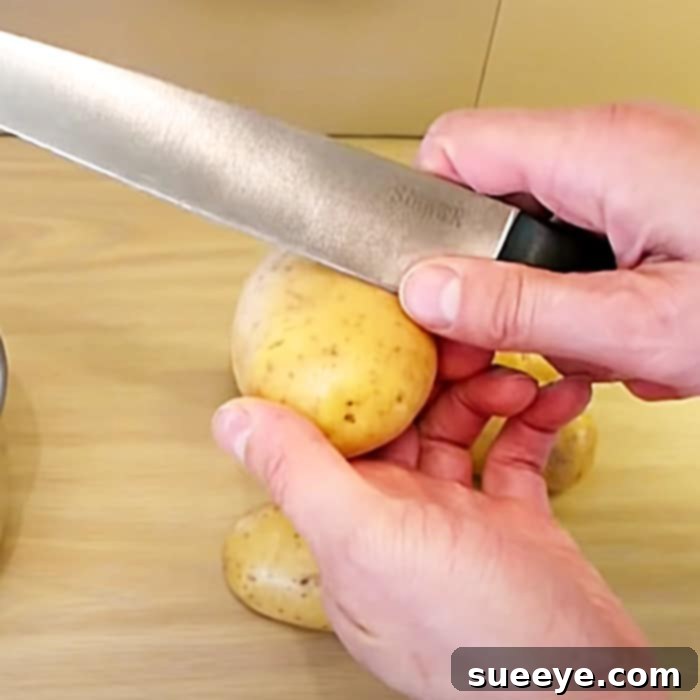
This is arguably the most crucial step in the entire process. Using your sharp knife, make a single, shallow circular cut around the equator of each potato. The cut should go just deep enough to penetrate the skin, but not into the flesh itself. Think of it as scoring the skin. The goal is to create a clean break in the skin’s surface without severing the potato in half. Take care not to cut too deeply, as this can lead to the potato breaking apart during boiling. A steady hand and a sharp knife make this step much easier and safer. This score line acts as a pre-determined fault line, along which the skin will easily separate once cooked.
Step 3: The Boiling Phase
Place all your scored potatoes into a large pot. Fill the pot with enough cold water to fully submerge all the potatoes by at least an inch or two. Bring the water to a rolling boil over high heat. Once boiling, reduce the heat slightly to maintain a steady simmer and cook the potatoes until they are just tender when pierced with a fork. Be careful not to overcook them to the point of being mushy; they should be firm enough to handle but soft enough for the skin to have loosened. The cooking time will vary depending on the size and type of potatoes, typically ranging from 10 to 20 minutes. It’s essential that the heat penetrates the potato fully to allow for optimal skin separation.
Step 4: The Cold Water Shock
Once your potatoes are cooked to the desired tenderness, carefully drain the hot water from the pot. Immediately, without delay, rinse the potatoes under very cold running water, or even better, transfer them into a bowl of ice water. The sudden change in temperature, known as thermal shock, is key to this hack. The hot potato flesh expands, pushing against the skin, and when rapidly cooled, the flesh contracts. The skin, having a different elasticity and cooling rate, separates from the flesh along the score line you made earlier. Allow them to cool in the cold water for a minute or two until they are cool enough to comfortably handle.
Step 5: The Magical Peel
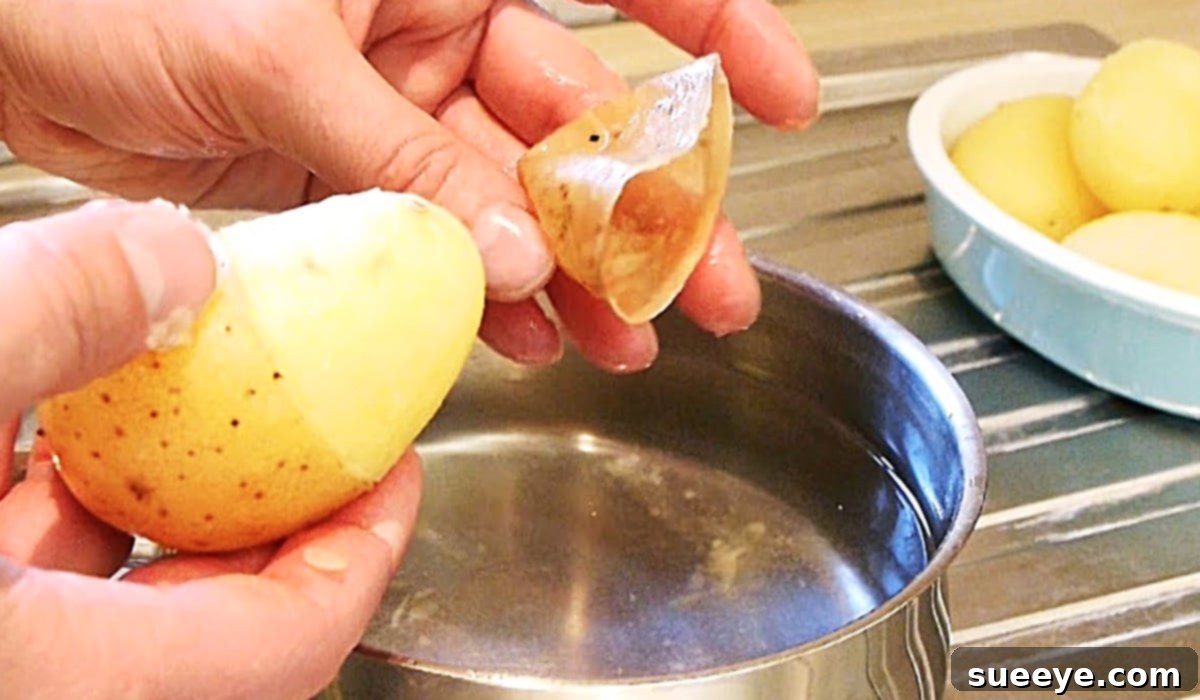
Once the potatoes are cool to the touch, simply grasp each potato and gently twist or pull at the skin from the circular cut. You will find that the skin slides off effortlessly, often in two large halves, revealing a perfectly smooth, naked potato underneath. It truly feels like magic! If any small parts of the skin remain, they can be easily rubbed off with your fingers. This step is incredibly satisfying and highlights the true genius of DaveHax’s method.
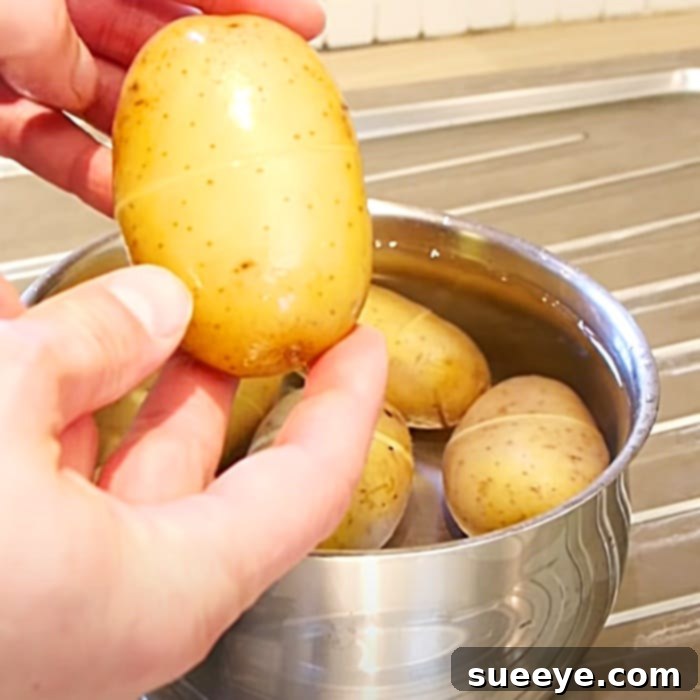
Then the skin will peel away so easily!
Tips for Perfection and Troubleshooting Your Potato Peeling Hack
While this method is incredibly straightforward, a few additional tips can help ensure your success and address any potential issues:
Choosing the Right Potatoes
This hack works best with thinner-skinned potato varieties like Yukon Golds, Red Bliss, or new potatoes. Russet potatoes, with their thicker and sometimes tougher skins, can also be peeled this way, but the skin might require a slightly firmer tug. Waxy potatoes, which hold their shape well after boiling, are generally excellent candidates for this method.
Knife Safety is Paramount
Always exercise caution when handling knives. Ensure your cutting surface is stable, and always cut away from your body. The circular cut is shallow, but a slip can still occur if not careful. A firm grip on the potato is essential.
Avoid Overcooking
Overcooked potatoes can become mushy, making them difficult to handle and peel cleanly. They might also break apart when subjected to the cold shock. Aim for ‘just tender’ – firm enough to hold their shape, but soft enough to be easily pierced.
What If the Skin Doesn’t Slide Off?
If you encounter resistance, there are a few potential reasons:
- Cut Not Deep Enough: The score line might not have penetrated the skin sufficiently.
- Not Enough Cold Shock: The thermal difference wasn’t great enough. Try a longer dip in ice-cold water.
- Under-cooked Potatoes: If the potato wasn’t cooked enough, the skin won’t have loosened from the flesh. In this case, you can try boiling them for a few more minutes, then repeating the cold shock.
Usually, a slight adjustment to one of these steps will resolve the issue, and the skin will come right off.
Batch Peeling for Large Quantities
This method truly shines when you need to peel a large quantity of potatoes. The efficiency gained by preparing multiple potatoes at once (scoring them all, then boiling them together) is enormous compared to peeling each one individually. Invest in a large pot, and you can significantly cut down your prep time for big family meals or meal prepping.
Beyond Peeling: What to Do with Your Perfectly Peeled Potatoes
Once your potatoes are beautifully peeled, the culinary possibilities are endless! They are now ready for any recipe that calls for peeled potatoes. You can immediately move on to mashing them into a creamy side dish, cutting them into cubes for roasting with herbs and garlic, slicing them for gratins, or even preparing them for a comforting potato salad. Their smooth, clean surface ensures even cooking and a delightful texture in your final dish.
Conclusion: Embrace the Simplicity of This Game-Changing Hack
This easy potato peeling method truly changed my life in the kitchen, and it has the potential to do the same for yours. What initially seemed like a mundane and arduous chore has been transformed into a quick, clean, and surprisingly enjoyable step in meal preparation. By adopting this simple yet brilliant technique shared by DaveHax, you can reclaim valuable time, reduce kitchen mess, and say goodbye to the frustration of traditional potato peeling forever. Give it a try the next time you’re faced with a pile of potatoes; you’ll be amazed at how effortlessly the skins come off, leaving you with perfectly prepared potatoes ready for your culinary creations. Happy cooking!