
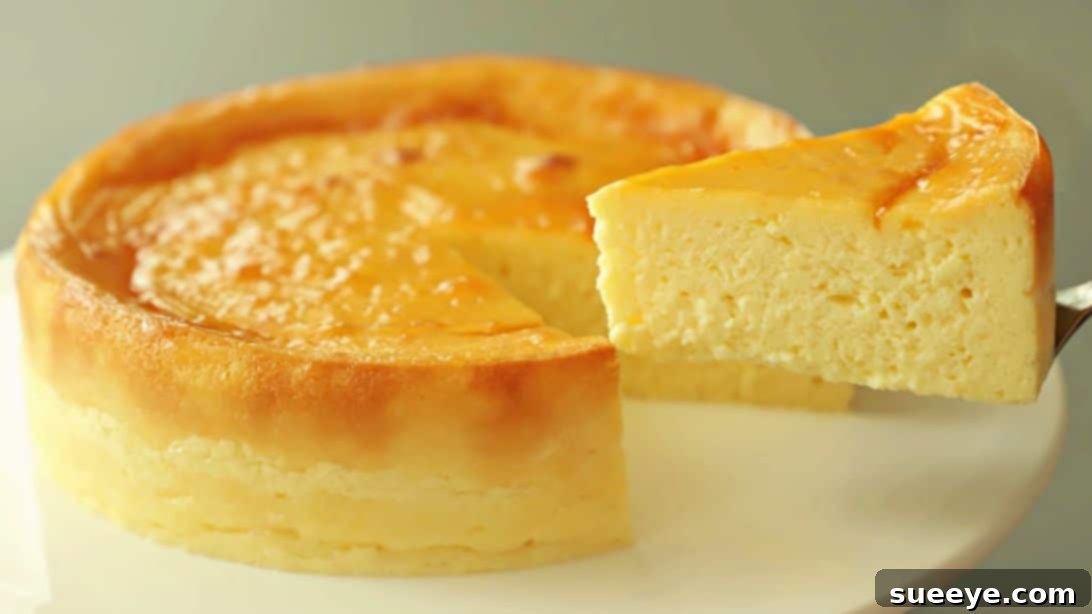
Master the Art of Baking: Easy & Fluffy Custard Soufflé Cheesecake Recipe
Imagine a dessert that’s as light as a cloud, rich with creamy custard, and melts in your mouth with every bite. That’s exactly what you get with a homemade Custard Soufflé Cheesecake! For too long, baking a soufflé cheesecake has been perceived as a daunting task, reserved only for expert bakers. However, this incredibly easy recipe is here to shatter that misconception, proving that even novice bakers can achieve a show-stopping dessert that will leave everyone craving more.
This particular recipe has become a family favorite in my home, disappearing moments after it’s served. The joy of creating something so utterly delicious and watching loved ones savor every mouthful is truly unparalleled. This guide will walk you through each step, ensuring you gain confidence in the kitchen while preparing a dessert that rivals any professional patisserie. Get ready to impress your family and friends with this divine treat, inspired by the wonderful culinary artistry of Cooking tree 쿠킹트리 on YouTube.
Why This Custard Soufflé Cheesecake Will Be Your New Favorite
What sets a soufflé cheesecake apart from its denser New York-style cousin? It’s all about the texture – an ethereal lightness combined with a delicate creaminess. This recipe marries the classic richness of cheesecake with the airy elegance of a soufflé, resulting in a dessert that’s both comforting and sophisticated. The custard base adds an extra layer of velvety smoothness, making each forkful an exquisite experience. Furthermore, its relatively simple preparation, focusing on proper mixing techniques and baking at the right temperature, makes it highly accessible for home bakers.
Unlike many complex recipes, this Custard Soufflé Cheesecake doesn’t require an extensive list of exotic ingredients. Most items are readily available in any grocery store, making it a convenient choice for a spontaneous baking session or a planned celebration. The balance of sweet cream cheese, fragrant vanilla, and a hint of lemon creates a harmonious flavor profile that is neither too heavy nor overly sweet, making it an ideal dessert for any time of year.
Essential Ingredients for Your Soufflé Cheesecake
Gathering all your ingredients before you begin is a crucial step that ensures a smooth and enjoyable baking process. Quality ingredients make a noticeable difference in the final taste and texture of your cheesecake. Opt for fresh, room-temperature dairy products for optimal blending and emulsification.
- 3 large egg yolks
- 1½ tbsp granulated sugar (for yolks)
- 2¾ tbsp cornstarch
- ¾ cup warm milk (full-fat recommended for richness)
- 1 tsp vanilla bean paste (or pure vanilla extract for a classic flavor)
- 1½ tbsp unsalted butter, softened
- 1 cup (8 oz/226g) cream cheese, softened
- 2 tsp fresh lemon juice
- 1¼ tbsp cake flour (sifted, for a lighter texture)
- 3 large egg whites
- 4 tbsp granulated sugar (for meringue)
- Apricot jam, for glazing and presentation
Recommended Baking Equipment
Having the right tools at hand will streamline your baking process and help you achieve the best results for your soufflé cheesecake. While some items are essential, others simply make the experience more efficient.
- Medium-sized saucepan
- Whisks (both balloon and flat whisks are useful)
- Several mixing bowls
- Fine-mesh sieve
- Rubber spatula
- Hand mixer or stand mixer with a whisk attachment
- 6-inch or 7-inch round cake pan (springform recommended for easy unmolding)
- Parchment paper
- Large roasting pan (for water bath)
- Oven thermometer (for accurate temperature control)
- Cooling rack
Step-by-Step Guide to Your Perfect Soufflé Cheesecake
Step 1: Crafting the Velvety Custard Base
The foundation of this delightful cheesecake is a rich, smooth custard. Begin by carefully separating the egg yolks from the whites. Place the egg yolks into a medium-sized saucepan. Add the first portion of granulated sugar (1½ tbsp) to the yolks. Using a whisk, thoroughly combine the sugar and yolks until the mixture is pale yellow and smooth. This initial whisking helps to dissolve the sugar and create a homogeneous base.
Next, sift the cornstarch directly into the egg yolk mixture. Whisk well until there are no lumps and the cornstarch is fully incorporated, forming a thick paste. Gradually, pour in the warm milk, continuously whisking to ensure a smooth, lump-free batter. The warmth of the milk helps to temper the eggs and prevent curdling. Finally, stir in the vanilla bean paste for that exquisite aroma and flavor.
Place the saucepan over medium heat on your stove. It’s crucial to stir continuously and relatively quickly as the mixture heats up. The custard will begin to thicken quite rapidly; you’ll notice it coating the back of your spoon. As soon as it reaches a thick, pudding-like consistency, immediately remove it from the heat. This prevents overcooking the eggs. While still warm, stir in the unsalted butter until it has completely melted and is fully incorporated, adding a luscious richness to your custard. Set this custard cream aside to cool slightly.
In a separate large mixing bowl, break up the softened cream cheese with a whisk or a rubber spatula until it is completely smooth and free of any lumps. Achieving a smooth cream cheese base is vital for the final texture of your cheesecake. Gradually add the still-warm (but not hot) custard cream mixture to the whisked cream cheese, stirring gently until well combined. Sift the cake flour directly over this mixture, then add the fresh lemon juice. Continue whisking everything together until the batter is perfectly smooth, homogeneous, and silky. Set this flavorful cream cheese custard batter aside.
Step 2: Whipping the Airy Meringue and Folding the Batters
The characteristic lightness of a soufflé cheesecake comes from the perfectly whipped egg whites, known as meringue. In a very clean, dry mixing bowl (ensure no grease or yolk is present, as this will prevent the whites from whipping properly), begin to beat the three egg whites using a hand mixer or a stand mixer with a whisk attachment. Start on medium speed until the whites become foamy and opaque.
Once foamy, gradually add the second portion of granulated sugar (4 tbsp) in three additions. Continue beating the egg whites, increasing the speed to medium-high after each sugar addition. Beat until soft peaks form. This means that when you lift the whisk, the peaks of egg white will hold their shape but curl over slightly at the tip. Be careful not to overbeat, as stiff, dry peaks can make the cheesecake less tender.
Before combining, give your cream cheese custard mixture another quick stir to ensure it’s still smooth. Now, it’s time to gently fold the meringue into the custard. This step is crucial for maintaining the airy texture. Take about half of the soft-peak meringue and add it to the cream cheese custard batter. Using a rubber spatula, gently fold the meringue into the custard using a circular motion, scraping the bottom of the bowl and turning it over. Continue until just combined – don’t overmix.
Add the remaining meringue and gently fold it in. The goal is to incorporate the meringue without deflating too much of the air. You should aim for a light, uniformly mixed batter with a beautiful, airy consistency. This careful folding technique is what contributes to the cheesecake’s signature soufflé-like texture.
Step 3: Baking to Golden Perfection with a Water Bath
Preparation for baking is key to preventing cracks and achieving an evenly cooked cheesecake. Line the bottom and sides of your chosen cake pan (a 6 or 7-inch springform pan works best) with parchment paper. This makes unmolding significantly easier and helps to protect the cake during the water bath. Pour the airy cheesecake batter into the prepared pan, spreading it gently and evenly with a spatula to create a smooth top surface.
The secret to a moist, crack-free soufflé cheesecake is the water bath (bain-marie). Place your cake pan into a larger roasting pan. Carefully pour boiled water into the larger pan, ensuring the water level comes about halfway up the sides of the cake pan. This creates a moist baking environment, preventing the cheesecake from drying out and cracking, and also ensures a gentle, even bake.
Preheat your oven to 150°C (302°F). Carefully transfer the roasting pan with the cake pan inside to the preheated oven. Bake for approximately 60 minutes. Baking times can vary slightly depending on your oven, so keep an eye on it. The cheesecake is done when it’s puffed up, golden brown on top, and a skewer inserted into the center comes out clean or with moist crumbs. The center should have a slight jiggle, indicating its creamy texture.
Step 4: The Grand Finale – Chilling, Glazing, and Serving
Once your cheesecake is baked to perfection, resist the urge to pull it out immediately! The crucial cooling process begins in the oven. Turn off the oven, crack the door open slightly, and allow the cheesecake to cool gradually inside for at least an hour. This slow cooling prevents sudden temperature changes that can cause the cheesecake to sink or crack. After this initial cooling, carefully remove the cheesecake from the water bath and the roasting pan, and let it cool completely on a wire rack at room temperature.
For the best texture and flavor, chilling is essential. Once completely cooled, transfer the cheesecake (still in its pan) to the refrigerator and let it chill for at least 4 hours, or preferably overnight. Chilling allows the cheesecake to firm up, develop its full flavor, and become easier to slice cleanly. After chilling, carefully unmold the cheesecake from the pan and gently peel away the parchment paper from the sides and bottom.
Transfer the beautifully baked and chilled cheesecake to your chosen serving plate. For an extra touch of elegance and a burst of fruity flavor, warm up some apricot jam (you can microwave it for a few seconds to make it more spreadable) and spread it evenly over the top surface of the cheesecake. This creates a lovely glossy glaze. Now, slice the cheesecake into generous portions, serve, and prepare to receive rave reviews! Its airy texture and rich flavor make it a truly unforgettable dessert.
Pro Tips for Soufflé Cheesecake Perfection
Achieving a flawless soufflé cheesecake is within your reach with these expert tips:
- Room Temperature Ingredients: Ensure cream cheese, butter, and eggs are at room temperature. This allows them to emulsify better, creating a smoother, lump-free batter.
- Clean Bowl for Meringue: Any trace of grease or egg yolk will prevent egg whites from whipping to their full volume. Always use a scrupulously clean, dry bowl and whisk for your meringue.
- Gentle Folding: The lightness of the soufflé cheesecake hinges on the air incorporated into the meringue. Fold the meringue into the custard gently and in stages to avoid deflating the batter.
- Accurate Oven Temperature: An oven thermometer is your best friend. Soufflé cheesecakes are sensitive to temperature fluctuations; baking at too high a temperature can cause cracking and a dry texture.
- Water Bath is Non-Negotiable: Do not skip the water bath. It provides a moist environment, ensuring a slow, even bake and preventing the top from cracking or burning.
- Patience During Cooling: Gradual cooling is essential. Cooling too quickly can cause the cheesecake to dramatically sink or crack. Allow it to cool in the oven first, then at room temperature, and finally in the fridge.
- Don’t Overmix: Overmixing at any stage, especially after adding flour or when folding in meringue, can develop gluten and toughen the cheesecake.
Serving and Storage Recommendations
Your Custard Soufflé Cheesecake is a star on its own, especially with the apricot glaze. However, you can elevate the experience further with a few simple additions. Serve it alongside fresh berries (strawberries, raspberries, or blueberries), a dollop of whipped cream, or a light fruit coulis for an extra burst of flavor and color. For a cozy treat, pair it with a warm cup of coffee or tea.
To store any leftover cheesecake, cover it tightly with plastic wrap or place it in an airtight container. It will keep beautifully in the refrigerator for up to 3-4 days. While it’s best enjoyed fresh, the flavors can sometimes deepen a bit after a day or two in the fridge. Freezing is generally not recommended for soufflé cheesecakes as it can alter their delicate texture upon thawing.
Experience the Joy of Homemade Soufflé Cheesecake
Baking this Custard Soufflé Cheesecake is more than just following a recipe; it’s an experience that culminates in a truly spectacular dessert. The journey from separating eggs to the final slice is filled with simple yet rewarding steps, resulting in a cake that embodies both elegance and comfort. The ease of preparation, combined with the overwhelmingly positive reactions from anyone who tastes it, makes this recipe an absolute keeper.
So, why wait? Gather your ingredients, prepare your kitchen, and embark on this delightful baking adventure. You’ll be amazed at how simple it is to create such a light, airy, and utterly delicious soufflé cheesecake right in your own home. Share the joy with your loved ones, and savor every exquisite moment!
For a visual guide and expert demonstration, be sure to watch the comprehensive video tutorial by Cooking tree 쿠킹트리 on YouTube. This visual aid will undoubtedly enhance your baking experience and ensure a successful outcome, providing tips and techniques straight from the pros.
*All image credit belongs to Cooking tree 쿠킹트리 via YouTube. Follow and subscribe to their channel for more inspiring recipes and baking adventures!