Quilting Ideas
22 Cozy DIY Blankets and Throws You Can Make
DIY blankets and throws to make: a giant tassel throw, a no sew fleece patchwork, an indigo dyed picnic blanket, a rag quilt and a chunky knit afghan.
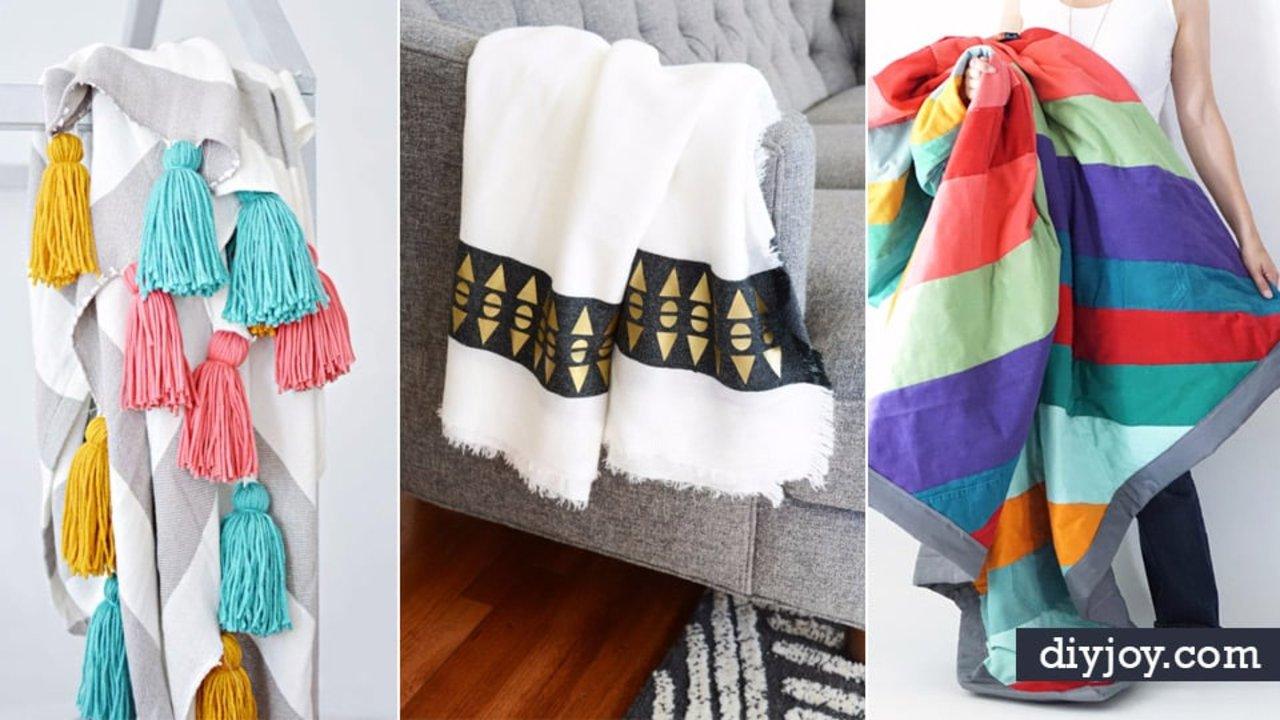
DIY blankets and throws are the rare project that pays you back every single evening. A throw costs real money in a shop and almost nothing to make, and half the ideas here need no sewing at all. There are tassels tied onto a plain store bought blanket, fleece squares knotted together with no machine involved, a cotton sheet folded and dunked in indigo, a rag quilt that frays on purpose, and a chunky knit afghan worked on a hook the size of a broom handle. Some take an afternoon, a couple take five minutes, and one is an entire quilt, so pick according to how much evening you have. Every project links back to the person who worked it out.
1. DIY Giant Tassel Throw Blanket
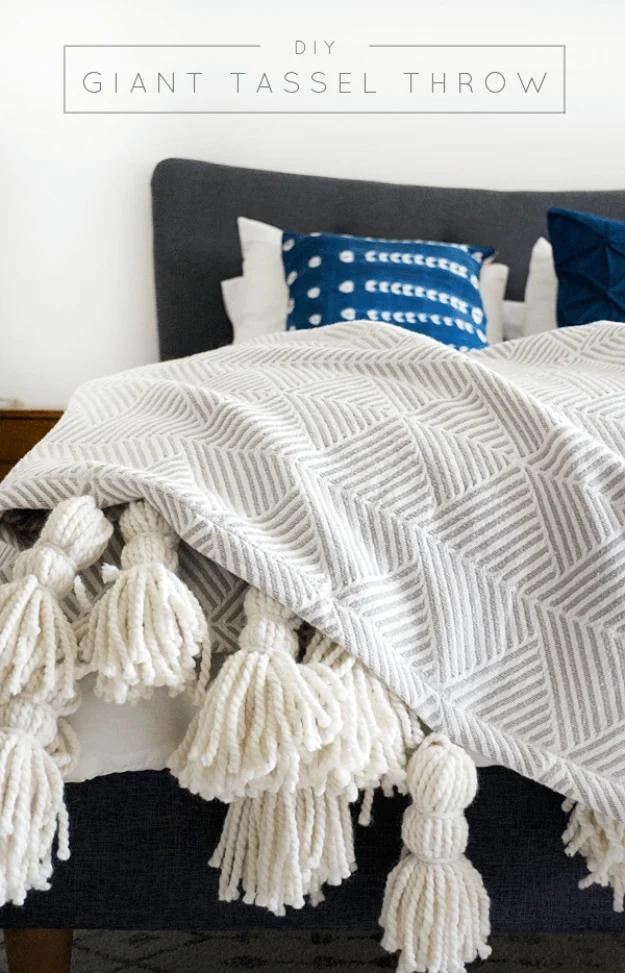
Oversized cream tassels hand sewn along the edge of a plain bought throw, and the scale is what sells it. Brepurposed wraps bulky yarn around a piece of cardboard thirty times per tassel, slides a length of string underneath, ties it loosely, cuts the bottom free and then tightens the knot, finishing with a second wrap an inch or two down. The base blanket came from Target, chosen neutral but with a subtle pattern. Lay the blanket flat and mark placements with tape before stitching. Worth knowing before you start: this one is not going in the washing machine.
Get the full tutorial at Brepurposed.
2. Throw Blanket With A Geometric Patterned Edge
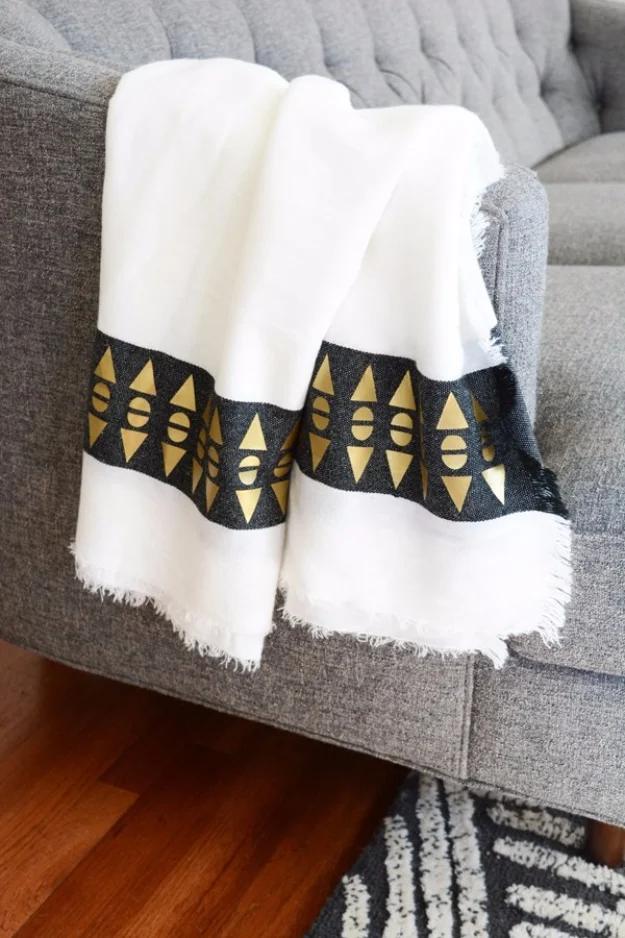
Metallic gold iron on vinyl cut into a row of geometric shapes and pressed along the border of a plain white throw, and the effect is closer to a boutique textile than a craft project. Oleander + Palm used a ready made design from the Cricut Design Space Make It Now library, which means the cut file and the material settings come bundled rather than needing to be worked out. A heads up on the photographs: the striped piece in the styling shots is an oversized scarf, not the blanket. The post is a sponsored collaboration and the full cutting instructions live in the linked project.
Get the full tutorial at Oleander + Palm.
3. DIY Tassel Throw Blanket
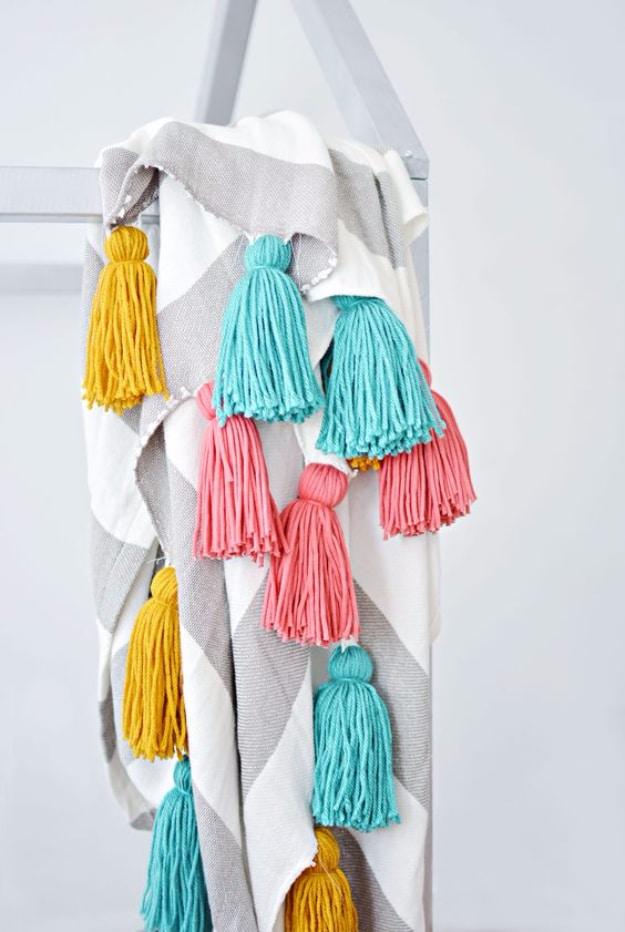
A gray and white geometric throw hung over a rail with fat yarn tassels in mustard, coral and teal running down one edge, and the color choice is the whole idea: three bright shades against a quiet blanket rather than one matched tone. Tassels can be made from almost anything ropelike, which the post lists as leather strips, old t shirt yarn, ribbon, cord, bakers twine and even paper. Worth flagging before you click: the page is a short preview and sends you to another site for the actual measurements and attachment steps.
Get the full tutorial at Little Inspiration.
DIY Blankets
4. DIY Indigo Dyed Blanket
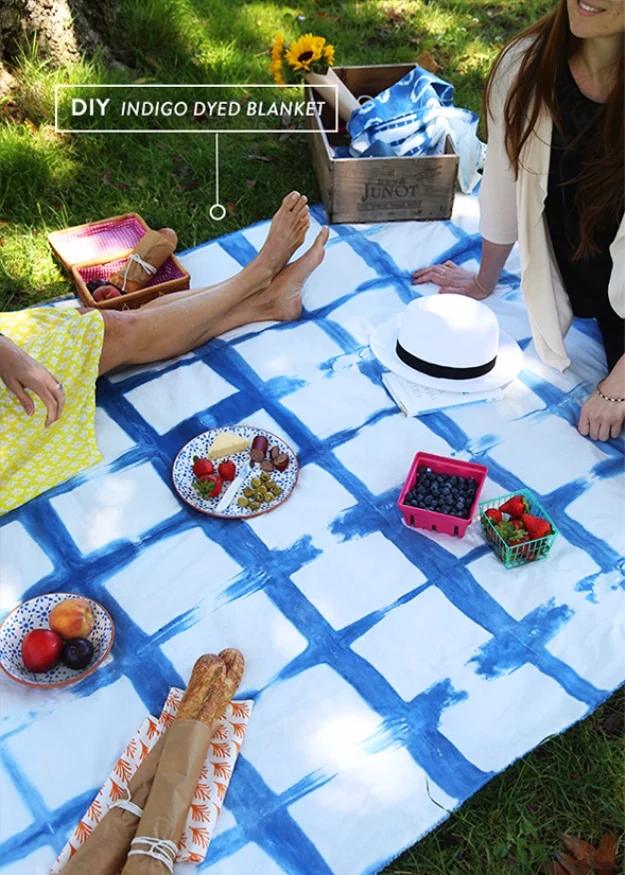
A cotton sheet folded, clamped and dipped in indigo until it comes out as a soft blue grid, used here as a picnic blanket on the grass. Say Yes accordion folds the fabric and then either clamps boards across it, which guarantees big white blocks, or binds it with a lot of rubber bands the way you would for tie dye. The dye needs about thirty minutes to sit before you use it, a couple of minutes of gentle pressing in the bucket, then roughly fifteen minutes of oxidising. Do not panic when it comes out green, because that green turns indigo in the air.
Get the full tutorial at Say Yes.
5. Patchwork Sweater Blanket
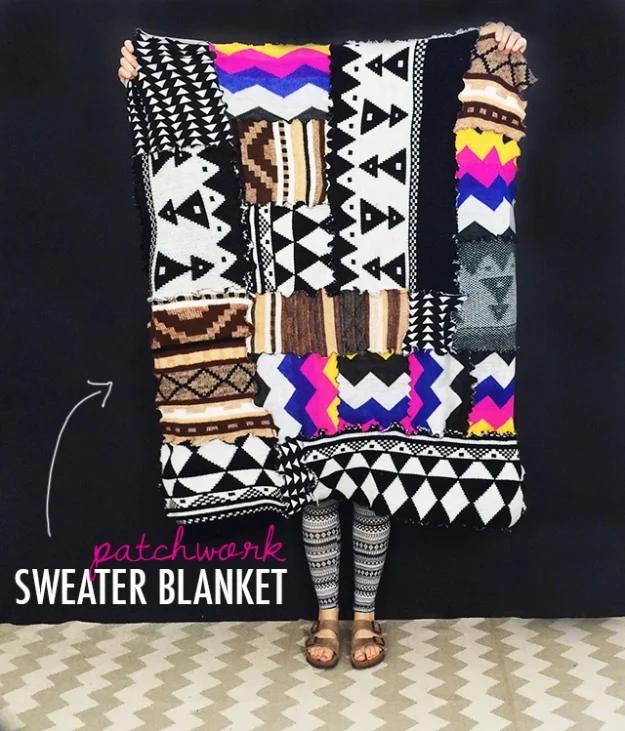
Thrifted sweaters cut into mismatched squares and rectangles and zigzagged together, and the clashing patterns are the point rather than an accident. Alisa Burke keeps a stash of charity shop sweaters picked for color or pattern and used four for this one. Pin the pieces, then use a really tight zigzag stitch, which holds knitwear together and stops the cut edges unravelling. Here is the lovely part nobody expects: sewing knits with a zigzag makes the seams curl, so the surface gets texture for free. She leaves it unbacked deliberately, stitching on the outside so the seams show.
Get the full tutorial at alisaburke.
6. Quick And Easy Flannel Blanket
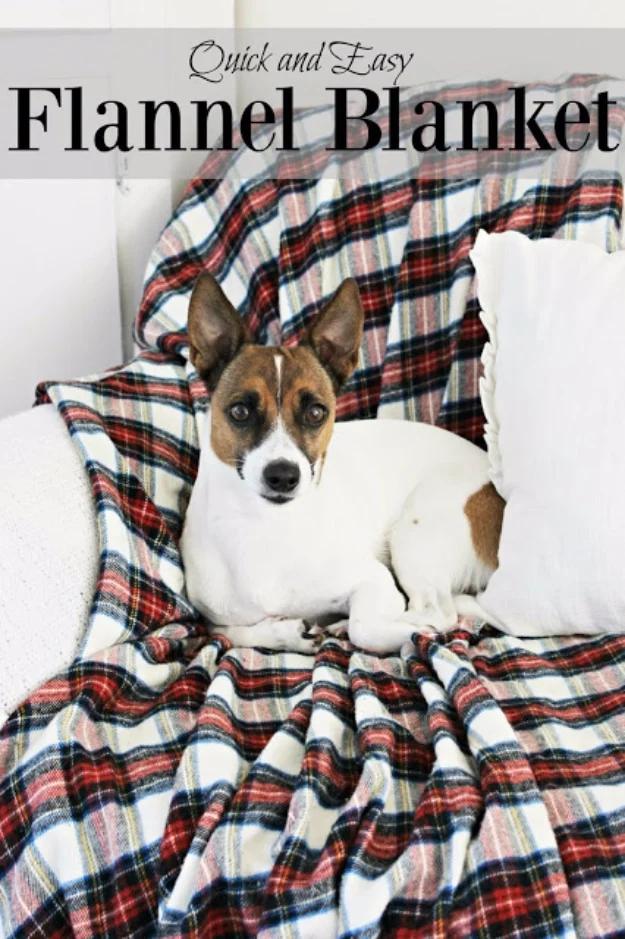
Two yards of heavyweight plaid flannel, two hemmed ends and nothing else, which makes this the fastest blanket on the page by a distance. The selvedges down the long sides already finish themselves, so they get left alone entirely. For the two raw ends, fold the fabric over twice to encase the edge, pin it, and run one straight line down the length. Prewashing and ironing are optional and were skipped here. Choose a genuinely heavy flannel rather than a shirting weight, because the drape is the only thing separating this from a length of cloth.
Get the full tutorial at Happy At Home.
7. Patchwork No Sew Fleece Blanket
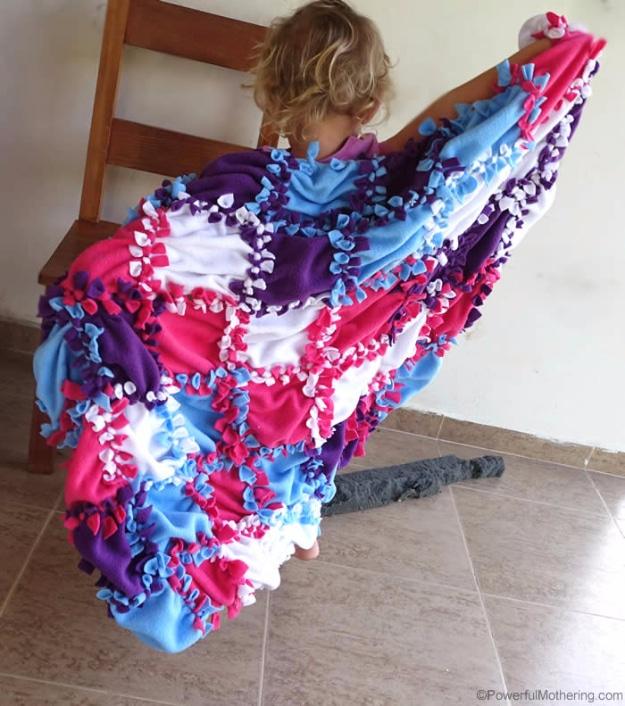
Forty eight fleece squares knotted together into a bright patchwork, no machine and no needle anywhere. Powerful Mothering cuts twelve squares in each of four colors at about ten inches, snips tabs along the edges and double knots the squares into strips first, which is much easier to handle than trying to join the whole grid at once, then knots the strips to each other. If one side ends up with more tabs than its neighbor, cut one tab in half to even the count. Tug the knotting gently afterwards to unclump it.
Get the full tutorial at Powerful Mothering.
8. DIY Arm Knitted Blanket
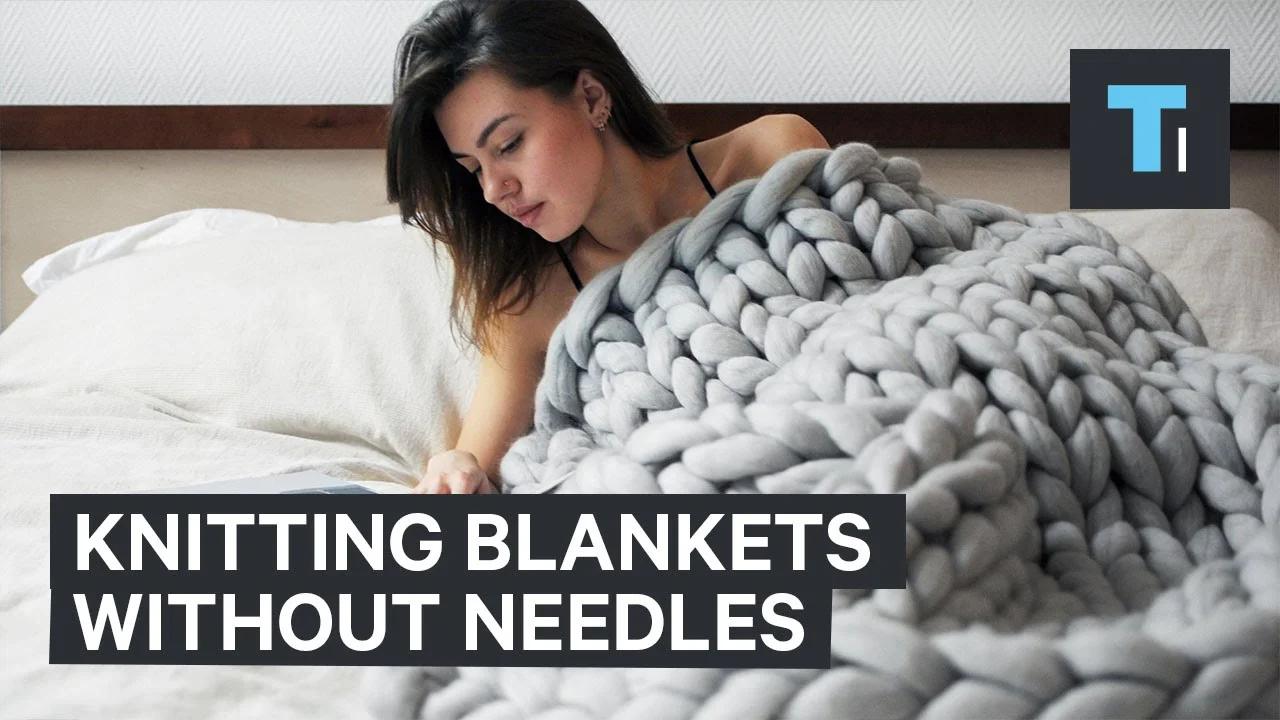
An oversized blanket knitted on your own forearms instead of needles, worked in yarn thick enough to look like rope, and the finished stitches come out the size of a fist. The appeal is pure speed, since the whole thing is demonstrated start to finish in about fifteen minutes. There are no needles to buy and nothing to learn beyond looping the yarn over your arm and pulling the next loop through. Buy the thickest yarn you can find and work it doubled if it still looks thin, because the scale of the stitch is the entire look.
Get the full tutorial at Sueeye.
9. Easy Flannel Fringe Throw
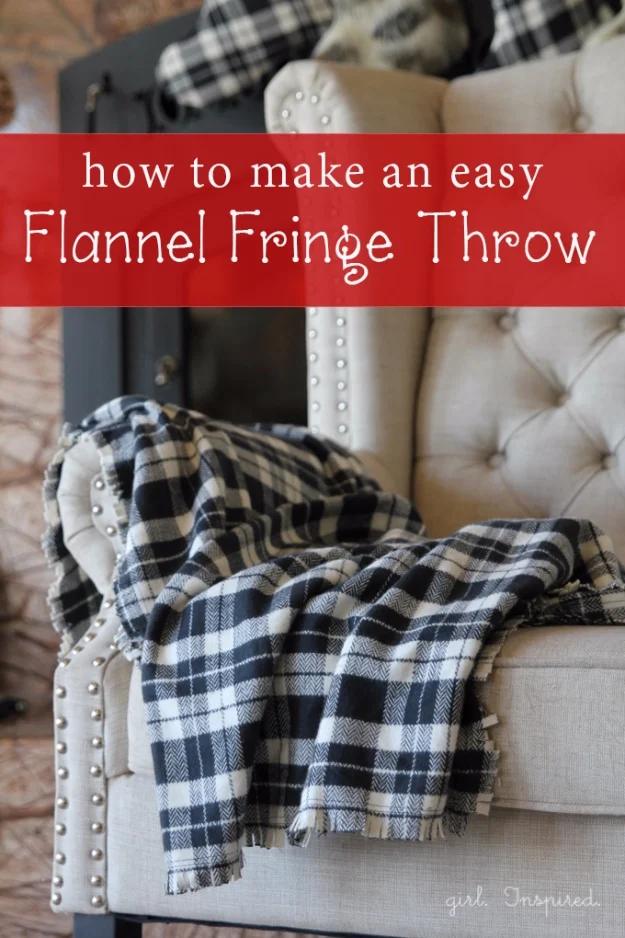
Black and white buffalo check flannel with the edges cut into a soft fringe, draped over a pale tufted armchair. The tutorial starts with a single layer of thick flannel, one and two thirds yards of it at forty six inches wide, and stitches a border one inch inside the raw edge, then a second row a quarter inch further in. Those two lines are not joining anything; they stop a single layer distorting and give you a straight guide to cut against. Cut a one inch square out of each corner, then cut the fringe at about a quarter inch wide. A plaid hands you the lines to follow.
Get the full tutorial at girl. Inspired.
10. Learn How to Make A Rag Quilt
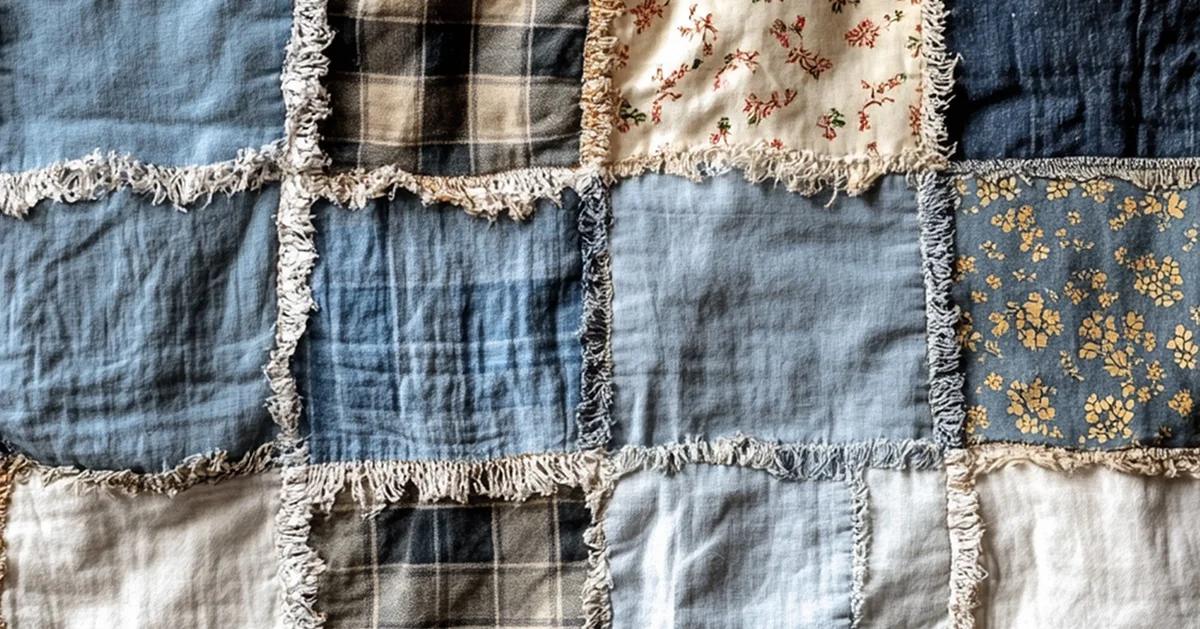
A quilt built from three layer blocks sewn with the seams on the outside, then clipped so they fray into soft ragged ridges in the wash. Cotton woven prints go on top with flannel for the middle and backing, because flannel is soft and frays beautifully. Prewash everything warm with a color catcher and dry it hot before you cut, since the fraying depends on that. Sew with a half inch seam allowance, which means each finished block loses an inch. Lay the blocks out on the floor before committing, because a pattern that looks right on a table rarely does at full size.
Get the full tutorial at Sueeye.
11. No Sew Summer Throw
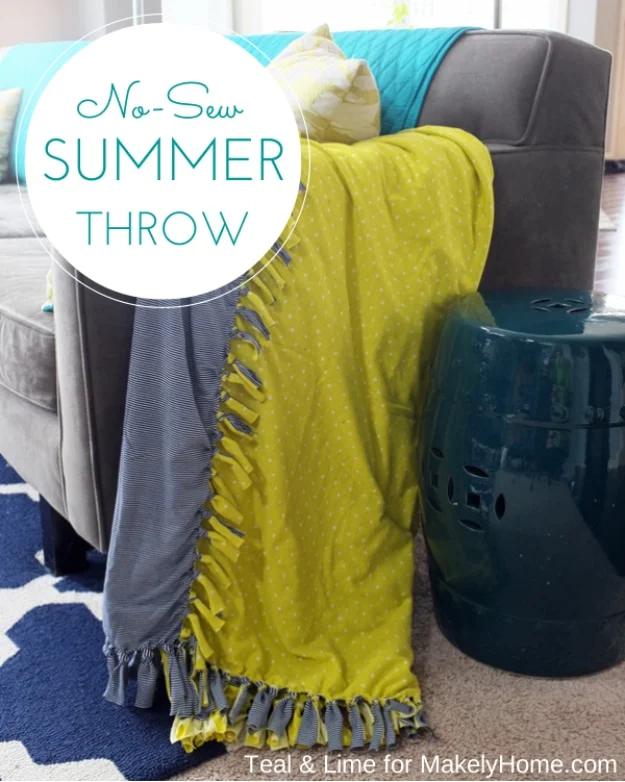
A chartreuse and gray colorblocked fleece throw with a knotted fringe along the bottom, leaning against a sofa, and the weight is the point: a summer throw wants to be light enough to sit under in July. No sew fleece work is usually a winter cliche, so seeing it done in a bright acid green against gray is a genuinely useful idea for the warmer half of the year. Knotted fringe finishes the hem with no stitching at all, and two colors cut straight across keeps it modern rather than crafty.
Get the full tutorial at Makely Home.
12. Chunky Feather And Fan Crochet Blanket
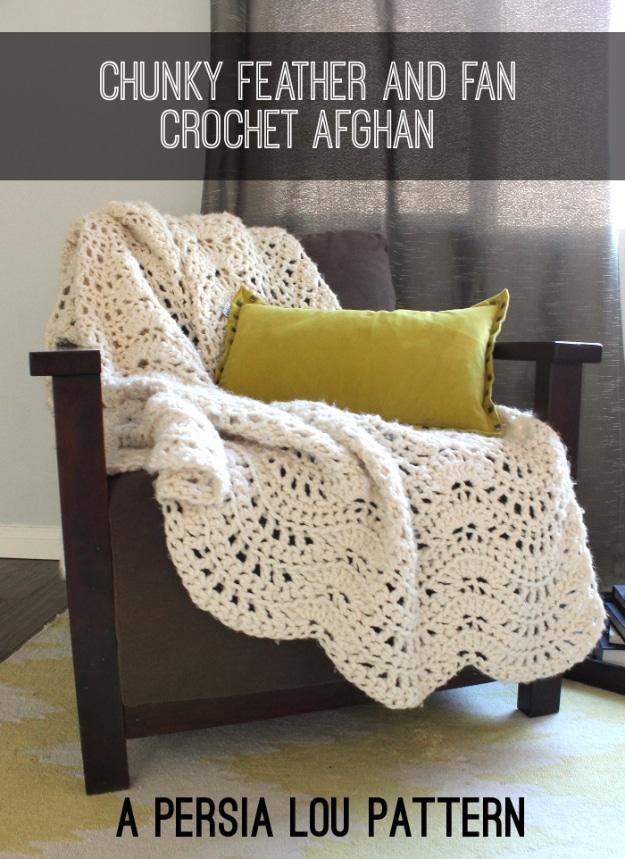
A cream lace afghan in the feather and fan stitch, worked in super bulky yarn on a hook so large the openwork scallops come out the size of a hand. Persia Lou used about nine balls of Wool Ease Thick and Quick, roughly nine hundred yards, on a Q hook at fifteen millimetres to reach six feet long. The foundation is eighty five stitches, five repeats of seventeen, so widening or narrowing it means adding or subtracting a multiple of seventeen. Row three works into the front loops only, which is what gives the ridged texture between the fans.
Get the full tutorial at Persia Lou.
13. World Map Quilt Blanket
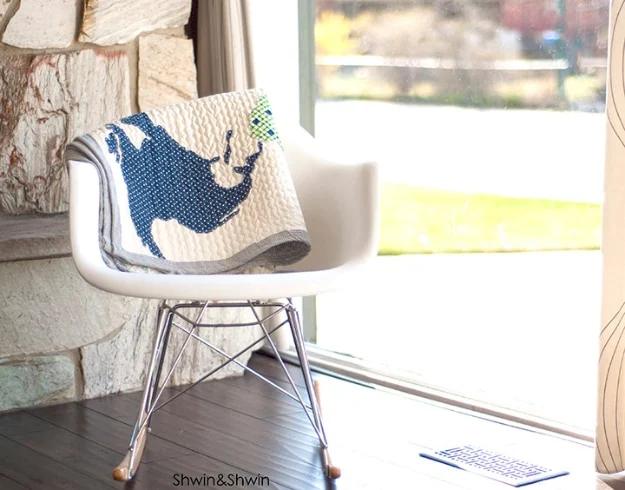
A world map appliqued across a cream ocean background and quilted with wavy lines, finished at about sixty by forty inches as a lap blanket. Shwin & Shwin traces each continent onto fusible interfacing, presses it onto the chosen fabric, cuts the landmasses out and stitches them down on the ocean panel. A semi transparent cream cotton lets you see the pattern underneath while you position everything. The wavy quilting lines are not just decorative, they hide errors, which is the sentence every nervous quilter needs. Her own advice if you are a perfectionist: good luck.
Get the full tutorial at Shwin & Shwin.
14. Lovely Linen Throw
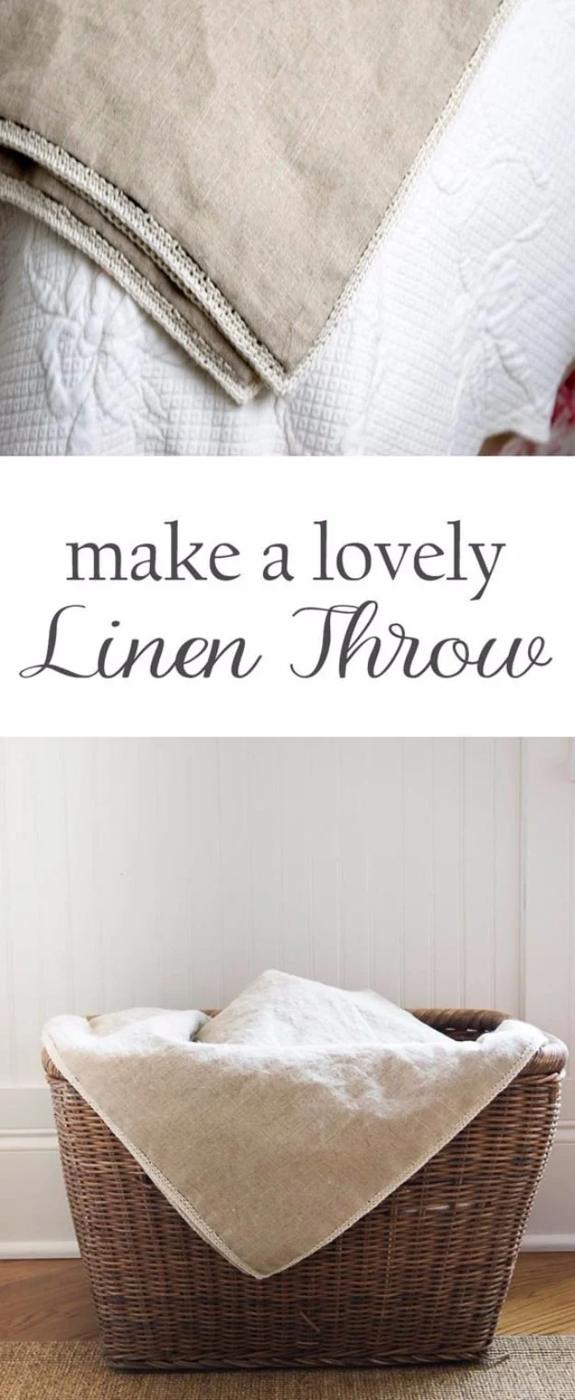
A cream linen throw finished with a hand crocheted edge, which is the detail that turns a hemmed square of cloth into an heirloom. Nourish and Nestle uses one and two thirds yards of fifty seven inch wide linen for a fifty five inch square, irons a quarter inch then a half inch fold on every side with spray starch, marks every two centimetres around the perimeter and backstitches in pearl cotton. Four single crochets go into each backstitch segment, then three more rounds with extra stitches at the corners. Prewash the linen, because it ravels otherwise.
Get the full tutorial at Nourish and Nestle.
15. Chunky Tassel Throw
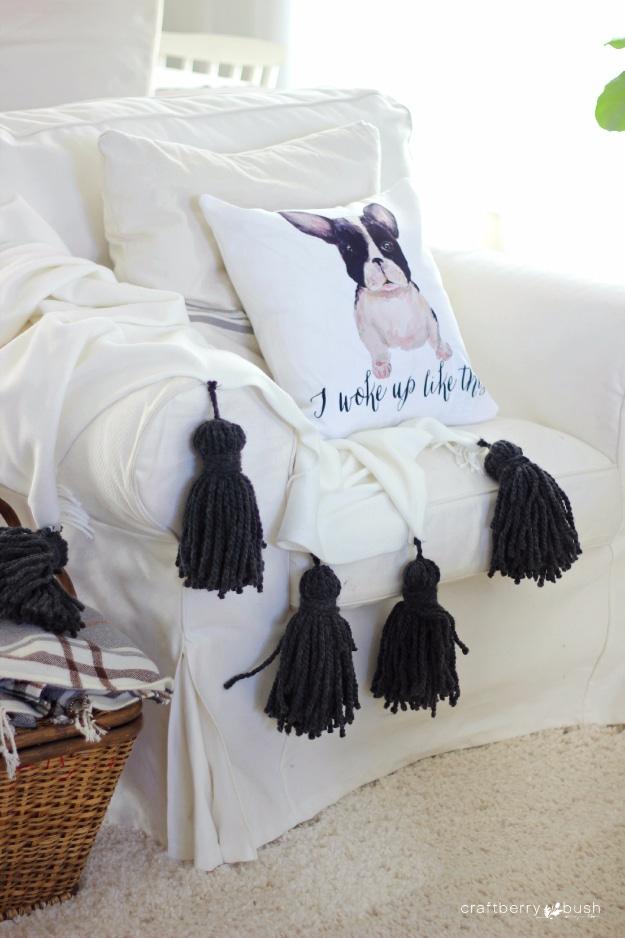
A white throw with four thick charcoal tassels hanging along its edge, high contrast and deliberately chunky. Craftberry Bush wraps yarn lengthways around a piece of cardboard roughly seven by four inches, and the number of wraps is what sets the thickness, so more wraps is the whole secret to a tassel that does not look mean. Cut the bottom, tie the centre tightly, fold in half and bind the top with a separate two foot length, leaving about six inches. Thread that tail up and down through the tassel twice with a yarn needle before sewing it on.
Get the full tutorial at Craftberry Bush.
16. Easy Patchwork Quilt DIY
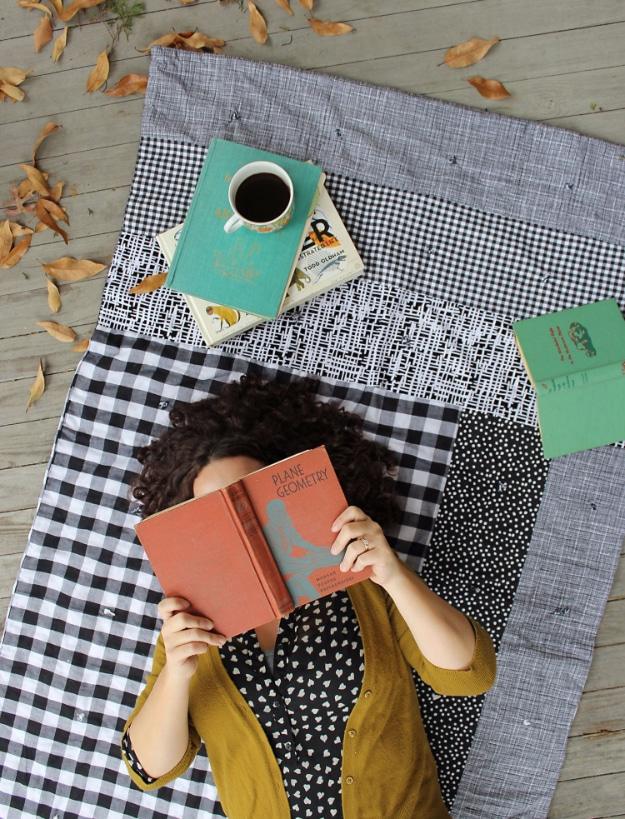
A quilt of black and white gingham, stripe and dot panels laid out on a deck with the leaves coming down, and it is far simpler than it looks. A Beautiful Mess builds the whole top from one large piece measuring thirty one by forty three inches plus five strips at eight by forty three, cut from five or six prints that work together. Pin, sew a quarter inch seam, press each seam to one side, then sandwich the top with batting and a backing, stitch the perimeter and turn it through a twelve inch opening. It is hand tied with embroidery thread rather than machine quilted, a knot every eight inches.
Get the full tutorial at A Beautiful Mess.
17. Upcycled Jeans Quilt
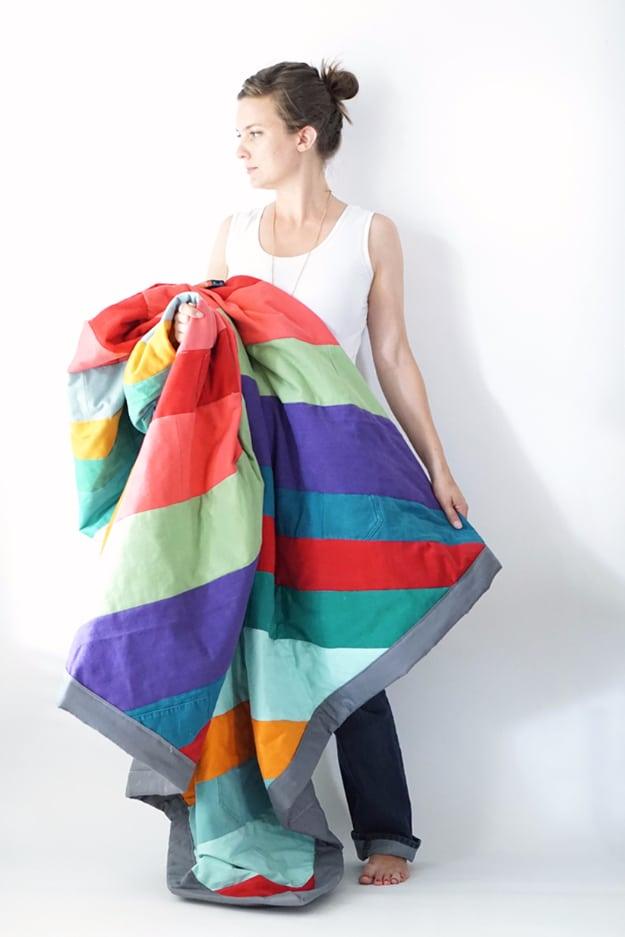
Sixteen pairs of old jeans cut up and pieced into a denim quilt backed with a queen sheet, which is about as satisfying an end as a bag of worn out trousers can come to. Andrea’s Notebook is honest that she works by eye, calling herself an improvisational quilter and eyeballing most of what she does, so treat this as a method rather than a pattern. Her one practical warning is to buy more jeans than you think, because she made two trips back to the thrift store. Basting spray holds the layers, with pins as the alternative.
Get the full tutorial at Andrea's Notebook.
18. Travel Picnic Blanket
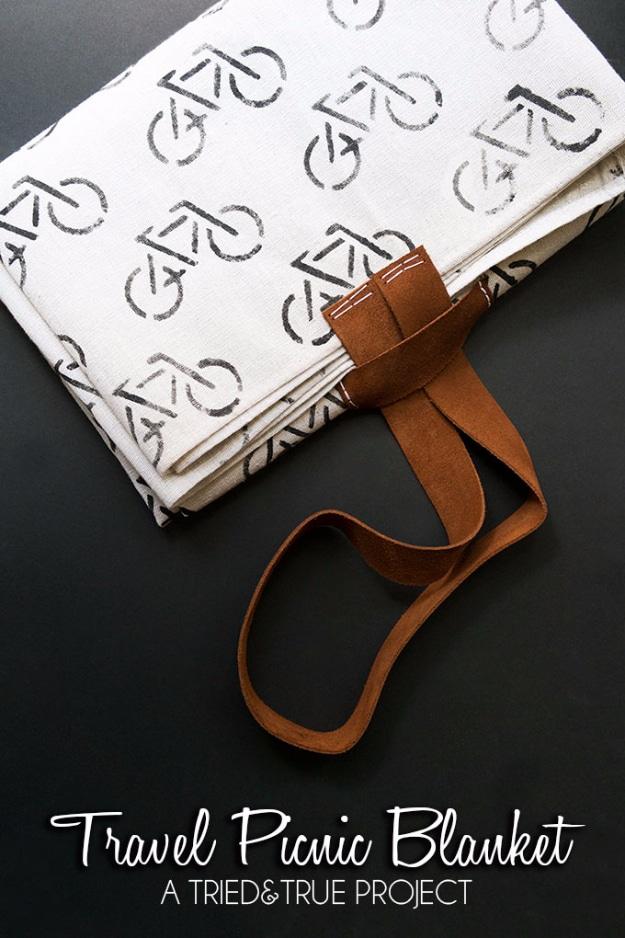
A poly backed canvas dropcloth from the hardware store, stencilled all over with bicycles and fitted with leather carrying straps. Tried & True started with a five foot square dropcloth costing about ten dollars, and the poly backing is what makes it water resistant without any extra layer. The pattern went on with cut stencil material and stippled paint, and she is upfront that this part took forever. The straps are leather strips punched with a sixteenth inch hole punch and sewn on with strong thread, positioned so they interlace and go over your shoulder when the blanket is folded.
Get the full tutorial at Tried & True Creative.
19. Warm And Fuzzy Fleece Blanket
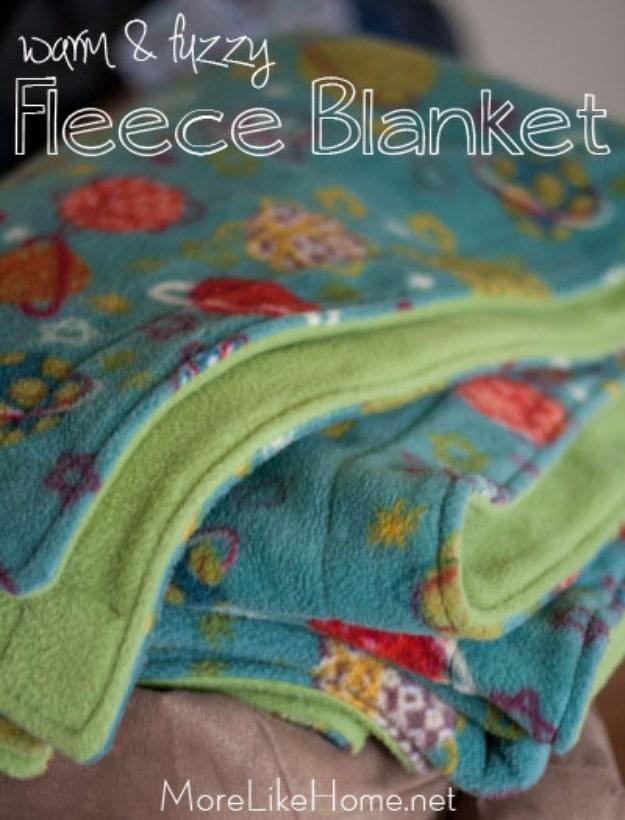
Two and a half yards each of printed and solid no pill fleece, sewn rather than tied, which More Like Home argues is both faster and tidier than the knotted version. Stack the pieces right sides together, sew round at a five eighths inch seam allowance leaving an eight to ten inch gap for turning, flip it out, pin the opening shut and topstitch the whole perimeter at a quarter inch. Optional quilting lines through the middle cut down the static, which is a real problem with a fleece blanket this size. Hers came to about twenty two dollars on sale and fits two people.
Get the full tutorial at More Like Home.
20. DIY Gauze Swaddle Blanket
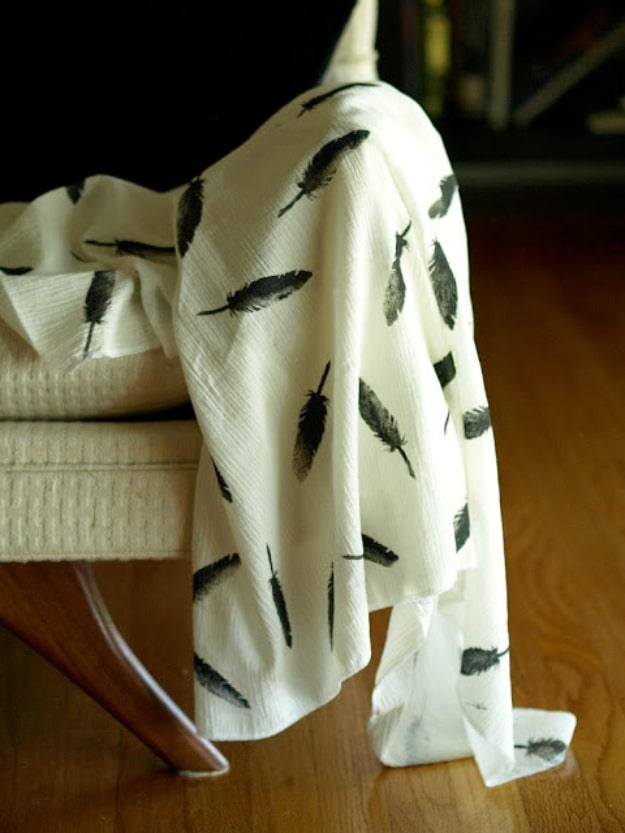
A cream cotton gauze swaddle stamped all over with dark feathers, made as a homemade answer to the boutique muslin ones. This Little Miggy uses a little over a yard of gauze and cuts the stamp from a potato: slice it flat and even, trace a feather freehand, cut round the outline with a craft knife, then score outward and undercut to lift the waste away. Notch small triangles into the sides of the feather last. Test the stamp on paper, load it with a sponge, lay paper under the fabric and rock it gently for a clean print. She chose black against the cream.
Get the full tutorial at This Little Miggy.
21. Extra Large Chunky Crochet Blanket
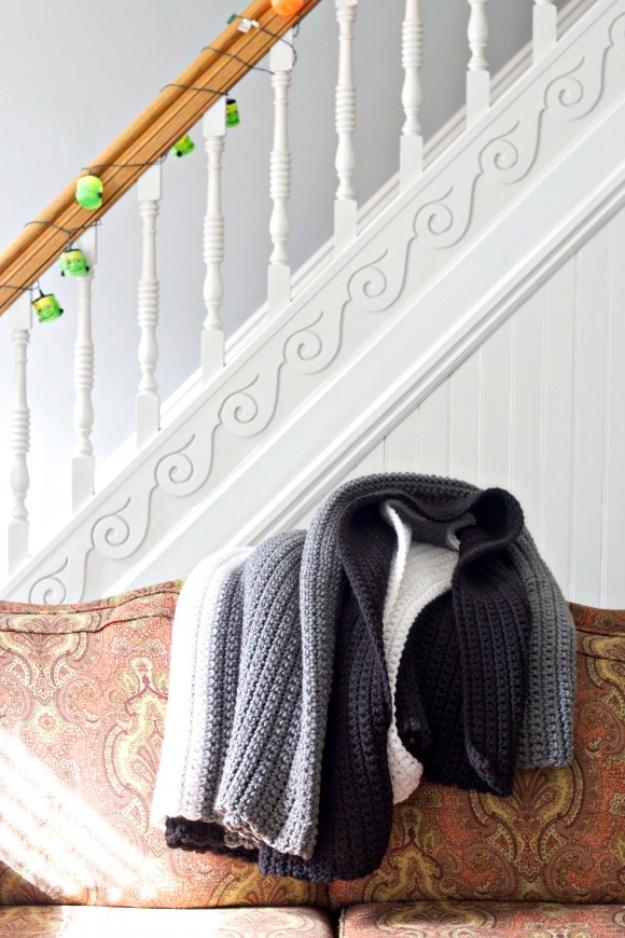
A very large chunky crocheted blanket in gray and charcoal draped over a floral sofa by a staircase, big enough to cover two people properly. Extra large is a real decision rather than a description, because a chunky blanket scaled up eats yarn fast and the honest cost of one is usually a surprise. Price the whole project before the first skein goes in the basket rather than halfway through. Gray against charcoal gives the piece depth without committing the room to a color you then have to live with.
Get the full tutorial at The Sweeter Side of Mommyhood.
22. Chunky Knit Blanket
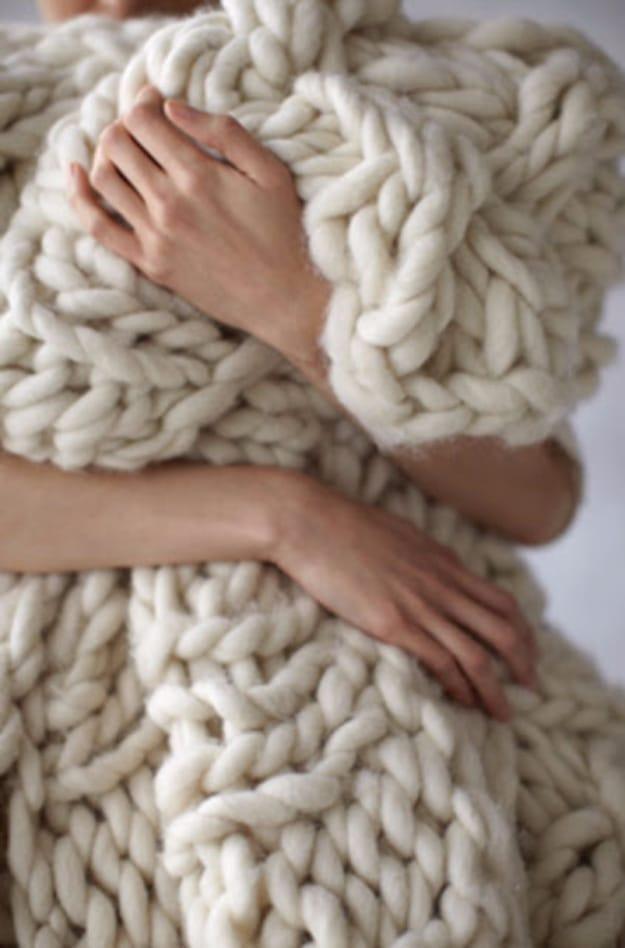
Arm sized cream stitches in unspun wool roving, hugged close enough in the photograph that you can see how fat each loop is. Grosgrain’s post is titled for the yarn sources as much as the method, and that is the useful part, because finding genuinely giant roving at a sane price is the real barrier to this project rather than the knitting. The page lists four suppliers by yardage, from twenty one yards up to a hundred, and hands the technique to a video. Commenters argue it is roving rather than yarn, and doubling a super chunky would get you there at a price.
Get the full tutorial at Grosgrain.