DIY Decor
18 Brilliantly Creative DIY Aquariums and Fish Tanks
DIY aquariums to build this weekend: a light bulb moss ball tank, a pickle jar fish bowl, a hanging macrame bowl, tank tunnels and a slate background.
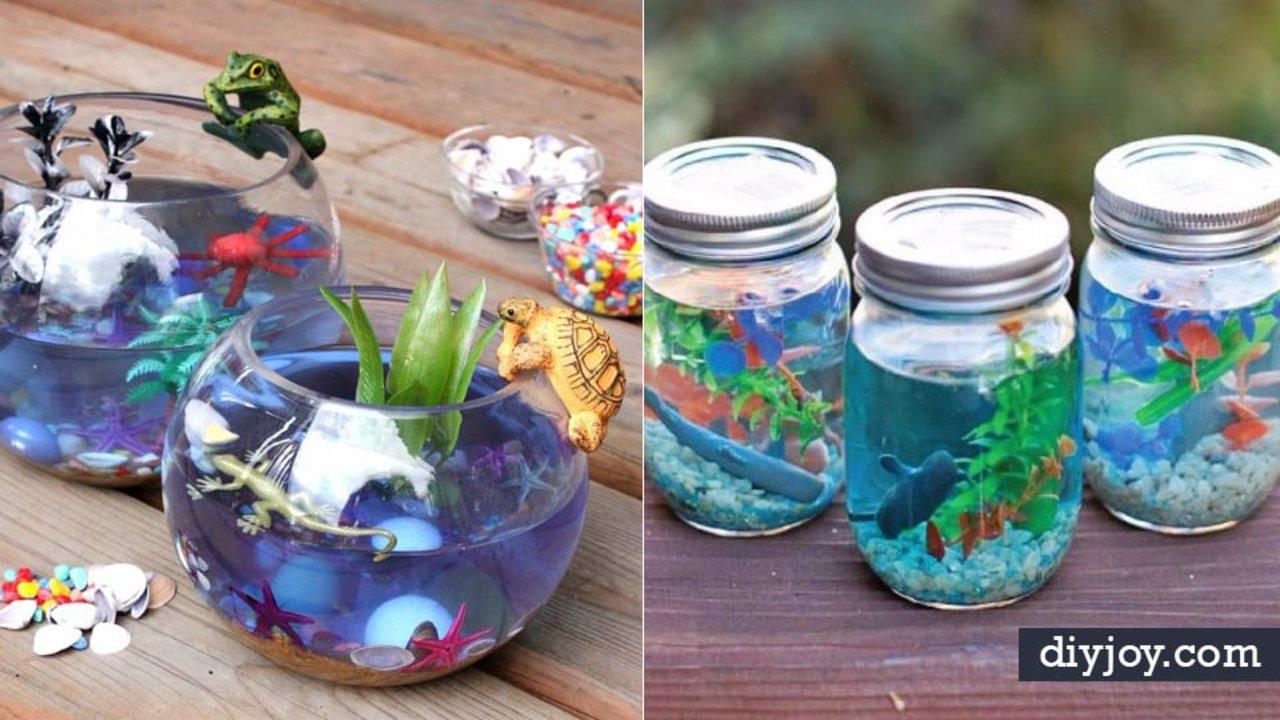
Nobody who has ever stood in front of a lit fish tank wanted to leave quickly. That is the whole appeal, and it is also why a plain glass rectangle on a stand is such a waste of the opportunity. Below are 18 DIY aquariums, and they split into two useful halves. Some are whole tanks: a gallon pickle jar, a macrame hanger swinging from the ceiling, a light bulb holding a single moss ball, and a jar that makes fish appear to hover above a garden pond. The rest are things to build for a tank you already own, like a slate rock background, a planted tunnel, tank dividers and an island of moss that floats in mid water. Start with whichever one you have the jar for.
1. Upcycled Fish Tank
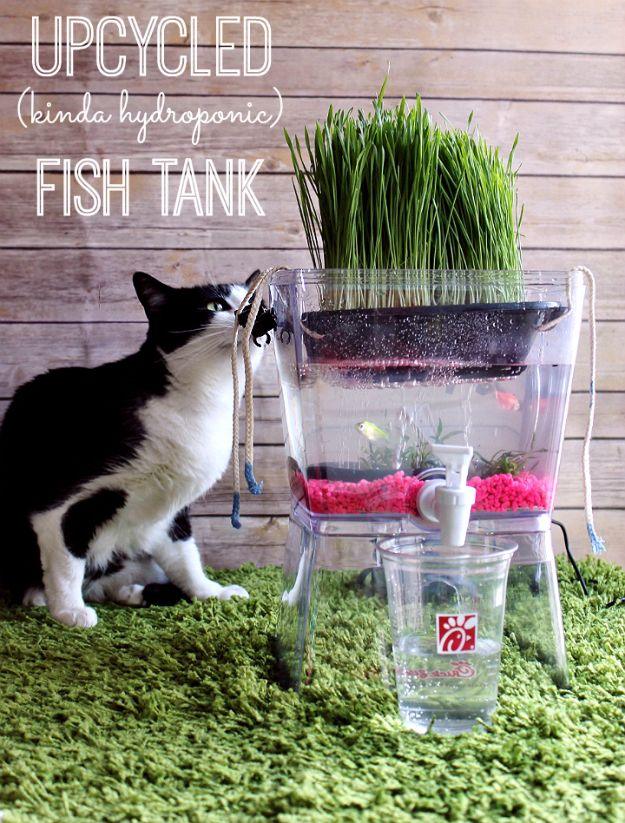
A clear plastic salad container turned into a small tank with cat grass growing in the tray above the waterline, roots reaching down into the water. It is loosely hydroponic, which is a generous description and the creator’s own, and the cat in the photograph is clearly the intended audience. Stocking is the part to get right rather than the build: a single betta is the sensible choice for a beginner, kept alone always, and it breathes at the surface so the water must stay open. Guppies work too, in a school, but three is the ceiling in a container this size and two is better.
Get the full tutorial at Momma Told Me.
2. Pickle Jar Fish Bowl
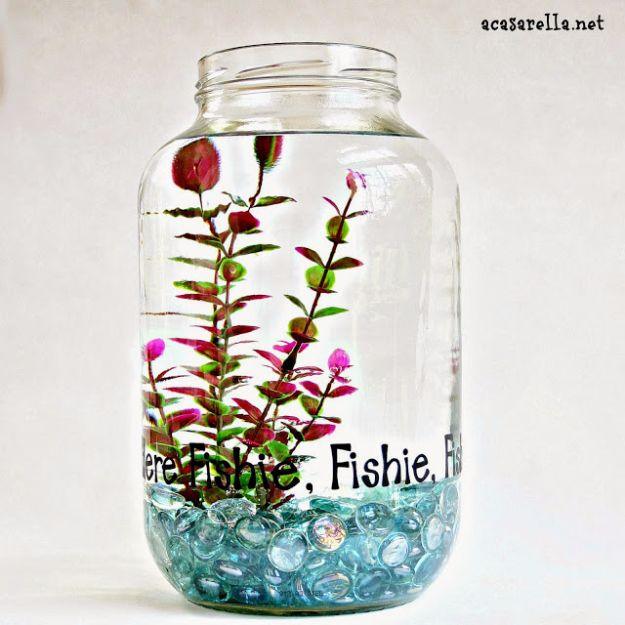
A one gallon glass pickle jar, emptied, cleaned and set up as a bowl with gravel, plastic plants and vinyl lettering across the front. There is a properly good bit of logic behind it: a bare gallon jar at the thrift store came to six dollars, and a full jar of pickles at the supermarket cost less than that and came with the pickles. Soak the jar in boiling water after the label comes off, since pickle brine has a way of lingering in the seal. Glass this thick is far sturdier than any plastic bowl of the same size.
Get the full tutorial at A Casarella.
3. Easy Marimo Moss Ball Light Bulb Aquarium
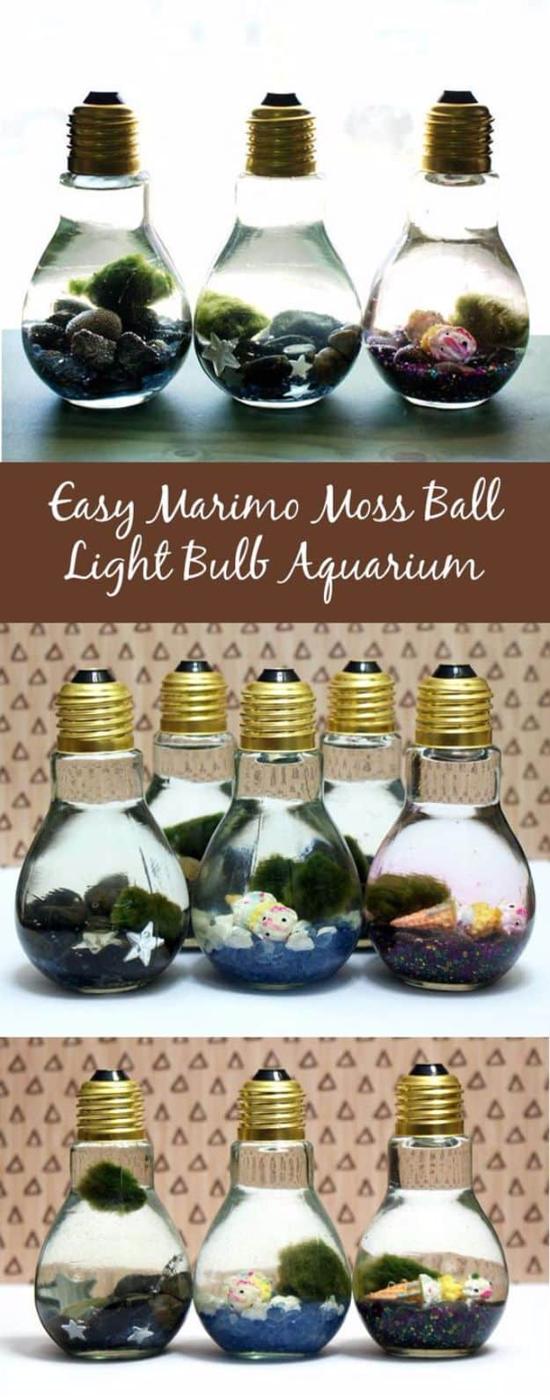
Light bulb shaped glass bottles, a screw cap, a funnel of small pebbles and a marimo moss ball, and that is a complete desk aquarium with no pump and no fish. Moss balls sold in shops are often far too fat for the bottle neck, and the fix is better than it sounds: squeeze the water out, cut the ball in half, then in half again, and roll each quarter back into a ball in your palm. One shop ball becomes four. Change the water every week or two and keep them out of direct sun.
Get the full tutorial at Soap Deli News.
4. Fish Tank Elevator
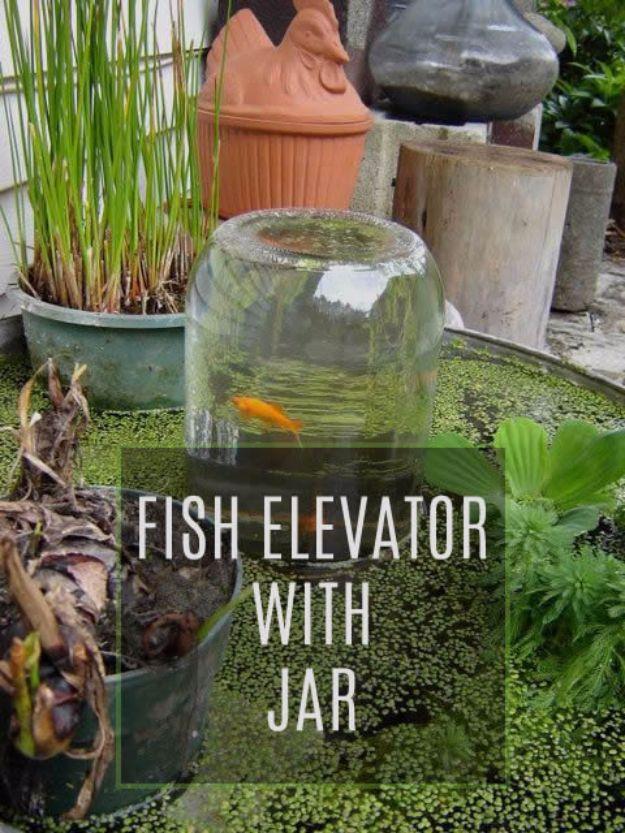
A glass jar standing upright in a pond with its mouth submerged in a stand, full of water, so fish swim up inside it and appear to hover above the surface. The method is a trick of air pressure and it is simpler than it looks. Push the jar under on its side until it fills completely, tip it slowly bottom up while it stays under, then seat the mouth into the stand, keeping that mouth below the waterline the entire time. Let air in at any point and the whole thing empties. A pot with a mouth the same size as the jar is the easiest stand.
Get the full tutorial at 1001 Gardens.
5. Fish Jar Aquarium
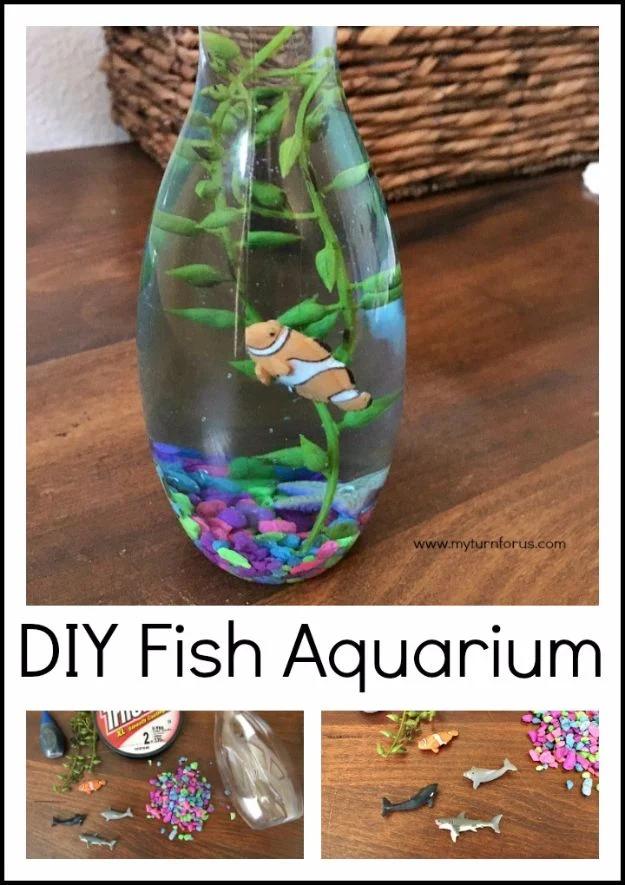
A toy aquarium in a screw top plastic bottle, made for a room full of children where glass was never going to be an option. Gravel goes in through a funnel, the plastic fish hangs on two pound fishing line that is thin enough to vanish in the water, and one drop of blue food coloring in two cups of water tints it without hiding anything. Tie the loose end of the line under the lid before you screw it down, so the fish stays suspended at the level you chose rather than sinking. Fifteen minutes of actual work.
Get the full tutorial at My Turn For Us.
6. Hanging Macrame Fish Bowl
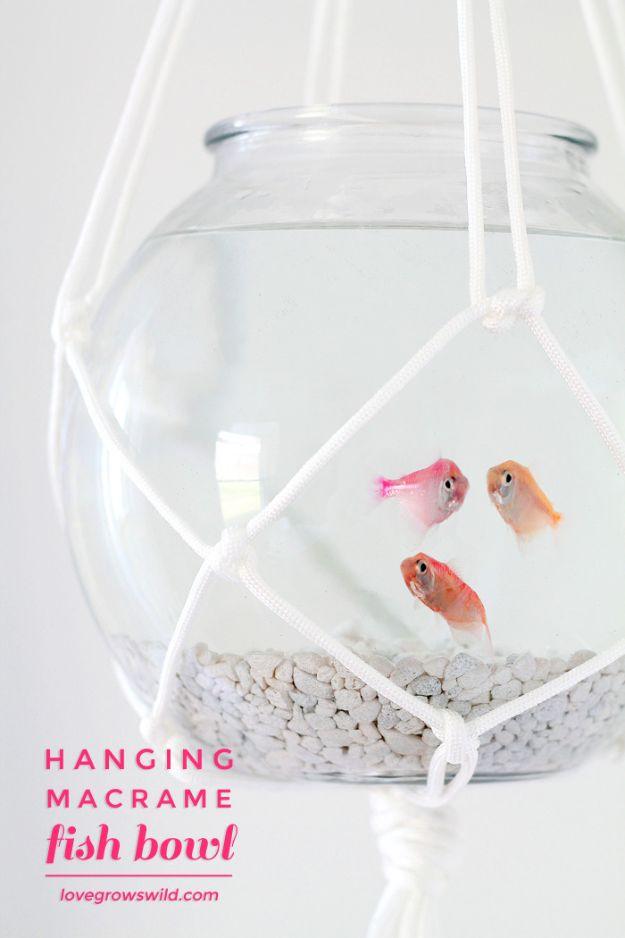
A glass bowl suspended from the ceiling in a knotted nylon hanger, which frees a whole shelf and looks far better than a bowl on a desk. The knotting is nothing more than repetition. Cut eight five foot lengths, knot them all together at one end, split them into four pairs, and knot each pair a couple of inches down. Then take one strand from each neighbouring pair and knot those together two inches further on, and repeat, and the diamond net forms itself. Use a half gallon bowl and hang it from a real ceiling joist, because water is heavy.
Get the full tutorial at Love Grows Wild.
7. DIY Aquarium Tank Dividers
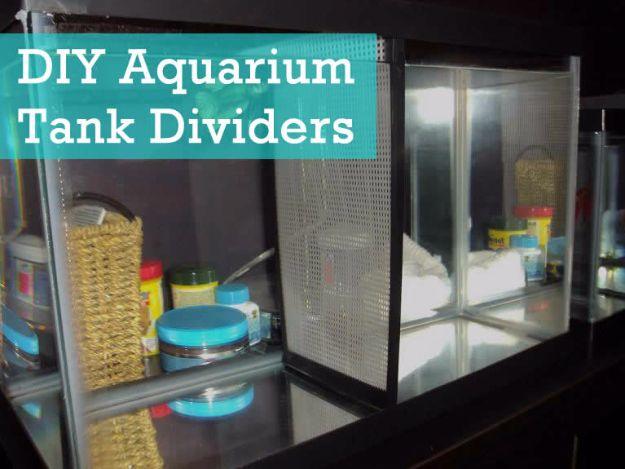
Mesh panels slotted into a long tank so it becomes three or four separate compartments, which is what you need the moment you keep anything that will not tolerate a neighbour. Bettas are the usual reason. The photograph shows a divided tank on a shelf with the panels running floor to surface. The whole job is a rigid frame and a mesh fine enough that nothing can squeeze past but open enough for water to move through freely, so the filter still serves every compartment and the heat stays even across the tank.
Get the full tutorial at Tropical Fish Keeping.
8. Aquarium Plant Rock Base
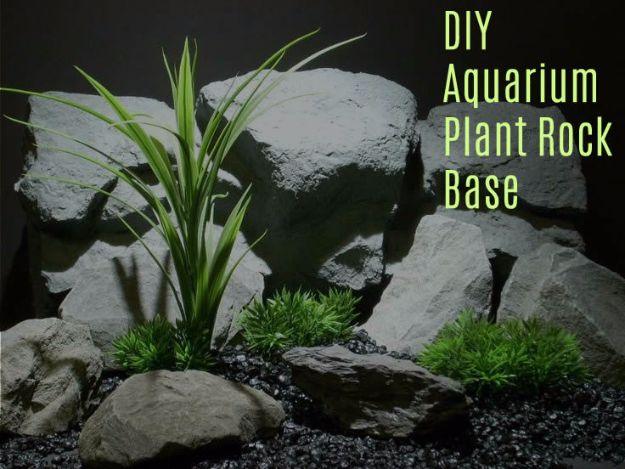
Plastic aquarium plants come on a flimsy plastic tray that never holds them down, and this swaps that tray for a clump of glued rocks. Pull the tray off, tape the roots up out of the way so they do not get glued, then glue the base of the stem and drop it straight into the rocks, building up until the clump is about an inch and a half across. Squeeze it gently while the glue is still soft for a tighter base. Give it an hour before it goes in the tank, longer with aquarium acrylic glue.
Get the full tutorial at Rad Linc Crafts.
9. DIY Aquarium Tunnels
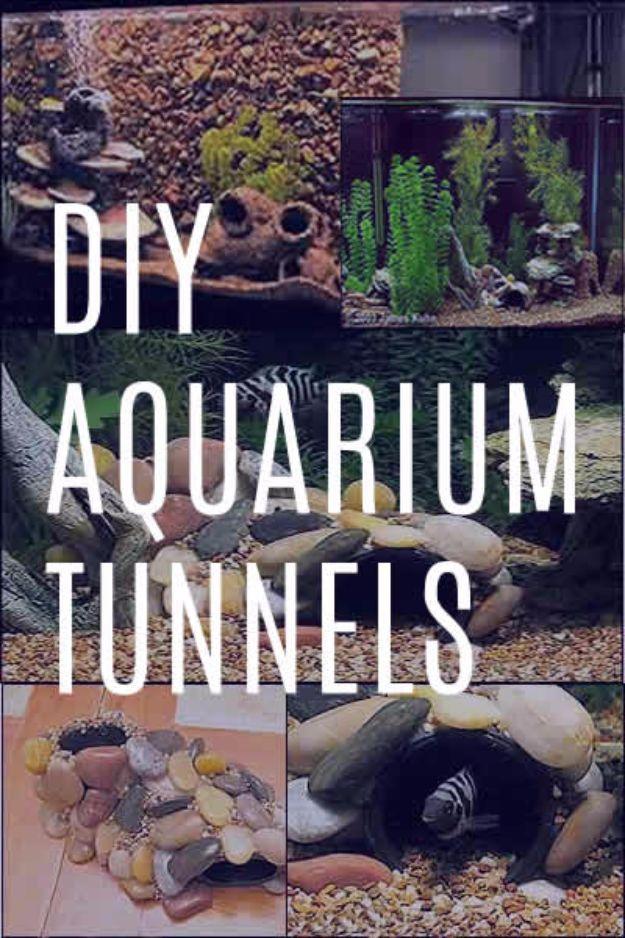
A length of PVC covered in rocks so it reads as a natural arch on the tank floor, with an opening at each end for fish to swim through. The creator used a four inch Y connector, which gives three mouths rather than two and is why the finished piece looks less like a pipe. Cover as much of the plastic as you possibly can, because any bare PVC showing gives the whole game away. Two honest warnings from someone who did it: hot glue burns and takes forever, and a smaller diameter pipe would have been the better choice.
Get the full tutorial at Rad Linc Crafts.
10. Decorate Boring Fish Tank
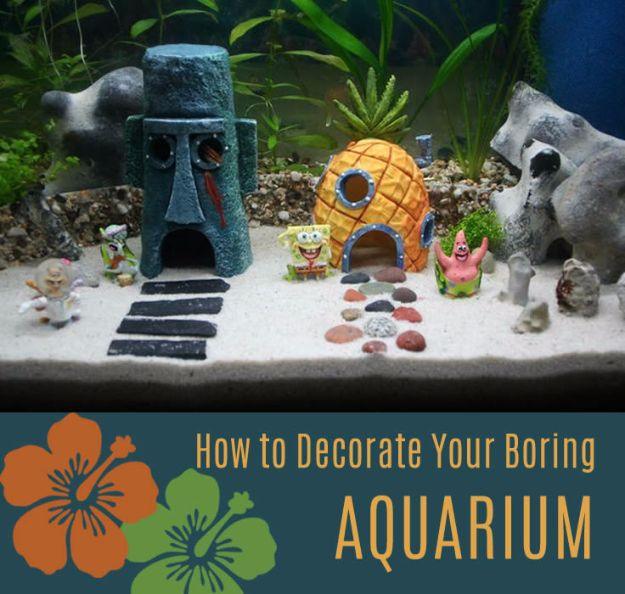
Less a build than a run of sensible decisions about what goes into a tank and how much of it. Start with the honest question of whether there is room for decor and for the fish to swim, because the most common mistake is a tank so full of ornaments that nothing can move. Then gravel on the floor, larger rocks with openings for fish to explore, live or plastic plants for a natural look, and a background image behind the glass, which is the single cheapest change on the list. Leave open water. A crowded tank stresses the fish and looks worse.
Get the full tutorial at Pouted Magazine.
11. Floating Island Aquarium
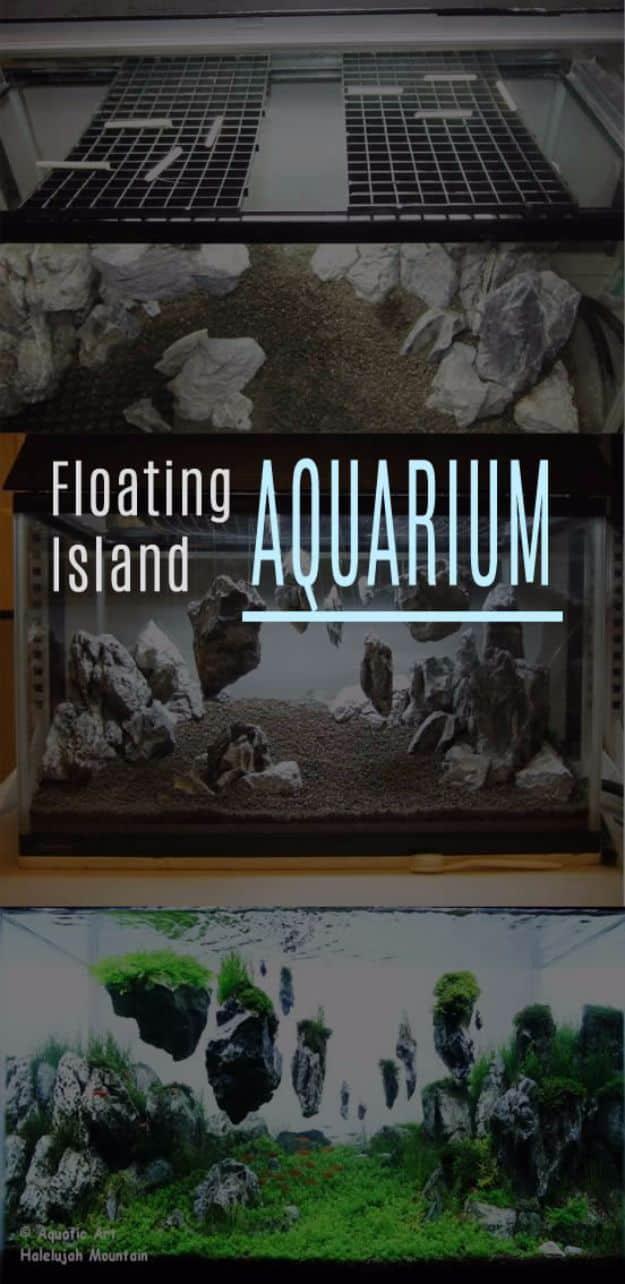
Rocks that appear to hang in mid water above a planted bed, with moss growing on top of them, and the answer to how is wonderfully mundane: very fine fishing line, tied to the rocks and anchored above. Once the moss and the carpet plants fill in, the line disappears completely and the rocks just float. This was a two foot tank with carpeting plants below and spiky and flame moss on the islands, plus a colony of small red shrimp. Small fish only, tetras and rasboras, which pass through the lines without trouble.
Get the full tutorial at Aquatic Art.
12. Light Up Jar Aquarium
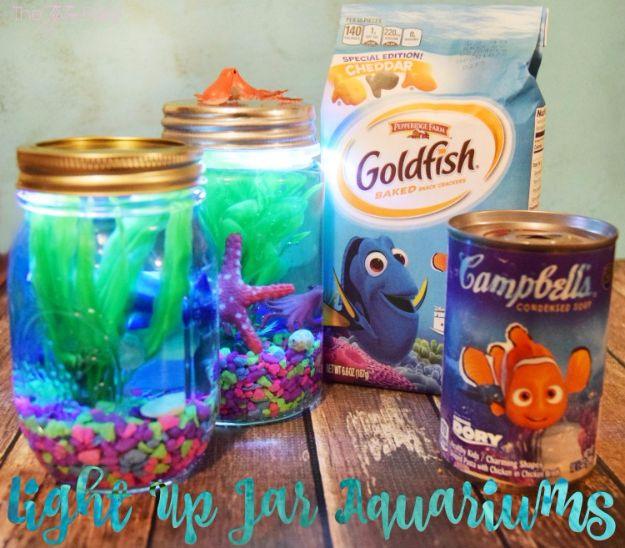
A mason jar aquarium with a submersible LED stuck inside the lid, so it glows from the top down and makes a very good nightlight. Two details are worth having in advance. Put the plant in first and pour the gravel around its base in a circle, an inch and a half to two inches deep, or you will spend ten minutes trying to push a plant into settled gravel. And glue the light to the lid with a strong adhesive, letting both surfaces go tacky before they touch. Plastic sea creatures only, nothing that was ever alive.
Get the full tutorial at The TipToe Fairy.
13. Mini Aquarium In A Bottle
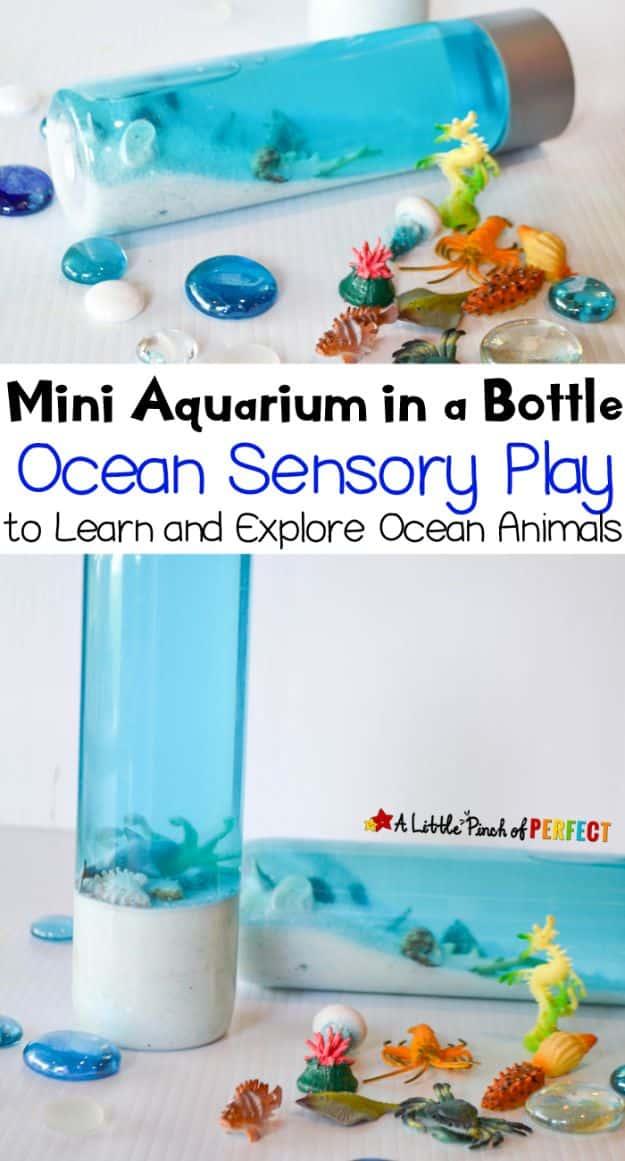
A sealed sensory bottle with sand, water and small plastic sea animals, meant to be picked up, shaken and turned over, which is the difference between this and every other jar on the list. Rinse the sand before it goes anywhere near the bottle: put it in a bowl, add water, swirl, pour the cloudy water off and repeat until it runs clear, or the whole bottle stays permanently murky. Two inches of sand, then fill with water and let it overflow so the last of the dust runs out over the rim. Then the creatures, then the lid.
Get the full tutorial at A Little Pinch of Perfect.
14. DIY CO2 Aquarium
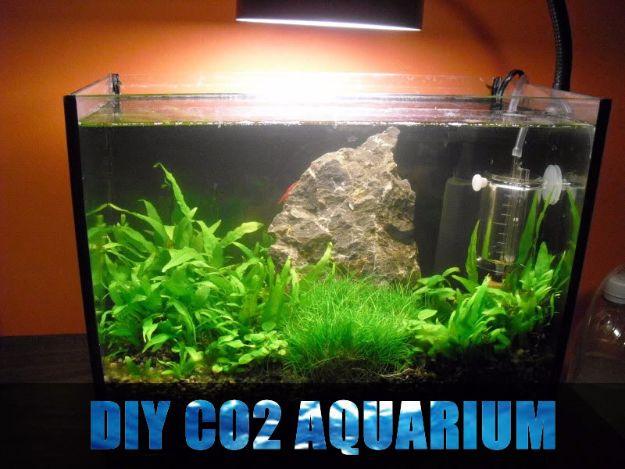
A home built carbon dioxide system feeding a planted tank, which is the step that separates plants that survive from plants that actually grow in. The photograph shows a lit tank with a dense carpet of green and a diffuser hanging on the glass at the right. Injected CO2 changes what is possible in a planted tank enormously, and it is also the one piece of aquarium equipment worth being careful with, since it alters the water chemistry and a rate that suits the plants can be too much for the fish. Start low and watch them.
Get the full tutorial at BC Aquaria.
15. Saltwater Aquarium
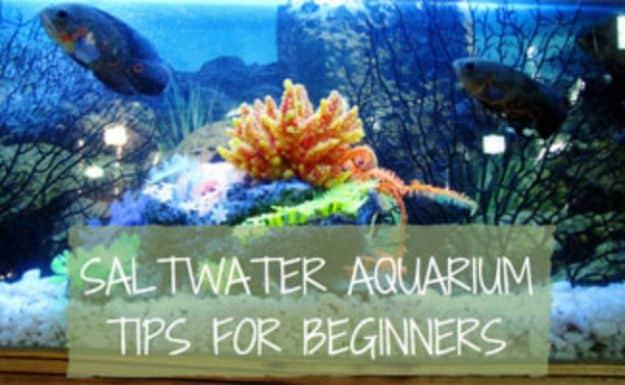
Not a craft, a setup guide, and the right one to read before spending any money on a reef tank. Three numbers matter more than anything else in it. Setting a tank up properly can take as long as two months before a fish goes in, because the water has to cycle and balance first. Salinity wants to sit between 1.024 and 1.025, measured with a refractometer rather than guessed. And new fish get quarantined for two to four weeks before they join the tank, which is how you avoid losing the whole thing to one arrival.
Get the full tutorial at Earth's Friends.
16. Tiles 3D Fish Tank Background
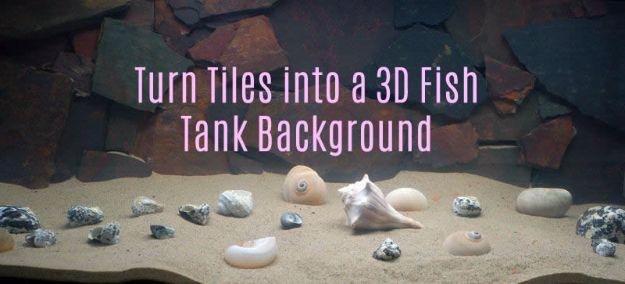
Broken slate floor tile siliconed to the back glass, and it is the single biggest visual upgrade on this list for about thirteen dollars. Smash the tiles with a hammer wearing safety goggles, then sort the pile: you want four good corners and a decent run of straight edges, and every other straight edge gets chipped away so the lines look natural. Lay the tank on its side on something soft, dry lay the first layer, then silicone each piece down with the heaviest bead in the middle. Use plain silicone with no fungicide or additives, no exceptions.
Get the full tutorial at Lifehacker.
17. How To Make A 3-Hearts Aquarium With Cement And Bricks
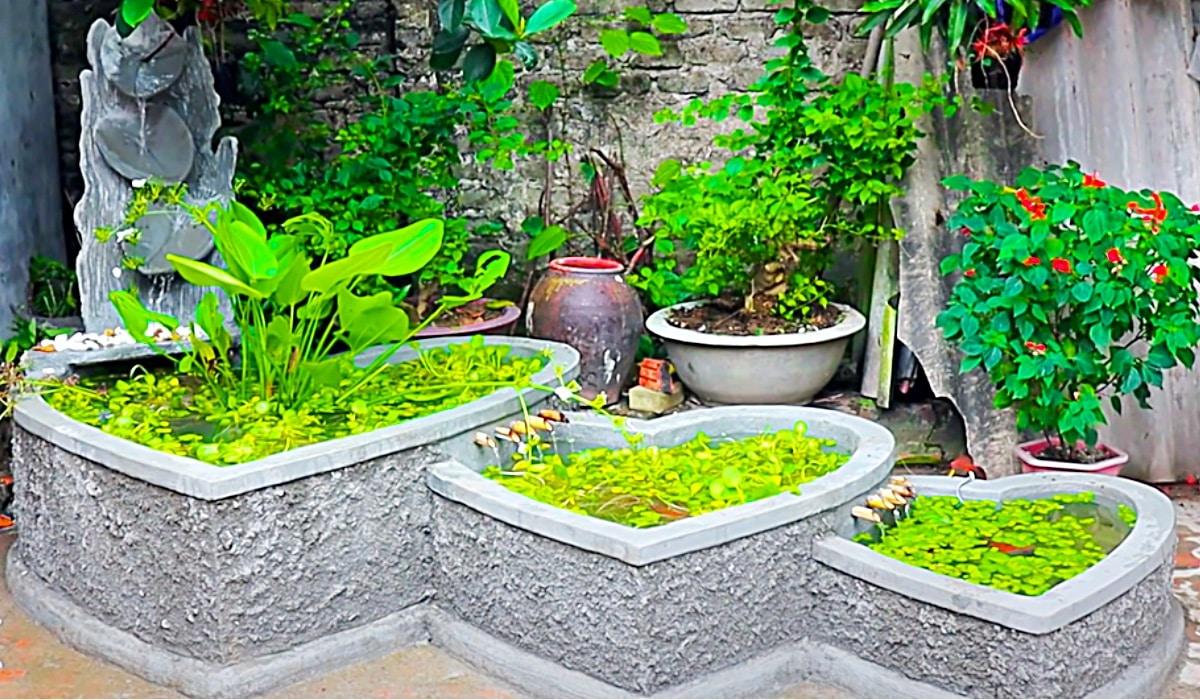
Three linked heart shaped pools built outdoors from bricks and rendered in cement, planted up and stocked with fish, which is a garden water feature rather than a tank and is all the more striking for it. The hearts are laid out in brick first, so the shape is set before a single bag of cement is opened, and the curves are where the bricklaying gets fiddly. Then the whole form is rendered over, filled, planted and stocked. Give the cement time to cure and flush it thoroughly before any fish go anywhere near the water.
Get the full tutorial at Sueeye.
18. Turn a Bathtub Into a DIY Aquarium Fountain
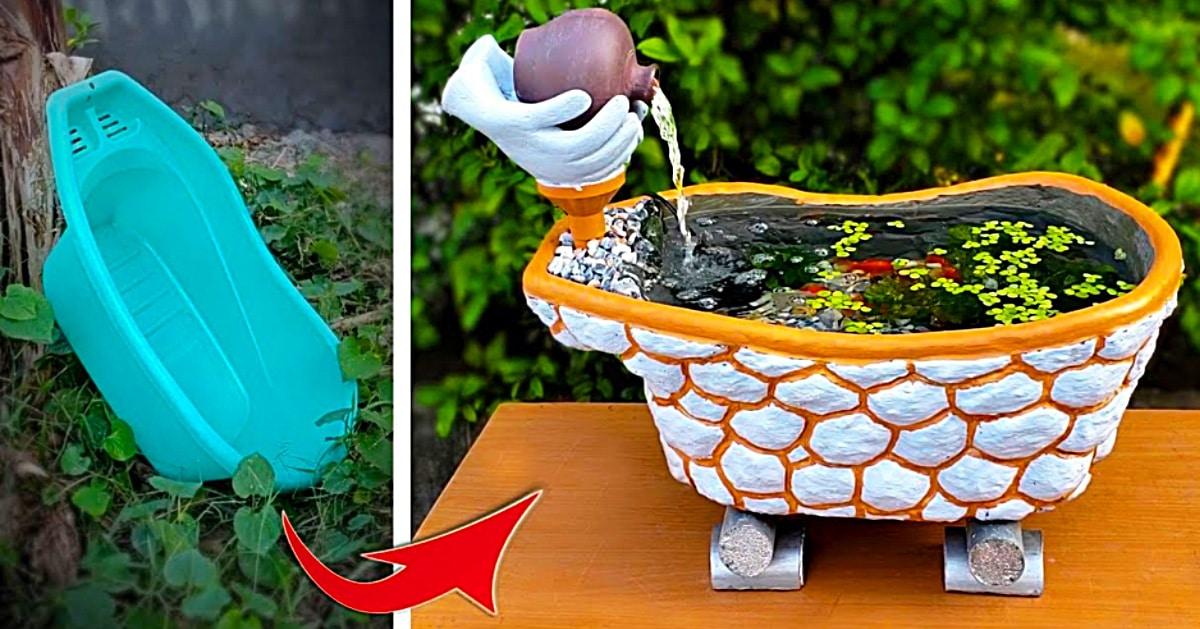
A plastic baby bath turned into a clawfoot tub fountain, faced in cement shaped into faux stones, with a hand shaped pot pouring water in from above and a small pump circulating it. The cement facing is what sells the whole illusion, since a moulded plastic tub becomes a cast stone object once it is textured and painted. Build the foundation and the feet before the facing goes on. Plant it out with floating greenery, add the pump and the jug, and it runs as a patio water feature with fish living in it.
Get the full tutorial at Sueeye.