
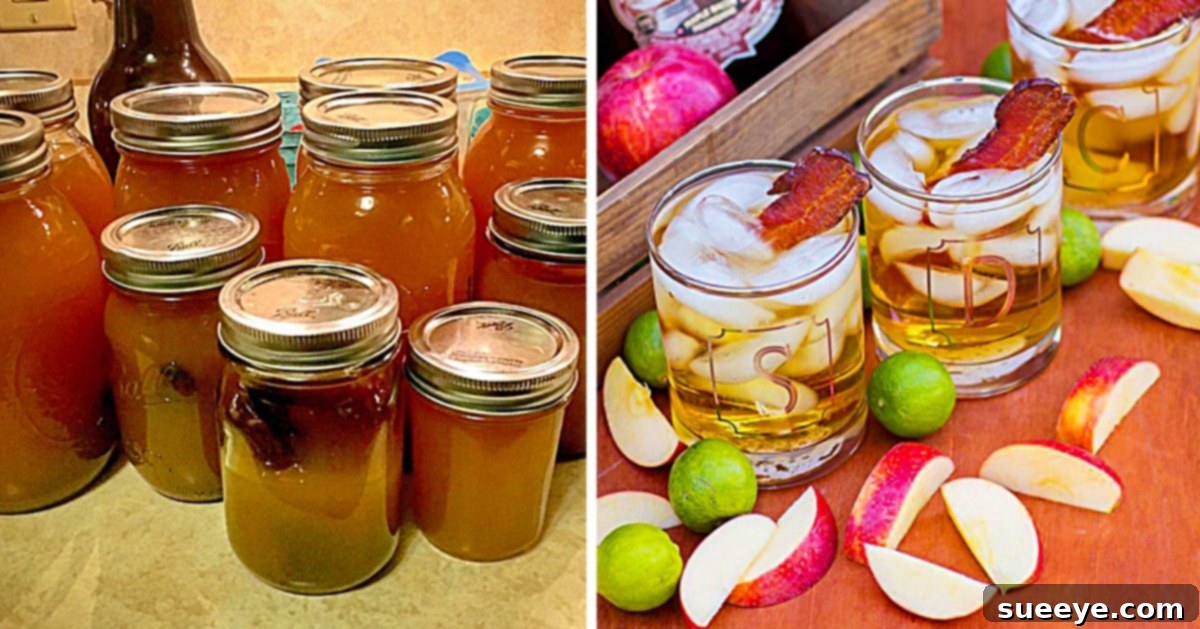
Crafting Potent Applejack: The Art of Freezer Moonshine
Embark on a unique journey into the world of homemade spirits with applejack freezer moonshine. You might be surprised to learn that your common household freezer can be transformed into an essential tool for creating a remarkably smooth and potent apple liquor. This fascinating method, often referred to as freeze distillation or fractional freezing, elevates simple hard cider into a refined spirit, yielding a product so delicious and easy-drinking that it demands respect and responsible consumption. Given its enhanced strength, applejack is perfectly suited for mixing into cocktails or pairing with other liquids like club soda or fruit juices, offering a delightful apple essence without overwhelming the palate. Inspired by traditional hard cider brewing with an innovative finishing twist, this recipe takes home distillation to an exciting new level through a meticulous process of multiple freezing and thawing cycles.
Understanding Applejack and Freeze Distillation
Applejack is a traditional American spirit with roots dating back to colonial times. Historically, colonists would leave barrels of hard cider outside in the winter, allowing the water to freeze and separate from the alcohol. This natural process concentrated the alcohol, producing a stronger drink. This method, known as freeze distillation, is a form of concentration rather than true distillation, which involves heating and condensation. The principle behind it is simple: alcohol has a lower freezing point than water. When an alcoholic beverage like hard cider is frozen, the water content crystallizes into ice at a higher temperature than the alcohol, which remains liquid (or freezes at a much lower temperature). By carefully removing the ice, you effectively increase the alcohol by volume (ABV) of the remaining liquid.
While traditional heat distillation for personal consumption is illegal without a license in many regions, freeze concentration of fermented beverages like hard cider or wine often occupies a legal gray area, as it doesn’t involve altering the chemical composition through heating. However, it’s crucial to be aware of local laws regarding alcohol production. This method is praised for creating an exceptionally smooth product, as the freezing process helps to remove some impurities alongside the water, resulting in a cleaner, more concentrated flavor profile that retains the essence of the original apple cider.
Ingredients and Essential Materials:
To embark on your applejack freezer moonshine adventure, you’ll need a combination of ingredients for the initial hard cider fermentation and specific tools for the subsequent freeze concentration. Precision and sanitation are key to a successful and enjoyable end product.
- 1 gallon of Apple Juice: Opt for natural apple juice without preservatives. Preservatives like sulfites can inhibit yeast activity, hindering proper fermentation. Look for pure, unfiltered apple juice for a richer flavor.
- 3 cups Dark Brown Sugar: This provides fermentable sugars for the yeast, boosting the potential alcohol content. Dark brown sugar also imparts delightful caramel and molasses notes that complement the apple flavor beautifully.
- 1 teaspoon Yeast Nutrient: Essential for healthy yeast growth, ensuring a strong and complete fermentation. It provides vital minerals and nitrogen that yeast needs to thrive.
- 1/2 teaspoon Pectic Enzyme: Apples contain pectin, which can make your cider hazy. Pectic enzyme breaks down pectin, resulting in a clearer final product.
- 1 teaspoon Distillers Active Dry Yeast (D.A.D.Y.): This specific type of yeast is known for its high alcohol tolerance, crucial for achieving a robust hard cider base that can withstand the subsequent freeze concentration.
- 1 can of Frozen Apple Juice Concentrate: Thaw this on bottling day. Adding concentrate provides an extra boost of apple flavor and additional sugars for fermentation, intensifying the apple character in the final spirit.
- Hydrometer: An indispensable tool for home brewers. A hydrometer measures the specific gravity of your liquid, allowing you to calculate the alcohol by volume (ABV) before and after fermentation.
- Fermentation Bucket with Spigot: A food-grade bucket (typically 2-gallon or larger) with an airtight lid and an airlock port. The spigot makes transferring the fermented liquid much easier, minimizing disturbance to the yeast sediment.
- Star San or similar Sanitizer: Absolutely critical for preventing contamination. All equipment that comes into contact with your juice or cider must be thoroughly sanitized to avoid off-flavors or spoilage.
- Airlocks: These allow carbon dioxide to escape during fermentation while preventing airborne contaminants from entering your fermenter.
- Mini Siphon or Auto-Siphon: Used to transfer (rack) the fermented cider from the primary fermenter to bottling vessels, leaving sediment behind.
- Bottles: Strong glass bottles suitable for holding alcoholic beverages. Swing-top bottles are convenient, or you can use traditional beer bottles with caps.
- Bottle Capper and Caps (or swing-top bottles): If using traditional beer bottles, a capper is needed to seal them securely.
Detailed Directions: From Hard Cider to Potent Applejack
The creation of applejack freezer moonshine is a two-phase process: first, brewing a robust hard cider base, and then meticulously concentrating it through repeated freezing and thawing. Patience and meticulous attention to detail are paramount for a successful outcome.
Phase 1: Brewing the Hard Cider Base
This initial stage involves fermenting your apple juice into a strong hard cider, which will serve as the foundation for your applejack. Good sanitation is non-negotiable.
- Sanitize Everything: Thoroughly clean and sanitize your fermentation bucket, lid, airlock, hydrometer, and any utensils that will come into contact with your juice. Follow the instructions for your chosen sanitizer (e.g., Star San). This step prevents unwanted bacteria or wild yeasts from spoiling your batch.
- Prepare the Base: Pour the gallon of preservative-free apple juice into your sanitized fermentation bucket.
- Add Sugars and Nutrients: Dissolve the 3 cups of dark brown sugar into a small amount of warm apple juice (or water) to create a syrup, then add it to the bucket. This ensures the sugar is fully incorporated. Next, add the yeast nutrient and pectic enzyme. Stir the mixture gently but thoroughly with a sanitized spoon to ensure all ingredients are well combined.
- Pitch the Yeast: Ensure the temperature of your juice mixture is between 65-75°F (18-24°C) – the ideal range for D.A.D.Y. yeast. Sprinkle the 1 teaspoon of Distillers Active Dry Yeast onto the surface of the juice. Do not stir it in immediately; allow it to rehydrate on the surface for about 15-20 minutes before gently stirring it in.
- Seal and Ferment: Secure the lid tightly onto the fermentation bucket and insert your sanitized airlock, filled with a small amount of sanitizer solution, into the lid’s grommet. Place the fermenter in a cool, dark place with a stable temperature (ideally 65-70°F or 18-21°C).
- Monitor Fermentation: Within 24-48 hours, you should observe activity in the airlock (bubbling), indicating that fermentation has begun. Let the cider ferment for approximately 2-3 weeks, or until bubbling significantly slows or ceases entirely.
- Check Gravity and Rack (Optional): After primary fermentation, you can use your hydrometer to take a final gravity reading. This allows you to calculate the ABV. For instance, if your original gravity was 1.060 and your final gravity is 1.000, your ABV would be roughly 7.8% ( (1.060 – 1.000) * 131.25 = 7.875%). If you desire a clearer product, you may rack the cider into a secondary sanitized fermenter for another week or two, leaving the bulk of the yeast sediment behind.
Phase 2: The Freeze Concentration Process (Applejack Method)
This is where the magic happens, transforming your hard cider into potent applejack through successive freezing and thawing cycles.
- Prepare for Freezing: Once your hard cider has finished fermenting, gently siphon it into individual, sturdy glass bottles, leaving about an inch or two of headspace at the top to allow for expansion during freezing. Seal the bottles with caps or swing tops. At this point, thaw your can of frozen apple juice concentrate and mix it into the bottled hard cider if desired, to boost apple flavor.
- Initial Freeze: Place the sealed bottles in your freezer. Allow them to freeze completely. This may take 24-48 hours, depending on your freezer’s temperature and the size of your bottles.
- First Thaw and Collection: Once completely frozen, remove the bottles. You will notice that the alcohol-rich liquid component thaws at a faster rate or remains liquid even when the water has solidified into ice. Place the bottles upside down in a funnel over a clean, sanitized collection vessel (like a jar or another bottle). Allow the concentrated, higher-alcohol liquid to slowly drip out, leaving the ice behind. This process should be done slowly, perhaps even in a refrigerator to control the thaw rate. The collected liquid is your first stage of applejack.
- Repeat for Potency: Take the collected liquid from the first thaw and transfer it back into smaller, clean bottles. Repeat the freezing and thawing process. Each subsequent cycle will further concentrate the alcohol, making the applejack progressively stronger. The amount of ice that forms will decrease with each cycle as the alcohol percentage increases.
- Determine Desired Strength: Continue freezing and thawing until you reach your desired strength, or until very little ice forms during the freezing process. At this point, you’ve removed most of the water, leaving a highly concentrated apple spirit. Be extremely careful; the strength increases significantly with each cycle. You can use your hydrometer to get a rough idea of the final ABV, but hydrometers are less accurate at very high alcohol concentrations.
Safety and Responsible Enjoyment
It cannot be stressed enough: the applejack produced through this freeze concentration method will be significantly more potent than the initial hard cider. Its smoothness can mask its strength, leading to overconsumption. Always remember that this is a very strong alcoholic beverage.
- Consume Responsibly: This applejack is delicious, but it is not recommended to drink it alone. Its high alcohol content makes it ideal for mixed drinks.
- Serving Suggestions: Mix it with club soda, ginger ale, cranberry juice, or use it as a base for warm cocktails like a hot toddy. It can also add a delightful kick to a homemade cider mulled wine.
- Methanol Awareness: While less of a concern with a purely fruit-based ferment like hard cider compared to grain mashes, freeze distillation theoretically concentrates all components, including trace amounts of methanol (a byproduct of fermentation). However, the amount of methanol from apple juice fermentation is generally very low and not typically concentrated to dangerous levels by this method for typical home use. Still, always consume homemade spirits with caution and in moderation.
- Legal Considerations: Always verify the legality of producing alcoholic beverages, even through freeze concentration, in your specific jurisdiction.
Flavor Profile and Serving Suggestions
The resulting applejack boasts a concentrated apple flavor, often with underlying notes of caramel and dark fruit from the brown sugar and fermentation. Its texture is remarkably smooth, making it dangerously easy to drink. Consider these serving ideas:
- Applejack & Soda: A refreshing mix with a splash of club soda or seltzer, garnished with an apple slice or lemon twist.
- Warm Winter Warmer: Combine with hot cider, a cinnamon stick, and a dash of nutmeg for a comforting beverage.
- Classic Cocktails: Substitute applejack for whiskey or brandy in cocktails like an Old Fashioned or a Manhattan for an autumnal twist.
- Simple Sipper: Enjoy a small amount neat, over ice, to appreciate its full complexity, but do so with extreme moderation.
Troubleshooting & Tips
- Fermentation Not Starting? Ensure your yeast is fresh, the temperature is within the recommended range, and you used non-preserved apple juice. A gentle swirl can sometimes rouse dormant yeast.
- Not Enough Ice Forming? This indicates your liquid is already very high in alcohol. You may have reached near maximum concentration.
- For Clarity: If you desire an even clearer applejack, you can cold crash (refrigerate) the finished product for a few days after the final thaw, then carefully siphon it off any remaining sediment.
- Storage: Store your finished applejack in clean, airtight glass bottles in a cool, dark place. While spirits don’t typically “go bad,” flavors can mellow or change over time.
Conclusion
Making applejack freezer moonshine is an incredibly rewarding process, blending traditional brewing with an ingenious concentration technique. It’s a journey from simple apple juice to a complex, potent, and exceptionally smooth spirit that captures the essence of apples. By following these detailed steps, maintaining strict sanitation, and exercising patience, you can craft a unique homemade liquor that will impress and delight. Remember to always respect the strength of your creation and enjoy it responsibly, preferably mixed into another liquid. This unique method, perfected through cycles of freezing and thawing, offers a delightful way to explore the nuanced world of spirits from the comfort of your home.