
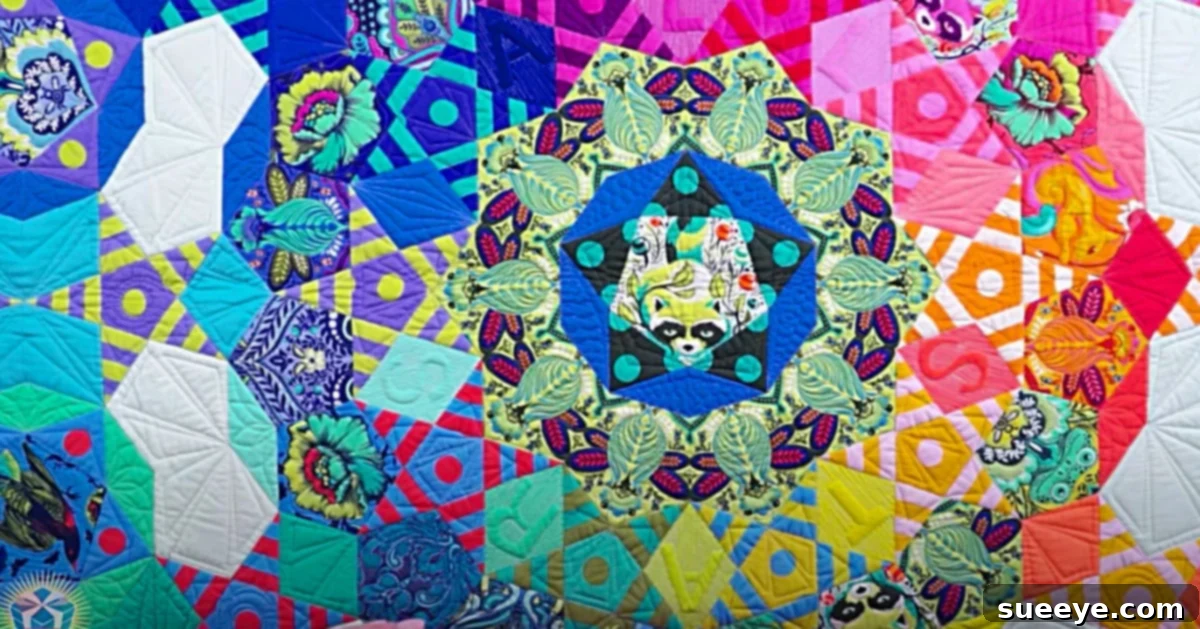
Master the Art of English Paper Piecing and Fussy Cutting for Exquisite Quilts
Embark on a captivating journey into the world of precision quilting with English Paper Piecing (EPP) and the intricate technique of fussy cutting. These methods transform fabric scraps into stunning masterpieces, offering a meditative and rewarding crafting experience. While often associated with advanced sewing skills, understanding the core principles can open up a world of creative possibilities for any passionate quilter. Inspired by expert quilters like Tula Pink, we delve into the magic behind these beautiful, meticulously crafted quilts.
I recently stumbled upon an incredibly insightful video by Tula Pink on YouTube, which brilliantly demystifies the process of making an English paper pieced quilt with fussy cutting. As an enthusiastic amateur quilter, I’ve always admired the geometric precision and captivating patterns of these quilts, often wondering how such intricate designs were achieved. Tula Pink’s tutorial revealed the secret: it’s all in the careful preparation and precision cutting. This isn’t your typical quick-sew project; it requires dedication, patience, and a keen eye for detail, making it a truly gratifying endeavor for those ready to embrace a more involved quilting challenge.
Understanding English Paper Piecing (EPP)
English Paper Piecing, affectionately known as EPP, is a traditional hand-sewing method that has been cherished by quilters for centuries. Originating out of necessity to make the most of valuable fabric scraps, it has evolved into a beloved technique for creating exceptionally precise and intricate quilt blocks. The fundamental principle involves wrapping fabric pieces around paper templates and basting them into place before hand-sewing the basted fabric shapes together. This process results in perfectly sharp points and accurate seams, even with complex geometric designs that would be challenging to achieve with machine sewing alone.
The beauty of EPP lies in its portability and the precision it offers. Once your fabric pieces are basted to their paper templates, they are ready to be sewn together anytime, anywhere – making it an ideal project for travel, commuting, or simply relaxing on the couch. The paper templates act as a stable foundation, ensuring that each fabric piece maintains its exact shape and size, which is critical for creating a cohesive and stunning quilt top. Popular EPP shapes include hexagons, diamonds, triangles, and intricate curvilinear designs, allowing for endless creative patterns.
The Art of Fussy Cutting
Fussy cutting is a technique that takes fabric selection to an artistic level, allowing quilters to highlight specific motifs, create repeating patterns, or capture unique elements from their fabric prints. Instead of randomly cutting fabric, fussy cutting involves deliberately positioning your template to frame a particular design or image within the fabric. This method is often reserved for your most treasured fabrics—those with exquisite prints, whimsical illustrations, or striking geometric patterns that you’ve been hesitant to cut into.
When combined with English Paper Piecing, fussy cutting elevates a quilt from beautiful to breathtaking. Imagine a field of hexagons, each one perfectly framing a tiny flower, a bird, or a specific design element from the fabric. This intentional placement adds depth, narrative, and a bespoke quality to your quilt, turning it into a true work of art. Fussy cutting isn’t just about aesthetics; it’s about storytelling through fabric, allowing each piece to contribute meaningfully to the overall design of your project.
Essential Materials for Your EPP Journey
Embarking on an English Paper Piecing project, especially one incorporating fussy cutting, requires a thoughtful selection of tools. Having the right materials will significantly enhance your experience and the quality of your finished quilt.
Fabric Selection
- High-Quality Quilting Cotton: Opt for good quality quilting cottons that are easy to press and hold their shape well. Consider the scale of the prints – larger, bolder prints are often ideal for fussy cutting, allowing you to isolate distinct motifs.
- Variety of Prints: For fussy cutting, having a range of prints that complement each other but also offer unique elements to highlight is key. Don’t be afraid to mix and match.
Paper Templates
- EPP Paper Pieces: These are specialized paper shapes, typically made from sturdy cardstock, that serve as your foundation. They come in various sizes and geometric forms (hexagons, diamonds, triangles, etc.). You can purchase pre-cut templates or make your own using cardstock and a precise cutting tool. Consistency in template size is paramount for accurate piecing.
Adhesives and Tools
- Washable Glue Stick: A fabric-safe, washable glue stick is indispensable for basting fabric to your paper templates. It offers a quick and secure way to hold the fabric in place without the bulk of thread basting. Ensure it’s acid-free to protect your fabric.
- Fabric Scissors: Keep a pair of sharp, dedicated fabric scissors for precise cutting. Small snips can be useful for intricate trimming.
- Rotary Cutter, Mat, and Rulers: While not strictly for the EPP hand-sewing part, these are invaluable for initially cutting your fabric pieces larger than your paper templates and for general fabric preparation and squaring up.
- Acrylic Templates (Fussy Cutting Specific): Clear acrylic templates that match your paper piece shapes, often with seam allowances marked, are crucial for accurate fussy cutting. They allow you to see through to the fabric and precisely position your cut over a desired motif.
Sewing Essentials
- Hand Sewing Needles: Fine, sharp needles are essential for EPP. Milliners needles (appliqué needles) or ‘straw’ needles are popular choices due to their length and ability to glide through fabric easily, making tiny, consistent stitches possible.
- Quilting Thread: A strong, fine polyester or cotton thread is recommended. Choose a color that blends well with your fabrics or a neutral shade like grey or beige.
- Thimble: Protect your fingers from repeated needle pushes. A comfortable thimble is a hand quilter’s best friend.
- Iron and Ironing Board: For pressing seams open or to the side, and for flattening your finished EPP blocks. Good pressing habits contribute significantly to the overall flatness and precision of your quilt.
Step-by-Step Guide to English Paper Piecing with Fussy Cutting
Tula Pink’s video masterfully demonstrates the intricacies of fussy cutting and EPP. While she explores multiple methods, let’s focus on a commonly used and highly effective approach. This method, as beautifully illustrated in her tutorial, begins with a rough cut and then precisely folds the fabric around the paper template.
Step 1: Preparing Your Templates
First, ensure all your paper templates are accurately cut to your desired shape and size. Precision here is non-negotiable, as any inconsistencies will affect the final quilt. Whether you buy pre-cut pieces or make your own, strive for uniformity.
Step 2: The Fussy Cutting Process
This is where the magic of “fussy” begins. Take your fabric and identify the specific motifs or patterns you wish to highlight. Place your clear acrylic fussy cutting template over the desired area of the fabric, carefully aligning the motif within the template’s window. Once satisfied, use your rotary cutter or fabric scissors to cut around the acrylic template, leaving an approximate ¼ inch (or slightly more) seam allowance around all sides. This means your fabric piece will be slightly larger than your paper template, ready for basting.
Step 3: Basting Fabric to Paper
This critical step secures the fabric to its paper foundation. Place your paper template centrally on the wrong side of your fussy-cut fabric piece. Apply a small amount of washable glue stick to the edges of the paper template. Then, carefully fold the fabric seam allowance over the edges of the paper, pressing it down firmly with your fingers to adhere it to the paper. Work your way around the entire perimeter, ensuring the fabric is snug and smooth around the paper, creating crisp edges and corners. This creates a neat, stable unit ready for sewing. This is precisely why this method is aptly named a “paper piece” quilt.
Step 4: Hand-Sewing Your EPP Pieces
Once you have a collection of basted fabric pieces, it’s time to sew them together. Take two basted pieces and align them right sides together, matching the edges precisely. Using a fine hand-sewing needle and a strong thread, begin to join them with a tiny whip stitch or a flat back stitch. Your stitches should be small, consistent, and only catch a few threads from the fold of each fabric piece, not going through the paper. The goal is to create an almost invisible seam that holds the pieces securely. Continue adding pieces, forming larger blocks or rows as per your quilt design, always ensuring perfect alignment and tension.
Step 5: Removing Paper Templates
The paper templates provide stability during the sewing process. Once the basted pieces are firmly sewn into a larger unit or when adjacent seams have been completed and are stable, the paper templates can be carefully removed. Gently un-fold the fabric edges and peel away the paper. This usually happens once several pieces are joined, or when a larger block is formed, to ensure the fabric retains its shape until fully integrated into the quilt top.
Step 6: Assembling Your Quilt Top
After you’ve created numerous EPP units, you’ll begin to assemble them into the full quilt top. This often involves joining smaller EPP blocks into larger sections, and then stitching those sections together. Some quilters choose to machine-sew these larger EPP sections to non-EPP fabric pieces for larger quilts, while others prefer to continue hand-sewing for a fully hand-pieced finish. Press your seams carefully to ensure your quilt top lies flat and smooth.
Why Choose EPP and Fussy Cutting?
The allure of English Paper Piecing combined with fussy cutting extends beyond just creating a quilt; it offers a unique set of benefits for the dedicated crafter:
- Unmatched Precision: The paper templates guarantee accuracy, leading to stunningly precise points and perfect geometric patterns that are difficult to achieve with other methods.
- Portable Crafting: EPP is the ultimate take-along project. You can prepare your pieces and sew them almost anywhere, making it a perfect companion for quiet moments.
- Mindful and Meditative: The repetitive, gentle rhythm of hand-sewing can be incredibly calming and therapeutic, offering a wonderful escape from daily stresses.
- Showcase Treasured Fabrics: Fussy cutting allows you to highlight the most beautiful and meaningful motifs from your favorite fabrics, turning them into focal points of your design.
- Unique Artistic Expression: The combination of EPP’s structure and fussy cutting’s creativity allows for truly one-of-a-kind quilts that reflect your personal style and vision.
- Durability: Hand-sewn seams are often very strong and durable, contributing to the longevity of your quilt as a cherished heirloom.
Tips for EPP Success
To ensure a smooth and enjoyable EPP experience, consider these valuable tips:
- Start Small: If you’re new to EPP, begin with a smaller project like a cushion cover, a placemat, or a table runner. This allows you to practice the techniques without feeling overwhelmed by a large quilt.
- Invest in Good Tools: Quality needles, thread, and sharp scissors make a significant difference in your stitching experience and the final outcome.
- Pressing is Key: Press your fabrics before you start cutting, and press your EPP units as you complete sections. Good pressing habits contribute immensely to the overall flatness and professional finish of your quilt.
- Patience and Practice: EPP is not a race. Embrace the process, take your time, and remember that practice will refine your stitches and accuracy. Enjoy the journey of creation.
- Watch Tutorials: Videos like Tula Pink’s are invaluable resources. Watching an expert in action can clarify techniques and provide visual guidance.
- Join a Community: Connect with other EPP enthusiasts online or in local guilds. Sharing tips, tricks, and inspiration can be incredibly motivating and helpful.
Conclusion
The world of English Paper Piecing and fussy cutting is rich with tradition, precision, and boundless creative potential. It’s a craft that rewards patience and attention to detail with truly spectacular results. From choosing the perfect fabric motif to meticulously stitching each piece by hand, every step in the process contributes to a quilt that is not only visually stunning but also holds a piece of your dedication and artistry.
If you’ve ever admired a quilt with perfectly matched patterns and intricate designs, now you understand the thoughtful work behind it. Whether you’re a seasoned quilter looking for a new challenge or an adventurous beginner eager to expand your skills, EPP with fussy cutting offers a profoundly satisfying creative outlet. Dive in, gather your materials, and let the inspirational teachings of experts guide you. The journey to creating your own exquisite, paper-pieced quilt filled with deliberately chosen fabric elements is a rewarding one indeed. Happy quilting!