
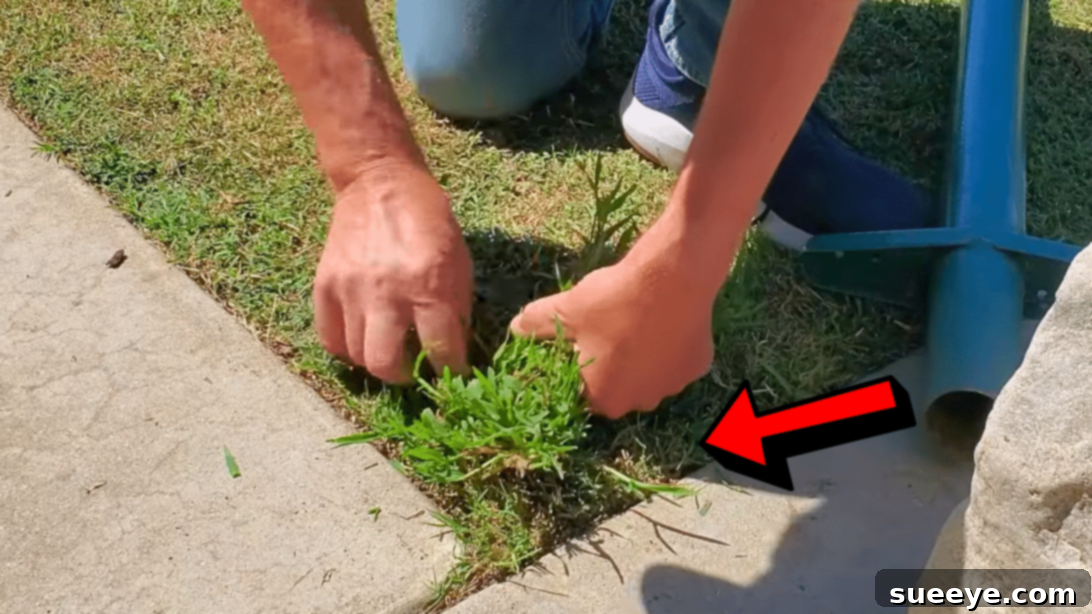
Crabgrass is a formidable adversary for any lawn enthusiast. This invasive annual weed can rapidly establish itself, outcompeting your desirable turf for vital sunlight, water, and nutrients. Its aggressive spreading habit means that if not addressed promptly, it can quickly dominate your entire lawn, leaving it looking patchy and unhealthy. Tackling crabgrass effectively requires a clear understanding of its characteristics and a strategic approach to control and prevention. By implementing the right techniques, you can ensure that your lawn remains a lush, vibrant green space, free from the clutches of this stubborn weed.
RELATED: Easy Homemade Weed Killer Tutorial
This comprehensive guide, inspired by expert insights, including visual demonstrations from channels like How to House on YouTube, will equip you with the knowledge to not only remove existing crabgrass but also prevent its return. You’ll learn how to identify crabgrass, employ various removal methods, and implement long-term prevention strategies to cultivate a consistently healthy and beautiful lawn. Get ready to transform your turf and enjoy the satisfaction of a weed-free landscape.
Comprehensive Guide to Crabgrass Control: From Identification to Prevention
- Understanding Crabgrass: Identification and Life Cycle
- Effective Manual Removal Techniques
- Targeted Herbicide Treatments: Pre-Emergent and Post-Emergent
- Long-Term Prevention Strategies for a Healthy Lawn
- Seasonal Crabgrass Management Calendar
Conquering Crabgrass: Step-by-Step Strategies for a Pristine Lawn
1. Understanding Crabgrass: Identification and Life Cycle
Crabgrass (scientifically known as Digitaria spp.) is one of the most common and tenacious annual weeds found in lawns and gardens across various climates, particularly thriving in warm-season conditions. It’s an annual plant, meaning it completes its entire life cycle within one growing season, typically from spring to fall, producing thousands of seeds before it dies with the first hard frost. These seeds then lie dormant through winter, ready to germinate the following spring when soil temperatures consistently reach 55-60°F (13-16°C) for several days.
Its distinctive low-growing, spreading habit gives it a crab-like appearance, with stems radiating out from a central point. Young crabgrass plants can be difficult to distinguish from desirable turfgrass, but as they mature, they become coarser, broader-leaved, and often lighter green than most lawn grasses. Common varieties include large crabgrass (Digitaria sanguinalis) and smooth crabgrass (Digitaria ischaemum), both of which can quickly invade lawns, flowerbeds, and garden spaces. They compete aggressively with your desired plants for essential nutrients, water, and sunlight, leading to weakened turf and unsightly patches.
Effective control begins with proper identification. Look for broad, flat leaves with prominent veins and a ligule (a small membrane or fringe of hairs) at the base of the leaf blade where it meets the stem. Early detection is key; the younger the plant, the easier it is to control.
2. Manual Removal Techniques: For Small Infestations
For small infestations, scattered plants, or in areas where chemical treatments are not preferred or feasible, manual removal remains a highly effective method. While labor-intensive, it provides an immediate and chemical-free solution, especially when crabgrass plants are young and have not yet produced seeds.
The best time for manual removal is when the crabgrass is still small, ideally before it has grown more than a few inches tall. At this stage, its root system is less developed, making extraction easier. Ensure the soil is moist, either after a rain or thorough watering. Moist soil allows the roots to slide out more easily, minimizing soil disturbance and reducing the risk of leaving root fragments behind that could regrow.
When pulling, grasp the crabgrass plant firmly at its base, as close to the soil line as possible. Gently but steadily pull upward, aiming to remove the entire plant, including its root system. Leaving even small root fragments can lead to regrowth. For larger, more established crabgrass plants, or those with more developed root systems, a garden tool like a weeding fork, trowel, or hoe can be invaluable. Carefully dig around the base of the plant to loosen the soil before lifting it out. Be mindful not to disturb surrounding desirable turf more than necessary.
After removal, it’s crucial to dispose of the crabgrass properly. Do not leave it on the lawn, as even uprooted plants can still mature and release seeds. Place them in a compost bin (if your compost gets hot enough to kill seeds) or dispose of them in yard waste. After removing the weed, consider filling the exposed soil with new topsoil and overseeding with desirable grass seed to prevent new crabgrass from germinating in the bare spot.
3. Targeted Treatments: Utilizing Herbicides Wisely
When prevention and manual removal prove insufficient for larger or more widespread crabgrass problems, targeted herbicide treatments can provide effective control. It’s crucial to understand the two main types of herbicides used for crabgrass and how to apply them correctly.
Pre-Emergent Herbicides: The First Line of Defense
Pre-emergent herbicides are designed to prevent crabgrass seeds from germinating and establishing themselves. They form a chemical barrier in the soil that inhibits seed growth shortly after germination, effectively stopping the weed before it even emerges. The timing of application is critical for their success. Pre-emergents should be applied in early spring, typically when soil temperatures consistently reach 55-60°F (13-16°C) for several days, and before crabgrass seeds have a chance to germinate. This usually coincides with when forsythia bushes start blooming or dogwoods are in full bloom.
Applying too early can cause the chemical barrier to degrade before the germination window, while applying too late means the crabgrass may have already sprouted. Always read and follow the label instructions meticulously, as different products have varying active ingredients (e.g., prodiamine, dithiopyr, pendimethalin) and recommended application rates. After application, it’s often necessary to lightly water the lawn to activate the herbicide and move it into the soil where it can work effectively. Be aware that pre-emergents can also inhibit the germination of desirable grass seeds, so avoid overseeding your lawn for several months after application.
Post-Emergent Herbicides: Tackling Active Growth
If crabgrass has already emerged and is actively growing, post-emergent herbicides are your solution. These products are designed to kill existing crabgrass plants. They can be selective, meaning they target crabgrass and similar weeds while sparing desirable turfgrass species, or non-selective, which will kill almost any plant they contact. For lawn applications, always opt for selective post-emergent herbicides (e.g., quinclorac, fenoxaprop, mesotrione).
Apply post-emergent herbicides when crabgrass is actively growing but before it starts to produce seeds. This typically means late spring through early summer. Avoid applying on extremely hot days (above 85°F / 30°C) or when the lawn is under stress from drought, as this can lead to turf damage. As with pre-emergents, carefully follow the product label for application rates, mixing instructions, and safety precautions. Ensure uniform coverage and avoid spraying desirable plants, shrubs, or flowers nearby. Multiple applications may be necessary for severe infestations, but always adhere to the recommended reapplication intervals.
When using any herbicide, wear appropriate protective gear (gloves, eye protection) and keep children and pets off the treated area according to label instructions. Always store herbicides safely and out of reach.
4. Prevention Strategies: Cultivating a Healthy, Crabgrass-Resistant Lawn
The most effective and sustainable strategy for crabgrass control is prevention. A dense, healthy lawn naturally suppresses weed growth by shading the soil and outcompeting weeds for resources. By maintaining optimal turf conditions, you create an unfavorable environment for crabgrass to take root and thrive.
Mowing Practices: The Right Height
Mowing your grass at the appropriate height is paramount. Aim to keep your lawn at least 2.5 to 3 inches tall, or even taller (3-4 inches) for some grass types. Taller grass blades create shade over the soil surface, which helps to keep the soil temperature cooler and blocks sunlight, thereby inhibiting crabgrass seed germination. Frequent mowing at a lower height, conversely, exposes the soil to sunlight, encouraging crabgrass. Always use a sharp mower blade to ensure a clean cut, which promotes healthier grass growth and prevents tearing that can stress your lawn.
Watering Techniques: Deep and Infrequent
Water your lawn deeply but infrequently. This encourages your desirable grass to develop deep, robust root systems, making them more resilient to drought and better able to compete with weeds. Shallow, frequent watering, on the other hand, promotes shallow root growth in turfgrass and creates ideal moist conditions near the surface for crabgrass seeds to germinate. Aim for about 1 inch of water per week, applied in one or two sessions, depending on soil type and climate.
Proper Fertilization: Balanced Nutrition
A well-nourished lawn is a strong lawn. Apply fertilizer according to your soil test results and the specific needs of your grass type. Proper fertilization ensures your turf has the nutrients it needs for vigorous growth, allowing it to become thick and dense, thus naturally crowding out weeds. Avoid over-fertilizing, especially with high nitrogen, which can lead to excessive top growth at the expense of root development and can stress the lawn.
Soil Health: Aeration and Dethatching
Improving soil health is critical for long-term crabgrass prevention. Compacted soil, often found in high-traffic areas, restricts root growth of desirable grasses and can create ideal conditions for crabgrass. Aeration, the process of removing small cores of soil, alleviates compaction, improves water and nutrient penetration, and enhances air circulation to the roots. Dethatching, removing the layer of dead grass material (thatch) that accumulates on the soil surface, also helps improve water and nutrient absorption and reduces hiding spots for weed seeds. Both practices create a healthier environment for your lawn and less favorable conditions for crabgrass.
Overseeding: Filling Bare Spots
Thin or bare areas in your lawn are prime targets for crabgrass. Overseeding these areas with quality grass seed in the late summer or early fall (after crabgrass has died but before new seeds germinate) helps promote a dense turf. A thick lawn leaves little room for crabgrass to establish itself, effectively outcompeting any new weeds trying to sprout. Choose a grass seed variety that is well-suited to your local climate and soil conditions.
Strategic Use of Pre-Emergent Herbicides
As mentioned previously, applying pre-emergent herbicides in early spring, before crabgrass seeds germinate, forms a crucial part of a comprehensive prevention strategy. This creates an invisible barrier that stops new crabgrass plants from emerging. Remember to time this application based on soil temperature rather than just the calendar date for maximum effectiveness.
5. Seasonal Crabgrass Management Calendar
Effective crabgrass control is an ongoing, seasonal effort. Here’s a general timeline to guide your efforts:
- Early Spring (March-April, when soil temps reach 55-60°F): This is the critical window for applying pre-emergent herbicides. It’s your best defense against germination. If you plan to overseed your lawn, you may need to choose a pre-emergent that allows for seeding or delay seeding until late summer/fall. Begin light fertilization for a healthy start.
- Late Spring to Early Summer (May-June): Monitor your lawn closely for any crabgrass that may have slipped past your pre-emergent barrier. If you spot young plants, manual removal is still highly effective. For larger outbreaks, this is the time to apply post-emergent herbicides to actively growing crabgrass. Continue good mowing and watering practices.
- Mid to Late Summer (July-August): Continue monitoring for any new crabgrass sprouts and apply post-emergent treatments as needed, always following label instructions carefully. Ensure your lawn is well-watered to reduce stress from summer heat, which can make it more susceptible to weed invasion. Avoid heavy fertilization during peak summer heat.
- Late Summer to Early Fall (September-October): Crabgrass begins to die off with the first frost, but not before producing millions of seeds. Focus on repairing any damage left by crabgrass. This is the ideal time for aeration, dethatching, and overseeding to thicken your lawn. Apply a fall fertilizer to help your grass recover and build root strength for winter.
- Winter (November-February): While crabgrass is dormant, this is a good time to get your soil tested. Understanding your soil’s pH and nutrient levels will inform your spring fertilization and liming strategies, further strengthening your lawn against future weed invasions.
*All these images are credited to How to House via YouTube. Give his channel a visit and subscribe for more informative lawn and home care tips!
Achieving a Crabgrass-Free Lawn: A Recap
Successfully getting rid of crabgrass and keeping it away requires a multifaceted approach that combines understanding the weed, strategic removal, and consistent preventive measures. From diligently pulling young plants by hand to precisely applying pre- and post-emergent herbicides, each step plays a crucial role in reclaiming your lawn. However, the true secret to long-term success lies in cultivating a healthy, dense lawn through proper mowing, watering, fertilization, and soil care. By prioritizing your lawn’s health, you create an environment where desirable grasses thrive and invasive weeds like crabgrass simply cannot compete.
Embrace these strategies, stay vigilant, and adapt your approach to the specific needs of your lawn and local climate. With dedication and the right knowledge, you can achieve and maintain a beautiful, crabgrass-free landscape that enhances your home’s curb appeal and provides a lush space for enjoyment.