
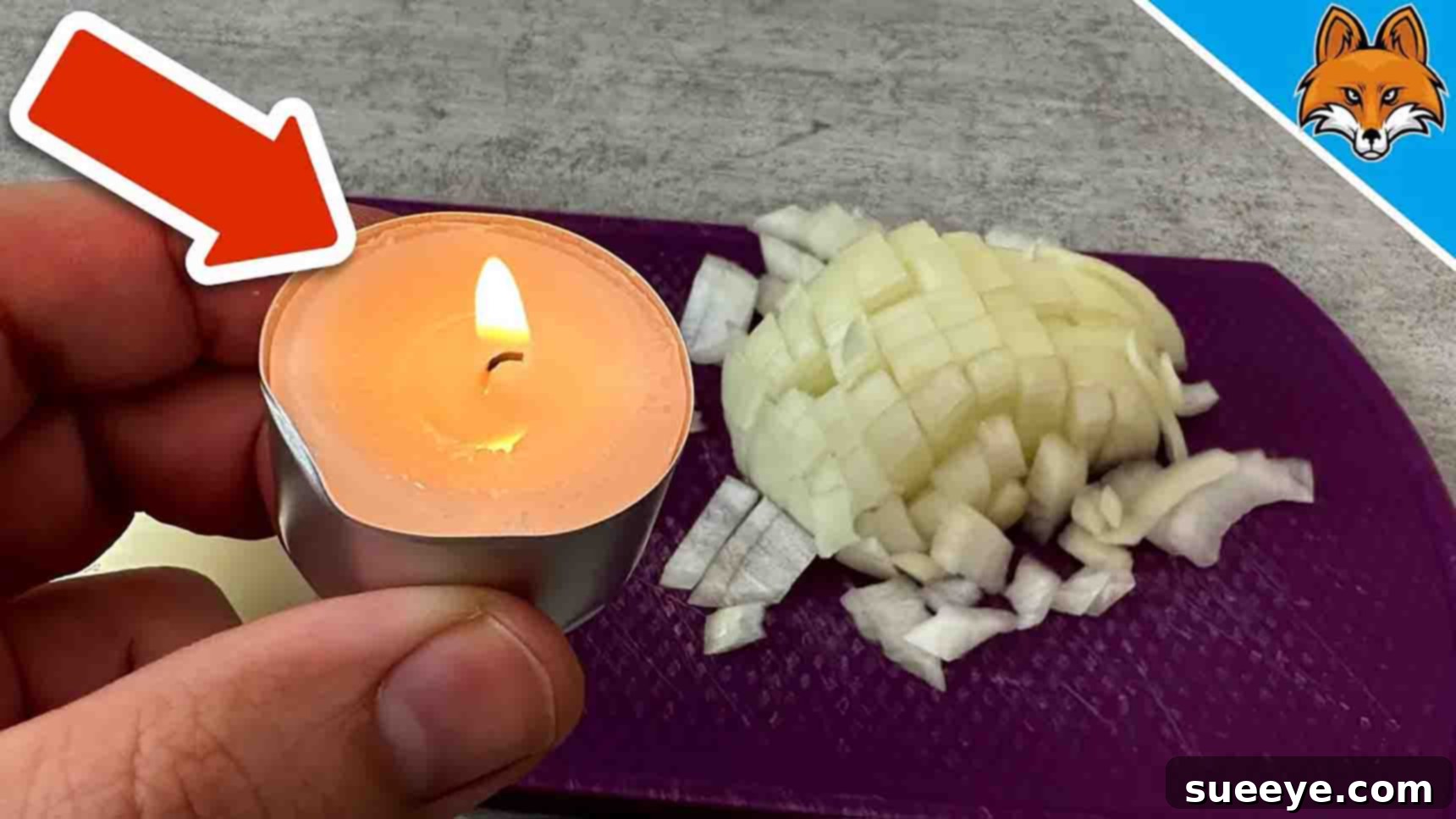
Are you tired of watery, stinging eyes every time you chop onions? It’s a common kitchen dilemma that can turn meal prep into a tearful ordeal. But what if we told you there’s a surprisingly simple, yet incredibly effective trick that can banish those tears for good? You’ve stumbled upon the ultimate guide to keeping your eyes dry and comfortable while dicing even the most pungent onions. This ingenious method, popularized by channels like Smart Fox on YouTube, has revolutionized onion prep for countless home cooks, and it truly feels like magic.
Say goodbye to the days of battling onion fumes with awkward goggles or frantic fanning. This article will walk you through a foolproof candle hack, delve into the science behind why onions make us cry, and explore a variety of other practical tips to ensure your onion chopping experience is always tear-free. Get ready to transform your cooking routine and enjoy the process of preparing your favorite dishes without the sting!
The Science Behind the Tears: Why Onions Make Us Cry
Before we reveal the magical trick, let’s understand the enemy. Why do onions cause such an irritating reaction? It all comes down to a clever defense mechanism developed by the onion plant itself. When you cut into an onion, you damage its cells, releasing a cocktail of enzymes and sulfur compounds that were previously kept separate.
- Sulfur Absorption: Onions absorb sulfur from the soil, which is stored in their cells as various sulfur-containing compounds.
- Enzyme Release: When the onion’s cells are broken (by a knife, for example), enzymes called alliinases are released.
- Chemical Reaction: These alliinase enzymes react with the sulfur compounds, primarily a compound called trans-S-(1-propenyl) L-cysteine sulfoxide. This reaction quickly produces sulfenic acids.
- Lachrymatory Factor Synthase: The sulfenic acids are then converted by another enzyme, lachrymatory-factor synthase (LFS), into a highly volatile gas known as syn-propanethial-S-oxide. This is the infamous “lachrymatory factor” (LF).
- Eye Irritation: As this gaseous LF floats up from the cutting board, it comes into contact with the water in your eyes. When LF dissolves in your tears, it forms a mild sulfuric acid.
- Tear Response: This sulfuric acid irritates the nerve endings in your eyes, triggering a natural reflex: your lacrimal glands produce more tears to wash away the irritant, leading to the familiar watering and stinging sensation.
Understanding this chemical cascade is key to appreciating why certain methods, especially our featured candle trick, are so effective in neutralizing the irritant before it reaches your delicate eyes.
The Ingenious Candle Trick: A Step-by-Step Guide
This simple yet highly effective trick harnesses the power of a tiny flame to combat the irritating compounds released by onions. It’s incredibly easy to implement, requires minimal materials, and delivers impressive results. Get ready to chop onions without a single tear rolling down your cheek!
Materials:
- A tea light (or any small candle)
- A lighter or matches
- Your trusty chopping knife and cutting board
- Onions, ready for dicing!
Directions:
Step 1: Prepare Your Workspace and Light the Candle
Begin by setting up your cutting area as usual. Place your onion on the cutting board. Now, take your tea light or small candle and light it up. The strategic placement of the candle is crucial here. Position the lit candle right next to the onion you are about to cut, ensuring it’s close enough to be effective but also a safe distance from your hands and any flammable items. The flame doesn’t need to be directly touching the onion, just within a few inches of your primary chopping zone.
Step 2: Begin Chopping and Witness the Magic
With the candle safely lit and positioned, proceed to cut your onions as you normally would. You’ll quickly notice a remarkable difference: your eyes should remain perfectly dry and free from any stinging sensation. It’s truly astonishing how such a simple addition can completely eliminate the tear-inducing irritants. You can now chop, dice, and mince to your heart’s content without the discomfort that usually accompanies onion preparation.
Step 3: Understanding Why the Candle Trick Works
The effectiveness of the candle trick lies in two primary scientific principles. Firstly, the flame of the candle generates a small but continuous updraft of warm air. This convection current acts like a miniature fume hood, drawing the volatile syn-propanethial-S-oxide (the lachrymatory factor or LF) upwards and away from your face. Instead of floating directly into your eyes, the irritating gas is pulled into the flame’s path.
Secondly, and perhaps more importantly, the heat and combustion processes of the candle flame actively neutralize or burn up the airborne lachrymatory factor. The chemical compounds that cause the irritation are effectively destroyed or transformed into harmless byproducts by the flame before they can reach your eyes and trigger a tear response. In essence, the candle acts as a powerful localized incinerator for the irritating onion gas, making your chopping experience completely tear-free.
Other Effective Methods to Prevent Onion Tears
While the candle trick is a standout favorite, there are several other tried-and-true methods that cooks employ to avoid watery eyes. Experiment with these tips to find what works best for you, or combine them for maximum protection!
Chill Your Onions
Placing your onions in the refrigerator for 30 minutes or the freezer for 15 minutes before cutting can significantly reduce tear production. The cold temperature slows down the release of the enzymes and volatile compounds that cause irritation, making them less reactive when you cut into the onion. This is a simple, passive method that requires minimal effort.
Cut Under Ventilation
Work in an area with good air circulation. Cutting onions directly under an extractor fan, near an open window, or even with a small fan blowing across your cutting board (away from your face) can help disperse the irritating gases before they reach your eyes. This minimizes the concentration of the lachrymatory factor in your immediate breathing space.
Wear Protective Eyewear
For those with extremely sensitive eyes, or if you’re processing a large quantity of onions, a physical barrier can be your best friend. Simple swimming goggles, specialized onion goggles (yes, they exist!), or even well-fitting safety glasses can create an impenetrable shield against the irritating fumes. While perhaps not the most stylish solution, it’s undeniably effective.
Use a Very Sharp Knife
This might sound counterintuitive, but a super-sharp knife causes less damage to the onion’s cells than a dull one. When cells are cleanly sliced, fewer enzymes and sulfur compounds are released into the air. A dull knife, on the other hand, crushes cells, releasing a greater volume of the tear-inducing compounds. Keep your knives honed for efficiency and tear prevention!
Cut the Root End Last
The root end of an onion contains the highest concentration of the lachrymatory factor and the enzymes responsible for its production. By cutting the onion in half lengthwise and slicing from the stem end towards the root, you delay exposing the most potent part of the onion to the air until the very end of your chopping process. Some even suggest leaving the root end intact as you slice, only removing it at the last possible moment.
Soak Onions in Water (Briefly)
Some cooks find that soaking peeled onions in a bowl of cold water for 10-15 minutes before cutting can help. The water can absorb some of the irritating compounds from the surface, and the onion stays chilled. However, be mindful that prolonged soaking can affect the onion’s texture and flavor.
Breathe Through Your Mouth or Chew Gum
While less scientifically robust than other methods, some people find relief by breathing solely through their mouth while chopping, or by chewing gum. The idea is that these actions may divert your attention, or create a barrier that prevents the gases from reaching the nasal passages and triggering a reflex response that then impacts the eyes.
Benefits of Tear-Free Onion Chopping
Mastering the art of tear-free onion chopping extends beyond mere comfort; it enhances your entire cooking experience.
- Enhanced Safety: When your eyes aren’t tearing up, you can see clearly, significantly reducing the risk of accidents with sharp knives.
- Improved Efficiency: No more pausing to wipe away tears or step away from the cutting board. You can chop continuously and quickly.
- More Enjoyable Cooking: Cooking should be a pleasure, not a chore. Eliminating the discomfort of onion tears makes the entire process more enjoyable and less stressful.
- Better Knife Skills: With clear vision, you can focus on perfecting your dicing and mincing techniques, leading to more consistent cuts and professional-looking results.
- Reduced Eye Irritation: For those with sensitive eyes, or contact lens wearers, avoiding the chemical irritation is a huge relief, preventing lasting discomfort.
Selecting and Storing Onions for Optimal Freshness
To make the most of your tear-free chopping techniques, start with high-quality onions.
- Selection: Choose onions that are firm, heavy for their size, and have dry, papery outer skins. Avoid any with soft spots, sprouts, or signs of mold.
- Storage: Store whole, unpeeled onions in a cool, dry, dark, and well-ventilated place, like a pantry or cellar. Keep them separate from potatoes, as both release gases that can cause the other to spoil faster. Do not store whole onions in the refrigerator, as the moisture can lead to spoilage and soften their texture. Once cut, however, store onion pieces in an airtight container in the refrigerator for up to a week.
- Variety Matters: Different onion varieties have varying levels of pungency. Yellow onions are generally the most pungent and tear-inducing, while white onions are slightly milder. Red onions are often eaten raw and have a sweeter, milder flavor, and sweet onions (like Vidalia or Walla Walla) are the least likely to make you cry due to their lower sulfur content.
Conclusion: Embrace Tear-Free Cooking
Chopping onions doesn’t have to be a tear-jerking experience any longer. With the simple, brilliant candle trick, you have a powerful tool at your disposal to eliminate the sting and make your kitchen prep work significantly more pleasant. This hack, celebrated by home cooks and culinary enthusiasts alike, truly works like a charm by neutralizing the irritating gases before they can reach your eyes.
We encourage you to try this easy method today and witness the difference for yourself. Along with exploring other effective techniques like chilling your onions, using a sharp knife, or ensuring good ventilation, you now possess a comprehensive arsenal against onion tears. Embrace these kitchen secrets, and transform your cooking journey into a more enjoyable, efficient, and tear-free adventure. Happy chopping!