
Are you constantly battling an endless swarm of flies invading your personal sanctuary? Have you invested in countless commercial repellents, sprays, and zappers, only to find these persistent pests returning with unwavering determination? If you’re feeling overwhelmed and desperate for a genuinely effective solution that doesn’t involve harsh chemicals or breaking the bank, your search ends here. Prepare to discover a remarkably simple, yet incredibly potent, DIY fly trap that harnesses the power of everyday household ingredients to create a virtually fly-free environment.
This ingenious method offers a refreshing alternative to traditional pest control, providing peace of mind knowing you’re protecting your family and pets from potentially harmful substances often found in store-bought products. Not only is this homemade fly trap safe and environmentally friendly, but it’s also astonishingly cost-effective, utilizing items you likely already have in your pantry.
The Viral Sensation: A TikTok Inspired Fly Control Hack
The inspiration for this highly effective fly trap gained widespread attention thanks to TikToker @southernescape. Her viral video showcased a practical and incredibly easy approach to tackling fly infestations, transforming a common nuisance into a manageable problem. The clip demonstrated how a simple concoction, mixed in an ordinary cup, could become a powerful magnet for flies, proving that sometimes the best solutions are the simplest ones.
The beauty of such viral hacks lies in their accessibility and immediate applicability. People are constantly searching for quick, affordable, and natural remedies to everyday problems, and this fly trap certainly delivers. Its popularity underscores a collective desire for practical, no-fuss solutions that genuinely work, moving away from complex, expensive, or chemical-laden alternatives.
@southernescape #diy
#hack
#flies
#idea
#summer
#cleantok
#clean
#cleaning
#viral
#foryou
#fyp
#satisfaction
#flytrap
#trap
#annoying
#gross
#disgusting
#ew♬ Touch Down 2 Cause Hell – Hd4president
Understanding the Science: Why This Homemade Fly Trap Works So Well
The effectiveness of this DIY fly trap lies in a clever combination of attraction and incapacitation, utilizing the specific properties of readily available ingredients. It’s not just a random mix; each component plays a crucial role in luring flies and ultimately trapping them.
- Apple Cider Vinegar (ACV): This is the primary attractant. Flies, especially fruit flies, are strongly drawn to the fermented, fruity smell of apple cider vinegar. It mimics the scent of overripe fruits and decaying organic matter, which are common food sources and breeding grounds for these insects. The acetic acid in ACV is particularly appealing.
- Sugar: Sugar acts as an additional irresistible lure, enhancing the sweetness and making the solution even more enticing to flies. It provides a quick energy source that flies actively seek out, compounding the attraction already provided by the ACV.
- Dish Soap: This seemingly innocuous ingredient is the trap’s secret weapon. When flies land on the surface of the solution, the dish soap breaks down the surface tension of the liquid. Normally, flies can land on water and walk across it due to surface tension. With the surface tension disrupted, they immediately sink into the liquid and become trapped, unable to escape.
- Water: Water acts as the base solvent, allowing all the ingredients to mix homogenously and creating the liquid environment necessary for the trap to function effectively. It dilutes the other ingredients to the right consistency and provides the volume needed for the flies to drown once they fall in.
Together, these ingredients create a deadly (for flies!) but harmless (for humans and pets) trap that exploits a fly’s natural instincts and physical limitations.
Crafting Your Ultimate DIY Fly Trap: A Step-by-Step Guide
Creating this effective homemade fly trap is incredibly simple and requires minimal effort. Follow these straightforward steps to assemble your pest control solution:
Materials You’ll Need:
- Plastic Cup: Any disposable or reusable plastic cup will work. Glass jars are also suitable.
- Apple Cider Vinegar: Standard apple cider vinegar from your pantry.
- Sugar: Granulated white sugar or brown sugar.
- Dish Soap: Any brand of liquid dish soap.
- Water: Tap water is perfectly fine.
- Fork or Spoon: For mixing the solution.
- Optional (but NOT recommended, as per our findings): Cling wrap and an elastic band.
Simple Instructions:
- Combine the Attractants: In your plastic cup, pour about 1/4 to 1/2 cup of apple cider vinegar. The exact amount isn’t critical, but ensure there’s enough liquid to cover the bottom of the cup generously.
- Add the Sweetener: Stir in one to two tablespoons of sugar. This enhances the appeal of the vinegar, making it even more irresistible to flies. Mix thoroughly until the sugar largely dissolves.
- Introduce the Trapping Agent: Add a few drops (about 1/2 to 1 teaspoon) of liquid dish soap to the mixture. Gently stir, trying not to create excessive foam. The goal is to break the surface tension, not to make suds.
- Dilute with Water: Top off the cup with water, leaving about an inch of space from the rim. This helps ensure there’s enough liquid for flies to drown in and slightly dilutes the mixture to the ideal concentration.
- Mix Well: Using a fork or spoon, gently mix all the ingredients together until they are thoroughly combined. Ensure the dish soap is evenly distributed throughout the solution without creating too many bubbles on the surface.
- Placement: Place your uncovered fly trap in areas where you frequently observe flies. Common spots include kitchen counters, near fruit bowls, by windows, or close to trash cans.
The Unveiling: The Power of the Uncovered Trap
An intriguing aspect of the original TikTok demonstration involved an impromptu experiment to determine the optimal setup for the fly trap. The creator prepared two identical traps. One was covered with cling wrap, secured with an elastic band, and then punctured with small holes – a common method often seen in other DIY fly trap designs to allow flies in but prevent escape. The other trap was left completely uncovered, a straightforward open cup of the solution.
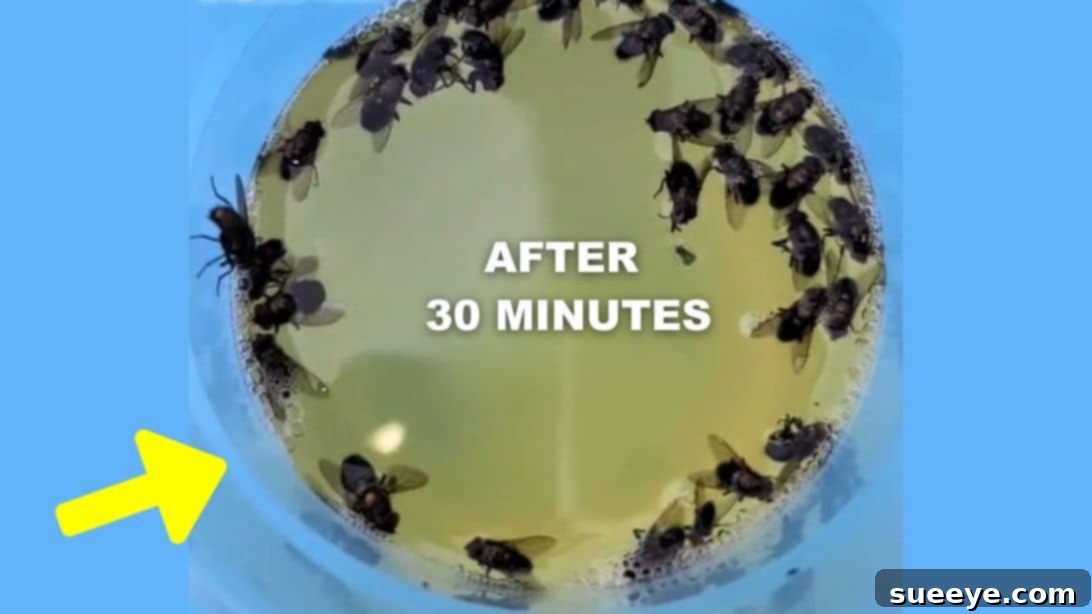
Both traps were placed in areas known for fly activity and left for a mere 30 minutes to observe their efficacy. The results were quite astonishing and provided a critical insight into maximizing the trap’s performance. The trap that was left uncovered, without any plastic wrap or holes, managed to ensnare a surprising number of flies within that short half-hour period. Conversely, the trap that was meticulously covered with cling wrap and poked with holes yielded absolutely no flies.
This powerful comparison unequivocally demonstrated that for this particular solution, the simpler, uncovered approach is vastly superior. The open surface allows flies direct and easy access to the irresistible scent and the fatal liquid, without the need to navigate through small holes. This revelation simplifies the process even further, making the DIY fly trap an even more appealing and less cumbersome solution for home pest control.
Maximizing Effectiveness: Tips for Your Homemade Fly Trap
While the basic recipe is incredibly effective on its own, a few additional tips can help you achieve even better results and maintain a consistently fly-free home:
- Strategic Placement: Place traps near known fly hotspots. This could be by windows where flies enter, near kitchen fruit bowls, compost bins, or even pet food bowls (if safely out of reach of pets). For outdoor use, position them near patios or outdoor dining areas.
- Regular Replacement: The solution will lose its potency and become less appealing over time, especially as it collects flies and evaporates. For optimal results, change the solution every 2-3 days, or sooner if it becomes heavily laden with flies.
- Multiple Traps: For larger infestations or bigger spaces, consider setting up multiple traps in different problem areas. This increases the coverage and overall trapping capacity.
- Experiment with Attractants: While apple cider vinegar is highly effective, some flies might prefer other sweet scents. You can try adding a small piece of overripe fruit, a few drops of fruit juice, or even a tiny amount of wine or beer to the mixture to see if it increases attraction.
- Consistency is Key: Don’t just set it and forget it. Regular monitoring and refreshing of the traps will ensure a continuous line of defense against flies.
Beyond the Trap: Proactive Fly Prevention
While this DIY fly trap is a fantastic reactive solution, incorporating proactive measures can significantly reduce the overall fly population in your home and garden.
- Maintain Impeccable Hygiene: Flies are attracted to food sources and decaying organic matter. Always wipe down kitchen surfaces, clean up food spills immediately, and ensure trash cans are covered and emptied regularly. Rinse recycling containers before discarding them.
- Proper Food Storage: Store fruits and vegetables in the refrigerator or in sealed containers, especially during warmer months. Avoid leaving overripe produce exposed on countertops.
- Seal Entry Points: Inspect your home for any gaps or cracks around windows, doors, and foundations. Seal these openings to prevent flies from entering. Ensure window screens and door screens are in good repair.
- Eliminate Breeding Sites: Address any stagnant water sources, as these can be breeding grounds for certain types of flies. Ensure good drainage around your property.
- Natural Deterrents: Certain plants and essential oils are known to deter flies. Consider planting basil, mint, lavender, or marigolds near entry points. Diffusing essential oils like peppermint, lemongrass, or eucalyptus can also help.
Embrace a Fly-Free Home Naturally
Dealing with flies can be an incredibly frustrating experience, but it doesn’t have to be a battle fought with harmful chemicals or expensive gadgets. This simple, effective, and chemical-free DIY fly trap, born from a viral TikTok discovery, offers a powerful solution that truly works. By utilizing common household ingredients, you can effortlessly create an enticing lure that quickly and efficiently reduces the fly population in your home.
The proven effectiveness of the uncovered trap provides a hassle-free method for anyone seeking a natural approach to pest control. So, take control of your living space and enjoy a cleaner, more comfortable, and undeniably fly-free environment. Give this homemade fly trap a try today, and prepare to be amazed by the results!