
10 Natural Ways to Effectively Repel Wasps and Enjoy Your Outdoor Space
Wasps are an integral part of our ecosystem, playing crucial roles as both pollinators and natural pest controllers, preying on insects that can damage crops. However, their presence around our homes and outdoor living spaces can quickly become a nuisance, especially when they build nests too close for comfort or aggressively seek out our food and drinks. The threat of a painful sting, particularly for those with allergies, makes finding effective deterrents a priority. While chemical solutions exist, many homeowners prefer natural, eco-friendly methods to keep these buzzing insects at bay.
If you’re looking for safe and sustainable ways to reclaim your patio, garden, or picnic area from persistent wasps, you’ve come to the right place. We’ve compiled 10 natural strategies, inspired by insights from Joy Home Remedies, that will help you repel wasps without harming them or the environment. These methods focus on understanding wasp behavior and using natural deterrents to create a less appealing environment for them.
Understanding Wasp Behavior: Why They Come Calling
Before diving into repellent strategies, it’s helpful to understand what attracts wasps to your property. Social wasps, like yellow jackets and hornets, have a diet that changes throughout the season. In spring and early summer, they primarily hunt insects to feed their larvae, providing valuable pest control. As summer progresses into fall, their larvae mature, and the adults shift their diet to focus on sugary substances for energy. This is when they become most bothersome, drawn to ripe fruits, sweet drinks, and other human foods. By eliminating these attractants and implementing deterrents, you can significantly reduce their presence.
1. Eliminate Unwanted Food Sources
One of the most effective ways to deter wasps is to remove what attracts them most: food. Wasps are opportunistic foragers, always on the lookout for their next meal. They are particularly fond of protein-rich foods in the early season and sugary liquids as the season progresses. This means leaving out uncovered dishes of meat, sugary drinks, fruit salads, or even pet food can act as an open invitation. Always cover food when dining outdoors, and be diligent about cleaning up any spills or crumbs immediately. After a barbecue or cookout, ensure your grill grates and surrounding areas are thoroughly cleaned to remove any residual grease or meat particles that might attract protein-seeking wasps.
2. Ensure Trash Cans Are Securely Sealed
Garbage cans, especially those outdoors, are prime targets for wasps. They contain a smorgasbord of appealing scents and food scraps. To prevent wasps from investigating and potentially nesting near your waste, it’s crucial to use trash cans with tight-fitting, securely closing lids. Regularly empty outdoor bins, and consider rinsing them periodically to eliminate lingering odors. For recycling bins, pay extra attention to rinsing out bottles and cans that once contained sugary beverages like sodas, juices, or syrups. The smallest residue can be enough to draw wasps in, making your recycling a sweet treat rather than a deterrent.
3. Clean Up After Fruit-Producing Plants
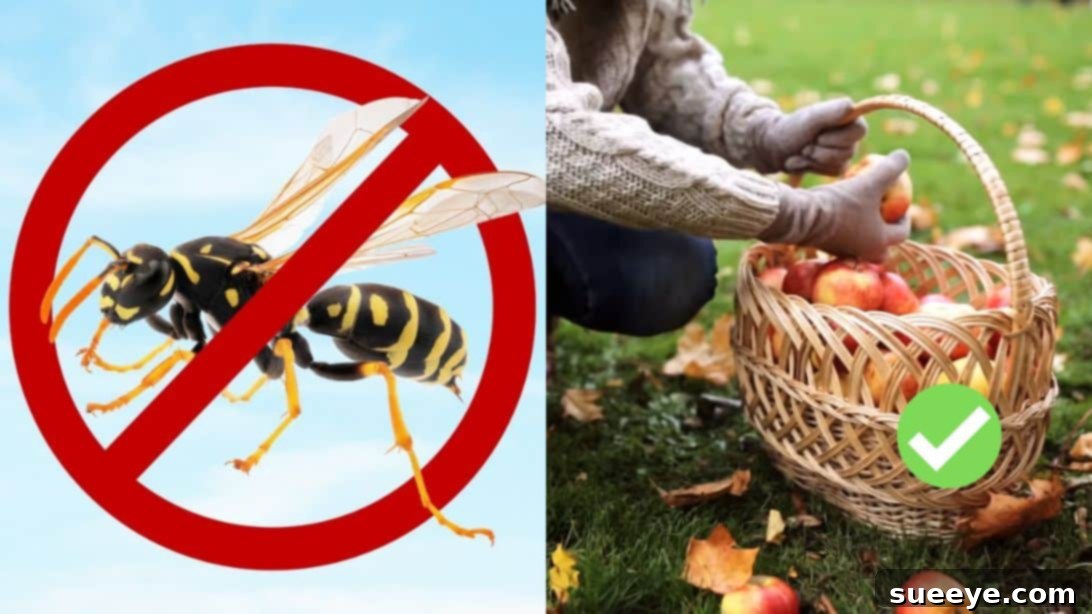
If you have fruit trees or berry bushes in your garden, you’re likely providing a natural buffet for wasps. Ripe and fermenting fruits are incredibly attractive to them, particularly in late summer and early autumn when their diet shifts to focus on sugar. To minimize attraction, make a habit of harvesting ripened fruits as soon as possible. More importantly, promptly clean up any fallen fruit from the ground. Decomposing fruit not only attracts wasps but can also draw other pests and harbor mold. A well-maintained garden with minimal fallen fruit will be far less appealing to these insects.
4. Avoid Swatting and Squashing Wasps
While the instinct might be to swat at a wasp buzzing too close, this action can actually escalate the situation and make it worse. When a wasp is squashed or feels threatened, it releases a chemical alarm pheromone. This pheromone acts as a distress signal, alerting other wasps in the vicinity to potential danger and often provoking them into defensive, aggressive behavior. Instead of swatting, try to remain calm and slowly move away from the wasp. If a wasp enters your personal space, gently blow on it or use a slow, sweeping motion to guide it away without causing alarm. A calm approach can prevent a single wasp encounter from turning into an attack by multiple insects.
5. Avoid Using Floral and Bright Patterns, as well as Strong Perfumes
Wasps, like bees, are drawn to certain visual cues and scents. Bright colors and floral patterns in clothing can mimic the vibrant hues of flowers, signaling a potential source of nectar. Therefore, when spending time outdoors where wasps might be present, opt for neutral-colored clothing rather than bright yellows, oranges, or intricate floral designs. Similarly, many perfumes, colognes, scented lotions, and even some hairsprays contain sweet, floral, or fruity fragrances that wasps can easily mistake for nectar or ripe fruit. To avoid attracting them, it’s best to minimize or avoid using such scented products when you’ll be outdoors.
6. Patch Up Cracks and Seal Entry Points
Wasps are master builders, and they’re always looking for protected, secluded spots to construct their nests. Common nesting sites include cracks in walls, hollows in trees, gaps under eaves, and openings in attics or sheds. To prevent wasps from establishing a home inside or directly attached to your house, conduct a thorough inspection of your property. Seal any visible cracks, holes, or gaps in your home’s foundation, siding, window frames, and roofline. By eliminating these potential entry and nesting points, you significantly reduce the chances of encountering an indoor wasp problem or discovering a nest in an inconvenient location.
7. Hang a Fake Wasp Nest
Wasps are notoriously territorial creatures. They often avoid building nests too close to another existing nest to prevent conflict and competition for resources. You can use this natural instinct to your advantage by hanging a fake wasp nest. These artificial nests, often made of paper or fabric, visually mimic a real wasp nest and can effectively deter new wasp colonies from settling in the area. Place these fake nests strategically in areas where you want to discourage wasp activity, such as under eaves, on porches, or near patio areas. This simple, non-toxic method can be surprisingly effective in making wasps believe the territory is already occupied.
8. Add Wasp-Repellent Plants to Your Landscape
Certain plants naturally produce scents that wasps find unpleasant, making them excellent additions to your garden, especially near outdoor living areas. Integrating these plants into your landscape can create a natural barrier against wasps. Consider planting herbs like spearmint, thyme, eucalyptus, and wormwood, known for their strong aromatic properties. For flowering deterrents, marigolds, pennyroyals, and geraniums are excellent choices. Plant them in pots on your patio, in flowerbeds around your home’s perimeter, or near entryways. Not only do these plants act as natural repellents, but they also enhance the beauty and fragrance of your garden.
9. Create Homemade Wasp Repellent for Personal Use
For a personal line of defense, a simple homemade repellent can be very effective. Essential oils, particularly peppermint oil, are known for their strong scent which wasps dislike. To create your own repellent, mix a few drops of high-quality peppermint essential oil with a carrier oil such as a teaspoon of olive oil or liquified coconut oil. Gently rub this mixture onto exposed skin areas like your arms, neck, and legs before heading outdoors. Always perform a patch test on a small area of skin first to ensure you don’t have an adverse reaction. This natural blend can help create an invisible shield against bothersome wasps.
10. Wait Until Winter to Remove a Nest (If Possible)
Removing an active wasp nest can be extremely dangerous due to the aggressive nature of the colony. For social wasp species like yellow jackets and hornets, the entire colony, with the exception of the queen, dies off during the colder winter months. The queen typically hibernates in a sheltered location and starts a new colony in the spring. This natural cycle means that removing a dormant, uninhabited nest in late fall or winter is significantly safer and easier than attempting to tackle an active nest. If you discover a large, active nest during warmer months, it is always recommended to contact a professional pest control service for safe removal rather than attempting it yourself.
Embracing a Wasp-Free Outdoor Environment
By implementing these natural and proactive strategies, you can significantly reduce the presence of wasps around your home and garden, allowing you to enjoy your outdoor spaces with greater peace of mind. Remember, vigilance in maintaining a clean environment, understanding wasp behavior, and utilizing natural deterrents are key to successful wasp management. While these natural methods are highly effective, always exercise caution around wasps and consider professional assistance for large or aggressive nests to ensure your safety and the safety of your family.