
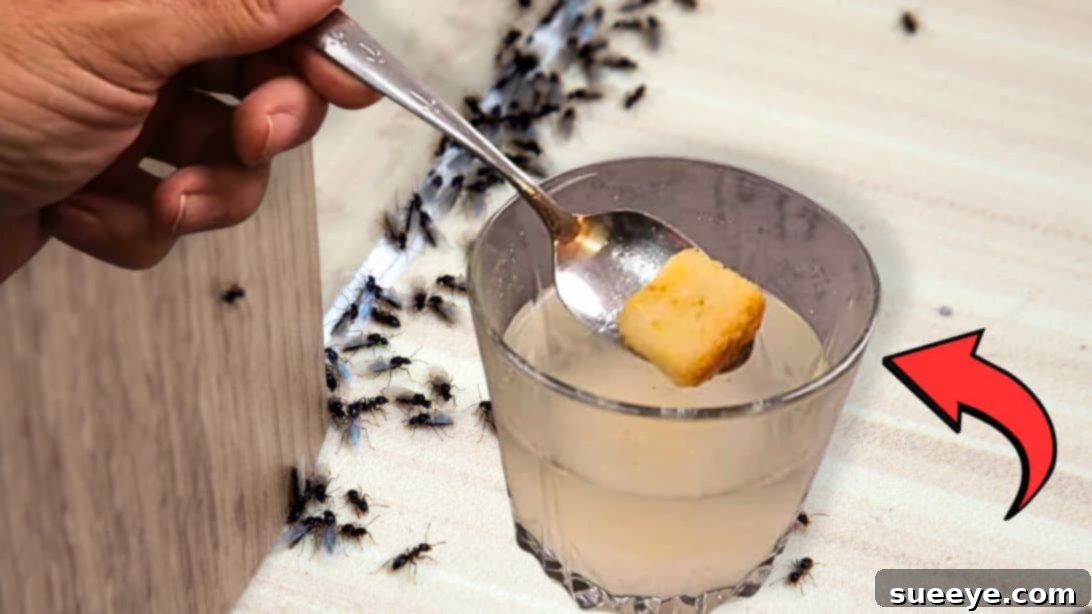
Ants can be a persistent nuisance, making their presence known throughout the year, but their activity truly peaks from spring right through to early fall. Among the most common invaders are the ubiquitous little black ants, which thrive in warm conditions and can multiply at an alarming rate. It’s no surprise, then, to suddenly find these tiny, dark trails making their way across your kitchen counters or along baseboards. While these small insects are generally not dangerous – they won’t sting and their bites are more of a minor annoyance than a threat – they are undeniably frustrating to deal with, disrupting the comfort and cleanliness of your home.
For many homeowners, an ant infestation isn’t just a seasonal problem; it’s a battle that demands an effective, yet often elusive, solution. Traditional store-bought repellents can be costly, temporary, and often involve harsh chemicals that you might prefer to keep away from your living spaces, especially if you have children or pets. The good news is, you don’t always need aggressive pesticides to reclaim your home. Sometimes, the most potent solutions are those you can craft right in your own kitchen.
RELATED: How to Find the Nest of Ants and Get Rid of Them
If you’re currently facing the challenge of a persistent black ant problem, consider trying a remarkably simple yet highly effective homemade solution. This ingenious trick, championed by DIY Homestead Projects, reveals the secret to truly eliminating little black ants at their source. Forget the endless spraying and the temporary fixes; with this method, you can quickly and efficiently wipe out an entire ant colony, not just the visible scouts. It’s a cost-effective, readily available alternative to potentially harmful commercial products, putting the power of pest control directly into your hands.
While this homemade remedy is a fantastic alternative, it’s crucial to remember that it contains ingredients that should be handled with care. As with any pest control measure, ensure you keep the prepared solution and bait stations well out of reach of children and household pets. Safety is always paramount when implementing any DIY project.
For even more clever ant prevention and elimination strategies, don’t miss these practical tips: 3 Cheap Tricks to Get Rid of Ants In Your Home.
Understanding Little Black Ants and Why They Invade
Before diving into the solution, it’s helpful to understand the adversary. Little black ants (scientifically known as Monomorium minimum) are tiny, typically measuring only about 1/16 of an inch long, with a dark brown to black coloration. They are widespread across North America and are notorious for forming large colonies, sometimes housing thousands of individuals. These ants are omnivores, meaning they’ll eat almost anything, but they have a particular fondness for sweets, grease, and oily foods. This preference often leads them directly into our homes, where they seek out crumbs, sugary spills, and pet food left unattended.
Indoors, little black ants frequently nest in wall voids, under floors, behind electrical outlets, or in rotting wood. Outdoors, they prefer moist areas under rocks, logs, or pavement. Their ability to nest in diverse locations and their rapid reproductive cycle make them a formidable opponent. When you see a few ants, it’s a sure sign that many more are lurking, and they’ve likely established a foraging trail leading from their nest to a food source within your home. The key to effective elimination isn’t just killing the ants you see, but reaching the entire colony, including the queen and her larvae.
Why Choose a Homemade Solution for Ant Control?
The market is flooded with various ant control products, from sprays and traps to granular baits. However, many homeowners are increasingly turning to DIY alternatives for several compelling reasons:
- Safety Concerns: Many commercial insecticides contain harsh chemicals that can pose risks to human health, pets, and the environment. Using a homemade solution, particularly one with readily available ingredients, allows for more control over what chemicals are introduced into your home.
- Cost-Effectiveness: Ant infestations can be an ongoing battle, and repeatedly buying commercial products can quickly add up. The ingredients for this homemade bait are inexpensive and often already present in your pantry or easily purchased at a local store.
- Targeted Approach: Unlike broad-spectrum sprays that only kill ants on contact, a bait-based solution targets the entire colony. The ants carry the poisoned bait back to their nest, sharing it with the queen and young, ensuring a more thorough and long-lasting eradication. This approach means you don’t just eliminate the visible foraging ants; you destroy the source of the infestation.
- Reduced Environmental Impact: By opting for a homemade solution, you can minimize the release of synthetic pesticides into your immediate environment, contributing to a healthier home ecosystem.
The Science Behind the Boric Acid Ant Bait
The effectiveness of this homemade solution lies in the clever combination of sugar and boric acid. Understanding how these two ingredients work together is key to appreciating its potency:
- Sugar as an Attractant: Little black ants, like many other ant species, are highly attracted to sweet substances. The sugar in this solution acts as an irresistible lure, enticing foraging ants to discover the bait and carry it back to their colony.
- Boric Acid as a Slow-Acting Toxin: Boric acid is a naturally occurring compound derived from boron minerals. When ingested by ants, it acts as a stomach poison, disrupting their digestive and nervous systems. However, it’s crucial that it’s slow-acting. If the ants die too quickly after consuming the bait, they won’t have time to carry it back to the nest.
- The “Trophallaxis” Effect: Ants exhibit a behavior called trophallaxis, where they share food with other members of the colony, including the queen and larvae, through regurgitation. When foraging ants consume the boric acid-laced sugar bait, they transport it back to the nest and share it. This ensures that the toxic substance spreads throughout the entire colony, ultimately leading to its collapse. This systemic approach is what makes baiting far more effective than simply spraying individual ants.
What You Need to Make an Ant-Repellent Solution
Gathering your supplies is the first step toward regaining control of your home. You’ll find most of these items are common household staples, making this solution incredibly accessible:
- Warm water (to help dissolve the sugar and boric acid efficiently)
- Granulated sugar (the sweet attractant that draws ants to the bait)
- Pure granular boric acid (the active ingredient for colony elimination – typically found in the laundry or pest control aisle)
- Crouton or a piece of bread (to act as a sponge, soaking up the solution and becoming the bait carrier)
- Paper plate (to serve as a disposable, easy-to-manage base for the bait)
- Plastic egg carton (to create a protected, ant-accessible bait station, keeping children and pets safer)
How to Eliminate Black Ants: A Step-by-Step Guide
Follow these simple steps carefully to prepare and deploy your homemade ant bait. Precision in preparation ensures maximum effectiveness.
Step 1: Create the Sweet Base
Begin by taking a clean glass and filling it halfway with warm water. The warmth of the water is important as it helps to dissolve the sugar much more quickly and thoroughly than cold water would. Add a teaspoon of granulated sugar to the warm water. Stir the mixture continuously until the sugar crystals have completely dissolved, creating a clear, sugary liquid. This sweet solution will serve as the initial lure for the ants.
Step 2: Incorporate the Active Ingredient
Once the sugar is fully dissolved, carefully add a few tablespoons of pure granular boric acid to the sugary water. It’s crucial to use pure granular boric acid for the best results. Mix the solution thoroughly again, ensuring that the boric acid is evenly distributed throughout the liquid. Continue stirring until the mixture appears uniform. After mixing, let the solution sit undisturbed for a minute or two. This brief pause allows any remaining particles to dissolve and the solution to settle, ensuring a consistent potency.
Step 3: Prepare the Bait Carrier
Now, it’s time to create the medium that will deliver the solution to the ants. Take a piece of crouton or a small slice of bread. Place this bread piece into the prepared boric acid solution. Allow the crouton or bread to sit in the liquid for a couple of minutes, giving it ample time to fully absorb the solution. You want the bread to be thoroughly soaked, acting like a sponge, ensuring it carries enough of the boric acid mixture to be effective when the ants feed on it.
Step 4: Assemble the Bait Station Base
Once your crouton is fully saturated with the boric acid mixture, carefully remove it from the glass. Take a paper plate and tear a small section off the edge. This small tear creates a convenient and disposable base for your bait station. Place the fully soaked crouton onto the torn section of the paper plate. This setup makes it easy for ants to access the bait and for you to handle and dispose of the station later.
Step 5: Create a Protected Bait Shelter
To make the bait station safer and more appealing to ants, you’ll use a plastic egg carton. Cut a section of the plastic egg tray, ideally one cup or two, depending on the size of your bait. Make small cuts or notches along the sides of this plastic piece. These cuts should be just large enough for the tiny black ants to easily crawl inside. Once the cuts are made, place the plastic egg carton piece upside down directly over the crouton on the paper plate. This creates a small, protected enclosure, shielding the bait from direct exposure and making it less accessible to pets and children while still allowing ants to enter.
Step 6: Strategic Placement for Optimal Results
With your bait stations prepared, it’s time for deployment. Identify the areas where you most frequently observe black ants. These usually include ant trails, near entry points into your home (like windowsills or doorframes), under sinks, near pet food bowls, or in corners of your kitchen and bathroom. Place the prepared bait stations in these strategic locations. Ensure they are out of the way of foot traffic and, most importantly, in spots that are inaccessible to curious children and pets. The more accurately you place the baits along active ant routes, the faster the colony will discover and consume the solution.
Monitoring and Long-Term Prevention of Ant Infestations
After placing the bait stations, it’s natural to want to see immediate results. However, patience is key with boric acid baits. You might initially observe an increase in ant activity around the bait stations; this is actually a good sign, indicating that the ants have found the bait and are carrying it back to their nest. Over the next few days to a couple of weeks, you should notice a significant decrease in the overall ant population as the boric acid takes its effect on the entire colony. Replace the baits as needed if they dry out or if ant activity remains high.
Once the ants have seemingly disappeared, it’s important to take preventative measures to avoid future infestations:
- Seal Entry Points: Inspect your home thoroughly for any cracks or gaps in foundations, walls, windows, and door frames. Seal these openings with caulk or appropriate sealants to block ant access points.
- Maintain Cleanliness: Keep your kitchen and dining areas meticulously clean. Wipe up spills immediately, sweep away crumbs, and ensure food preparation surfaces are free of residues. Store all food, including pet food, in airtight containers.
- Address Moisture Issues: Ants are often attracted to moisture. Fix any leaky pipes, faucets, or drains promptly. Ensure basements and crawl spaces are dry and well-ventilated.
- Outdoor Management: Trim shrubs and tree branches away from your house, as these can serve as bridges for ants to access your home. Consider creating a clear barrier around your home’s foundation.
- Regular Monitoring: Periodically check for signs of new ant activity, especially during warmer months, and be prepared to deploy your homemade solution again if necessary.
Reclaiming Your Home from Little Black Ants with This Proven DIY Method
Dealing with a little black ant infestation can be an exasperating experience, but it doesn’t have to lead to expensive and potentially harmful chemical treatments. By understanding the behavior of these common household pests and employing a smart, targeted strategy, you can effectively eliminate entire colonies. This homemade boric acid and sugar bait solution offers a simple, cost-effective, and powerful alternative, leveraging the ants’ natural foraging habits against them. By patiently following these steps and maintaining vigilant home hygiene, you can reclaim your living spaces, ensuring a pest-free environment for you and your family.
Empower yourself with this DIY secret and say goodbye to those unwelcome little black ants for good. Your home deserves to be a sanctuary, free from tiny invaders.