
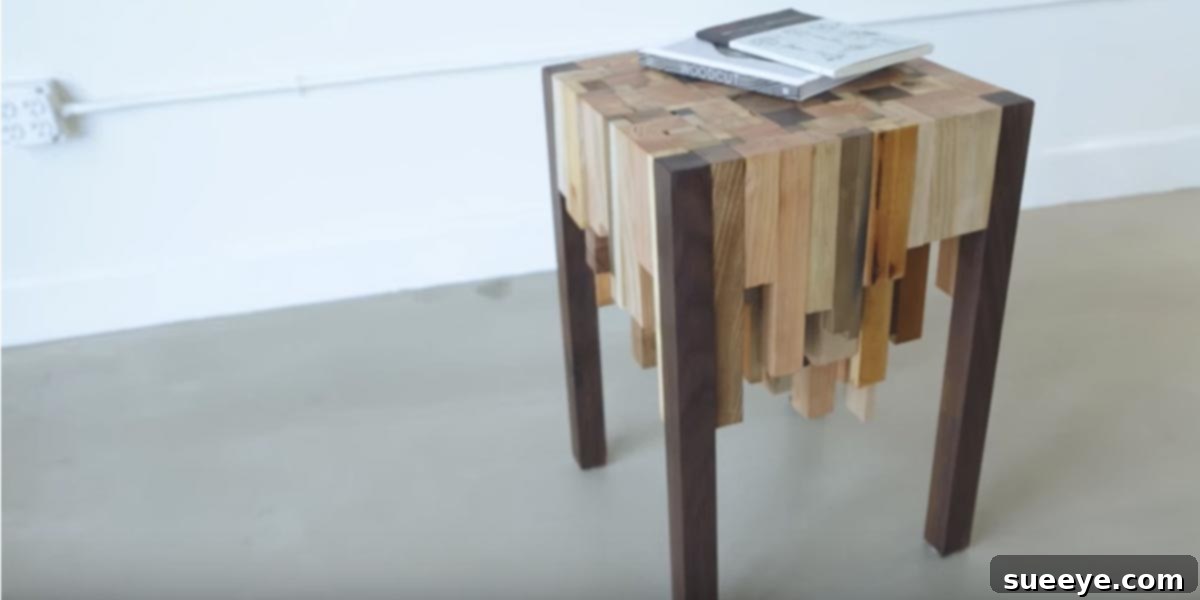
Transform your workshop clutter into a stunning centerpiece! Discover how to turn overlooked scrap wood into a magnificent, modern end grain table, challenging you to reconsider what’s truly waste and what’s raw potential.
Craft a Modern End Grain Table: Your Ultimate Guide to Upcycling Scrap Wood
Do you have a burgeoning pile of wood scraps gathering dust in your workshop, remnants from past DIY triumphs or ambitious projects? Many woodworkers face the dilemma of what to do with these leftover offcuts, small pieces, and irregular shapes that often seem destined for the bin. But what if these seemingly insignificant fragments held the blueprint for your next show-stopping piece of furniture? This comprehensive guide will inspire you to look at your scrap wood collection with fresh eyes, revealing its incredible potential to become a beautiful, functional, and surprisingly easy-to-make end grain table that perfectly complements modern home decor.
The Unique Allure of End Grain Woodworking
An end grain table stands apart from conventional furniture designs. Instead of showcasing the wood’s grain running along the surface, an end grain construction arranges countless small blocks of wood vertically. This ingenious method exposes the intricate patterns and natural variations of the wood’s growth rings, creating a captivating mosaic effect. The result is a tabletop with unparalleled visual depth and texture, transforming simple wood into a work of art. This unique orientation doesn’t just look good; it also provides exceptional durability and resistance to wear, making it an incredibly robust surface perfect for high-traffic areas. Imagine a bespoke piece in your living room, acting as both a practical surface for your daily essentials and a compelling conversation starter, all crafted from materials you might otherwise have discarded.
Why an End Grain Table is the Perfect Scrap Wood Project
Choosing an end grain table project offers a multitude of compelling benefits, extending beyond its striking aesthetic. First and foremost, it champions sustainability. In an era where reducing waste is a global imperative, repurposing wood scraps directly contributes to a greener planet. You’re giving new life to materials that would otherwise contribute to landfills, minimizing your environmental footprint and maximizing resource efficiency. Secondly, this project is remarkably cost-effective. The primary material – wood – is already in your possession, accumulated from previous projects. This dramatically reduces material expenses, making high-end furniture design accessible on almost any budget. Furthermore, this particular woodworking endeavor is celebrated for its forgiving nature. You don’t need perfectly uniform pieces or laser-precise cuts. The inherent beauty of an end grain table often lies in its delightful imperfections and the varied sizes and types of wood coming together to form a cohesive, rich tapestry. This makes it an ideal choice for both novice woodworkers seeking a rewarding first project and experienced crafters looking for a satisfying build without the pressure of absolute perfection.
Embracing the Diversity of Your Scrap Pile
The true charm of this project lies in its celebration of material diversity. Almost any type of wood scrap can be utilized – from the rich hues of hardwoods like oak, walnut, maple, and cherry to the lighter tones of pine or spruce. Mixing different species can create an even more dynamic and visually interesting tabletop, contrasting colors and grain patterns for a truly unique and personalized finish. Your existing collection of leftovers is essentially a treasure trove waiting to be reimagined. The only “new” materials you might need to acquire are specific structural components like a base or legs – for instance, a 3-foot section of walnut post was used in an inspirational tutorial – and perhaps some felt pads for the feet to protect your floors. The rest is pure ingenuity and resourceful utilization of what you already possess. This commitment to using available resources not only saves money but also instills a profound sense of accomplishment and a deeper connection to the finished piece, making it truly yours.
Step-by-Step Vision: Crafting Your End Grain Masterpiece
While specific dimensions and detailed techniques may vary based on your design and the resources available, the general process of creating an end grain table is surprisingly straightforward and incredibly rewarding. It typically involves a few key stages: preparation, assembly, shaping, and finishing. Initially, your scrap wood pieces will need to be cut into roughly similar thicknesses, although their length and width can vary significantly. This variation is precisely what contributes to the table’s unique, mosaic-like aesthetic. The individual blocks are then meticulously arranged and glued together, with their end grain facing upwards, forming a large, solid slab. High-quality waterproof wood glue and strong clamps are absolutely essential during this stage to ensure a robust, durable, and long-lasting bond that can withstand daily use. Once the glue has thoroughly cured – a crucial step that cannot be rushed – the slab can be shaped and smoothed. This often involves extensive sanding, starting with coarse grits and progressing to finer ones, to create a perfectly flat and even surface. This meticulous sanding process is vital for truly highlighting the intricate patterns and natural beauty of the end grain. Finally, applying a protective finish – be it a penetrating oil, a durable varnish, or a tough polyurethane – will enhance the wood’s natural colors, provide crucial protection against moisture and wear, and give your table a professional, polished look that will endure for years.
Essential Tools and Materials: Leveraging Your Workshop
Don’t be daunted by the misconception that this project requires an arsenal of specialized, expensive equipment. Most of this project can be accomplished with standard woodworking tools commonly found in many home workshops. A miter saw or a table saw will be immensely useful for efficiently cutting your scrap pieces to a consistent thickness, ensuring a level surface for gluing. However, with patience and careful technique, a good hand saw can also achieve satisfactory results. A robust orbital sander or belt sander will be your best friend for achieving that coveted smooth, tabletop finish. Essential consumables include a strong, high-quality wood glue, a variety of clamps (bar clamps or pipe clamps are ideal for exerting even pressure across larger assemblies), and your chosen wood finish. For the base or legs, you might opt for a pre-made solution available at hardware stores, or even better, repurpose another piece of scrap wood to truly embody the spirit of upcycling and continuous creativity. Remember, the overarching goal is to leverage your existing resources as much as possible, minimizing new purchases and maximizing the value of your accumulated materials.
Design Versatility and Limitless Customization Options
One of the most exciting and empowering aspects of building your own end grain table is the boundless potential for customization. You are not confined to a single aesthetic or a predetermined dimension. Begin by considering the final placement of your table: will it serve as a sleek side table beside a minimalist sofa, a sturdy nightstand in a rustic-chic bedroom, a welcoming accent piece in your entryway, or even a unique plant stand? The size and shape can be precisely tailored to fit your specific needs and available space, from compact square tables to elegant rectangular ones, or even more adventurous, unique organic shapes. The careful selection of wood species, as previously mentioned, profoundly impacts the visual outcome – dark walnut mixed with light maple creates a stark, sophisticated contrast, while various shades of oak can offer subtle complexity and warmth. Furthermore, the base of the table presents another fantastic avenue for personalization. You could attach sleek metal hairpin legs for an industrial, minimalist touch, craft a solid wood pedestal for a more traditional or robust feel, or even design a geometric base that beautifully complements the mosaic top. The finishing process also allows for immense creative expression: a clear finish will celebrate the wood’s natural beauty and color variations, while a darker stain can add depth, warmth, and a touch of vintage charm. For an ultra-modern, high-gloss appearance, some enthusiasts even experiment with durable epoxy resin coatings to create a glass-like, impervious surface that magnificently magnifies the intricate end grain patterns, adding another layer of sophistication and protection.
Beyond the Build: The Profound Rewards of DIY Woodworking
The satisfaction derived from completing a project like this extends far beyond merely acquiring a new piece of furniture. It encompasses the entire journey of creation – the problem-solving, the honing of practical skills, and the immense pride of ownership in something truly unique and handmade. Each time you glance at your magnificent end grain table, you’ll be reminded of your ingenuity, your commitment to sustainable practices, and the remarkable transformation of what was once considered waste into a functional work of art. This profound sense of accomplishment can serve as a powerful catalyst, fueling further creative endeavors and encouraging you to tackle even more ambitious woodworking projects, continuously exploring the endless possibilities of DIY. Moreover, a handmade end grain table often becomes a cherished family heirloom, rich with personal history and a compelling story of transformation that mass-produced, factory-made furniture simply cannot offer. It stands as a testament to your resourcefulness, craftsmanship, and a captivating focal point that is sure to spark curiosity and admiration from every guest who enters your home.
Ready to Re-imagine Your Scrap Pile? Your Next Project Awaits!
The inspiration is palpable, and the potential is truly immense. If you’ve been pondering what to do with those leftover wood scraps from your last DIY adventure, here is your definitive answer – and it’s far cooler, more rewarding, and significantly more impactful than you might have ever imagined. An end grain table is not just another woodworking project; it’s an exceptional opportunity to create a stunning, exceptionally durable, and eco-friendly piece of furniture that will undeniably enhance any modern home decor. Take a moment to sift through your workshop, meticulously gather your wood remnants, and prepare to embark on a woodworking journey that promises both aesthetic beauty and profound sustainability. For those ready to dive into the specific details and intricate steps, invaluable guidance is readily available through detailed step-by-step tutorials, such as those famously provided by platforms like Instructables. Don’t simply throw away potential; seize the opportunity to build something truly extraordinary and leave your mark with sustainable craftsmanship!