
Mastering the Skies: How to Make 5 Amazing Paper Airplanes That Really Fly
In today’s fast-paced digital world, where screens often monopolize our attention, there’s a profound joy in reconnecting with simple, hands-on activities. With many of us spending more time at home, the quest for engaging, screen-free entertainment that brings the family together has become a priority. This search frequently leads to the rediscovery of classic DIY projects that utilize everyday household items. Among these timeless pursuits, crafting paper airplanes stands out as a universally loved activity, promising endless smiles and genuine excitement.
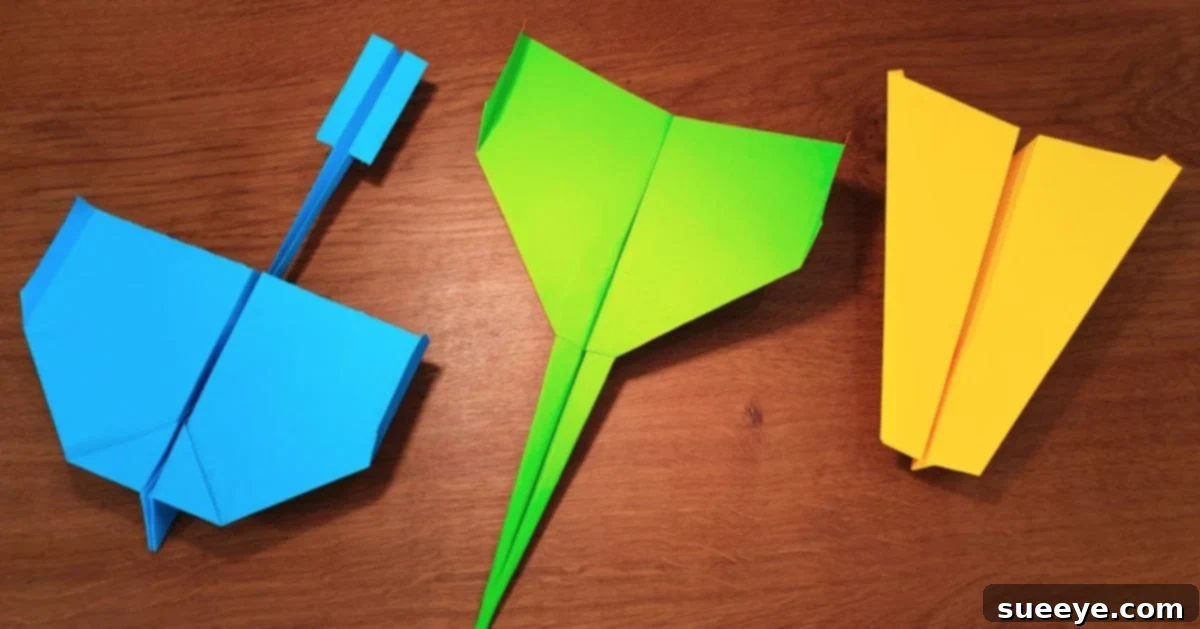
My own recent dive into home-based hobbies led me to an inspiring online tutorial. It promised to guide enthusiasts through the creation of not just one, but five distinct paper airplane designs, each engineered for impressive flight. As someone who deeply appreciates the intricate beauty of paper crafts, from the precise folds of origami to the personalized artistry of scrapbooking, my crafting station was already well-equipped. I eagerly embarked on this project, ready to transform ordinary sheets of paper into a fleet of aerodynamic wonders. For this particular adventure, I found that sturdy, colored card stock was the ideal material, offering both durability and vibrant aesthetics. I chose the brightest shades from my collection, envisioning these colorful planes bringing a cheerful burst of energy as they sailed through our living space.
The Undeniable Charm and Multifaceted Benefits of Paper Airplanes
Crafting paper airplanes is much more than a simple pastime; it’s a rich activity that offers a multitude of benefits for individuals across all age groups. It beautifully combines creativity, foundational learning, and physical engagement, positioning it as an excellent choice for wholesome family fun. Here are compelling reasons why this classic craft continues to captivate and educate:
- Educational Exploration: The process of designing, folding, and launching paper airplanes provides a tangible introduction to core principles of aerodynamics, physics, and basic engineering. Participants gain firsthand experience with concepts like lift, drag, thrust, and gravity, making abstract scientific ideas accessible and exciting.
- Development of Fine Motor Skills: The meticulous folding, precise creasing, and occasional trimming required for intricate designs significantly enhance fine motor skills, hand-eye coordination, and spatial reasoning.
- Cultivates Creativity and Problem-Solving: From selecting paper colors and patterns to experimenting with subtle adjustments for improved flight, paper airplane making stimulates creative expression. When a design doesn’t fly as expected, it naturally encourages critical thinking and problem-solving to diagnose issues and implement effective modifications.
- Instills Patience and Persistence: Achieving optimal flight performance often requires several iterations and adjustments. This iterative process inherently teaches patience, reinforces the value of persistence in the face of initial setbacks, and builds resilience.
- Highly Affordable and Accessible: Requiring little more than paper and sometimes a pair of scissors, paper airplane crafting is remarkably cost-effective and can be enjoyed almost anywhere, at any time. This makes it a perfect spontaneous activity for moments of boredom or creative inspiration.
- Effective Screen-Time Reduction: In an era dominated by digital devices, paper airplanes offer a refreshing, hands-on alternative that fully engages the mind and body away from glowing screens, promoting healthier play habits.
- Fosters Stronger Family Bonds: This activity naturally brings people together. Collaborating on new designs, personalizing planes with decorations, and organizing friendly flying competitions create cherished memories and strengthen interpersonal connections within the family.
Essential Materials for Your Airborne Fleet
One of the most attractive qualities of paper airplane crafting is its minimalist material requirement. Chances are, you already possess everything necessary to begin your aviation adventure right at home!
- Paper: The foundational element for all your flying creations.
- Standard Printer Paper (8.5×11 inches or A4): An excellent choice for beginners due to its widespread availability, ease of folding, and forgiveness for initial attempts. It’s perfect for practicing basic folds.
- Colored Card Stock: As previously highlighted, this type of paper is often preferred for crafting more durable and visually appealing planes. Its slightly heavier weight contributes to greater stability and resilience, allowing for more dynamic maneuvers and potentially longer, more controlled flights. The added benefit of vibrant colors also enhances the aesthetic appeal of your fleet.
- Origami Paper: While not strictly essential, its thin, crisp texture allows for exceptionally sharp creases, which are crucial for executing highly intricate and advanced paper airplane designs.
- Recycled Paper: Embrace an eco-conscious approach by repurposing materials! Old newspapers, magazine pages (ensure they are not overly glossy or thick), or used printer paper can be cleverly transformed into new flying machines.
- A Pair of Scissors: Although many basic designs can be achieved solely through folding, scissors become indispensable for more advanced modifications. These include trimming wings for precise shaping, creating functional rudder flaps, or making specific cuts required by complex airplane models to optimize their flight characteristics.
- Optional Tools for Enhanced Crafting and Personalization:
- Ruler: For achieving perfectly straight folds and highly accurate measurements, which can significantly impact the plane’s aerodynamic performance and symmetry.
- Pencil: A useful tool for lightly marking fold lines before committing to a crease, particularly helpful when tackling complex patterns or ensuring precise alignment.
- Decorative Items: Markers, colored pencils, crayons, stickers, and even glitter glue can elevate a simple paper plane into a truly unique and personalized work of art, allowing for boundless creative expression and individual flair.
Unleashing the Inner Aviator: A Journey into Crafting Flying Machines
The true magic of learning to construct multiple paper airplane designs lies in the exciting journey of discovery that each fold presents. While comprehensive, specific step-by-step instructions for each of the five unique aircraft are typically detailed within a dedicated video tutorial or an illustrated guide, we can explore the general principles and the sheer excitement that underpins the entire crafting process.
Imagine embarking on an engaging folding adventure, watching a flat sheet of paper progressively transform into a sleek, aerodynamic marvel. Each of the five designs you master will offer its own set of unique challenges and satisfying rewards, ultimately leading to planes endowed with distinct flight characteristics:
- The Classic Dart: Often the introductory design for many enthusiasts, characterized by its pointed nose and swept-back wings. Renowned for its speed and direct trajectory, it serves as an excellent foundation for understanding fundamental folding techniques.
- The Glider Master: This design prioritizes broad wings and a more stable structure, enabling extended glides and graceful descents. It effectively teaches the critical role of wing surface area and balanced construction in achieving prolonged airtime.
- The Stealth Bomber: Featuring an angular, futuristic aesthetic, this design often involves more complex and precise folds that cleverly mimic the profile of stealth aircraft. While it demands greater attention to detail, the reward is a plane with a distinct and captivating flight path.
- The Stunt Flyer: Engineered for agility and performing aerial acrobatics, this plane might incorporate features like a shorter fuselage and specialized wingtips or tail fins. These elements allow it to execute exciting loops, daring dives, or elegant spirals, making it a design where small experimental adjustments yield significant performance changes.
- The Long-Distance Cruiser: Explicitly designed to maximize airtime and travel considerable distances, these planes typically feature elongated bodies and carefully angled wings to efficiently harness air currents. Mastering this type of design requires meticulous attention to symmetry and precise weight distribution.
The core of the paper airplane crafting process revolves around a few fundamental techniques:
- The Initial Fold: Most designs begin with folding the paper in half lengthwise. This creates a strong, central crease that acts as the plane’s crucial spine, providing structural integrity.
- Creating the Nose Section: This step typically involves folding down the top corners of the paper towards the central crease, which gradually forms the plane’s distinctive front section.
- Forming the Wings: This is arguably the most critical stage, where you fold the sides of the paper downwards from the main body. The specific angle, overall size, and precise shape of these wing folds are paramount in determining how your finished plane will perform in flight.
- Refining the Tail (Optional): Certain advanced designs benefit greatly from the inclusion of small tail fins or rudders. These can be crafted by making small, strategic cuts or folds at the rear of the plane, significantly improving stability or enabling specific acrobatic maneuvers.
- Emphasis on Sharp Creases: For every fold, it is absolutely vital to press down firmly and methodically to create a crisp, well-defined crease. Loose or poorly defined folds inevitably lead to flimsy planes and consistently poor flight performance.
- Symmetry is Paramount: Ensuring that both sides of your paper plane are perfect mirror images of each other is crucial. Even minor asymmetry can cause your plane to consistently veer off course or exhibit unpredictable flight patterns.
As you progress through the various designs, you’ll naturally develop an intuitive understanding of how different folds and structural choices directly influence flight dynamics. The initial thrill of simply creating a plane that flies will gracefully evolve into the deep satisfaction of truly understanding and manipulating basic aerodynamic principles with your own hands.
Achieving Spectacular Flights: Expert Tips and Tricks
Once your fleet of paper aircraft is meticulously constructed, the true adventure begins! Launching them into the air involves more than just a simple throw; applying a few key techniques and considerations can dramatically enhance your plane’s performance and extend its flight time.
- The Perfect Launch Technique: Gently hold the plane between your thumb and forefinger, positioning your grip just beneath the main wing. For most paper plane designs, a controlled, gentle forward push with a slight upward angle (approximately 10-15 degrees relative to the horizon) yields the best results. Resist the urge to throw too forcefully, as excessive power often leads to the plane stalling or diving abruptly.
- Experiment with Launch Angle: Playfully vary your launch angles. A slightly higher upward angle might generate more initial lift, potentially leading to greater height but possibly reduced speed. Conversely, a flatter launch angle can increase speed but carries a higher risk of a rapid descent.
- Mastering “Trimming” for Optimal Performance: This is where the subtle magic of aerodynamics comes into play!
- Addressing Nose Weight: If your plane consistently dives sharply, it might be slightly nose-heavy. To correct this, gently bend the trailing edges of the wings slightly upwards, creating a subtle upward curve known as dihedral. If the plane instead “stalls” (climbs sharply, loses speed, and then drops), it could be tail-heavy or the nose is too light; try adding a tiny piece of tape to the nose.
- Wing Adjustments for Direction: Even minuscule adjustments to the back edges of the wings (akin to ailerons on a real aircraft) can fine-tune its flight path. Bending one wingtip slightly upwards and the other slightly downwards can induce a controlled turn.
- Rudder Flaps for Straight Flight: If your plane persistently veers to the left or right, a small vertical cut and subsequent bend on the trailing edge of the tail (if your design incorporates one) can act as a rudder, effectively straightening its flight path.
- Consider the Flight Environment:
- Indoor Flights: Ideal for initial flight testing, as indoor spaces typically offer consistent conditions free from wind interference. Aim for open areas like spacious living rooms, long hallways, or gymnasiums.
- Outdoor Flights: Best reserved for calm days with minimal wind. Even a light breeze can significantly alter a paper plane’s trajectory, sometimes creating delightful updrafts for extended flights, but often causing unpredictable deviations.
- Learn from Every Flight: Treat each launch as a valuable learning opportunity. Carefully observe how your plane behaves in the air: Does it nose-dive? Does it stall? Does it consistently turn sharply? Use these critical observations to make small, iterative adjustments until you achieve the desired, stable flight pattern.
Transforming Flight into Family Fun and Creative Play
Once you’ve mastered the exciting art of crafting and launching your 5 unique paper airplane designs, the real entertainment truly takes flight! The joy extends far beyond the initial folding process, evolving into imaginative play, spirited family competitions, and collaborative creativity. This project proved to be incredibly infectious, inspiring everyone around me to get involved, eagerly creating their own variations and testing their newfound aeronautical prowess.
Creative Customization and Engaging Storytelling:
- Personalize Your Aerial Fleet: Encourage every participant to decorate their planes with markers, vibrant stickers, or even miniature hand-drawn flags. Give each plane a unique name and an imaginative backstory – perhaps “The Comet,” a speedy explorer; “Sky Shark,” a master of stealth; or “The Whisper Wind,” a graceful glider.
- Themed Aerial Missions: Devise imaginative scenarios for your planes. Maybe “The Long-Distance Cruiser” is tasked with delivering a secret message across the living room, or “The Stunt Flyer” needs to skillfully navigate a challenging obstacle course constructed from cushions, chairs, and blankets.
- A Symphony of Sound Effects: This is where the fun truly amplifies! As your planes gracefully zoom, elegantly glide, and daringly dive, accompany their movements with a lively symphony of “whooshes,” “zooms,” “swoops,” and even dramatic “kaboom” crash sounds. These playful vocalizations make the entire experience more immersive, hilariously engaging, and memorable, especially for younger participants.
Friendly Competitions and Engaging Challenges:
- The Distance Challenge: Organize a competition to see whose plane can fly the farthest. Use tape or chalk to mark the landing spots and accurately measure the distances achieved.
- Accuracy Landing Contest: Place a designated target – it could be a bucket, a hula hoop, or simply a drawn circle on a piece of paper – and challenge players to land their planes as precisely as possible within or nearest to the target.
- Airtime Endurance Race: For the glider-style designs, initiate a challenge to determine whose plane can remain airborne for the longest duration, captivating everyone as they watch the slow descent.
- Creative Obstacle Course: Set up a simple yet engaging course featuring “gates” (e.g., chairs or cardboard arches) to fly through, “mountains” (e.g., stacked pillows) to fly over, or “tunnels” to navigate.
- Design a New Plane Challenge: After everyone has mastered the initial five designs, challenge family members to design their very own, unique paper airplane model. Encourage them to present its specific flight characteristics and explain the design choices they made.
Conclusion: The Enduring Magic and Simple Joy of Paper Airplanes
From a humble, flat sheet of paper to a soaring, gravity-defying marvel, the journey of crafting paper airplanes serves as a beautiful testament to the power of hands-on creativity and the immense value of shared experiences. It’s a timeless craft that effortlessly transcends generations, offering a delightful escape into a world brimming with imagination, fundamental learning, and collaborative fun. Whether you consider yourself a seasoned crafter with intricate origami skills or are simply seeking an easy, engaging activity to share with cherished loved ones, the modest paper airplane delivers boundless enjoyment and lasting memories.
This particular project proved to be an instant, resounding hit in my household, quickly evolving into a dynamic, collaborative effort where every family member enthusiastically contributed their unique flair and ingenious ideas. The profound satisfaction derived from watching a meticulously folded paper plane gracefully glide across a room, seemingly defying the laws of gravity with elegant precision, is truly an unparalleled experience. So, gather your colorful paper, retrieve those trusty scissors, and prepare to embark on an adventure that promises an abundance of laughter, invaluable learning opportunities, and countless hours of exhilarating airborne entertainment. Unleash your inner engineer, ignite your family’s competitive spirit, and joyfully let your handcrafted fleet take to the skies!