
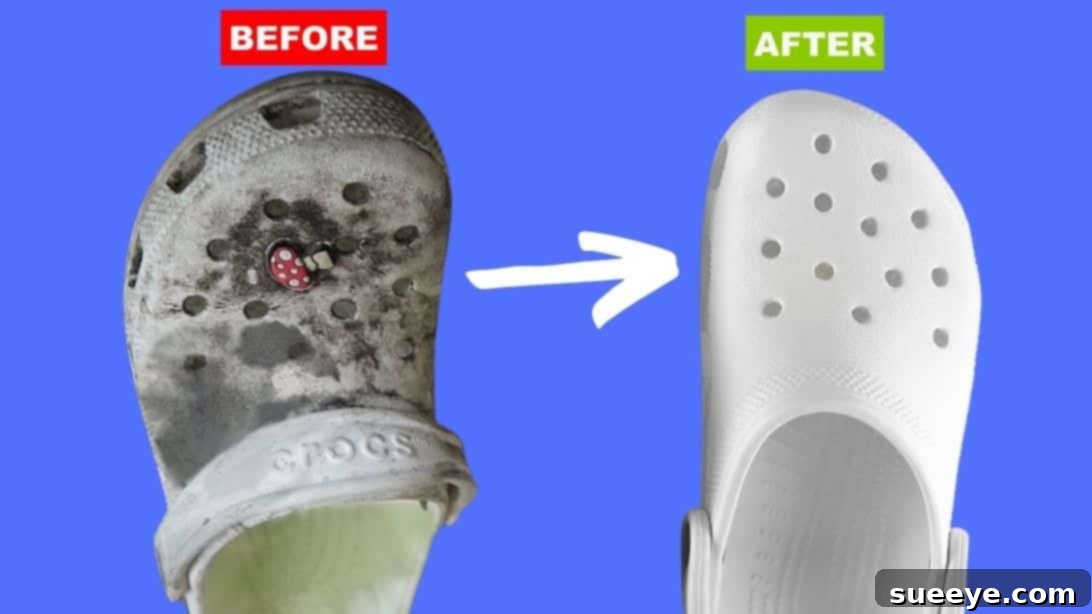
Crocs have cemented their place as a beloved footwear choice for millions, renowned for their unparalleled comfort, lightweight design, and soft, supportive feel. Whether you’re heading out for daily errands, spending a relaxed day at home, or even navigating certain work environments, these versatile sandals are often the go-to option. Many owners find themselves reaching for their Crocs every single day, appreciating how perfectly they contour to the feet, avoiding the common discomfort of squeezed toes often found with other sandal designs. However, this consistent daily use, while showcasing their utility, inevitably leads to them accumulating dirt, grime, and even stubborn stains. When your favorite pair starts looking a little less fresh, the crucial question arises: what is the most effective way to clean Crocs and restore them to their original glory?
RELATED: 6 Smart Uses of Toothpaste for Cleaning
Maintaining the pristine condition of your Crocs not only keeps them looking great but also extends their lifespan and ensures they remain a hygienic and comfortable option for your feet. From the distinctive Croslite material to the cozy fur linings and the decorative Jibbitz charms, each component might require a slightly different approach to cleaning. Fortunately, you don’t need to invest in a brand new pair to achieve that fresh-from-the-store look and feel. With some simple household items and effective techniques, you can transform your well-worn Crocs, making them appear virtually new again. The detailed instructions and shoe-cleaning tips shared by channels like Oxcharger offer invaluable guidance, covering every part of your beloved sandals. These methods are remarkably effective and undoubtedly worth the effort. You’ll likely be astonished by just how clean and revitalized your Crocs will become after following these straightforward steps.
Why Regular Crocs Cleaning is Essential
Before diving into the “how-to,” it’s worth understanding why consistent cleaning is more than just about aesthetics. Your Crocs endure a lot – pavement, grass, dirt, spills, and the daily grind. Regular cleaning offers multiple benefits that enhance both their appearance and your overall foot health:
- Hygiene and Health: Dirt, sweat, and moisture create an ideal breeding ground for bacteria and fungi. Regular washing helps prevent foot odor, athlete’s foot, and other microbial issues, ensuring your footwear remains sanitary.
- Preserve Appearance: Over time, dirt and grime can embed themselves in the Croslite material, dulling its vibrant color. Cleaning restores their original look, making them presentable for any occasion.
- Extend Lifespan: While Crocs are famously durable, accumulated grit and certain stains can, over extended periods, degrade the material. Proper cleaning practices help maintain the integrity of the Croslite foam, allowing you to enjoy your favorite footwear for longer.
- Maintain Comfort: Clean shoes simply feel better on your feet. Removing abrasive dirt and refreshing the material contributes to the signature comfort that Crocs are known for.
- Odor Control: This is especially crucial for frequently worn pairs. Cleaning eliminates odor-causing bacteria and allows for better air circulation, keeping your Crocs smelling fresh.
General Principles for Cleaning Your Crocs
While specific methods vary depending on the type of dirt or stain, a few general principles apply to all Crocs cleaning tasks. Always start with the least abrasive method and work your way up if necessary. Most basic cleaning can be done with items readily available in your home, making Crocs maintenance both simple and cost-effective.
- Identify the Material: Most Crocs are made from Croslite foam, which is easy to clean. Fur-lined Crocs and those with Jibbitz charms require slightly different handling.
- Gather Your Tools: Common items include soft brushes (old toothbrushes work wonders), sponges, paper towels, mild dish soap, baking soda, rubbing alcohol, and a clean cloth for drying.
- Spot Clean First: For minor marks, target the specific area before undertaking a full wash. This saves time and effort.
- Rinse Thoroughly: Always ensure all cleaning agents are completely rinsed off to prevent residue buildup, which can attract more dirt or potentially degrade the material.
- Air Dry: Crocs should always be air-dried away from direct sunlight or extreme heat, as high temperatures can cause the Croslite material to shrink or warp.
Comprehensive Crocs Cleaning Guide: Step-by-Step
Now, let’s delve into the specific cleaning techniques for various parts and common issues your Crocs might face.
General Cleaning for Dirt, Mud, and Everyday Grime
For most routine cleaning, especially when your Crocs are just dusty or have light mud splashes, a simple wash will suffice. This method is effective for the main Croslite body of your sandals, making them look refreshed and vibrant once more.
- Rinse Off Loose Dirt: Start by rinsing your Crocs under cool or lukewarm running water. This helps remove any loose dirt, mud, or debris, preventing it from turning into muddy paste during scrubbing.
- Prepare a Soapy Solution: In a basin or bucket, mix warm water with a few drops of mild dish soap. Avoid harsh detergents or cleaners with strong chemicals, as these can potentially damage the Croslite material.
- Scrub Gently: Dip a soft-bristled brush (an old toothbrush is perfect for crevices), a sponge, or a clean cloth into the soapy water. Gently scrub the entire surface of your Crocs – the top, sides, and inside. Pay extra attention to textured areas and corners where dirt tends to accumulate.
- Address Deeper Stains (as needed): For any remaining dirt and grass stains that didn’t come off with general scrubbing, create a paste using baking soda and a small amount of water. Apply this paste directly onto the stain using a paper towel or a toothbrush, then gently scrub. Baking soda is a natural abrasive and deodorizer, making it excellent for lifting stubborn dirt without being too harsh.
- Rinse Thoroughly: Once you’re satisfied with the cleanliness, rinse your Crocs completely under running water. Ensure all soap residue is washed away, as leftover soap can leave a dull film or even attract more dirt.
- Air Dry: Shake off excess water and place your Crocs in a well-ventilated area to air dry. Crucially, avoid leaving them in direct sunlight, near a heat source, or in a hot car, as the Croslite material can shrink, warp, or crack under extreme heat.
How to Remove Stubborn Stains or Pen Marks from Crocs
Sometimes, everyday wear leads to more persistent marks like ink, scuffs, or dark spots that don’t yield to mild soap and water. For these challenging blemishes, a targeted approach is required.
- Rubbing Alcohol for Ink: For pen marks or other stubborn ink stains, rubbing alcohol (isopropyl alcohol) is highly effective. Dampen a paper towel or a cotton ball with rubbing alcohol. Gently dab and rub the stained area. You’ll notice the ink dissolving and transferring onto the paper towel. Replace the paper towel as it gets dirty to avoid spreading the stain.
- Magic Eraser for Scuffs: For scuff marks or general dark spots on your Crocs, a melamine foam cleaner (often known by the brand name Magic Eraser) can work wonders. Dampen the magic eraser and gently rub the affected area. The micro-abrasive nature of the foam helps lift away surface grime and marks.
- Bar Keepers Friend for Tough Grime: For exceptionally tough stains or discolored areas, especially on lighter-colored Crocs, Bar Keepers Friend can be a powerful ally. Its mild abrasive qualities make it excellent for lifting embedded dirt without damaging the Croslite. Apply a small amount to a damp cloth or sponge and gently scrub the stain.
- Patch Test: Regardless of the cleaner you choose, it’s always wise to perform a patch test on an inconspicuous area of your Crocs first to ensure there’s no discoloration or damage.
- Rinse and Dry: After treating the stains, rinse the area thoroughly with clean water to remove any residue from the cleaning agent. Air dry your Crocs as usual.
How to Keep Fur Lined Crocs from Smelling Fresh
Fur-lined Crocs offer extra warmth and comfort, but the lining can easily trap moisture, sweat, and odors, making them prone to smelling less than pleasant. Special care is needed to keep them hygienic and fresh without damaging the cozy lining.
- The Baking Soda Solution: Baking soda is a natural deodorizer that effectively absorbs odors. Generously sprinkle a good amount of baking soda directly onto the fur lining inside your Crocs. Make sure to cover the entire fuzzy surface.
- Let It Sit: Allow the baking soda to sit for at least 10 minutes, or even longer for more persistent odors (overnight is ideal if the smell is strong). During this time, the baking soda will work to neutralize and absorb the unpleasant smells.
- Vacuum the Baking Soda: After the waiting period, use a handheld vacuum cleaner with a brush attachment or the hose attachment of a larger vacuum to thoroughly vacuum up all the baking soda from the fur lining. Ensure you remove as much powder as possible.
- Air Out: For an added freshness boost, place your fur-lined Crocs in a well-ventilated area for a few hours. Avoiding direct sunlight is still key, but fresh air circulation will help dissipate any remaining odors.
- Prevention is Key: To minimize future odors, consider wearing socks with your fur-lined Crocs to absorb sweat. Also, allow them to air out after each wear, rather than immediately tucking them away in a dark, enclosed space.
How to Clean the Bottom of Crocs
The soles of your Crocs take the brunt of daily impact, collecting the most dirt, grime, and debris. Keeping them clean not only looks better but can also help maintain traction. The deep grooves and textures on the bottom require a robust cleaning approach.
- Rinse Thoroughly: Begin by rinsing the bottom of your Crocs under strong running water to dislodge any large pieces of dirt, mud, or pebbles stuck in the treads.
- Apply Bar Keepers Friend: Bar Keepers Friend is highly effective for cleaning tough stains and grime from the rubbery soles. Wet the bottom of your Crocs and sprinkle a small amount of Bar Keepers Friend powder directly onto the sole, or apply its liquid form.
- Scrub with a Hard Bristle Brush: Using a hard bristle brush (a utility brush or even a sturdy dish brush works well), scrub the bottom of your Crocs vigorously. The bristles need to be stiff enough to reach into the deep grooves and textured patterns of the sole to dislodge embedded dirt.
- Focus on Grooves: Pay particular attention to the deep grooves and traction patterns where dirt is most likely to accumulate and get stuck. Scrub in multiple directions to ensure comprehensive cleaning.
- Rinse Clean: Once you’ve thoroughly scrubbed the soles, rinse them off completely with clean water, ensuring all traces of the cleaning agent and loosened dirt are gone.
- Check and Repeat: Inspect the soles. If any stubborn spots remain, repeat the application and scrubbing process until the bottoms are sparkling clean.
How to Clean Jibbitz Charms
Jibbitz charms are a fun way to personalize your Crocs, but their small size and intricate details can make them magnets for dirt and grime. Keeping them clean ensures they continue to add a vibrant touch to your footwear.
- Remove Charms: For the most effective cleaning, it’s best to carefully remove your Jibbitz charms from your Crocs. This allows you to clean both the charms and the holes in your Crocs thoroughly.
- Soak in Soapy Water: Fill a small bowl with warm water and a few drops of mild dish soap. Place all your Jibbitz charms into the soapy water and let them soak for about 5-10 minutes. This helps to loosen dirt and grime, making them easier to clean.
- Scrub with a Toothbrush: After soaking, use an old toothbrush to gently scrub each charm. Pay close attention to any crevices, embossed designs, or small details where dirt might be hiding. The bristles of the toothbrush are perfect for getting into these tight spaces.
- Remove Dirt: Continue scrubbing until you’ve removed as much dirt and grime as possible from each charm.
- Rinse and Pat Dry: Rinse your Jibbitz charms thoroughly under clean running water to remove all soap residue. Then, pat them dry with a clean cloth or allow them to air dry completely before reattaching them to your Crocs.
Preventative Measures for Long-Lasting Cleanliness
While effective cleaning methods are essential, a little prevention goes a long way in keeping your Crocs in top condition and reducing the frequency of deep cleaning sessions:
- Wipe After Each Use: A quick wipe-down with a damp cloth after wearing, especially if you’ve been outdoors, can prevent dirt from embedding into the material.
- Avoid Extreme Environments: Keep your Crocs away from excessive dirt, mud, or chemical spills whenever possible. If they do get dirty, clean them promptly.
- Proper Storage: Store your Crocs in a cool, dry place away from direct sunlight or heat. This prevents the material from warping or shrinking and keeps them free from dust buildup.
- Rotate Footwear: If you wear Crocs daily, consider having two pairs and rotating them. This allows each pair to air out completely between uses, reducing odor and wear.
- Wear Socks (Optional): For certain activities or if you’re prone to sweaty feet, wearing socks can help absorb moisture and keep the inside of your Crocs cleaner and fresher.
The Best Way to Clean Crocs: A Summary
Ultimately, the “best way to clean Crocs” is a combination of regular care and targeted approaches for specific problems. From a general wash with mild soap and water for everyday dirt, to using rubbing alcohol for stubborn pen marks, baking soda for fur-lined odors, and Bar Keepers Friend for gritty soles, a comprehensive cleaning regimen will ensure your beloved footwear remains comfortable, hygienic, and stylish. These easy-to-follow tips empower you to refresh your Crocs, making them look and feel new again, extending their life, and allowing you to enjoy their unique comfort for many more years to come. Don’t let dirt diminish the joy of your favorite Crocs – with a little effort, they can always be ready for your next adventure.