
Effortless Potato Peeling: A Revolutionary Method for Everyone
Peeling potatoes is often considered one of the more tedious tasks in the kitchen. For many, it’s a simple, albeit time-consuming, part of meal preparation. However, for individuals living with conditions like arthritis, hand tremors, or reduced dexterity, this seemingly mundane chore can become a significant challenge. The precision required to use a traditional peeler safely and effectively can be a source of frustration and even pain.
Recently, a close friend shared her mother’s struggle with progressive arthritis, which made her hands tremble to the point where peeling potatoes became nearly impossible. It highlighted a common but often overlooked problem that affects countless home cooks. Witnessing this challenge prompted a search for alternative, more accessible methods. The internet, a treasure trove of clever kitchen hacks, led to a fantastic video tutorial by Andrea Jean Cleaning on YouTube.
This ingenious technique offered a ray of hope. I immediately shared it with my friend, who then eagerly taught it to her mother. The results were transformational; her mother was overjoyed to rediscover the joy of preparing potatoes without the struggle. Whether you’re seeking a simpler way to manage your kitchen tasks, dealing with physical limitations, or simply curious to try a new, efficient method, this potato peeling hack is a game-changer. It promises to make your time in the kitchen more enjoyable and less strenuous, allowing you to focus on the pleasure of cooking rather than the drudgery of prep work.
Why This Potato Peeling Method Is a Game-Changer
Traditional potato peeling methods, such as using a vegetable peeler or a paring knife, require a certain level of hand strength, dexterity, and control. For those with arthritis, carpal tunnel syndrome, or even just fatigue after a long day, these methods can be slow, uncomfortable, and sometimes even unsafe. The risk of nicks and cuts increases when fine motor skills are compromised.
This innovative boiling method bypasses these challenges entirely. It leverages the power of thermal expansion and contraction to separate the skin from the potato flesh with minimal physical effort. No intricate knife work or strenuous peeling is involved, making it remarkably accessible for everyone. It’s particularly beneficial when preparing large quantities of potatoes for family meals, holiday feasts, or meal prepping for the week. Imagine peeling five pounds of potatoes in a fraction of the time, with less strain on your hands and wrists – that’s the promise of this brilliant technique.
Beyond its accessibility, this method is also incredibly efficient. It streamlines the peeling process, allowing you to multitask while the potatoes are boiling. This efficiency isn’t just about saving time; it’s about making cooking a more pleasant and less daunting experience for every home chef. It empowers individuals who might otherwise feel limited in the kitchen, fostering independence and confidence in their culinary endeavors.
Essential Materials for Effortless Potato Peeling
One of the best aspects of this method is its simplicity, requiring only basic kitchen tools you likely already own. You don’t need any specialized gadgets or expensive equipment to achieve perfectly peeled potatoes.
- Boiling Water: The key catalyst for this method. Hot water creates the necessary thermal shock to loosen the potato skins effectively.
- A Sharp Knife: Used for a crucial shallow cut around the potato’s circumference. A sharp knife ensures a clean cut with minimal effort and prevents unnecessary pressure. Any standard kitchen knife will do, but a chef’s knife or a utility knife works particularly well.
- Potatoes: Any variety of potato can be peeled using this method, though it works exceptionally well with firm, starchy potatoes like Russets or Yukon Golds.
- A Pot: Large enough to comfortably hold your potatoes and enough water to submerge them.
- A Slotted Spoon or Tongs (Optional but Recommended): For safely removing the hot potatoes from the boiling water.
- An Ice Bath (Optional but Recommended): A bowl of ice water is highly recommended for immediate cooling, which further aids in the peeling process and makes the potatoes easier to handle.
Step-by-Step Directions for Quick and Easy Potato Peeling
Follow these simple steps to effortlessly peel your potatoes:
- Prepare the Water: Begin by placing a large pot on your stovetop. Fill it with enough water to fully submerge your potatoes. Set the heat to medium to high and bring the water to a rolling boil. While the water is heating, you can move on to preparing the potatoes.
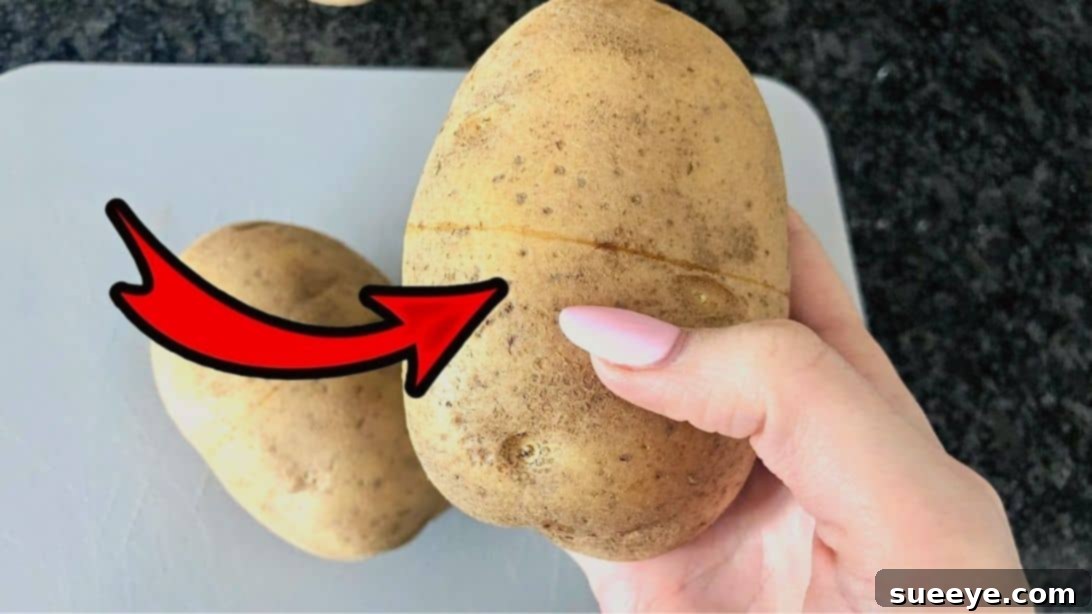
- Score the Potatoes: This is a critical step. Take each potato and, using a sharp knife, carefully make a very shallow incision around its circumference. The cut should be just deep enough to break through the skin, creating a faint ring around the middle of the potato. Do not cut deeply into the flesh; you’re only scoring the skin. This score line acts as a starting point for the skin to separate easily later.
- Boil the Potatoes: Once your water is boiling vigorously, carefully add the scored potatoes to the pot. Allow them to boil until the skins begin to noticeably loosen or curl at the score line. The exact boiling time will vary depending on the size and type of potato, but typically this takes about 10-15 minutes, or until the potatoes are tender when pierced with a fork but not overly soft. The goal is to cook them just enough for the skin to detach.
- Prepare an Ice Bath: While the potatoes are boiling, prepare a large bowl of ice water. This ice bath is crucial for quickly chilling the potatoes, which helps the skins contract and separate further, making them incredibly easy to peel.
- Drain and Transfer: Once the potatoes are tender and their skins are visibly loosening, carefully drain the hot water from the pot. Using a slotted spoon or tongs, immediately transfer the hot potatoes into the prepared ice bath. Let them sit in the ice water for about 30 seconds to a minute. This rapid cooling creates the thermal shock needed for the skins to slip right off.
- Peel with Ease: After their brief dip in the ice bath, remove the potatoes one by one. You’ll find that the skins now simply slide off with the lightest touch. Start from the score line you made earlier, and gently pull the skin in opposite directions. It should come off in two neat halves, revealing a perfectly peeled potato beneath.
Tips for Perfect Potato Peeling Every Time
- Don’t Overcook: While you want the potatoes tender, overcooking them will make them mushy and difficult to handle without breaking. Aim for “al dente” tenderness.
- Safety First: Always exercise caution when handling hot water and sharp knives. Use oven mitts or tongs when draining and transferring hot potatoes.
- Varying Potato Sizes: If you’re peeling potatoes of different sizes, consider boiling them in batches or adding the larger ones first, then the smaller ones a few minutes later, to ensure even cooking.
- Immediate Use or Storage: Once peeled, potatoes can be used immediately for mashing, roasting, or any other recipe. If not using right away, place them in cold water to prevent oxidation and keep them fresh until ready to use.
- Composting Potato Skins: If you have a compost pile or a food waste disposal system, potato skins are an excellent addition!
Frequently Asked Questions About This Peeling Method
Can this method be used for all types of potatoes?
Yes, this method works well for most potato varieties, including Russet, Yukon Gold, red, and new potatoes. The effectiveness might vary slightly with very thin-skinned varieties, but the principle remains the same.
Is it safe to handle hot potatoes?
The ice bath significantly cools the outer layer of the potato, making it much safer and more comfortable to handle. However, always be cautious. If a potato still feels too hot, let it sit in the ice bath for a few more seconds or use a clean cloth to hold it.
What if the skin doesn’t come off easily?
If the skin isn’t sliding off, it likely means the score wasn’t deep enough, or the potatoes weren’t boiled long enough to fully loosen the skin. You can try a slightly deeper score next time or boil for an additional minute or two.
Does this method affect the taste or texture of the potato?
No, as long as you don’t overcook the potatoes, this peeling method does not negatively impact their taste or texture. In fact, it can result in a more evenly cooked potato since the skin is briefly compromised.
Conclusion: Simplifying Your Kitchen Life
This simple yet revolutionary potato peeling technique, generously shared by Andrea Jean Cleaning, is more than just a kitchen hack; it’s a testament to how small innovations can significantly improve daily life. It offers an elegant solution for anyone who finds traditional peeling methods challenging, making cooking a more inclusive and enjoyable activity. Whether you’re battling arthritis, juggling a busy schedule, or simply looking for a more efficient way to prepare your meals, this method is worth integrating into your culinary repertoire.
Give this technique a try, and prepare to be amazed at how effortlessly potato skins fall away. You’ll not only save time and effort but also transform a once-dreaded task into a surprisingly satisfying one. We extend our sincere gratitude to Andrea Jean Cleaning via YouTube for sharing this invaluable tip and for all the images used here. If you found this tutorial helpful, we highly recommend visiting her channel for more brilliant cleaning and cooking hacks, and don’t forget to subscribe for endless inspiration!