
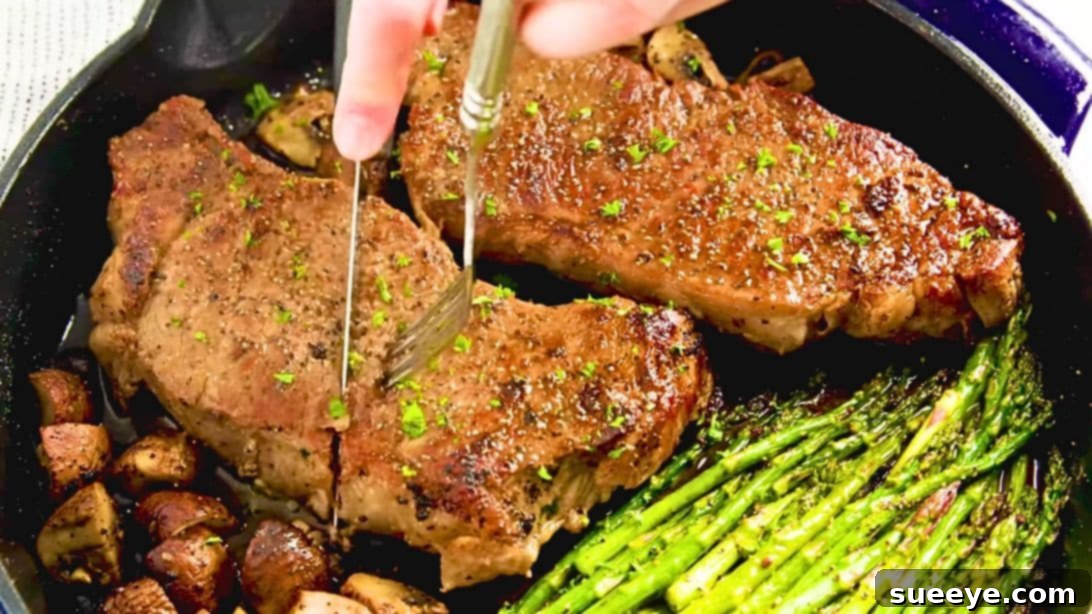
Easy Skillet Steak Dinner: Achieve Restaurant-Quality Steak at Home
Imagine a perfectly seared steak, boasting a savory, crispy crust and a juicy, tender interior, complemented by perfectly cooked asparagus and earthy mushrooms. Sounds like a dish from a high-end restaurant, doesn’t it? What if we told you it’s incredibly simple to achieve right in your own kitchen, using just one pan? This ultimate skillet steak recipe is designed for both novice cooks and seasoned home chefs, promising a delightful culinary experience that will impress your family and friends. Forget complicated techniques and endless clean-up; prepare to discover your new favorite weeknight meal or special occasion showstopper.
This recipe, inspired by the culinary wisdom of The Stay At Home Chef on YouTube, distills complex steak-cooking methods into an approachable, foolproof guide. We’ll walk you through selecting the right cut, mastering the perfect sear, and finishing your meal to perfection, ensuring every bite is as delicious as the last. Get ready to transform simple ingredients into an extraordinary dinner that’s both impressive and incredibly satisfying.
Why the Skillet is Your Secret Weapon for Perfect Steak
Cooking steak in a skillet, especially a heavy-bottomed one like cast iron, offers numerous advantages that contribute to a superior result:
- Unrivaled Sear: A hot skillet creates an incredibly even and intense heat that is essential for developing that coveted Maillard reaction, resulting in a deep, flavorful crust.
- Moisture Retention: The quick searing locks in the natural juices of the steak, keeping it tender and moist on the inside.
- Flavor Infusion: Cooking vegetables in the same pan as the steak allows them to absorb the rich flavors left behind in the fond, enhancing the overall taste of your meal.
- One-Pan Convenience: Minimizes cleanup, making it a perfect choice for busy weeknights without sacrificing quality.
- Oven-Safe Finish: Many skillets can go directly from stovetop to oven, providing a gentle, even heat that cooks the steak through without burning the exterior.
Choosing Your Steak and Understanding Your Ingredients
The foundation of a great steak dinner lies in the quality of your ingredients. While this recipe is incredibly forgiving, starting with good components elevates the final dish.
Selecting the Best Steak
For a perfect skillet steak, aim for a cut that is at least 1.5 to 2 inches thick. Thicker cuts allow for a beautiful crust to form without overcooking the interior. Some excellent choices include:
- Ribeye: Known for its rich marbling and robust flavor, ribeye offers exceptional tenderness and juiciness.
- New York Strip: A balance of tenderness and chew, with a good fat cap for flavor.
- Sirloin: A leaner, more economical option that still delivers great taste, especially when cooked correctly.
- Filet Mignon: The most tender cut, though it has less marbling, making precise cooking important to prevent dryness.
Ensure your steaks are thawed if previously frozen, and ideally, brought to room temperature before cooking for an even cook from edge to center.
Ingredients:
- 2 steaks (e.g., ribeye or New York strip, 1.5-2 inches thick, thawed and brought to room temperature)
- 1 tsp salt (fine sea salt or kosher salt preferred)
- ½ tsp black pepper (freshly ground for best flavor)
- ½ tsp white pepper (adds a subtle, distinct heat)
- ½ tsp onion powder
- ½ tsp garlic powder
- 1 tbsp vegetable oil (or canola oil, for high smoke point)
- 2 tbsp unsalted butter, divided (for searing and sautéing vegetables)
- 4 ounces fresh mushrooms, quartered (cremini or button mushrooms work well)
- ½ pound fresh asparagus, trimmed (about 1 bunch)
- Additional salt and pepper, to taste (for seasoning vegetables)
Understanding Your Seasonings and Sides
The seasoning blend of salt, black pepper, white pepper, onion powder, and garlic powder creates a classic, savory profile that enhances the natural flavor of the beef without overpowering it. White pepper, in particular, adds a nuanced heat and is often used in professional kitchens for its ability to blend seamlessly without visible black flecks.
Mushrooms and asparagus are chosen as perfect accompaniments for their quick cooking times and complementary flavors. Mushrooms add an umami richness, while asparagus provides a fresh, slightly bitter counterpoint, balancing the richness of the steak.
Essential Equipment for Your Skillet Steak Dinner
Having the right tools makes all the difference:
- Heavy Oven-Safe Skillet: A 10-12 inch cast-iron skillet is highly recommended for its excellent heat retention and even cooking.
- Tongs: Essential for handling hot steak and vegetables safely and efficiently.
- Meat Thermometer: The most reliable way to ensure your steak is cooked to your desired doneness without guesswork.
- Small Bowl: For mixing seasonings.
- Cutting Board & Sharp Knife: For preparing steak and vegetables.
Step-by-Step Guide to Your Perfect Skillet Steak Dinner
Follow these detailed steps to achieve a perfectly cooked steak and delicious sides, all in one pan.
Step 1: Prepare and Season Your Steaks and Vegetables
Begin by preparing your seasoning blend. In a small bowl, thoroughly mix together the 1 teaspoon of salt, ½ teaspoon of black pepper, ½ teaspoon of white pepper, ½ teaspoon of onion powder, and ½ teaspoon of garlic powder until well combined. This ensures an even distribution of flavor across your steaks.
Next, bring your steaks to room temperature. This is a crucial step for even cooking. Remove them from the refrigerator at least 30 minutes, and up to an hour, before you plan to cook. Pat them thoroughly dry with paper towels; moisture on the surface can prevent a good sear. Once dry, generously sprinkle the prepared seasoning mixture all over both sides of the steaks. Don’t be shy – a good crust needs a good amount of seasoning. Rub the spices firmly into the meat to ensure they adhere and form a flavorful crust.
While the steaks are resting, prepare your vegetables. Trim the woody ends off the asparagus stalks by holding an asparagus spear and bending it until it naturally snaps; the break point indicates where the tough end stops. Quarter your mushrooms, ensuring pieces are roughly uniform in size for even cooking.
Step 2: Master the Sear on the Stovetop
Preheat your oven to 375°F (190°C). This is where your oven-safe skillet comes in. Place your heavy skillet (preferably cast iron) on a stove over high heat. Allow it to heat up until it’s smoking lightly – this indicates it’s hot enough to achieve an excellent sear. A properly hot pan is the secret to a perfect crust and prevents the steak from sticking.
Once the pan is smoking, add 1 tablespoon of vegetable oil and 1 tablespoon of butter to the hot skillet. The oil has a high smoke point, preventing the butter from burning too quickly, while the butter adds richness and aids in browning. Swirl to coat the pan. Carefully place the seasoned steaks into the hot skillet, ensuring not to overcrowd the pan. If you’re cooking more than two steaks, sear them in batches.
Sear the steaks for approximately 2 to 3 minutes on each side. During this time, resist the urge to move them; allow that beautiful, golden-brown crust to form. Once seared, transfer the steaks onto a clean plate and set them aside. They won’t be fully cooked yet, but the searing has locked in their juices and developed a rich flavor. Add the remaining 1 tablespoon of butter to the same pan. The butter will melt and combine with the delicious fond (browned bits) left from the steak, forming a flavorful base for your vegetables.
Step 3: Finish in the Oven and Serve
With the remaining butter in the pan, add the trimmed asparagus and quartered mushrooms. Season them with additional salt and pepper to taste. Toss the vegetables together, ensuring they’re coated in the flavorful butter and steak drippings. Cook them over medium-high heat for about 2 minutes, stirring occasionally, until they start to soften and brown slightly.
Now, push the partially cooked vegetables to one side of the pan, creating space. Neatly place the seared steaks back onto the empty space in the skillet. Turn off the stovetop heat. Carefully transfer the entire pan into your preheated 375°F (190°C) oven.
Allow the steak and vegetables to continue cooking in the oven for about 10 to 15 more minutes, depending on your desired level of doneness and the thickness of your steaks. For best results, use a meat thermometer:
- Rare: 125-130°F (52-54°C)
- Medium-Rare: 130-135°F (54-57°C)
- Medium: 135-140°F (57-60°C)
- Medium-Well: 140-145°F (60-63°C)
Remember that the internal temperature will rise by a few degrees as the steak rests.
Once your steak reaches your preferred doneness, remove the skillet from the oven. This next step is paramount for a juicy steak: transfer the steaks back to the plate and let them rest for at least 5-10 minutes, tented loosely with foil. Resting allows the juices, which have been driven to the center during cooking, to redistribute throughout the meat, resulting in a more tender and flavorful steak. The vegetables can remain in the warm pan until serving.
After resting, slice your steaks against the grain for maximum tenderness. Serve immediately with the perfectly roasted asparagus and mushrooms. Enjoy your restaurant-quality skillet steak dinner!
Tips for a Perfect Skillet Steak Every Time
Achieving consistently perfect results with your skillet steak is easier than you think with these expert tips:
- Don’t Skip Room Temperature: This is arguably the most crucial step for even cooking. Cold steak will cook unevenly, with a well-done exterior and a rare interior.
- Pat Dry, Always: Moisture on the steak’s surface will steam rather than sear, preventing a crispy, flavorful crust.
- Hot Skillet is Key: Ensure your pan is smoking hot before adding the oil and butter. This immediate high heat creates the best possible sear.
- Don’t Overcrowd the Pan: If cooking multiple steaks, work in batches. Overcrowding lowers the pan’s temperature, leading to steaming instead of searing.
- Use a Meat Thermometer: Take the guesswork out of doneness. This small tool is your best friend for consistently cooked steak.
- Rest Your Steak: As emphasized, resting is non-negotiable for juicy, tender results. Be patient!
- Consider Basting: For an extra layer of flavor, during the last minute of searing on the stovetop, you can add a knob of butter, a few sprigs of fresh rosemary or thyme, and crushed garlic cloves to the pan. Tilt the pan slightly and use a spoon to baste the melted herb butter over the steak continuously.
- Slice Against the Grain: This breaks down the muscle fibers, making each bite more tender and enjoyable.
Variations and Customizations for Your Skillet Steak Dinner
While this recipe is fantastic as is, feel free to experiment and make it your own:
- Herb Butter Finish: Before resting, melt an additional tablespoon of butter with fresh herbs like rosemary or thyme and a minced garlic clove. Spoon this aromatic butter over the resting steak.
- Different Vegetables: Swap asparagus and mushrooms for green beans, broccoli florets, or even bell peppers. Adjust cooking times as needed.
- Spice It Up: Add a pinch of cayenne pepper, smoked paprika, or red pepper flakes to your seasoning blend for a bit of a kick.
- Pan Sauce: After removing the steak and vegetables, you can deglaze the pan with a splash of red wine or beef broth. Reduce slightly, then stir in a pat of butter for a simple, rich pan sauce to spoon over your steak.
- Compound Butter: Prepare a compound butter in advance by mixing softened butter with minced garlic, herbs, and a touch of lemon zest. Place a slice of this butter on top of the hot steak as it rests.
Common Mistakes to Avoid When Cooking Skillet Steak
Even with a straightforward recipe, a few common pitfalls can hinder your results. Steer clear of these to ensure your steak is always a success:
- Cooking Cold Steak: As mentioned, cooking steak straight from the fridge is a recipe for unevenly cooked, tough meat.
- Under-Seasoning: Steak needs a generous amount of seasoning to form a flavorful crust. Don’t be timid!
- Not Patting the Steak Dry: Moisture on the surface prevents the Maillard reaction, leading to a grey, steamed exterior instead of a beautiful sear.
- Flipping Too Often: Resist the urge to constantly flip the steak. Let it develop a crust on each side for the recommended time.
- Overcrowding the Pan: This lowers the pan temperature dramatically, causing the meat to steam and preventing a good sear.
- Not Resting the Steak: Cutting into the steak immediately after cooking will cause all the delicious juices to run out, leaving you with dry meat.
- Not Using a Meat Thermometer: Guessing doneness is a gamble that often leads to overcooked or undercooked steak. Invest in an instant-read thermometer.
- Using the Wrong Pan: A thin, lightweight pan won’t retain heat well enough to create a good sear. A heavy-bottomed, oven-safe skillet is crucial.
Armed with these insights and techniques, you’re now ready to confidently create a truly unforgettable skillet steak dinner. This recipe is more than just instructions; it’s a journey to mastering a classic dish that will become a staple in your culinary repertoire. Enjoy the process, savor the aromas, and delight in the incredible flavors you’re about to bring to your table. Your restaurant-quality steak is just a few steps away!
All image credit belongs to The Stay At Home Chef via YouTube. Follow and subscribe to her channel for more amazing recipes!