
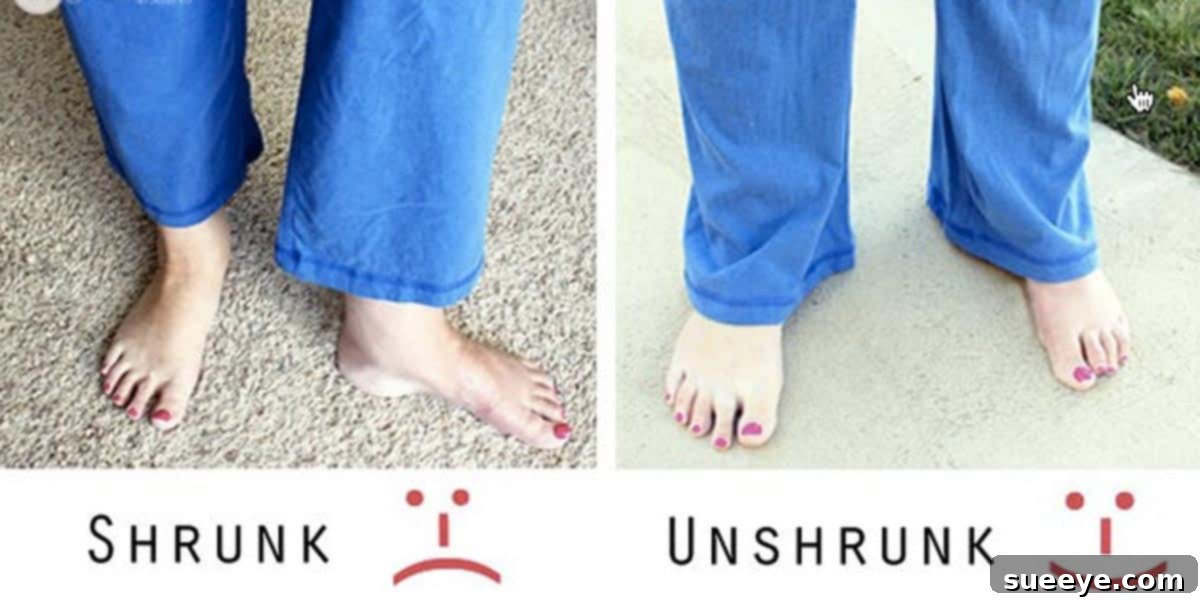
How to Unshrink Clothes: Your Ultimate Guide to Restoring Your Favorite Garments
We’ve all been there – that moment of dread when you pull your cherished wool sweater, a brand-new pair of jeans, or another favorite item from the laundry only to discover it’s inexplicably shrunk. What was once a perfect fit now resembles something better suited for a doll! The immediate reaction is often despair, leading many to toss the ‘ruined’ item into a donation bag. But what if we told you that many shrunken garments can be rescued and restored to their former glory? Yes, you heard that right! Don’t give up on your beloved clothes just yet. With a simple, yet surprisingly effective trick, you can reverse the shrinkage and bring your wardrobe back to life.
This common laundry mishap often feels like an irreversible tragedy, especially when it happens to a treasured piece. Imagine discovering your softest wool cardigan has become stiff and tiny, or your perfectly fitted denim now feels like a constricting second skin. The frustration is palpable, and the thought of replacing it can be disheartening, not to mention costly. But before you relegate those items to the ‘thrift store’ pile, prepare to learn a game-changing method that has saved countless garments from an untimely end. This isn’t just a hopeful theory; it’s a proven technique that works by gently relaxing the constricted fibers, allowing them to be coaxed back to their original size.
The Unexpected Hero: Baby Shampoo (or Hair Conditioner!)
The secret to un-shrinking your clothes lies in an everyday household product you might already have: baby shampoo. While it might sound unconventional, this gentle cleanser (or even a standard hair conditioner) possesses properties that make it an ideal agent for reversing fabric shrinkage. The magic behind this method, popularized by resourceful bloggers like Jillee from “One Good Thing by Jillee,” is incredibly simple yet profoundly effective. It’s a testament to how sometimes the most straightforward solutions are the best.
Jillee’s experience, often shared with her audience, highlights how easily cherished items, like a favorite pair of jeans accidentally tossed into the dryer by a well-meaning partner, can fall victim to shrinkage. Her ingenious method of soaking them in just a capful of baby shampoo mixed with water seems almost too good to be true, yet it consistently yields impressive results. The reason this works lies in the very nature of how fabrics shrink and how these conditioners interact with them. When clothes shrink, especially natural fibers like wool or cotton, their individual fibers constrict and draw together, tightening the weave of the fabric. Baby shampoo and hair conditioners are designed to soften and detangle hair by lubricating the protein fibers. Similarly, when applied to fabric, they work to relax and lubricate the constricted fibers, allowing them to stretch without breaking.
Understanding Why Clothes Shrink
Before diving into the rescue mission, it’s helpful to understand why clothes shrink in the first place. This knowledge can also help prevent future mishaps. Most natural fibers, like wool, cotton, and even some rayons, are prone to shrinking due to heat and agitation. When these fibers are exposed to hot water or high heat in a dryer, they contract. Wool, for example, has microscopic scales on its fibers that interlock and “felt” together when exposed to heat and moisture, leading to significant shrinkage and a denser, stiffer texture. Cotton fibers also swell and contract, causing the fabric to tighten.
Synthetic fabrics are generally less prone to shrinkage, but even blends can be affected. The key takeaway is that heat and aggressive tumbling are often the culprits. Once those fibers tighten, they need a special kind of intervention to release their grip and regain their original structure. That’s precisely where our baby shampoo trick comes into play, by conditioning and softening these fibers, making them pliable once more.
Your Step-by-Step Guide to Un-shrinking Clothes
Ready to bring your shrunken garments back from the brink? Here’s a detailed, easy-to-follow guide based on Jillee’s successful method, ensuring you have all the information you need for a successful restoration.
What You’ll Need:
- The shrunken garment
- A large basin, sink, or tub
- Lukewarm water
- 1 capful (or about a tablespoon) of baby shampoo or hair conditioner
- Several clean, dry towels
- Optional: A measuring tape to track progress
The Process:
-
Prepare the Soaking Solution:
Fill your basin or sink with lukewarm water. The water shouldn’t be too hot (as heat caused the problem!) nor too cold. Add about one capful (approximately one tablespoon) of baby shampoo or hair conditioner to the water. Swish the water around gently to disperse the shampoo, creating a mild, sudsy solution. The amount of shampoo might need a slight adjustment depending on the size of the garment – a larger item like a blanket might need a bit more, while a small baby outfit needs less.
-
Submerge the Shrunken Garment:
Gently place your shrunken item into the prepared solution. Ensure it is fully submerged and saturated with the water and conditioner mixture. Do not wring or agitate the fabric aggressively. The goal here is to relax the fibers, not stress them further. If the item floats, you can gently press it down to ensure it absorbs the solution.
-
Let it Soak:
Allow the garment to soak for at least 30 minutes, and up to several hours for very stubborn cases or thicker fabrics like denim or chunky wool. During this time, the conditioner will work its magic, lubricating and softening the fibers, allowing them to release their constricted state. You might even feel the fabric start to feel noticeably softer as it soaks.
-
Rinse (or Don’t!):
After soaking, remove the garment from the basin. Many experts suggest *not* rinsing the item completely. Leaving a tiny bit of conditioner residue can help keep the fibers pliable during the stretching process. If you feel the need to rinse, do so very gently with cool water, being careful not to wring or twist the fabric, as this can undo the conditioning work you just achieved.
-
Remove Excess Water with Towels:
This step is crucial for preparing the garment for stretching without damaging it. Lay a large, clean, dry towel flat on a surface. Place the wet garment on top of the towel. Carefully roll the towel and garment together, creating a tight roll. Press down firmly on the roll to absorb as much excess water as possible. You might need to repeat this process with a second dry towel if the item is very saturated. The aim is to get the garment damp, not dripping wet. Avoid wringing or twisting at all costs, as this can distort the fabric and create permanent creases.
-
The Gentle Stretch:
Now comes the most important part: stretching the fabric back to its original size. Lay the damp garment flat on a clean, dry surface (a table, a bed, or even a clean floor). Begin gently stretching the fabric in the direction it needs to expand. For a sweater that shrunk in length, gently pull it lengthwise. If it shrunk in width, pull it gently outwards. For jeans, you’ll likely need to focus on both length and width. Work slowly and patiently, stretching small sections at a time. Do not yank or pull forcefully, as this can damage the fibers. If you have the original measurements or a similar garment to compare it to, use that as a guide. Continuous, gentle pressure is key. Some find it helpful to put a heavy book at one end of the garment while gently pulling the other end. This process might take some time and repeated gentle stretching until you achieve the desired size.
-
Dry Flat:
Once you’ve stretched the garment to its approximate original size, lay it flat on a dry surface or a mesh drying rack to air dry completely. Avoid using a dryer, as heat will reverse all your hard work and likely cause the item to shrink again. Allow plenty of time for it to dry naturally. Periodically check the garment as it dries and gently re-stretch any areas that might have contracted slightly. For items like sweaters, shaping them while wet and letting them dry flat helps maintain their form.
-
Try It On and Evaluate:
Once completely dry, try on your garment. Hopefully, it has returned to its desired size and fit. In some cases, particularly with severely shrunken items, you might need to repeat the soaking and stretching process one more time to achieve full restoration. Patience and perseverance often pay off!
Fabric-Specific Considerations
While the baby shampoo method is broadly effective, different fabrics might respond slightly differently and require nuanced handling:
- Wool: Wool sweaters are notorious for shrinking and are often the prime candidates for this method. The scales on wool fibers respond well to the lubricating effect of conditioner, making them easier to stretch. Be extra gentle with wool, as aggressive stretching can damage the delicate fibers or felt them further if too much friction is applied.
- Denim/Jeans: Jeans, especially those with a high cotton content, can shrink, often becoming tighter and shorter. The baby shampoo method is excellent for restoring denim, helping to relax the sturdy cotton fibers. You might need to apply a bit more pressure during stretching due to the fabric’s inherent stiffness, focusing on both the waist, hips, and length.
- Cotton: Pure cotton items can also shrink, although they might not respond as dramatically as wool. However, the conditioner method can still be very effective in relaxing the fibers. Be patient with cotton, as it might take a few rounds of stretching to achieve the desired results.
- Rayon and Other Blends: Rayon is known for its tendency to shrink, particularly when exposed to heat and moisture. This method can also work for rayon, but handle with extreme care as rayon can be delicate when wet. For blends, the success rate depends on the predominant fiber type. Always test a small, inconspicuous area first if you’re unsure.
- Synthetics: While synthetics like polyester or nylon are less prone to shrinking, if a blend containing natural fibers has shrunk, the method is worth trying. However, pure synthetics are less likely to respond as their shrinkage mechanism is different (often due to heat setting during manufacturing).
Tips for Optimal Success and Future Prevention
To Maximize Your Un-shrinking Efforts:
- Act Quickly: The sooner you attempt to unshrink an item after it has shrunk, the better your chances of success. Freshly shrunk fibers are more pliable.
- Be Gentle: Patience and a light touch are your best friends. Aggressive pulling can damage fibers, leading to tears or permanent distortion.
- Measure Twice: If possible, measure the garment before and after the process. Even better, compare it to another garment of the same size that fits correctly.
- Consider a Drying Rack: A flat mesh drying rack allows air to circulate around the garment, promoting even drying and preventing further stretching or sagging in one area.
To Prevent Future Shrinkage:
- Read Care Labels Religiously: This is the golden rule of laundry. Labels provide specific instructions for washing, drying, and ironing that are crucial for maintaining garment integrity.
- Wash in Cold Water: For many items, especially delicate and natural fibers, cold water washing minimizes the risk of shrinkage and also helps preserve colors.
- Air Dry or Use Low Heat: Whenever possible, air dry delicate items or those prone to shrinking. If using a dryer, opt for the lowest heat setting or an air-fluff cycle.
- Separate by Fabric Type: Washing similar fabrics together helps ensure that each item receives the appropriate care. Avoid washing delicate woolens with sturdy denim that requires vigorous tumbling.
- Use Mesh Laundry Bags: For very delicate items like lingerie or fine knits, placing them in a mesh laundry bag can protect them from agitation during the wash cycle.
When to Know It’s Time to Let Go
While the baby shampoo trick is remarkably effective, it’s not a magical cure-all for every garment. Some items, particularly those made of wool that have undergone severe felting (where the fibers are irreversibly matted together), might be beyond rescue. If, after several attempts, your garment shows no sign of returning to its original size or feels irreparably damaged, it might be time to accept its fate. However, even then, consider alternatives like upcycling it into a smaller item, using the fabric for crafts, or donating it to someone who might find a use for it.
Conclusion: Empowering You to Save Your Wardrobe
Discovering a beloved garment has shrunk can be a truly disheartening experience, often leading to the premature retirement of perfectly good clothing. However, armed with this simple, cost-effective, and incredibly powerful technique using baby shampoo or hair conditioner, you now have the power to reverse many common laundry mishaps. This method not only saves your cherished items but also saves you money and contributes to a more sustainable approach to fashion by extending the life of your clothes. So, next time you face a shrunken sweater or a pair of jeans that are a size too small, don’t despair. Head to your bathroom cabinet, grab that baby shampoo, and embark on your garment-rescuing mission. You might just become your own laundry hero!