
Comprehensive Guide to Identifying and Treating Common Bug Bites & Stings
Spending time outdoors, especially during warmer months, offers wonderful opportunities for relaxation and fun with friends and family. However, these enjoyable moments can sometimes be interrupted by unwelcome tiny intruders: bugs and insects. While many bug bites and stings are merely an itchy nuisance, others can be dangerous, potentially leading to severe allergic reactions, secondary infections, or transmitting diseases that require immediate medical attention. Knowing how to accurately identify different types of bites and stings, understanding their specific symptoms, and applying appropriate first aid is crucial for ensuring your safety and comfort. This comprehensive guide will equip you with the essential knowledge to confidently identify and effectively treat the most common insect encounters, helping you minimize discomfort and mitigate risks.
For a visual aid and further insights into bug bite identification and treatment, consider watching this informative video tutorial from BRIGHT SIDE on YouTube.
Understanding Common Bug Bites and Stings
Before diving into specific types, it’s important to recognize that reactions to insect bites can vary greatly from person to person. Factors like individual sensitivity, the insect species, the amount of venom or saliva injected, and the location of the bite all play a role in how your body responds. However, there are common patterns and symptoms that can help you distinguish between a harmless nibble and something more serious.
Key Bites and Stings Covered in This Guide:
- Spider Bites
- Mosquito Bites
- Tick Bites
- Bed Bug Bites
- Bee Stings
Detailed Identification and Treatment Guide for Specific Bites
1. Spider Bites: Identifying the Threat and Providing First Aid
While many spiders are venomous, the vast majority pose no threat to humans because their fangs are either too short to penetrate human skin or their venom is not potent enough to cause significant harm. Most spider bites are relatively harmless, often resulting in minor irritation similar to a mosquito bite. However, there are a few exceptions whose bites can cause more severe reactions, some requiring urgent medical intervention. It’s essential to be aware of these species, particularly the Black Widow, Brown Recluse, and in certain regions, the aggressive Hobo spider, although Tarantula bites, while painful, are generally less severe than their intimidating appearance might suggest.
Spider Bite Identification: What to Look For
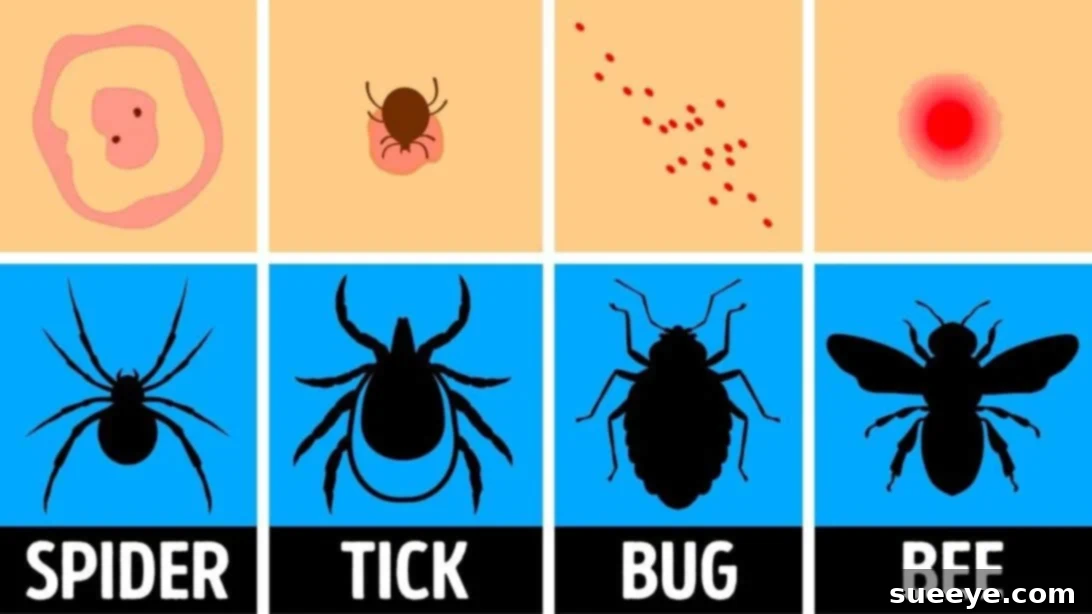
A typical spider bite may initially appear as two small puncture marks, often seen as tiny dots at the center of a red, inflamed area. The bite site may be painless at first but can quickly become itchy, red, and swollen. For bites from dangerous spiders, symptoms can escalate rapidly:
- Brown Recluse Spider Bite: This spider is identifiable by a violin-shaped marking on its back. Its bite can be initially painless, progressing into a blister with a red border and a pale or purplish center. Over several days, the center may become necrotic, forming an open, deep ulcer that is slow to heal and can leave a significant scar. Systemic symptoms may include fever, chills, body aches, and nausea.
- Black Widow Spider Bite: Recognizable by its shiny black body and a distinct red hourglass mark on its abdomen. Its bite is often described as a sharp pinprick, followed by immediate, intense pain that rapidly spreads. Symptoms can include severe muscle cramps and rigidity (especially in the abdomen or back), nausea, vomiting, sweating, headache, and sometimes difficulty breathing or elevated blood pressure. The bite itself may appear as a target-like lesion with a pale center and a red outer ring.
- Common Spider Bites: Less dangerous bites usually present as a red, itchy bump or welt, sometimes with a small white blister. Pain is typically mild to moderate and localized, resolving within a few days.
First Aid for Spider Bites: Immediate Steps to Take
Prompt and correct first aid can significantly reduce discomfort and prevent complications from a spider bite. If you suspect a bite from a common, non-threatening spider:
- Clean the Area Thoroughly: Gently wash the bite site with soap and water to prevent infection.
- Apply a Cold Compress: Place a cold pack or ice wrapped in a clean cloth on the bite for 10-20 minutes at a time, several times a day. This helps to reduce pain, swelling, and inflammation.
- Elevate the Affected Limb: If the bite is on an arm or leg, elevate it above heart level to slow the spread of venom and minimize swelling.
- Pain Management: Over-the-counter pain relievers such as acetaminophen (Tylenol) or ibuprofen (Advil, Motrin) can help manage localized pain.
- Antihistamines for Itching: Oral antihistamines (e.g., diphenhydramine) can help alleviate itching and swelling, particularly if an allergic reaction contributes to the discomfort.
- Actions to Avoid: Do NOT apply a tourniquet, cut the wound to try and extract venom, or attempt to suck out the venom. These methods are ineffective and can cause further harm or infection.
When to Seek Medical Attention for a Spider Bite:
While most spider bites are mild, it’s crucial to seek immediate medical help if you experience any of the following, especially if you suspect a Black Widow or Brown Recluse bite:
- Severe, spreading pain, intense muscle cramps, or rigidity.
- Development of an open sore, ulcer, or necrotic tissue at the bite site.
- Difficulty breathing, dizziness, shivering, confusion, or a severe headache.
- Nausea, vomiting, or fever.
- Signs of infection, such as increasing redness, warmth, tenderness, pus discharge, or red streaks extending from the bite.
- If the victim is a child, an elderly individual, or someone with a compromised immune system, as their reactions can be more severe.
2. Mosquito Bites: The Ubiquitous Itchy Annoyance
Mosquitoes are perhaps the most common and universally disliked insects, especially during warm weather. Their bites are characterized by small, itchy, red bumps that typically appear shortly after exposure. These bites are caused by the female mosquito, which pierces the skin to feed on blood, injecting saliva that contains an anticoagulant and various proteins. It’s this mosquito saliva that triggers the body’s localized immune response, leading to the familiar itching, redness, and swelling.
Mosquito Bite Identification: A Distinctive Mark
Mosquito bites typically present as:
- Small, red, swollen bumps: Usually about the size of a pea or a small berry, often with a tiny red dot in the center where the mosquito pierced the skin.
- Intense itching: The primary and most bothersome symptom, often leading to scratching that can exacerbate the bite and potentially lead to infection.
- Common Locations: Most frequently found on exposed skin areas, such as arms, legs, ankles, and neck, where the skin is thinner and blood vessels are closer to the surface. They can sometimes be mistaken for skin allergies due to their appearance, but their specific distribution on exposed areas often helps in identification.
While most reactions are localized and mild, some individuals can experience a more severe allergic response known as “Skeeter Syndrome.” This is characterized by extensive swelling, redness, and warmth around the bite, sometimes accompanied by a low-grade fever or blistering.
First Aid for Mosquito Bites: Effectively Relieving the Itch
Relief from mosquito bites focuses primarily on reducing itchiness and inflammation to prevent complications:
- Clean the Area: Wash the bite site thoroughly with soap and water to keep it clean and reduce the risk of infection.
- Apply a Cold Pack: Ice or a cold compress applied to the bite can numb the area, significantly reduce swelling, and alleviate itching.
- Anti-itch Creams: Over-the-counter remedies such as hydrocortisone cream (1%) or calamine lotion can provide significant topical relief from itching and inflammation.
- Oral Antihistamines: For widespread or very itchy bites, oral antihistamines (e.g., diphenhydramine or cetirizine) can help reduce the body’s allergic response and overall discomfort.
- Avoid Scratching: It’s crucial to resist the urge to scratch, as this can break the skin, worsen inflammation, and potentially lead to secondary bacterial infections.
When to Seek Medical Attention for a Mosquito Bite:
Most mosquito bites resolve on their own with home care, but medical consultation is advisable if you experience:
- Signs of Secondary Infection: Increasing redness, warmth, tenderness, pus discharge, or fever around the bite.
- Severe Allergic Reaction (Skeeter Syndrome): Extremely large areas of swelling, widespread hives, or blistering that is persistent or severe.
- Systemic Symptoms: The development of fever, severe headache, body aches, joint pain, swollen lymph nodes, or persistent fatigue, especially if these symptoms appear several days to weeks after the bite. These could indicate a mosquito-borne illness such as West Nile virus, Zika virus, dengue fever, or malaria, depending on your geographic location and recent travel history.
3. Tick Bites: Silent Threats with Potential Consequences
Ticks are parasitic arachnids that latch onto a host and feed on blood. Unlike many other insect bites, a tick bite is often painless and goes unnoticed for hours or even days. Ticks embed their barbed mouthparts deeply into the skin, gradually swelling as they engorge with blood. This engorgement is often when they are first discovered, as they become significantly larger and more visible. While the majority of tick bites are harmless, a significant concern is their ability to transmit various diseases, with Lyme disease, Rocky Mountain spotted fever, and encephalitis being among the most well-known and serious.
Tick Bite Identification: Spotting the Imposter
Identifying a tick bite primarily involves looking for the tick itself, rather than just a bite mark, as the latter may not appear until the tick has been removed or has fallen off:
- Attached Tick: Ticks vary significantly in size, from as small as a poppy seed (e.g., nymphal ticks) to the size of a pencil eraser when unfed. Once engorged with blood, they can swell to the size of a small grape. They typically appear as a small, dark, pea-sized bump attached firmly to the skin, with their legs often visible.
- Localized Reaction/Rash: After removal, a small red bump or patch may appear at the bite site. Some tick-borne diseases, most notably Lyme disease, can cause a distinctive “bull’s-eye” rash (erythema migrans) days or even weeks after the bite. It’s important to note that this characteristic rash does not appear in all cases of Lyme disease.
- Common Attachment Locations: Ticks prefer warm, moist, and often concealed areas of the body, such as the hairline, scalp, ears, armpits, groin, behind the knees, and navel.
First Aid for Tick Bites: Safe and Prompt Removal is Key
Proper tick removal is critical to prevent disease transmission. The longer a tick remains attached, the higher the risk of transmitting pathogens.
- Use Fine-Tipped Tweezers: Grasp the tick as close to the skin’s surface as possible, ideally at its mouthparts, not the body.
- Pull Upward Steadily: Apply slow, steady, and even pressure. Do NOT twist or jerk the tick, as this can cause the mouthparts to break off and remain embedded in the skin, potentially increasing the risk of infection.
- Clean the Bite Area: After removal, thoroughly clean the bite area and your hands with rubbing alcohol, an iodine scrub, or soap and water to reduce the risk of infection.
- Save the Tick (Optional but Recommended): Place the removed tick in a sealed bag or container. This allows for potential identification by a medical professional or testing if symptoms develop later, which can help guide diagnosis and treatment.
Do NOT use folk remedies or ineffective methods like petroleum jelly, nail polish, lit matches, or heat to remove a tick, as these can irritate the tick and cause it to regurgitate saliva and pathogens into the bloodstream, potentially increasing disease transmission.
When to Seek Medical Attention for a Tick Bite:
It is always wise to consult a doctor after a tick bite, especially if:
- You are unable to remove the tick completely, and mouthparts remain embedded in the skin.
- You develop a rash, particularly a bull’s-eye rash, in the days or weeks following the bite.
- You experience systemic symptoms such as fever, chills, body aches, joint pain, headache, severe fatigue, or swollen lymph nodes within several weeks of the bite.
- You live in or have visited an area known for a high incidence of tick-borne diseases.
- You are concerned about the type of tick (e.g., deer tick) or the estimated duration of its attachment.
Even if you feel fine immediately after removal, symptoms of tick-borne illnesses can take days or weeks to appear, making early medical consultation and vigilant monitoring important.
4. Bed Bug Bites: Unseen Nuisances and Persistent Itch
Bed bugs are tiny, nocturnal insects that feed exclusively on human blood. Their bites are often mistaken for mosquito bites or other skin rashes, but they possess distinct characteristics and patterns. Bed bugs typically bite while a person is asleep, and the bites themselves are usually painless at first, becoming intensely itchy and inflamed shortly thereafter. It’s important to understand that hygiene is not a factor in attracting bed bugs; they are simply opportunistic feeders, seeking out carbon dioxide exhaled by sleeping humans.
Bed Bug Bite Identification: A Linear or Clustered Pattern
Identifying bed bug bites often involves recognizing their unique pattern and the timing of their appearance:
- Characteristic Pattern: Bed bugs often bite in a linear pattern of three to five bites, sometimes humorously referred to as “breakfast, lunch, and dinner,” or in small clusters. This distinct pattern occurs because a bed bug may probe the skin several times to find a suitable blood vessel.
- Appearance: Bites are typically small, red, itchy welts that may have a slightly darker red center. They can resemble mosquito bites but are often more numerous, appear in characteristic lines or clusters, and may be firmer to the touch.
- Common Locations: Usually found on exposed skin areas during sleep, such as the arms, legs, neck, face, and torso.
- Timing of Appearance: Bites typically appear in the morning after sleeping, and new bites may appear each day if the infestation persists.
Reactions can vary significantly from person to person; some individuals may not react at all to bed bug bites, while others develop significant itching, redness, and swelling, or even small blisters.
First Aid for Bed Bug Bites: Managing the Symptoms
Treatment for bed bug bites focuses on alleviating the symptoms, as the bites themselves are not inherently dangerous or disease-transmitting:
- Wash the Bites: Clean the affected areas gently with soap and water to reduce itching and prevent secondary bacterial infections.
- Anti-itch Creams and Oral Antihistamines: Apply over-the-counter hydrocortisone cream (1%), calamine lotion, or an oral antihistamine to effectively reduce itching and inflammation.
- Cold Compress: A cold pack or ice wrapped in a cloth can help soothe irritated skin and reduce swelling.
- Avoid Scratching: Vigorously scratching bed bug bites can break the skin, which can lead to open sores and secondary bacterial infections, complicating the healing process.
The primary challenge associated with bed bugs is not treating the bites themselves, but rather identifying and eliminating the underlying infestation, which often requires professional pest control.
When to Seek Medical Attention for a Bed Bug Bite:
Consult a doctor or healthcare professional if you experience any of the following:
- Signs of Secondary Infection: Increased redness, warmth, tenderness, pus discharge from the bites, or the development of a fever.
- Severe Allergic Reaction: Although rare, if you experience widespread hives, difficulty breathing, or other signs of a systemic allergic reaction.
- Persistent or Extreme Itching: If the bites are extremely itchy and standard over-the-counter treatments are not providing adequate relief, a doctor may prescribe stronger topical steroids or oral medications.
5. Bee Stings: A Painful Prick with Potential for Allergy
Bee stings are a common outdoor hazard, and while painful, they are generally not dangerous for individuals who are not allergic to bee venom. A key differentiator for honey bee stings is that the bee leaves its barbed stinger and venom sac embedded in the skin, which typically results in the bee’s death. Wasps, hornets, and yellow jackets, however, do not leave their stingers behind and are capable of stinging multiple times, which can inject more venom and cause more severe reactions.
Bee Sting Identification: The Stinger’s Tell-Tale Mark
Recognizing a bee sting is usually straightforward due to the immediate and localized reaction:
- Immediate Pain and Burning Sensation: A sharp, stinging pain is felt instantly at the site of the sting, often accompanied by a burning sensation.
- Presence of Stinger (Honey Bees Only): For honey bee stings, a small black stinger may be visible, often with a tiny venom sac attached, which continues to pump venom into the skin. This stinger must be removed quickly.
- Localized Reaction: The area around the sting typically becomes red, swollen, and warm to the touch. A small, firm, white blotch with a red border may appear directly at the sting site.
- Itching Development: Following the initial pain, intense itching often develops, lasting for several hours. Localized swelling usually subsides within 1 to 2 hours, though minor swelling and tenderness can persist for a day or two.
First Aid for Bee Stings: Swift Stinger Removal and Symptom Relief
Prompt removal of the stinger (for honey bee stings) is crucial to minimize the amount of venom injected and reduce the severity of the reaction:
- Remove the Stinger Quickly: For honey bee stings, scrape the stinger out with a fingernail, the edge of a credit card, or gauze. Avoid using tweezers to pinch the venom sac, as this can inject more venom into the skin.
- Clean the Area: Wash the sting site thoroughly with soap and water or an antiseptic solution like hydrogen peroxide to prevent infection.
- Apply a Cold Compress: Ice or a cold pack applied to the sting can help reduce pain, swelling, and inflammation.
- Pain Relief: Over-the-counter pain relievers such as ibuprofen or acetaminophen can help manage discomfort.
- Antihistamines and Topical Creams: Oral antihistamines (e.g., loratadine, cetirizine) or topical anti-itch creams (e.g., hydrocortisone, calamine lotion) can alleviate itching and mild swelling.
- Elevate the Affected Area: If stung on an arm or leg, elevate the limb to help reduce swelling.
When to Seek Medical Attention for a Bee Sting:
While most bee stings are manageable at home, certain situations warrant immediate medical attention, as they can be life-threatening:
- Signs of a Severe Allergic Reaction (Anaphylaxis): This is a medical emergency. Symptoms include difficulty breathing or wheezing, swelling of the face, lips, or throat (angioedema), widespread hives or rash beyond the sting site, dizziness, lightheadedness, a rapid pulse, a sudden drop in blood pressure (leading to fainting), nausea, vomiting, diarrhea, or a feeling of impending doom. If the person has a known allergy and carries an epinephrine auto-injector (EpiPen), administer it immediately as instructed, and then call emergency services (e.g., 911 in the US).
- Multiple Stings: Numerous stings (e.g., from a swarm of bees or wasps) can lead to a toxic reaction, even in individuals who are not typically allergic.
- Sting in the Mouth or Throat: Swelling in these areas can rapidly obstruct airways and become life-threatening.
- Signs of Secondary Infection: Increasing redness, warmth, tenderness, pus discharge, or fever around the sting site.
- Persistent or Worsening Symptoms: If pain, swelling, or itching doesn’t improve or worsens significantly after a few days.
Individuals with known allergies to bee venom (apitoxin) must carry an EpiPen and should always seek immediate medical attention after any sting, even if they’ve administered their auto-injector.
General Prevention Strategies for Bug Bites and Stings
Prevention is always better than cure when it comes to bug bites and stings. By taking a few proactive steps, you can significantly reduce your chances of uncomfortable or dangerous encounters with insects and arachnids:
- Use EPA-Registered Insect Repellents: Apply insect repellents containing active ingredients like DEET, picaridin, oil of lemon eucalyptus (OLE), or IR3535 to exposed skin and clothing when outdoors. Always follow product instructions carefully, especially for children.
- Wear Protective Clothing: When in areas known for high insect activity, such as wooded or grassy environments, wear long-sleeved shirts, long pants, and socks. Tucking pants into socks or boots can create an additional barrier against ticks. Light-colored clothing may also be less attractive to some insects and makes ticks easier to spot.
- Avoid Peak Activity Times: Mosquitoes are most active during dawn and dusk. Ticks are prevalent in wooded or tall grassy areas, especially during warmer months. Plan outdoor activities to avoid these peak times when possible.
- Inspect Yourself, Children, and Pets Regularly: After spending time outdoors, particularly in tick-prone areas, thoroughly check your entire body, clothing, and pets for ticks. Pay close attention to hairlines, behind ears, armpits, groin, and behind the knees. Showering within two hours of coming indoors can help wash off unattached ticks.
- Eliminate Standing Water Sources: Mosquitoes breed in stagnant water. Regularly empty bird baths, unclog gutters, repair leaky outdoor faucets, and eliminate any containers that collect water around your home and yard.
- Seal Entry Points in Your Home: Repair torn screens on windows and doors to prevent insects from entering your living spaces. Use caulk to seal cracks and crevices in walls and foundations.
- Be Mindful of Food and Drinks Outdoors: Sweet drinks and uncovered food, especially fruits and sugary snacks, can attract bees and wasps. Keep food covered and use straws for beverages outdoors to avoid accidental ingestion of an insect.
- Avoid Strong Scents: Heavily scented perfumes, colognes, hair sprays, and lotions can attract some stinging insects. Opt for unscented products when spending time outdoors.
- Use Bed Bug Encasements: If you suspect or have had bed bugs, use special encasements for mattresses and box springs to trap them and prevent them from biting.
When to Always Seek Professional Medical Advice
While this guide offers detailed first aid information for common bug bites and stings, remember that it is not a substitute for professional medical advice. Always seek immediate medical attention if you:
- Exhibit signs of a severe allergic reaction (anaphylaxis), such as difficulty breathing, wheezing, swelling of the face, lips, or throat, widespread hives, dizziness, rapid pulse, or fainting.
- Suspect a bite from a dangerous spider (e.g., Black Widow, Brown Recluse) and experience systemic symptoms like severe muscle cramps, nausea, or intense pain spreading from the bite.
- Develop symptoms of a tick-borne illness, such as a bull’s-eye rash, persistent fever, severe headache, body aches, joint pain, or extreme fatigue, days or weeks after a tick bite.
- Have a bite that shows clear signs of a secondary bacterial infection (increasing redness, warmth, tenderness, pus discharge, or red streaks extending from the bite).
- Experience multiple stings or bites leading to significant discomfort, swelling, or systemic symptoms.
- Are a child, an elderly person, or have a compromised immune system, as these individuals can have more severe or atypical reactions to bites and stings.
- Are uncertain about the type of bite or sting, the appropriate course of action, or if symptoms worsen despite home treatment.
Conclusion: Stay Prepared, Stay Safe
Encountering bugs and insects is an inevitable part of enjoying the great outdoors. However, being informed and prepared can make all the difference in turning a potentially distressing incident into a minor inconvenience or, more importantly, preventing a dangerous situation from escalating. By understanding how to accurately identify common bug bites and stings, knowing the correct first aid steps, and recognizing when to seek professional medical help, you empower yourself to react effectively and ensure the safety and well-being of yourself and your loved ones. Always prioritize prevention, carry a basic first-aid kit with essential supplies like antihistamines and antiseptic wipes, and when in doubt, consult a healthcare professional. Your knowledge is your best defense against the tiny threats that roam our natural environments.
*All image credit belongs to BRIGHT SIDE via YouTube. Follow and subscribe to their channel for more informative content!