
The Ultimate Guide to Cutting Onions Without Tears: The Chilling Secret Revealed
For millennia, home cooks and professional chefs alike have shared a common, tear-filled experience: the inevitable agony of chopping onions. The stinging, burning sensation in our eyes, followed by a stream of uncontrollable tears, is a universal kitchen woe that can turn a simple meal prep task into a watery ordeal. Many of us have tried various folk remedies – biting on a piece of bread, chewing gum, holding a matchstick in our mouth, wearing swim goggles, or even awkwardly looking away from the cutting board (a rather dangerous maneuver, as many can attest). Yet, for most, the quest for a truly tear-free onion-cutting experience has remained elusive… until now.
Imagine a world where you can slice and dice onions with complete comfort, your eyes remaining perfectly dry and clear. This isn’t a culinary fantasy; it’s an incredibly simple and scientifically sound trick that can transform your kitchen routine. Thanks to ingenious insights, like those shared by channels such as Smart Fox on YouTube, we can finally bid farewell to onion-induced tears. The secret lies not in elaborate gadgets or strange contortions, but in the power of temperature. Get ready to discover how a basic kitchen appliance can revolutionize your onion preparation.
Understanding the Science Behind Onion Tears
Before diving into the solution, it’s helpful to understand why onions make us cry in the first place. This isn’t just a random act of vegetable aggression; it’s a sophisticated chemical defense mechanism. When an onion is cut, its cells are ruptured, releasing enzymes called alliinases. These enzymes then react with sulfoxides (amino acid compounds containing sulfur) within the onion to produce sulfenic acids. These sulfenic acids are unstable and quickly rearrange into a highly volatile compound known as syn-propanethial-S-oxide.
It’s this pungent, sulfur-containing gas, syn-propanethial-S-oxide, that wafts into the air and eventually reaches our eyes. Upon contact with the moisture in our eyes (our tears), it converts into a mild sulfuric acid. Our eyes, sensing this irritant, trigger a reflex to produce more tears to wash away the unwelcome chemical. This is our body’s natural defense mechanism kicking in, albeit a rather inconvenient one for anyone trying to cook a meal.
The speed and intensity of this reaction are key. The faster the enzymes and compounds react, and the quicker the gas reaches your eyes, the more tears you’re likely to shed. This understanding provides the perfect foundation for our tear-stopping solution: slowing down that very chemical reaction.
The Revolutionary Cold Method: Say Goodbye to Watery Eyes
The solution, as elegant as it is effective, leverages the impact of temperature on chemical reactions. By simply chilling your onions before cutting, you can significantly reduce or even eliminate the release of the tear-inducing irritant. The principle is straightforward: cold temperatures slow down enzyme activity. When the alliinase enzymes are chilled, their ability to react with the sulfoxides and produce syn-propanethial-S-oxide is drastically inhibited.
Think of it like this: chemical reactions generally speed up with heat and slow down with cold. By exposing the onion to low temperatures, you are essentially putting its tear-producing machinery on ‘pause’ or ‘slow-motion.’ This means fewer volatile compounds are released into the air, and thus, less irritation reaches your eyes. This simple pre-prep step allows you to chop your onions in peace, maintaining clear vision and a calm demeanor.
This method has gained popularity due to its sheer simplicity and proven effectiveness. It requires no special equipment beyond what you already have in your kitchen, making it accessible to everyone. No more awkward goggles, no more fumbling with matches – just a quick trip to the fridge or freezer, and you’re set for a tear-free experience.
What You Need for a Tear-Free Onion Experience:
- Onion(s): Any variety will work, whether it’s a pungent yellow onion, a milder red onion, or a sweet Vidalia.
- Refrigerator or Freezer: Your everyday cooling appliance is all you need to perform this magic trick.
Directions for Cutting Onions Without Tears:
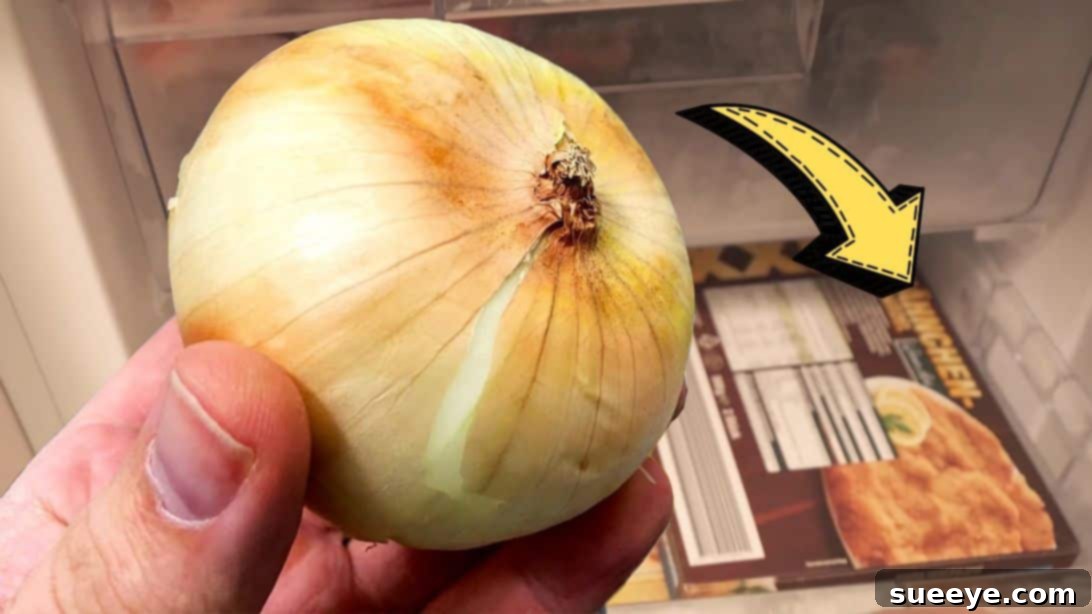
- Chill Your Onions: This is the crucial first step. Before you even think about grabbing your knife, place the whole, unpeeled onion into your freezer. If you’re pressed for time and need the onion quickly, a 15-minute stint in the freezer should be sufficient to significantly reduce the irritant release. However, for optimal results and a truly tear-free experience, aim for 30 minutes. If you have more time or prefer a less intense chill, you can place the onion in the refrigerator for an hour or even a few hours, though the freezer provides a quicker and often more effective chill for immediate use.
- Remove and Cut Immediately: Once the chilling time is complete, remove the onion from the freezer or refrigerator. It’s important to proceed with cutting directly after removing it from the cold. The onion will begin to warm up relatively quickly, and as it does, the enzymes will gradually regain their activity.
- Observe the Difference: As you begin to slice and dice, you will almost immediately notice a remarkable difference. The pungent aroma will be less overwhelming, and most importantly, your eyes will remain blissfully free of irritation and tears. This method is incredibly simple, straightforward, and consistently effective.
Give this method a try in your own kitchen. You’ll likely be amazed at how such a small adjustment can make such a significant impact on your cooking experience. No more squinting, no more burning, just clear vision and efficient prep work!
Benefits of Embracing the Cold Onion Hack
Beyond the obvious advantage of tear-free chopping, incorporating the cold method into your onion preparation offers several other compelling benefits:
- Enhanced Kitchen Safety: When your eyes aren’t watering and burning, you’re not tempted to look away from your knife and cutting board. This significantly reduces the risk of accidental cuts and injuries, making your kitchen a safer place.
- Improved Efficiency and Focus: Without the constant distraction of tears, you can concentrate fully on your chopping technique, leading to faster and more precise cuts. This is particularly beneficial when preparing larger quantities of onions for stews, soups, or batch cooking.
- Pleasant Cooking Environment: The overall cooking experience becomes more enjoyable when you’re not battling stinging eyes. It transforms a formerly dreaded task into a manageable and even pleasant part of meal preparation.
- No Special Equipment Needed: Unlike some other onion-cutting hacks that require goggles, fans, or other specific tools, this method only utilizes appliances already present in virtually every kitchen.
- Preserves Onion Quality: Briefly chilling the onion does not negatively impact its flavor, texture, or nutritional value. The cold merely inhibits the enzymatic reaction responsible for tears, leaving the onion’s culinary qualities intact.
Complementary Tips for Optimal Onion Prep
While the cold method is incredibly effective on its own, combining it with a few other best practices can elevate your onion preparation even further:
- Use a Sharp Knife: A dull knife crushes onion cells rather than cleanly slicing them, leading to more widespread cell damage and thus more irritant release. A sharp knife creates cleaner cuts, minimizing cell rupture and, consequently, reducing the amount of tear-inducing compounds released. Always ensure your knives are properly sharpened for any cutting task.
- Work in a Well-Ventilated Area: Even with chilled onions, working near an open window or under a range hood fan can help dissipate any lingering irritant gases, providing an extra layer of defense against tears.
- Cut Near a Gentle Fan: A small desk fan positioned to blow the onion fumes away from your face can also be effective, especially for particularly potent onions or if you’re sensitive.
- Mind Your Cutting Technique: When cutting, try to leave the root end intact for as long as possible. The highest concentration of the tear-inducing compounds is found near the root. By keeping it attached until the very last stage of chopping, you minimize the release of these compounds.
- Store Onions Properly: To maintain freshness and reduce the likelihood of premature sprouting or spoiling, store whole, unpeeled onions in a cool, dry, dark, and well-ventilated place, away from potatoes, which can cause them to spoil faster.
Beyond the Tears: Exploring More Kitchen Hacks
The world of cooking is filled with clever shortcuts and brilliant tips that can simplify tasks, improve results, and make your time in the kitchen much more enjoyable. Just as the cold onion trick demystifies a common kitchen challenge, countless other hacks exist to streamline everything from peeling garlic to perfectly cooking eggs.
Embracing these “smart cooking” techniques not only saves you time and effort but also builds confidence and creativity in the kitchen. Many of these insights come from experienced home cooks and culinary experts who share their wisdom, often through platforms like YouTube. If you found this onion hack incredibly useful, it’s a strong indicator that you’ll appreciate other innovative tips designed to make your culinary journey smoother and more fun.
Conclusion: A New Era of Tear-Free Cooking
The days of suffering through tearful onion chopping are officially over. With the simple, scientifically-backed method of chilling your onions, you can transform a once-dreaded kitchen task into a calm and efficient part of your meal preparation. This hack isn’t just about preventing tears; it’s about enhancing safety, improving efficiency, and making the entire cooking experience more pleasant and rewarding.
We extend our gratitude to innovative creators like Smart Fox via YouTube for sharing valuable insights and making kitchen life easier for everyone. If this trick has brought a smile to your face (instead of tears!), we encourage you to share this incredible hack with your family and friends. Help spread the word and empower others to enjoy cooking without the sting.
Don’t stop here! The culinary world is vast and full of exciting discoveries. We highly recommend visiting channels like Smart Fox for more ingenious video tutorials and kitchen hacks that promise to elevate your cooking skills and simplify your daily routines. Subscribe and explore, because a smarter kitchen is always a happier kitchen.