
10 Budget Sewing Hacks From the Dollar Store: Essential & Affordable Tools for Quilters and Sewers
Embarking on a sewing or quilting project brings immense joy and a sense of accomplishment. However, the initial investment in tools and accessories can sometimes feel daunting, especially for beginners. Specialty sewing notions often come with a hefty price tag, leading many to believe that a well-equipped sewing studio requires a significant financial outlay. This couldn’t be further from the truth! With a bit of creativity and a savvy eye, you can stock your sewing kit with incredibly useful items without breaking the bank. The dollar store, a treasure trove of everyday essentials, surprisingly holds many hidden gems perfect for quilters and sewers looking to maximize efficiency and safety while minimizing costs.
Whether you’re piecing together your first quilt, mending garments, or tackling complex textile arts, having the right tools makes all the difference. This comprehensive guide, inspired by the brilliant insights from Just Get It Done Quilts, will unveil ten ingenious budget-friendly sewing hacks from your local dollar store. These simple yet effective ideas will not only make your quilting and sewing journey easier, safer, and faster but also help you save a substantial amount of money, proving that passion for crafting doesn’t have to be an expensive endeavor. Get ready to transform your sewing experience with these wonderfully practical and economical solutions!
1. Extra Large Zipper Bags: Your Ultimate Organization Solution
Storage and organization are paramount in any sewing space. Keeping patterns, works-in-progress, and various fabric scraps neatly arranged can prevent clutter and save precious time. Extra large zipper bags, readily available at dollar stores, are an absolute game-changer for this purpose. These versatile bags are perfect for housing individual sewing projects, allowing you to keep all related components—pattern pieces, cut fabric, threads, and even specific notions—together in one secure place. Their transparent nature means you can quickly identify contents without having to open each bag, streamlining your workflow. Beyond projects, they are ideal for organizing fabric by color, type, or collection. Once filled, these flexible bags can be easily stacked vertically in a basket, bin, or on a shelf, maximizing your storage capacity and keeping your sewing area tidy and efficient. Say goodbye to rummaging through piles and hello to effortless organization!
2. Shelf Lining: Tame Your Runaway Pedals and Tools
One of the most frustrating annoyances for any sewer is a sewing machine foot pedal that refuses to stay put. As you sew, the pedal often creeps away, forcing you to constantly reposition it with your foot, disrupting your rhythm and concentration. The solution? A simple roll of non-slip shelf lining from the dollar store. This inexpensive material is designed to prevent items from sliding on shelves, and it works wonders under your sewing machine pedal. Simply cut a piece slightly larger than your pedal and place it on the floor underneath. The rubberized, grippy texture will hold the pedal firmly in place, allowing for continuous, uninterrupted sewing. This hack isn’t just for pedals; you can also use shelf lining under cutting mats to prevent them from slipping on your work surface, or even place it under your sewing machine itself for added stability. It’s a small adjustment that makes a significant difference in comfort and control.
3. Lint Remover: Effortless Thread and Debris Cleanup
Sewing, by nature, generates a lot of tiny threads, lint, and fabric debris. These stray bits can accumulate quickly, clinging to your fabric, clothing, and even your sewing machine, making your workspace look messy and potentially interfering with your stitches. While brushes and vacuums have their place, a dollar store lint remover offers a quick, convenient, and surprisingly effective way to tackle this common problem. The sticky sheets on a lint roller are perfect for picking up loose threads from your project, your cutting mat, your clothes, and even the surface of your sewing table. It’s particularly useful for dark fabrics where light threads show up prominently, or for quickly cleaning up after a trimming session. Keep one next to your sewing machine for immediate cleanup, ensuring your projects remain pristine and your workspace tidy. This simple tool saves time and keeps your sewing environment clean with minimal effort.
4. Flannel Tablecloths: Create an Instant Design Wall
A design wall is an invaluable tool for quilters, allowing you to arrange and visualize your quilt blocks before committing to sewing them together. Commercial design walls can be expensive and bulky, but a flannel tablecloth from the dollar store provides an ingenious and budget-friendly alternative. Flannel has a natural nap that allows fabric pieces to gently cling to its surface without pins, making it perfect for experimenting with block layouts, color arrangements, and overall quilt design. Before using it, toss the tablecloth in a hot dryer for about 5 minutes; this helps relax any creases and activates the flannel’s gripping properties. To create your design wall, simply adhere the flannel tablecloth (wrong side facing out, as the wrong side often has a stronger nap) to a wall using masking tape or painter’s tape. You now have a large, flexible surface to lay out your quilt blocks, stand back, and assess your design from a distance. This temporary, portable, and incredibly affordable design wall is a game-changer for visual quilters.
Having a design wall allows you to see the “big picture” of your quilt top coming together. It’s crucial for identifying potential color clashes, uneven block distribution, or opportunities to enhance your design. The flannel tablecloth offers a generous surface area, typically much larger than what you’d get from expensive specialty boards, and can be easily taken down and stored when not in use. This flexibility makes it ideal for crafters with limited permanent space or those who prefer to work on various projects without a dedicated, fixed design area. Experiment with different wall spaces in your home, from a spacious living room wall to the back of a door, transforming any flat surface into a temporary quilt design studio.
5. Gloves with Tacky Palms: Your Free-Motion Quilting Aid
Free-motion quilting requires a steady hand and excellent fabric control, which can be challenging, especially for beginners. The fabric tends to drag, and your hands can slip, making it difficult to achieve smooth, consistent stitches. Specialty quilting gloves, designed to provide grip, can be quite expensive. However, an excellent and budget-friendly alternative can be found in dollar store gardening or work gloves that feature tacky, grippy palms. These gloves are typically made with a knit back and a rubberized or textured palm, providing the perfect amount of traction needed to maneuver your quilt sandwich smoothly under the needle. They help reduce hand fatigue, prevent fabric from slipping, and allow for more precise control during free-motion quilting. Look for gloves that fit snugly but comfortably, ensuring dexterity. This simple swap allows you to enjoy the benefits of specialized quilting gloves without the premium price, making free-motion quilting more accessible and enjoyable.
6. Masking Tape: A Versatile Helper for Precision and Safety
Masking tape might seem like a mundane office supply, but it holds surprising utility in the sewing room, especially when acquired from the dollar store. Its low-tack adhesive makes it ideal for temporary applications without leaving residue or damaging fabric. Here are a few ways masking tape can become your sewing assistant:
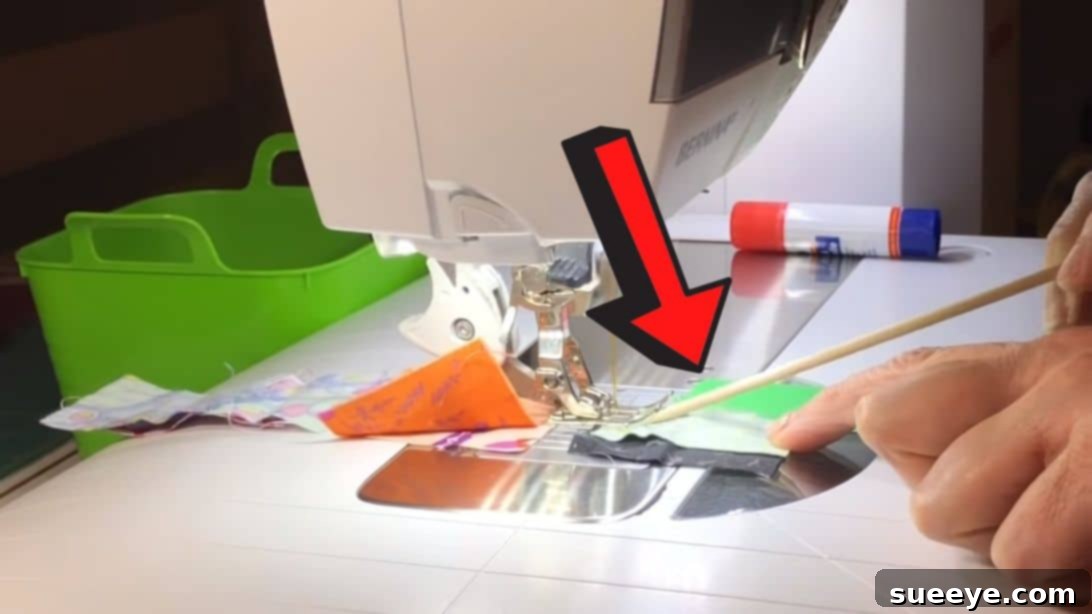
- **Temporary Seam Guide:** For perfect straight lines, especially when your sewing machine lacks clear guides or you need an unusual seam allowance, run a strip of masking tape along your needle plate at the desired distance from your needle. This provides a raised edge to guide your fabric, ensuring consistent seam allowances.
- **Marking Quilting Lines:** When planning straight-line quilting or cross-hatching, masking tape can be used to temporarily mark lines directly on your fabric. It’s easier to adjust than chalk and won’t leave marks.
- **Stabilizing Delicate Fabrics:** For very slippery or delicate fabrics, use masking tape to secure edges together before stitching, or to hold down finicky trim.
- **Holding Pattern Pieces:** While not a substitute for pins on fabric, masking tape can secure pattern pieces to your cutting mat or table, especially when you need to make slight adjustments or hold larger paper patterns in place.
- **Machine Cleaning Aid:** As mentioned in conjunction with flannel tablecloths, masking tape is excellent for temporarily affixing things, but it also has a role in cleaning. A small piece can dab up lint from hard-to-reach crevices on your machine.
Its affordability and versatility make dollar store masking tape an indispensable item in your sewing toolbox.
7. Makeup Brushes or Paint Brushes: Your Sewing Machine’s Best Friend
A clean sewing machine is a happy and efficient sewing machine. Lint, dust, and tiny thread fibers can accumulate in various nooks and crannies, especially around the bobbin case, feed dogs, and tension discs, leading to skipped stitches, tension issues, and general machine sluggishness. While most machines come with a small brush, these can often be too stiff or large for intricate cleaning. This is where dollar store makeup brushes (the soft, fluffy kind) or small paint brushes become invaluable. Their soft bristles and compact size allow you to gently sweep away lint and dust from delicate areas without pushing debris further into the machine or scratching surfaces. Use a clean, dry brush regularly to maintain your machine’s optimal performance. A dedicated dollar store brush for machine cleaning is a small investment that will significantly extend the life and improve the performance of your sewing machine, saving you costly repairs down the line.
8. Cuticle Sticks or Bamboo Skewers: Precision Tools for Small Pieces
Working with very small fabric pieces, such as those often found in miniature quilting or intricate appliqué, can be a test of patience. Holding these tiny components securely while guiding them under the sewing machine needle without your fingers getting too close to the needle can be tricky and even a bit risky. Dollar store cuticle sticks (the wooden kind) or bamboo skewers are perfect, inexpensive solutions for this challenge. Their fine, pointed tips allow you to precisely maneuver small fabric pieces, hold seams open, or guide fabric edges under the presser foot with accuracy and safety. They provide a safe distance between your fingers and the needle, reducing the risk of accidental injury. You can also use them to push out crisp corners after turning a project right side out. Keep a few of these handy tools near your machine, and you’ll find them indispensable for achieving professional results on even the smallest, most delicate sewing tasks.
9. Flexible Chopping Mats: Your Versatile Template Plastic
Creating multiple identical blocks for a quilt often requires numerous templates. While specialty template plastic can be expensive, dollar store flexible chopping mats offer a fantastic, durable, and economical alternative. These thin plastic mats are typically used in the kitchen for cutting food, but their sturdy yet pliable nature makes them ideal for sewing templates. They are easy to cut with scissors or a rotary cutter, hold their shape well, and can withstand repeated use without degradation. When you need to cut 100 or more blocks of the same shape and size, durable templates are essential for speed and accuracy. Simply draw your desired shape onto the chopping mat with a permanent marker, cut it out, and you have a robust template ready for chain piecing or batch cutting. This hack allows you to create custom templates for any project without the premium cost, significantly quickening your job and ensuring consistency across all your blocks.
The beauty of using flexible chopping mats as templates extends beyond just quilt blocks. They can be used for appliqué shapes, bag patterns, or any repetitive cutting task. Their translucent quality can also be beneficial, allowing you to align patterns or fabric motifs underneath. For even more stability, you can layer two mats together for a thicker, more rigid template if your project requires it. The ability to create durable, custom templates on a dime empowers you to tackle complex projects with confidence, knowing your cuts will be precise and your workflow efficient. This budget-friendly solution eliminates the need to buy pre-made templates for every unique design, offering unparalleled freedom and savings to the creative sewer.
10. First Aid Tape: The Simple Non-Slip Ruler Solution
Many specialty rulers, essential for accurate cutting in quilting, are made from smooth plexiglass. While durable, this smoothness often leads to a common frustration: the ruler slipping on your fabric as you try to make a precise cut. This can result in inaccurate pieces, frayed edges, and wasted fabric. Fortunately, a roll of first aid tape from the dollar store provides an incredibly effective and budget-friendly solution. Unlike regular adhesive tape, first aid tape, particularly the cloth-like medical tape, has a slightly textured surface and a gentle adhesive that provides just enough grip without leaving sticky residue on your rulers or fabric. Simply cut a few small strips of the tape and apply them to the underside of your ruler, strategically placed near the edges or corners. The tape creates a subtle friction, giving your ruler a much-needed bit of grip against the fabric, preventing it from sliding during cutting. This simple addition will dramatically improve your cutting accuracy and confidence, saving you from frustrating mishaps and ensuring your quilt pieces are perfectly sized every time.
This clever hack eliminates the need for expensive non-slip grip dots or specialty non-slip rulers. It’s easily replaceable when the grip wears down, and a single roll of dollar store first aid tape will last through countless ruler modifications. This method is particularly useful for new quilters who are still developing their cutting technique, offering an added layer of stability and control. Embrace this simple yet powerful tip to elevate your cutting precision and make your quilting projects smoother and more enjoyable.
There you have it—ten brilliant, budget-friendly sewing and quilting hacks straight from the dollar store! These clever ideas prove that you don’t need to invest in expensive specialty tools to create beautiful, precise, and professional-looking projects. From organizing your fabric stash with extra large zipper bags to ensuring precise cuts with first aid tape-modified rulers, each tip offers a practical solution to common sewing challenges.
By incorporating these simple hacks into your routine, you’ll find your sewing process becoming easier, more efficient, and significantly more enjoyable. You’ll save money, reduce clutter, and gain confidence in tackling a wider range of projects. So next time you’re at the dollar store, remember to look beyond the obvious and imagine how these everyday items can be repurposed to enhance your creative endeavors. Happy sewing, and happy saving!