
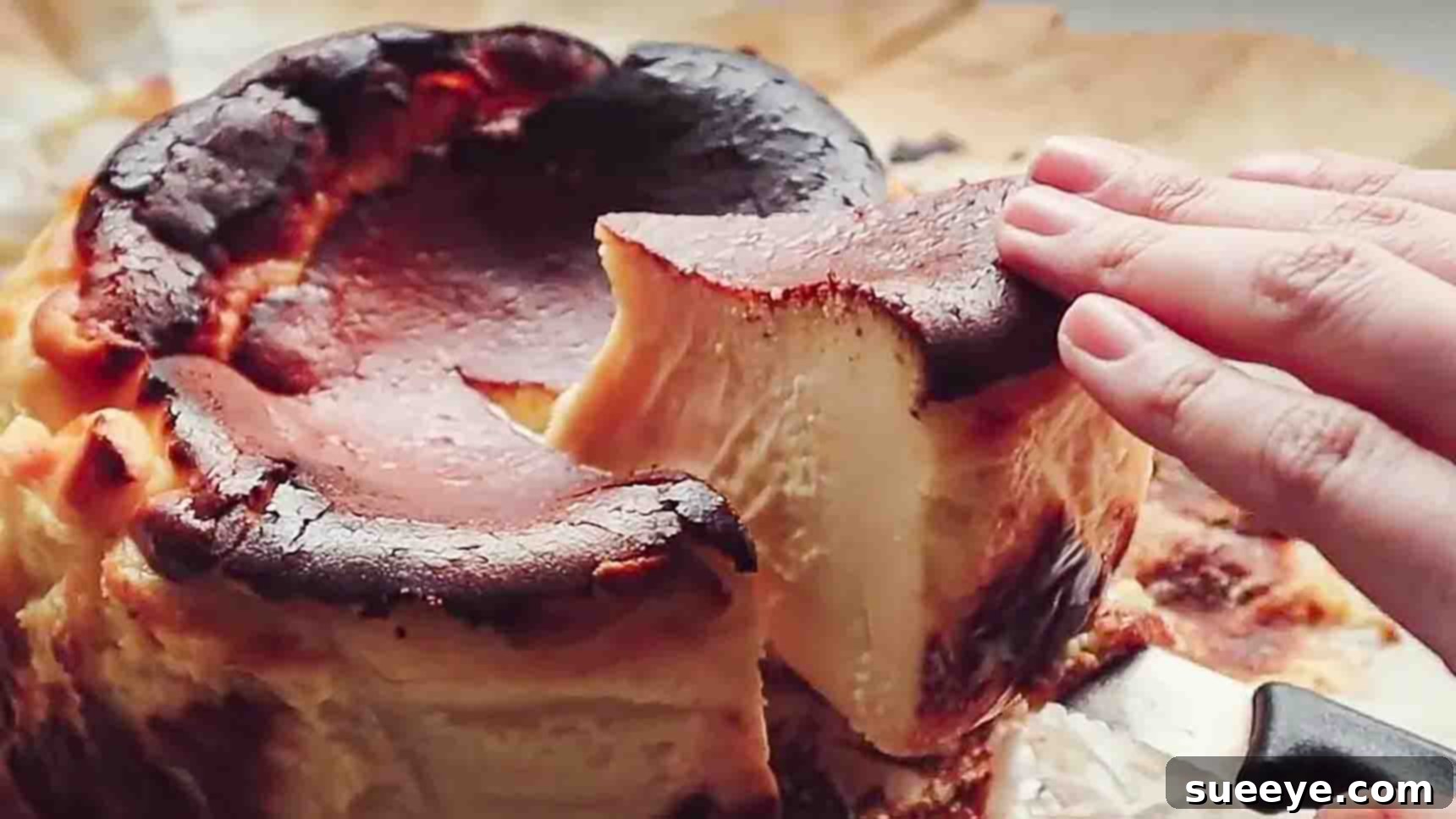
Embark on a culinary adventure to San Sebastian with this extraordinary Basque Burnt Cheesecake recipe, inspired by the viral sensation from Buttermilk Pantry on YouTube. Forget everything you thought you knew about cheesecake; this dessert redefines perfection with its striking deep bronzed, almost charred top, giving way to an incredibly jiggly, soft, and impossibly creamy interior. It’s a dessert that looks sophisticated yet is surprisingly simple to create, requiring just a handful of common ingredients. Prepare to captivate your taste buds and impress your guests with this mouthwatering pastry treat that demands attention. Don’t be intimidated by its rustic, “burnt” appearance – that’s precisely its charm and what sets it apart. This recipe proves that exceptional desserts don’t have to be complicated, making it perfect for both novice bakers and seasoned pros alike.
What is Basque Burnt Cheesecake? A Brief History
The Basque Burnt Cheesecake, or Tarta de Queso La Viña as it’s known in its birthplace, hails from the iconic La Viña restaurant in San Sebastian, Spain. Unlike its New York-style cousin, this cheesecake proudly breaks all traditional rules. There’s no crust to contend with, no fussy water bath, and certainly no need for a perfectly smooth, unblemished surface. Instead, its beauty lies in its deliberate imperfections. Baked at an unusually high temperature, the surface caramelizes rapidly, creating that signature dark, almost blackened crust. This intense heat is key to achieving its unique flavor profile – a bittersweet caramel note beautifully complementing the rich, tangy cream cheese filling.
The interior, however, is a different story. It remains lusciously soft, custardy, and even a bit wobbly in the center, offering a delightful textural contrast to the firmer, caramelized exterior. This stark difference in texture and flavor has propelled the Basque Burnt Cheesecake into global stardom, making it a beloved dessert in bakeries and homes worldwide. It’s a testament to how simple ingredients, when handled with a dash of daring, can result in something truly unforgettable.
Why This Recipe is Your Ultimate Easy Cheesecake Solution
Many cheesecakes demand precision and patience, often requiring complex steps like a water bath to prevent cracks or carefully folding ingredients to maintain aeration. This Basque Burnt Cheesecake recipe, however, is wonderfully forgiving. It embraces a rustic aesthetic, meaning minor cracks or an uneven top are not flaws but badges of honor, contributing to its authentic charm. With only seven core ingredients, readily available in most grocery stores, and a straightforward mixing and baking process, it’s designed for maximum flavor with minimal fuss.
The simplicity of this recipe makes it an ideal choice for busy weeknights, last-minute gatherings, or when you simply crave a luxurious dessert without the stress. The high baking temperature not only creates the iconic burnt top but also significantly reduces baking time compared to traditional cheesecakes. The resulting flavor is a harmonious blend of creamy richness, delicate tang, and a subtle bittersweet caramelization that will leave everyone asking for more. Once you master this recipe, it will undoubtedly become a go-to in your baking repertoire.
Ingredients for the Perfect Basque Burnt Cheesecake:
- 1 & 3/4 cups (430g) cream cheese, room temperature
- 1 cup (120g) caster sugar (also known as superfine sugar)
- 3 large eggs, room temperature
- 1 cup (270g) heavy or thick cream (at least 35% fat)
- 1/4 cup (20g) cake flour
- 1 tsp vanilla extract
- 1 tsp lemon juice
Ingredient Insights: The quality and temperature of your ingredients are crucial for the best results. Using full-fat cream cheese is essential for that signature rich, creamy texture. Ensuring your cream cheese and eggs are at room temperature before you begin mixing is vital; this allows them to combine smoothly and evenly, preventing lumps and ensuring a homogenous batter. Caster sugar dissolves more readily, contributing to a smooth texture, while cake flour provides just enough structure without making the cheesecake dense. Heavy cream adds unparalleled richness, and the touch of vanilla and lemon juice brightens the flavors, balancing the richness of the cream cheese.
Essential Equipment for Baking:
- 6-inch round baking tin (springform or regular cake pan)
- Parchment paper
- Stand mixer with paddle attachment or a hand mixer
- Large mixing bowls
- Whisk or spatula
- Measuring cups and spoons
Directions: Your Step-by-Step Guide to Cheesecake Perfection:
Step 1: Preparing the Pan and Cream Cheese Base
Begin by preheating your oven to a scorching 475 degrees F (245 degrees C). This high heat is crucial for achieving the characteristic “burnt” top. Next, take your 6-inch round baking tin. Line it with two layers of parchment paper, making sure the paper extends well above the rim of the pan. Don’t worry about making it perfectly smooth; scrunching the parchment paper first then fitting it into the tin creates a beautifully rustic, crinkled edge that’s part of the Basque cheesecake’s charm. This also prevents sticking and makes removal much easier.
In a large mixing bowl, preferably in a stand mixer fitted with a paddle attachment, combine the room temperature 1 & 3/4 cups (430g) cream cheese and 1 cup (120g) caster sugar. Beat these ingredients on medium speed until the mixture is incredibly smooth and creamy, with no visible lumps. This step is fundamental for a velvety cheesecake texture. Once smooth, begin adding the 3 large room temperature eggs, one at a time, allowing each egg to fully incorporate into the mixture before adding the next. This prevents the batter from separating and ensures a consistent emulsion. Finish by incorporating 1 tsp of vanilla extract and 1 tsp of fresh lemon juice, which will enhance the flavors and provide a subtle tang to cut through the richness.
Step 2: Incorporating Cream and Flour, and Baking to Perfection
In a separate mixing jug or bowl, combine the 1/4 cup (20g) cake flour with about half of the 1 cup (270g) heavy cream. Whisk vigorously until no lumps of flour remain. Gradually add the remaining heavy cream, continuing to whisk until completely smooth. This method helps to prevent any flour lumps from forming in your final batter, ensuring a silky-smooth cheesecake.
Gently pour the heavy cream and flour mixture into the cream cheese batter. Continue mixing on low speed, or fold by hand with a spatula, just until everything is combined and the batter is uniform. Be careful not to overmix at this stage, as incorporating too much air can lead to a less dense and creamy texture. Once perfectly blended, carefully pour the smooth batter into your prepared baking tin, ensuring it fills the parchment-lined pan evenly.
Transfer the baking tin to your preheated oven and bake for approximately 35 minutes. The baking time can vary slightly depending on your oven, so keep a close eye on it. You’re looking for a deep bronze, almost charred color on the top, while the center should still be noticeably wobbly when gently shaken. This “burnt” exterior is the hallmark of a true Basque cheesecake, providing a delectable caramelized flavor and a wonderful contrast to the creamy interior. Once baked, remove the cheesecake from the oven. Resist the urge to cut into it immediately. Allow it to cool completely at room temperature, which can take several hours. As it cools, the cheesecake will continue to set. For the best texture and flavor, refrigerate it for at least 4-6 hours, or preferably overnight, before serving. This chilling period is crucial for the cheesecake to firm up to its ideal custardy consistency.
Tips for a Flawless Basque Burnt Cheesecake:
- Room Temperature Ingredients are Non-Negotiable: This cannot be stressed enough. Cold ingredients don’t emulsify well, leading to a lumpy batter and potentially a grainy texture in the final product.
- Don’t Overmix: While you want a smooth batter, avoid over-whipping, especially after adding eggs and flour. Too much air can lead to a cakey texture rather than the desired creamy, dense custard.
- Embrace the “Burnt”: The dark, caramelized top is not a mistake; it’s the defining characteristic. Don’t pull it out of the oven too early if it looks very dark. Trust the process!
- Cooling is Key: Patience during the cooling and chilling phase is paramount. The cheesecake sets as it cools. Rushing this step will result in a runny, unstable dessert.
- Parchment Paper Magic: Don’t skimp on the parchment paper or try to make it perfectly smooth. The overhang helps create that rustic look and prevents overflow, while the crinkles add to the charm.
- Know Your Oven: Ovens vary. If your oven tends to run hot or cold, adjust the baking time accordingly. A good oven thermometer can be a baker’s best friend.
Troubleshooting Common Basque Burnt Cheesecake Issues:
- Cheesecake is Too Runny: This usually means it’s underbaked or hasn’t been chilled long enough. Ensure the center is wobbly, not liquid, before removing it from the oven, and always chill for at least 4-6 hours.
- Top Isn’t “Burnt” Enough: Your oven might not be hot enough, or you might have removed it too early. Don’t be afraid of the high temperature; it’s what creates the signature caramelized crust.
- Minor Cracks: While not common with Basque cheesecake, deep cracks usually indicate overbaking. Keep an eye on the wobble in the center as your indicator for doneness.
Creative Variations to Elevate Your Cheesecake:
While the classic Basque Burnt Cheesecake is perfect on its own, there are many ways to customize it:
- Chocolate Basque Burnt Cheesecake: Sift in 1/4 cup unsweetened cocoa powder with the cake flour for a rich, chocolatey twist.
- Coffee or Matcha Infusion: Add 1-2 tablespoons of instant espresso powder dissolved in a tiny bit of hot water, or 1 tablespoon of matcha powder, to the cream cheese mixture.
- Citrus Zest: Incorporate the zest of an orange, lime, or extra lemon into the cream cheese batter for a brighter flavor profile.
- Spice It Up: A pinch of cinnamon, cardamom, or even a touch of nutmeg can add warmth and complexity.
Serving and Storage Suggestions:
Once fully chilled, remove the cheesecake from the tin and peel away the parchment paper. For the best experience, allow the cheesecake to sit at room temperature for about 15-30 minutes before serving. This allows the creamy interior to soften slightly and become even more luscious.
Serve slices plain to appreciate its unique flavor, or enhance it with simple accompaniments:
- Fresh berries (strawberries, raspberries, blueberries)
- A drizzle of honey, caramel sauce, or chocolate sauce
- A dollop of freshly whipped cream
- A dusting of powdered sugar (if you prefer a less rustic look)
Store any leftover Basque Burnt Cheesecake in an airtight container in the refrigerator for up to 3-4 days. While it’s best enjoyed fresh, the flavors can sometimes deepen beautifully overnight.
Easy Basque Burnt Cheesecake Recipe
This recipe from Buttermilk Pantry truly delivers an ultimate cheesecake experience that stands out from the crowd. Its deeply bronzed top and divinely jiggly, soft interior create a dessert that is both visually stunning and incredibly delicious. The beauty of the Basque Burnt Cheesecake lies in its effortless elegance and the fact that it requires minimal ingredients and a simple process, making it accessible to every home baker. We encourage you to try this recipe, trust the “burnt” process, and savor every creamy, caramelized bite. It’s more than just a cheesecake; it’s a revelation that will transform your dessert expectations and become a cherished recipe in your kitchen. Happy baking!