
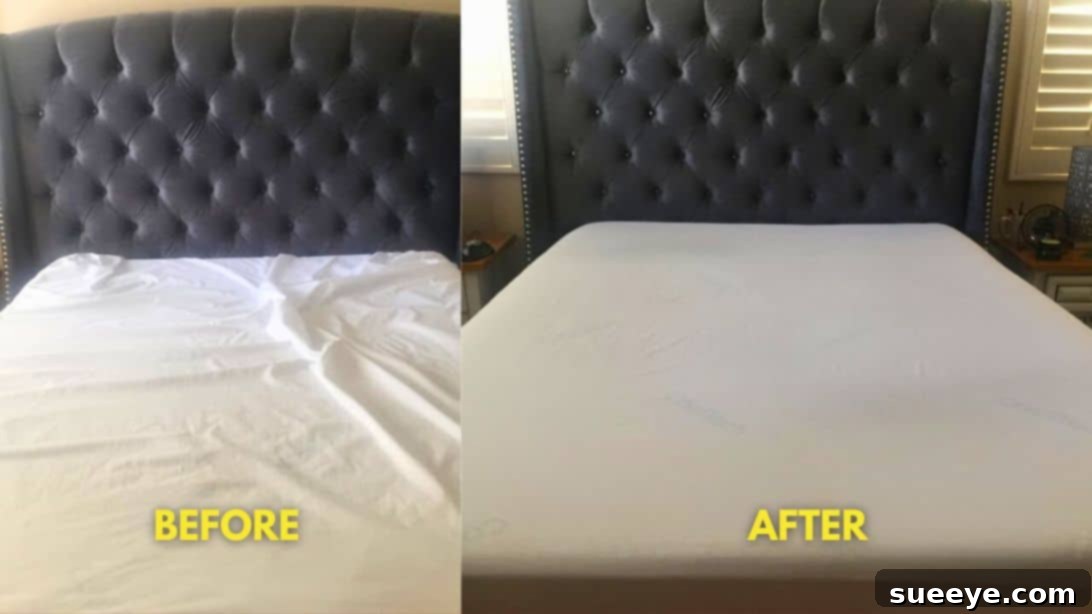
Ultimate Guide to Fixing Loose Fitted Bed Sheets: Reclaim Your Perfect Sleep
There are few things more frustrating than settling into bed, only to have your fitted sheet slip off the corners of your mattress. The nightly battle against bunching, sliding sheets can disrupt your sleep, dampen your mood, and leave your bed looking less than pristine. If you’re tired of constantly re-tucking or waking up tangled in a loose sheet, you’re in the right place.
This comprehensive guide will equip you with practical solutions to tackle the common problem of loose fitted bed sheets. We’ll explore why sheets come loose, how to prevent it, and most importantly, how to implement a clever DIY fix that will keep your sheets perfectly snug. We were inspired by clever hacks, like the one shared by Skillfully yours Maris on YouTube, which simplifies the process of making your old sheets feel like new.
Why Do Your Fitted Bed Sheets Keep Coming Loose?
Understanding the root cause is the first step to finding a lasting solution. Loose fitted sheets aren’t always a sign of poor quality; often, it comes down to a few common culprits:
1. Incorrect Bed Sheet Size
This is perhaps the most common reason for sheets that just won’t stay put. It’s not just about the length and width of your mattress, but also its depth. If your sheets are:
- Too Small: They won’t have enough fabric to properly wrap around the corners and tuck underneath the mattress, leading to them pulling up easily.
- Too Big: While seemingly counterintuitive, oversized sheets can also slip. If there’s too much slack, the elastic doesn’t have enough tension to grip the mattress firmly, allowing the sheet to move and bunch.
Mattress sizes vary, and so do their depths. Standard mattresses are typically 7-9 inches deep, but many modern mattresses, especially pillow-top or memory foam varieties, can be anywhere from 10 to 18 inches, or even deeper. Always check the “pocket depth” of your sheets to ensure it matches or slightly exceeds your mattress depth.
2. Worn-Out or Stretched Elastic
With repeated use and washing, the elastic sewn into the perimeter of your fitted sheets can lose its stretch and resilience. Over time, it simply can’t hold the fabric taut against the mattress anymore. This is a natural wear-and-tear process, but it doesn’t necessarily mean your sheets are destined for the landfill.
3. Mattress Toppers and Pads
If you’ve added a plush mattress topper or a thick mattress pad, you’ve effectively increased the overall depth of your mattress. This can make your existing sheets, which once fit perfectly, now too shallow to securely grip the new combined depth.
4. Active Sleepers and Bed Movement
Some people simply toss and turn more than others throughout the night. Even with perfectly fitting sheets, significant movement can sometimes work the corners loose. While this is harder to prevent entirely, a securely fitted sheet will stand up better to even the most active sleepers.
The Impact of Loose Sheets on Your Sleep and Comfort
Beyond the minor annoyance, perpetually loose bed sheets can genuinely detract from your sleep quality and overall bedroom comfort. Imagine:
- Disrupted Sleep: Waking up in the middle of the night to re-tuck a corner, or feeling a bunched-up sheet underneath you, can interrupt your sleep cycle and prevent you from reaching deeper, more restorative stages of sleep.
- Uncomfortable Sleep Environment: Loose sheets create wrinkles and bumps, which can be irritating against your skin and make it difficult to find a comfortable sleeping position.
- Decreased Aesthetic Appeal: A beautifully made bed is inviting. Loose, sagging sheets ruin the crisp, tidy look of your bed, making your bedroom feel less organized and peaceful.
- Faster Wear and Tear: When sheets are constantly slipping, they are also rubbing and stretching in unnatural ways, which can accelerate wear and tear on the fabric itself, shortening the lifespan of your linens.
Before You Buy: The Critical Importance of Accurate Mattress Measurements
To avoid the problem of ill-fitting sheets from the outset, always measure your mattress before purchasing new linen. This simple step can save you countless headaches and wasted money.
How to Measure Your Mattress:
- Width: Measure from one side seam to the opposite side seam.
- Length: Measure from the top edge to the bottom edge.
- Depth (or Height): This is the most crucial measurement for fitted sheets. Measure from the very bottom edge of the mattress to the very top, including any pillow-top layers. If you use a mattress topper or pad, measure with it on the bed to get the combined depth.
When shopping for sheets, look for the “pocket depth” specification, usually found on the packaging. Choose sheets with a pocket depth that is at least 2-3 inches greater than your mattress’s actual depth. For example, if your mattress is 14 inches deep, look for sheets labeled “deep pocket” with a depth of 16-18 inches or more. This extra allowance ensures the sheet can fully wrap around and tuck under the mattress for a secure grip.
RELATED: A Simple Trick For Putting on a Fitted Bedsheet
DIY Solution: How to Permanently Tighten Loose Fitted Bed Sheets
If you already own sheets with tired elastic, or perhaps they were always a bit too generous in size, you don’t necessarily need to buy new ones. A simple, cost-effective DIY fix can extend the life of your existing sheets and restore their snug fit. This method involves sewing additional elastic to the corners, providing that much-needed extra tension.
What You Need to Tighten Loose Bed Sheets:
Gathering your materials before you begin will make the process smooth and efficient. You likely have many of these items around your house already!
- Elastic: Approximately 1 yard of 1/2-inch or 1-inch wide braided or woven elastic. Braided elastic holds its shape well.
- Measuring Tape: For accurate measurements of your sheet and elastic.
- Fabric Scissors: Sharp scissors are essential for clean cuts.
- Sewing Machine (or Needle and Thread): A sewing machine will make this project quick and durable, but it can absolutely be done by hand with a sturdy needle and strong thread if you prefer.
- Fabric Chalk or Marker: To mark your sheet for precise placement.
- Safety Pins (Optional but Recommended): To temporarily hold the elastic in place before sewing.
- Matching Thread: To blend seamlessly with your sheets, or a contrasting color if you prefer a decorative touch.
Step-by-Step Guide: How to Tighten a Loose Bed Sheet
Follow these instructions carefully to reinforce your fitted sheets and achieve a lasting, snug fit:
Step 1: Prepare Your Elastic Segments
Start by cutting your elastic. You will need four pieces, one for each corner of your fitted sheet. Each piece should be approximately 12 inches (about 30 cm) long. This length provides enough tension to pull the corner snugly without making the sheet too difficult to put on.
Step 2: Mark the Corners for Precision
Lay your fitted sheet flat on a large surface, such as a bed or a clean floor, with the underside facing up. Identify one of the corners. Gently stretch the corner fabric slightly to ensure it’s flat. Using your measuring tape, measure 12 inches along the long side of the sheet, starting from the corner seam, and make a small mark with your fabric chalk. Repeat this process on the short side of the same corner, measuring 12 inches from the corner seam and marking.
Step 3: Position the Elastic Diagonally
Take one of your 12-inch elastic pieces. Align one end of the elastic with the mark you made on the long side of the sheet. Then, stretch the elastic across the corner diagonally towards the second mark you made on the short side of the sheet. The elastic should form a diagonal line across the corner, connecting your two marks. You can use a safety pin to hold the elastic in place temporarily at each mark, ensuring it’s taut but not overstretched before you sew.
Step 4: Secure the Elastic with Your Sewing Machine
Now, it’s time to sew the elastic into place. It’s crucial to sew this on the underside of the bed sheet, directly along the marks you’ve made. For best results and durability:
- Place one end of the elastic under your sewing machine foot, aligned with the first mark.
- Begin with a few backstitches to secure the start of your seam.
- As you sew, gently stretch the elastic taut. This is key to creating the gathering effect that will tighten your sheet. Sew with a zigzag stitch, as this type of stitch allows the elastic to stretch without breaking the thread.
- Sew all the way to the second mark, maintaining tension on the elastic.
- Finish with a few backstitches at the end to lock the seam.
Double stitching – going over the seam a second time – will add extra strength and ensure the elastic stays firmly in place through many washes.
Step 5: Repeat for All Corners
To ensure an even and secure fit across your entire mattress, repeat steps 1 through 4 for all remaining three corners of your fitted bed sheet. Consistency in measurement and sewing technique will yield the best results.
Step 6: The Fit Test & Adjustments
Once all four pieces of elastic are sewn into place, it’s time to test your newly improved fitted sheet! Place it on your mattress. It should now have a noticeably tighter and more secure fit. If, after placing it on the bed, you find that a corner or two are still a bit loose, don’t worry. You can either shorten the existing elastic pieces slightly (unpick a small section, pull it tighter, and re-sew) or, for maximum tension, consider adding another shorter piece of elastic directly across the corner seam, perpendicular to the one you just sewed. However, for most sheets, the single diagonal elastic per corner is usually sufficient.
You might also like: How to Fold a Bed Sheet in 12 Seconds
Alternative Solutions and Preventative Measures
While the DIY elastic fix is highly effective, here are a few other strategies to keep your sheets in place:
1. Fitted Sheet Straps or Suspenders
These are commercial products designed specifically to hold fitted sheets taut. They typically consist of elastic straps with clips that attach to the corners or sides of the sheet, pulling them underneath the mattress. They are an excellent no-sew option for those who prefer not to DIY.
2. DIY Sheet Suspenders
If you’re handy, you can make your own sheet suspenders using elastic, small clips (like garter clips or suspender clips), and buckles. This allows for customization of length and tension.
3. Sew a Full Casing for New Elastic
For a more involved project, you can remove the old, stretched-out elastic entirely and sew a new casing around the entire perimeter of the sheet. Then, thread new, strong elastic through the casing. This provides a complete elastic replacement and will make your sheet feel truly brand new.
Tips for Maintaining Your Fitted Sheets
Proper care can significantly extend the life of your fitted sheets and their elastic:
- Wash in Cold Water: Hot water can degrade elastic fibers more quickly.
- Tumble Dry Low or Air Dry: High heat is also detrimental to elastic. If possible, air dry or use the lowest heat setting on your dryer.
- Don’t Over-Stuff the Washer/Dryer: Give sheets plenty of room to move for a thorough clean and even drying, which reduces stress on the fabric and elastic.
- Rotate Your Sheets: Having multiple sets of sheets and rotating them regularly means each set gets less frequent use and washing, preserving their integrity.
- Fold Properly: Learning how to fold a fitted sheet neatly not only saves space but also reduces unnecessary stretching and tugging of the elastic.
When to Consider New Sheets
While DIY fixes are fantastic for extending the life of your sheets, there comes a time when replacement is the best option. Consider purchasing new sheets if:
- The fabric itself is worn thin, pilling, or tearing.
- The sheets are stained beyond repair.
- Despite all efforts, you simply can’t achieve a comfortable fit.
- You’re looking for an upgrade in material or style.
Enjoy a Perfectly Made Bed and Undisturbed Sleep!
No more struggling with loose, unruly fitted sheets! By understanding the causes and applying these practical solutions, especially the simple yet effective DIY elastic reinforcement, you can transform your sleeping experience. A perfectly snug fitted sheet contributes significantly to a more comfortable, aesthetically pleasing, and restful night’s sleep. Take control of your bedding and enjoy the peace of mind that comes with a beautifully made, secure bed every single night.