
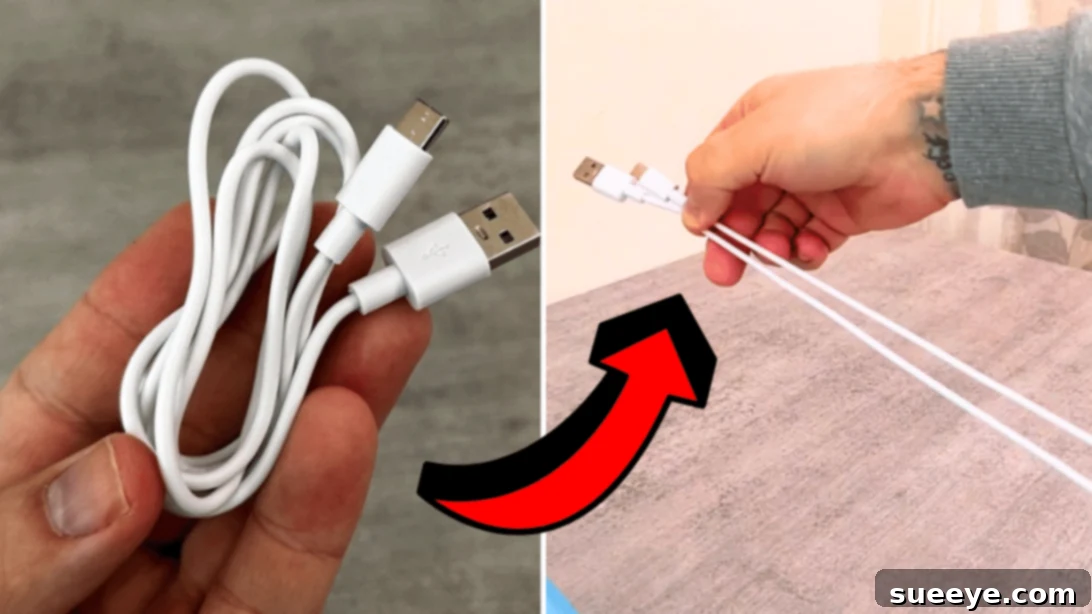
Effortlessly Straighten Kinked & Twisted Cables with This Simple Hot Water Hack
Are you tired of dealing with unruly, tangled, and permanently bent cables? Whether it’s a new charging cord fresh out of its packaging or an old power cable that’s developed stubborn kinks over time, these twists and folds can be incredibly frustrating. Not only do they create visual clutter, making your workspace or entertainment area look messy, but they can also lead to more significant problems. Constant bending and twisting can stress the internal wires, compromising their integrity and potentially leading to intermittent connections, reduced functionality, or even complete failure. Before you resign yourself to buying new cables or enduring the annoyance, there’s a surprisingly simple and effective DIY solution that can restore your cables to their original, smooth condition in a matter of minutes.
This clever technique leverages the power of hot water to gently relax the protective rubber or plastic coating of your cables, allowing them to straighten out with minimal effort. Forget about harsh chemicals, complex tools, or expensive gadgets – all you need are a few common household items and a few minutes of your time. This method is not only cost-effective but also remarkably safe, provided you follow the crucial safety guidelines. Ready to transform your collection of kinky cords into perfectly straight, manageable cables? Read on to learn this ingenious hack, inspired by the practical tips from Smart Fox on YouTube.
The Annoyance of Twisted Cables: Why Straightening Matters
From smartphone chargers to laptop power cords, HDMI cables, and even extension leads, nearly every electronic device comes with a cable that, over time, seems to develop a mind of its own. When cables are new, they often come neatly folded or coiled for efficient packaging and portability. However, this initial folding, combined with daily use, storage, and natural wear and tear, can cause the cable’s protective jacket to “remember” these twisted positions. The result is a cable that stubbornly retains its kinks, no matter how many times you try to manually straighten it.
Beyond the aesthetic nuisance, these persistent twists and bends pose several practical problems:
- Reduced Lifespan: Constant stress on the insulation and internal wires can lead to fraying, cracking, and eventual breakage, shortening the cable’s useful life.
- Compromised Performance: Damaged internal wires can lead to inconsistent power delivery, slower data transfer, or poor signal quality.
- Safety Hazards: Exposed wires due to damaged insulation present a risk of electric shock, short circuits, or even fire.
- Tangled Mess: Kinked cables are prone to tangling with each other, creating a chaotic environment and making setup or pack-up a frustrating ordeal.
- Difficult Storage: Properly coiling a kinky cable is virtually impossible, leading to messy drawers and bags.
Addressing these issues by straightening your cables not only improves their appearance but also enhances their functionality and extends their longevity, making this simple hack a worthwhile endeavor for any tech user.
RELATED: 5 Best Ways to Hide Wires and Cords for a Tidy Space
Safety First: Essential Precautions Before You Begin
While this hot water method is incredibly effective and straightforward, prioritizing safety is paramount. You will be working with hot water and electrical cables, so understanding and adhering to a few critical precautions will ensure a risk-free experience.
- Inspect Your Cable Thoroughly: Before you even think about heating water, meticulously examine the entire length of your cable. Look for any cuts, nicks, holes, exposed wires, or signs of fraying in the protective rubber or plastic coating. If you discover any damage whatsoever, do not proceed with this method. Submerging a damaged cable, especially an electrical one, in water creates a significant risk of electric shock and can permanently destroy the cable. This hack is strictly for cables with intact insulation.
- Keep Plugs and Connectors Dry: This is arguably the most crucial rule. The heated water should only ever come into contact with the rubber-coated body of the cable, never the plug ends or connectors. These components contain sensitive electronics and metal contacts that are not designed to be submerged in water. Exposing them to water will almost certainly lead to irreversible damage and could pose a shock hazard. Hold the cable securely by both ends, ensuring they remain well above the waterline throughout the process.
- Control Water Temperature: The recommended temperature range is 60-80 degrees Celsius (140-176 degrees Fahrenheit). Water that is too cold will not effectively soften the cable’s jacket, rendering the process ineffective. Conversely, water that is boiling or excessively hot (above 80°C) can potentially melt, deform, or permanently damage the cable’s insulation, making it brittle or sticky. Using a kitchen thermometer can help you achieve the ideal temperature, though careful monitoring of water simmering (not fully boiling) is usually sufficient.
- Use Appropriate Tools: A spoon or tongs are essential for safely submerging and manipulating the cable in hot water without risking burns to your fingers. Never use your bare hands to push the cable down.
- Work in a Safe Environment: Ensure your workspace is clear of other electronics, water-sensitive materials, and any potential tripping hazards. Have a clean, dry cloth ready for immediate drying of the cable.
- Unplug Everything: This should go without saying, but always ensure the cable is completely disconnected from any power source or device before beginning.
By diligently following these safety guidelines, you can confidently and effectively straighten your cables without any concerns.
The Science Behind the Smooth: Why Hot Water Works Wonders
At the heart of this simple hack lies a fundamental principle of material science, specifically concerning the properties of polymers – the long chains of molecules that make up plastics and rubber. Most cable jackets are made from materials like PVC (polyvinyl chloride) or various rubber compounds.
These polymeric materials possess a property known as “thermoelasticity.” This means their physical characteristics, such as flexibility and shape retention, are highly dependent on temperature. When a cable is manufactured or subjected to repeated bending and coiling, the polymer chains within its jacket can get “stressed” or “set” into a particular configuration, giving the cable its stubborn kinks.
When you immerse the cable in hot water (within the specified temperature range of 60-80°C):
- Softening the Polymer: The heat energy causes the polymer chains to become more energetic and move more freely. This effectively softens the material, reducing its rigidity and allowing the stressed sections to relax.
- Releasing “Memory”: The softened material loses its “memory” of the bent or twisted shape. This is akin to resetting the material’s structural integrity.
- Malleability: While the material is warm and soft, it becomes highly pliable, allowing you to gently manipulate it back into a straight form.
- Setting the New Shape: As the cable cools down, the polymer chains settle into their new, straightened configuration, and the material regains its rigidity, effectively “setting” the cable in its desired straight form.
It’s a chemical-free, physical process that temporarily alters the material properties to allow for reshaping, making it an incredibly effective and safe method for restoring your cables.
Materials You’ll Need for This Cable Transformation:
Gathering your materials beforehand ensures a smooth and uninterrupted process. Luckily, everything you need is likely already in your home.
- Bowl, Tray, or Container: Choose a heat-resistant vessel made of ceramic, glass, or sturdy plastic. It must be large enough to comfortably submerge the entire length of the cable body you intend to straighten, without letting the plugs touch the water. A baking tray or a large mixing bowl often works perfectly.
- Spoon (or Tongs): A long-handled spoon or a pair of kitchen tongs will be indispensable for safely pressing the cable down into the hot water and retrieving it, protecting your hands from the heat.
- Cloth or Rag: A clean, absorbent cloth is vital for immediately and thoroughly drying the cable after it’s removed from the hot water. This prevents water spots and ensures no moisture remains near potential electrical components.
- Water: Tap water is perfectly fine.
- Heat Source: A kettle, stovetop, or microwave to heat the water.
- Kitchen Thermometer (Optional but Recommended): For precise temperature control, ensuring the water is within the optimal 60-80°C range.
Step-by-Step Guide: How to Straighten Cables Easily in Minutes
Follow these steps carefully to achieve perfectly straight cables:
Step 1: Prepare Your Hot Water Bath
The first crucial step is to heat your water to the ideal temperature. Aim for a temperature range between 60 to 80 degrees Celsius (approximately 140 to 176 degrees Fahrenheit). You can achieve this using an electric kettle, a pot on the stovetop, or even a microwave. Avoid boiling water vigorously, as excessively high temperatures can potentially damage certain cable materials. Once heated, carefully pour the hot water into your chosen heat-resistant container – be it a tray, bowl, or any other suitable vessel. Ensure the container is large enough to submerge the entire length of the cable’s body without requiring the plug ends to get wet.
Step 2: Inspect and Position Your Cable Safely
Before any contact with water, perform a final, thorough inspection of your cable for any signs of damage like cuts, frayed insulation, or exposed wires. If any damage is present, do not proceed. Assuming your cable is intact, hold it firmly by both ends. It is absolutely imperative that under no circumstances should the electrical plugs or connectors at the ends of the cable come into contact with the water. These parts are not water-resistant and will be damaged, potentially creating a serious electrical hazard. Maintain a firm grip, keeping the plugs well above the water line.
Step 3: Submerge and Heat the Cable Body
Carefully and slowly lower only the rubber or plastic-coated body of the cable into the hot water. Ensure that the entire kinked section is fully submerged. Once immersed, use your spoon or tongs to gently press the cable down, ensuring it remains beneath the water’s surface. This helps in achieving even heat distribution and allows the heat to penetrate the cable jacket uniformly. Let the cable remain submerged in the hot water for approximately 3 to 4 minutes. This duration allows the polymeric material of the cable’s jacket to soften and relax, releasing its “memory” of the twisted shape.
Step 4: Retrieve, Dry, and Gently Straighten
Once the 3 to 4 minutes have passed, carefully lift the cable out of the hot water using your spoon or by holding the dry ends. Immediately, and without delay, use a clean, dry, and absorbent cloth to thoroughly wipe down the entire length of the cable. Ensure all moisture is removed, paying extra attention to the areas near the plugs. While the cable’s protective rubber or plastic is still warm and pliable from the heat, gently smooth and straighten the cable with your fingers. Work along the entire length, coaxing out any remaining kinks or bends. The warmth makes the material cooperative, allowing you to easily reshape it. As the cable cools, it will retain its newly straightened form, providing you with a neat, unkinked cord.
Beyond Straightening: Benefits and Further Considerations
Successfully straightening your cables using this hot water method offers a multitude of benefits that extend beyond mere aesthetics:
- Enhanced Durability and Lifespan: By removing kinks, you significantly reduce the stress points along the cable. This prevents the internal wires from constantly bending and breaking, thereby extending the cable’s useful life and saving you money on replacements.
- Improved Safety: Kinked cables are more susceptible to insulation damage, which can expose live wires and create electrical hazards. A straight cable is less likely to suffer such damage, contributing to a safer environment.
- Better Organization and Aesthetics: Straight cables are inherently easier to manage. They coil neatly, fit better into cable organizers, and contribute to a much cleaner, more professional-looking workspace or home setup, reducing visual clutter.
- Consistent Performance: When internal wires are under less stress and insulation is intact, the cable is better able to deliver consistent power and data, ensuring your devices function optimally.
- Eco-Friendly Solution: Rather than discarding perfectly functional but kinky cables and contributing to electronic waste, this method provides a sustainable way to refresh and reuse your existing equipment.
Important Considerations and When to Avoid This Method:
While highly effective for many common cables, this method is not a universal solution for every type of cable or every situation. Keep the following in mind:
- Cable Type Matters: This technique works best on cables with a relatively thick, soft, plastic, or rubberized jacket, such as standard charging cables, power cords for appliances, and audio cables. It may not be suitable for very thin, delicate cables (like some ultra-thin HDMI or Ethernet cables), specialized data cables (e.g., fiber optic), or cables with complex integrated components along their length. Always exercise caution.
- Pre-existing Damage: As emphasized, if a cable already has any form of damage to its insulation, exposed wires, or severe structural integrity issues, this method is unsafe and should be avoided. Such cables should be replaced immediately.
- Overheating Risks: Ensure the water temperature is controlled. Boiling water or prolonged exposure to excessive heat can melt or degrade the cable’s jacket, making it sticky, brittle, or causing permanent damage. Stick to the 60-80°C range.
- Not for Internal Wiring: This method is exclusively for external cables. Never attempt to use it on internal wiring of appliances or devices.
Preventative Measures: Keeping Your Cables Kink-Free in the Future
Once you’ve successfully straightened your cables, the next step is to adopt habits that will keep them kink-free and extend their lifespan even further. Prevention is always better than cure:
- Master the “Over-Under” Coiling Technique: This professional audio engineer’s trick is the gold standard for coiling cables. Instead of just wrapping haphazardly, alternate between rotating your hand over and then under the cable as you coil it. This creates natural loops that don’t twist the internal wires, making them easier to uncoil without tangles or kinks. Many tutorials are available online.
- Utilize Cable Ties and Wraps: Invest in reusable Velcro ties, zip ties, or silicone cable wraps. Once a cable is neatly coiled, secure it with a tie. This prevents it from unraveling and developing new kinks during storage or transport.
- Proper Storage Solutions: Avoid stuffing cables into tight drawers or bags where they can get crushed and bent. Use cable management boxes, pouches, or dedicated compartments that allow cables to be stored loosely coiled or neatly tied.
- Avoid Sharp Bends: When routing cables around furniture or through cable organizers, always ensure they have gentle curves. Avoid forcing them into sharp 90-degree angles, as this puts immense stress on the jacket and internal wires.
- Don’t Pull Cables by the Cord: Always grasp the plug itself when disconnecting a cable from a device or outlet. Pulling the cord directly stresses the connection point, which is a common area for damage and kinks to start.
- Regular Maintenance: Periodically check your cables for any signs of wear and tear, and address minor kinks before they become permanent problems.
By implementing these simple preventative measures, you can significantly reduce the likelihood of your cables ever becoming a tangled, kinky mess again, ensuring they remain functional and aesthetically pleasing for years to come.
Your Cables, Transformed: A Simple Hack for Lasting Results
In conclusion, the frustration of twisted, unruly cables is a common problem in our increasingly connected world, often leading to visual clutter, performance issues, and premature cable replacement. However, as this guide demonstrates, you don’t need to live with these annoyances. With just a bowl of hot water and a few minutes of your time, you can effectively and safely restore your cables to their original straightness.
This hot water hack is a testament to how simple, science-backed solutions can make a significant difference in maintaining our electronic accessories. By understanding the thermoelastic properties of cable jackets and following crucial safety precautions, you can not only improve the aesthetics of your cables but also extend their lifespan, enhance their performance, and contribute to a safer, more organized living space.
So, the next time you encounter a stubborn, kinked cable, remember this clever trick. Give it a try, and marvel at how effortlessly your cables regain their sleek, straight form. Share this invaluable tip with friends and family, and help them transform their tangled tech lives too! For more ingenious DIY solutions and practical hacks, remember to visit and support channels like Smart Fox on YouTube, who continue to inspire us with their creativity and problem-solving skills.