
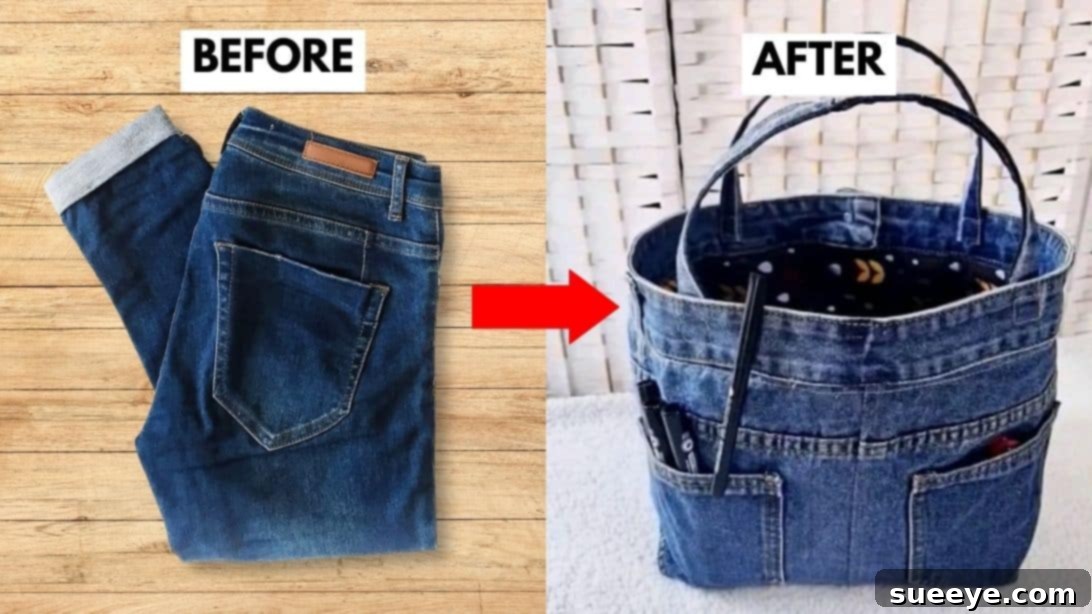
Do you have a forgotten pair of jeans or denim shorts tucked away at the back of your closet? Perhaps they no longer fit, or their style feels outdated. Before you even consider throwing them out, think again! Your old denim holds incredible potential for transformation. With a little creativity and some basic sewing skills, you can upcycle that denim into a stylish, durable, and unique bag. This project is not only a fantastic way to give new life to old garments but also a step towards more sustainable living. Inspired by the brilliant tutorial from Jejjsi Craft, this guide will walk you through the process of creating your very own custom denim bag, perfect for everyday use or as a chic accessory. Whether you’re a seasoned crafter or a beginner looking for a rewarding sewing project, this DIY is designed to be accessible and fun.
The beauty of using denim for this project lies in its inherent strength and versatility. Denim is a robust fabric known for its longevity, making it an excellent choice for a bag that will withstand daily wear and tear. Plus, every pair of jeans has a unique story, wash, and wear pattern, ensuring that your finished bag will be one-of-a-kind. While denim shorts provide a more modest amount of fabric, using an old pair of jeans will give you ample material, with potential leftovers for other exciting upcycling ventures. Imagine the satisfaction of carrying a bag that you crafted with your own hands, knowing that you’ve contributed to reducing textile waste and expressed your personal style. This project is more than just making a bag; it’s about embracing sustainability, creativity, and the joy of DIY.
Why Upcycle Denim: The Sustainable Choice for Fashion
Upcycling, the process of transforming discarded items into new products of higher quality or environmental value, is a powerful tool in combating textile waste. The fashion industry is a significant contributor to pollution and landfill overflow, with millions of tons of clothing discarded annually. Denim, in particular, has a substantial environmental footprint, from cotton cultivation to dyeing processes. By choosing to upcycle your old jeans, you are directly participating in the circular economy, reducing demand for new resources, and minimizing waste. This DIY denim bag project offers a practical and stylish way to extend the life cycle of your clothing, proving that ‘old’ can indeed become ‘new’ and wonderfully useful.
Beyond the environmental benefits, upcycling denim sparks creativity. Each faded patch, every subtle rip, and the unique wash of your old jeans tell a story that will be woven into your new bag. This individual character cannot be replicated by mass-produced items, making your handmade bag a true statement piece. It’s an opportunity to experiment with different denim shades, textures, and even incorporate elements like existing pockets, belt loops, or distressed areas into the bag’s design. The result is a bag that not only serves a functional purpose but also reflects your personal style and commitment to sustainable living.
Benefits of Crafting Your Own Unique Denim Bag
Making your own denim bag offers a multitude of advantages beyond just sustainability. Firstly, there’s the unparalleled sense of accomplishment. Successfully completing a sewing project, especially one that results in a functional and fashionable item, is incredibly rewarding. It boosts confidence and hones your crafting skills, opening doors to more complex DIY projects in the future. Secondly, your handmade denim bag will be genuinely unique. Unlike store-bought bags, which are often mass-produced, yours will carry the distinct charm and character imparted by your chosen pair of jeans and your personal touch. No two upcycled denim bags are ever exactly alike, ensuring that your accessory stands out from the crowd.
Practicality is another key benefit. Denim bags are renowned for their durability. The sturdy nature of the fabric means your bag can withstand daily commutes, heavy loads, and general wear and tear far better than many other materials. Existing pockets on your jeans can be ingeniously incorporated into the bag’s design, providing convenient external storage for keys, phones, or other small essentials. This intelligent use of original features not only saves time but also adds to the bag’s utilitarian appeal. Furthermore, a handmade bag allows for complete customization. You can choose the size, shape, and even the type of handles to perfectly suit your needs and aesthetic preferences. This level of personalization is simply not possible with off-the-shelf options, making your DIY denim bag a truly bespoke accessory.
DIY Jeans Bag Materials: Gathering Your Essentials
Before embarking on this creative journey, it’s essential to gather all the necessary tools and materials. Having everything ready beforehand will ensure a smooth and enjoyable crafting process. Here’s a detailed look at what you’ll need:
- Old Pair of Shorts or Jeans: This is the star of your project! Choose denim that is clean and in good condition, even if it’s old or doesn’t fit anymore. Consider the wash and color – a lighter wash might give a more casual feel, while darker denim can look more sophisticated. Jeans typically provide more fabric, which is great for larger bags or if you want extra material for handles or embellishments.
- Sharp Scissors: A good pair of fabric scissors is crucial for clean, precise cuts through denim, which can be a thick material. Dull scissors will make cutting difficult and result in frayed, uneven edges.
- Matching Thread and Needle: Select a durable polyester thread that matches or complements the color of your denim. A universal sewing machine needle (size 90/14 or 100/16 is ideal for denim) will work best for your machine. If hand-sewing, choose a sturdy needle suitable for heavy fabrics.
- Sewing Machine (Highly Recommended): While some parts can be hand-sewn, a sewing machine will make the process significantly faster, more precise, and result in stronger, more professional-looking seams, especially when working with multiple layers of denim.
- Lining Fabric: This is essential for giving your bag a neat finish, adding durability, and often providing internal pockets. Choose a medium-weight cotton or poly-cotton blend fabric in a color or pattern that complements your denim. It should be slightly lighter than your denim to avoid adding unnecessary bulk.
- Optional but Recommended:
- Fabric Marker or Chalk: For marking cut lines and sewing lines accurately.
- Measuring Tape or Ruler: For precise measurements of your fabric pieces.
- Sewing Pins or Clips: To hold fabric layers together securely before sewing.
- Iron and Ironing Board: For pressing seams open or flat, which greatly improves the professional appearance of your finished bag.
- Seam Ripper: Every sewer’s best friend, just in case you need to undo a stitch!
How to Make a Bag Using an Old Pair of Jeans: A Step-by-Step Guide
Transforming your old jeans into a fashionable bag is a surprisingly straightforward process. Follow these detailed steps to create your upcycled masterpiece.
Step 1: Preparing Your Denim – The Initial Cut
Begin by laying your shorts or jeans flat. The first crucial step is to cut the garment in the center. Carefully follow the existing seam line that runs down the middle of the inner leg. This cut will open up the denim, giving you a flat piece of fabric to work with. Accuracy here is key for an even foundation for your bag.
Step 2: Straightening and Measuring Your Fabric
Once opened, lay the denim fabric completely flat. Now, carefully cut the ends to ensure they are perfectly straight. This often involves trimming off the curved parts of the original leg openings. If you are using jeans, cut just below the crotch point. The goal is to create a rectangular or slightly tapered denim panel for the main body of your bag. After straightening, measure your denim fabric precisely. This measurement will be critical for cutting your lining fabric. The lining should be cut to the exact same dimensions as your main denim piece to ensure a perfect fit.
Step 3: Forming the Bag’s Base – Creating Box Corners
Now, fold your denim piece back into its approximate original form, aligning the edges. This will help visualize the base of your bag. To create a structured, flat bottom for your bag, you’ll need to cut squares from the bottom corners. For reference, imagine the folded denim as a flattened tube; you’ll be cutting squares from the two bottom corners. The size of these squares will determine the depth of your bag’s base. A 2-inch square, for example, will create a 4-inch deep box corner when sewn. Ensure both squares are identical in size for a balanced bag. Perform the exact same cutting procedure on your lining fabric, making sure to cut identical squares from its bottom corners as well.
Step 4: Sewing the Main Body and Lining
With right sides together, sew the middle seam of your denim fabric, then sew along the bottom edge. Use a strong stitch and backstitch at the beginning and end of your seams for added durability. Next, take the opened corners where you cut the squares. Pinch these open corners together, aligning the raw edges, and sew them closed. This action creates the “box corners” that will give your bag its flat, structured base. Once these seams are sewn, you can flip the denim bag body right side out. You will start to see the shape of your bag emerge!
Repeat this entire process for your lining fabric: sew the middle seam, then the bottom edge, and finally the box corners. However, here’s a crucial difference for the lining: when sewing the bottom edge, make sure to leave a 3-4 inch opening in the middle. This opening will be essential later for turning your bag right side out.
Step 5: Assembling and Finishing Your Bag
Now it’s time to bring the denim exterior and the fabric lining together. With the denim bag body still right side out, insert it inside the lining, which should be wrong side out. Align the top raw edges of both the denim and the lining, ensuring their right sides are facing each other. Pin them securely all around the top opening. Sew these top edges together with a consistent seam allowance. Once sewn, carefully pull the entire bag assembly right side out through the opening you left in the lining fabric. Smooth out the fabrics, and then hand-stitch or machine-stitch the opening in the lining closed, making it as neat and invisible as possible.
Step 6: Crafting and Attaching Your Handles
For your bag handles, you have several creative options. You can use the bottom edges of the jeans you cut earlier, if they are long enough and sturdy. If you used shorts or desire longer handles, you can create new ones from the rectangular fabric pieces leftover from your jeans. To do this, cut two long strips of denim (e.g., 2.5-3 inches wide by 20-24 inches long, depending on your desired handle length). Fold each strip lengthwise, pressing the edges inward, and then topstitch along both long edges to create strong, neat straps.
Alternatively, you could use store-bought canvas webbing, leather straps, or even recycled belt material for your handles. Once your handles are prepared, decide on their placement on the top edges of your bag. Pin them securely to both sides, ensuring they are evenly spaced and reinforced for carrying weight. Sew the handles onto the bag using multiple lines of stitching (a square with an X inside is a common reinforcement technique) to ensure they are strong and durable. And with that, your unique, upcycled denim bag is complete!
Customization Ideas for Your Unique Denim Bag
The true joy of a DIY project lies in the ability to infuse it with your personal style. Your upcycled denim bag is a blank canvas, ready for customization. Here are some ideas to make it truly yours:
- Patches and Appliques: Add embroidered patches, fabric appliques, or even cut-out shapes from other denim scraps for a quirky and personalized look.
- Embroidery or Fabric Paint: Hand-embroider motifs, initials, or abstract designs. Alternatively, use fabric paints to create bold patterns, stenciled images, or a hand-painted scene.
- Studs, Rhinestones, or Beads: For a touch of sparkle or an edgy vibe, attach metal studs, rhinestones, or sew on beads in various patterns.
- Additional Pockets: Utilize the pockets from the original jeans as external pockets on your new bag, or sew internal pockets from scrap fabric for better organization.
- Fringe or Distressing: For a bohemian or vintage look, create a denim fringe along the top edge or selectively distress areas of the bag using sandpaper or a craft knife.
- Different Closures: While an open-top bag is practical, you could add a magnetic snap, a zipper, or a button-and-loop closure for extra security and style.
- Decorative Stitching: Use contrasting thread colors for your topstitching or experiment with decorative stitches on your sewing machine to add subtle embellishments.
Caring for Your Upcycled Denim Bag
To ensure your handmade denim bag remains a cherished accessory for years to come, proper care is essential. Denim is durable, but mindful cleaning can prevent premature wear and maintain its aesthetic appeal. For most everyday dirt and minor spills, spot cleaning is the best approach. Use a damp cloth with a mild detergent and gently blot the affected area. Avoid harsh scrubbing, which can damage the fabric fibers or alter the denim’s finish.
When a more thorough cleaning is necessary, such as after extended use or significant soiling, machine washing can be an option. Turn your bag inside out to protect any embellishments or hardware. Wash it on a gentle cycle with cold water to prevent shrinking and color fading. It’s advisable to use a mild detergent and avoid bleach. After washing, reshape the bag and air dry it by hanging or laying it flat. Direct sunlight can sometimes cause denim to fade unevenly, so a shaded, well-ventilated area is ideal. Avoid machine drying if possible, as the high heat can be harsh on the fabric and any internal lining or stitching. With these simple care tips, your unique denim bag will continue to be a stylish and functional part of your wardrobe.
Beyond the Bag: More Denim Upcycling Inspiration
Your journey into denim upcycling doesn’t have to end with this fantastic bag! The leftover fabric from your jeans, or even other old denim garments, can be transformed into a myriad of useful and decorative items. Denim’s robust nature and classic appeal make it perfect for a wide range of projects. For instance, consider turning those smaller scraps into a charming Flower Bouquet, adding a touch of rustic elegance to your home decor. Or, for a more practical kitchen accessory, an upcycled Denim Apron offers both durability and style, perfect for cooking or crafting sessions.
Another clever idea is to create a versatile Circle Tray from Old Denim and Fabrics, ideal for organizing small items on your desk or dresser. The possibilities truly are endless. You could also make durable placemats, coasters, stylish wallets, or even storage bins to help declutter your home. Each project not only diverts textiles from landfills but also provides an opportunity for creative expression and personal satisfaction. So, before you discard any denim, pause and consider its potential for a new, exciting life. Embrace the world of upcycling and continue to transform your old clothes into new treasures!
RELATED: DIY Large Denim Box
Turn an Old Pair of Jeans into a Bag: Your Sustainable Fashion Statement
Congratulations! You’ve successfully transformed an old, forgotten pair of jeans into a stylish, durable, and uniquely yours denim bag. This project is a testament to the power of upcycling and a wonderful way to express your creativity while contributing to a more sustainable world. Every stitch you made, and every piece of fabric you repurposed, adds to the story of this bag, making it far more than just an accessory. It’s a statement about conscious consumption, personal style, and the joy of handmade craftsmanship. We hope you enjoyed this journey with Jejjsi Craft’s inspiring tutorial and feel empowered to explore even more DIY projects. Carry your new denim bag with pride, knowing you’ve created something beautiful and meaningful from something old.