
Hard-boiled eggs are a culinary marvel: a powerhouse of protein, incredibly versatile, and one of the simplest snacks or ingredients you can prepare at home. Whether you’re fueling up for a busy day, adding substance to a fresh salad, or crafting an elegant appetizer, eggs fit the bill perfectly. While the act of cooking an egg seems straightforward—a pot of water, a few minutes, and voilà—the true challenge often lies not in the boiling, but in the frustrating aftermath: peeling the shell.
For many home cooks, the joy of a perfectly cooked egg is frequently overshadowed by the tedious, often messy, and sometimes destructive task of removing its shell. We’ve all been there: bits of egg white clinging stubbornly to the shell, or worse, half the egg tearing away with the peel. This common kitchen woe can turn a quick, healthy snack into a test of patience. But what if we told you there’s a game-changing method that eliminates the peeling struggle entirely? Prepare to revolutionize your egg game as we dive into the ultimate no-peel egg shell removal hack, alongside mastering the art of cooking eggs to your desired doneness.
Mastering the Perfect Hard-Boiled Egg: From Soft to Firm
Before we conquer the peel, let’s ensure your eggs are cooked exactly how you like them. The beauty of a boiled egg lies in its adaptability, from a runny, golden yolk to a firm, creamy center. The cooking time is key, and it often depends on whether you start your eggs in cold or boiling water.
The Cold Water Start Method (Recommended for Easy Peeling):
This method is often preferred for more even cooking and is believed by many to contribute to easier peeling, especially when combined with our hack. Place eggs in a single layer in a pot. Cover them with about an inch of cold water. Bring the water to a rolling boil over high heat. Once boiling, immediately turn off the heat, cover the pot, and let the eggs sit in the hot water. The residual heat will cook the eggs gently. Here are approximate times:
- 6-7 minutes: For a soft-boiled egg with a runny, liquid yolk, perfect for toast or ramen.
- 8-9 minutes: For a medium-boiled or “jammy” egg with a creamy, custard-like yolk that’s still slightly soft in the center. Ideal for salads or as a snack.
- 10-12 minutes: For a classic hard-boiled egg with a firm, fully set yolk. Great for deviled eggs, egg salad, or long-term storage.
The Boiling Water Start Method:
Carefully lower eggs into already boiling water. This method often results in a slightly firmer white. Adjust cooking times accordingly:
- 5-6 minutes: Soft-boiled.
- 7-8 minutes: Jammy/medium-boiled.
- 9-10 minutes: Hard-boiled.
The Crucial Ice Bath:
No matter which cooking method you choose, an immediate transfer to an ice bath is non-negotiable. This serves two vital purposes: it instantly halts the cooking process, preventing overcooked eggs with unsightly green-grey yolks, and it causes the egg white to contract, helping it pull away from the shell and inner membrane. Prepare a bowl of ice water before your eggs are done, and plunge them in as soon as they’re removed from the heat. Let them cool completely for at least 5-10 minutes.
The Universal Frustration: Why Peeling Eggs is Such a Hassle
For years, the internet has been rife with various “hacks” for peeling hard-boiled eggs: rolling them on a counter, cracking them under running water, even using a spoon. While some offer slight improvements, none consistently deliver a perfectly smooth, frustration-free peel every single time. The culprit? The inner shell membrane. This thin layer often adheres stubbornly to the egg white, especially with very fresh eggs, leading to torn surfaces and wasted protein.
The freshness of an egg plays a significant role in peeling difficulty. Fresher eggs have a lower pH, which causes the albumen (egg white) to bond more strongly to the inner membrane. As eggs age, their pH increases, making them naturally easier to peel. However, waiting for eggs to age isn’t always practical, nor does it guarantee a flawless peel. This is why a truly revolutionary method is needed.
Fortunately, the quest for an easy egg-peeling solution has led to a remarkable discovery, popularized by channels like Good Foods Good Mood. This method, which we’ll detail below, focuses on preventing the membrane from sticking in the first place, rather than battling it after the fact. It’s an ingenious approach that leverages the science of heat, pressure, and temperature change to deliver a perfectly naked egg every time.
The Ultimate No-Peel Egg Shell Removal Hack: A Step-by-Step Guide
This method drastically simplifies the process of removing egg shells, turning a chore into a quick and satisfying task. Say goodbye to picking tiny shell fragments and hello to perfectly smooth, unblemished eggs.
Step 1: Gently Crack the Air Cell Before Boiling
Take one raw egg and hold it with the wider, flatter side facing down and the more pointed side facing up. Gently tap the wider, bottom part of the egg on a flat, hard surface. You’re aiming to create a small crack, just enough to break the shell and the membrane beneath it, but without rupturing the egg itself. The bottom flat part of the egg is where the “air cell” is located—a small pocket of air between the inner and outer membranes. This pre-crack is the secret ingredient to this no-peel hack, as it allows for a crucial interaction during the boiling process.
Step 2: Boil the Egg and Observe the Magic
Place your pre-cracked egg (or eggs) into a pot of water. Use your preferred boiling method (cold water start is recommended, as detailed above). As the water heats up and begins to boil, carefully observe the crack you made in Step 1. You will notice the crack start to expand ever so slightly. This expansion is due to the air cell and moisture inside the egg heating up, creating steam and gentle pressure, which helps to separate the inner membrane from the shell *before* the egg white fully sets and bonds to it. This is a crucial distinction from traditional methods.
Step 3: Prepare the Ice Bath with a Twist
While your egg is cooking, prepare a small bowl with a lid. Fill it approximately halfway with very cold water, ideally with some ice cubes to ensure a rapid temperature drop. The lid is essential for the final step of this hack, so choose a bowl with a secure-fitting lid.
Step 4: The Shake-and-Release Finale
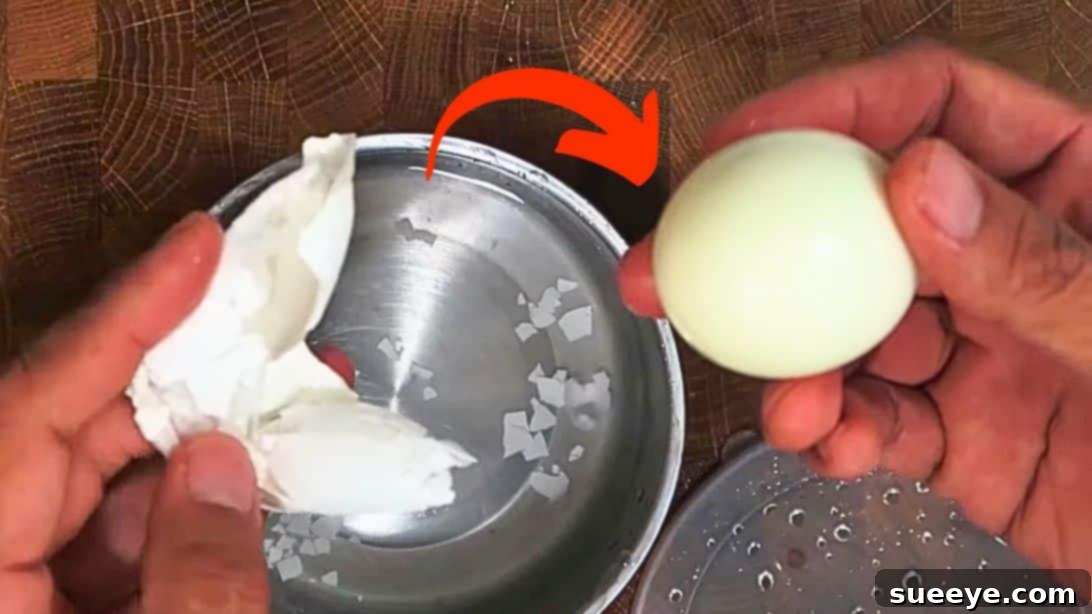
Once your egg has reached your desired doneness (soft, jammy, or hard-boiled), carefully remove it from the hot water and immediately place it into the prepared bowl of cold, icy water. Securely cover the bowl with its lid. Now, gently but firmly, shake the bowl from side to side for about 10-20 seconds. The goal is to allow the cold water to seep into the pre-existing crack and between the now-loosened shell and the egg. The shaking motion provides the mechanical force needed to completely dislodge the shell. When you remove the lid, you should find the egg perfectly de-shelled, often with the shell remaining in a few large pieces at the bottom of the bowl, or even completely detached from the egg!
This ingenious method truly transforms the arduous task of peeling eggs into an effortless and even satisfying experience. No more frustrating bits of shell, no more torn egg whites—just perfectly smooth, ready-to-eat eggs every time.
The Science Behind the No-Peel Success
Understanding *why* this hack works adds to its brilliance. It’s a combination of thermal dynamics and physical mechanics:
- The Pre-Cracked Air Cell: By gently cracking the wider end of the egg before boiling, you create a tiny opening to the air cell. As the egg cooks, the air within this pocket expands. With an open vent, this expanding air helps to push the inner membrane away from the shell. Crucially, a small amount of water or steam can also penetrate this gap, creating a thin layer of lubrication between the shell and the egg white.
- Rapid Cooling (Ice Bath): The immediate plunge into an ice bath causes the egg white to contract rapidly. This contraction further helps to separate the cooked egg from the inner shell membrane. The cold water also prevents overcooking, ensuring a perfectly colored yolk.
- The Shaking Mechanism: Once the egg is in the lidded bowl with cold water, the shaking motion provides the necessary physical agitation. The water acts as a lubricant and a medium to transfer the mechanical energy. The forces created by the shaking, combined with the earlier separation caused by the pre-crack and ice bath, effectively loosen and dislodge the shell from the egg without damaging the delicate white.
This method ingeniously bypasses the main problem of membrane adhesion, especially with fresh eggs, making the “no-peel” promise a consistent reality.
Beyond the Peel: Delicious Ways to Enjoy Your Perfectly Boiled Eggs
Now that you’ve mastered the art of both cooking and effortlessly peeling hard-boiled eggs, the culinary possibilities are endless! Hard-boiled eggs are not just for breakfast; they are a versatile ingredient that can elevate meals throughout the day.
Creative Snacks & Appetizers:
Turn your perfectly cooked eggs into delightful bites. Deviled eggs are a timeless classic, and you can get creative with presentations like this:
How to Make A Deviled Egg Bouquet
Beyond deviled eggs, consider slicing them for crostini, stuffing them into avocado halves, or even pickling them for a tangy snack.
Hearty Salads & Sandwiches:
Hard-boiled eggs are a fantastic addition to salads, adding protein and creamy texture. They are also the star of many comforting sandwiches. Here are some popular recipes to try:
- Easy Egg Cucumber Salad
- Easy Avocado Egg Salad Recipe
- Best Egg Salad Sandwich Recipe
Don’t stop there! Hard-boiled eggs are a staple in Niçoise salads, Cobb salads, or simply chopped over a bed of greens with your favorite dressing.
Elevating Main Dishes & Global Flavors:
Eggs aren’t just for cold dishes. They can be a star in warm, comforting meals too. The jammy, medium-boiled egg is particularly popular in Asian cuisine. Explore these and more:
For more egg recipes, try these:
- 38 Best Eggs Benedict Recipes
- Perfect Ramen Eggs Recipe
Think about adding them to curries, stir-fries, or even as a garnish for hearty soups. Their rich flavor and satisfying texture can transform simple dishes.
Conclusion: Embrace the Effortless Egg
The journey from a simple raw egg to a perfectly cooked and effortlessly peeled delight is now at your fingertips. No longer will the frustration of peeling deter you from enjoying this nutritious and versatile food. By understanding the optimal cooking times for your preferred doneness and employing the revolutionary no-peel egg shell removal hack, you can enjoy perfectly smooth, unblemished eggs every single time.
Whether you’re crafting an elaborate deviled egg bouquet, assembling a vibrant salad, or simply reaching for a quick, protein-packed snack, the ultimate no-peel method ensures your eggs are ready without the fuss. Go ahead, try this game-changing kitchen hack, and rediscover the simple joy of hard-boiled eggs. Share your success stories and favorite egg recipes—the era of effortless egg enjoyment has arrived!