
The Ultimate Guide to Picking a Perfectly Ripe Watermelon Every Time
There’s nothing quite like biting into a perfectly ripe, sweet, and juicy watermelon on a hot day. The crisp texture, the vibrant flavor, and the refreshing burst of natural sweetness make it a quintessential summer delight. However, the experience can quickly turn sour if you end up with an underripe or overripe melon – watery, flavorless, or mealy. The challenge lies in distinguishing the perfect specimen from its less-than-ideal counterparts without cutting it open. Fortunately, with a few simple tricks and a keen eye, you can master the art of selecting a ripe watermelon with confidence, whether you’re at the grocery store or harvesting from your own garden.
Many traditional methods exist for checking ripeness, such as examining the color, feeling the weight, or even sniffing the fruit. While these can be helpful, some techniques are far more reliable and efficient. We’ve gathered the most effective strategies, including insights from experienced gardeners like Dirty Gnomes Gardens on YouTube, to ensure you pick a winner every single time. These methods are designed to be quick, convenient, and incredibly accurate, making them perfect for everyone from casual shoppers to seasoned growers with extensive harvests.
Key Indicators for a Perfectly Ripe Watermelon
Identifying a ripe watermelon doesn’t require any special tools or skills, just a bit of observation and understanding of what to look for. Here are the most reliable signs that your watermelon is ready to be enjoyed.
1. The Thump Test: Listening for Sweetness
One of the most classic and surprisingly accurate ways to gauge a watermelon’s ripeness is the “thump test.” Gently tap the melon with your knuckles or the palm of your hand and listen carefully to the sound it produces. The key is to differentiate between two distinct sounds:
- Unripe or Overripe Sound: An unripe watermelon will often produce a higher-pitched, hollow, or “clinking” sound. It might feel dense and resonate with a sharp echo. An overripe melon, on the other hand, might sound dull and lifeless, almost like a flat thud with very little resonance.
- Ripe Sound: A perfectly ripe watermelon will emit a deep, resonant, somewhat muffled “thump” or “plunk” sound. Think of it as a deep bass note rather than a high treble. This indicates that the melon is full of water and sugars, with a dense yet yielding interior. Practice makes perfect with this method; try thumping a few melons to get a feel for the different sounds.
2. The Tendril Test: A Natural Ripeness Indicator
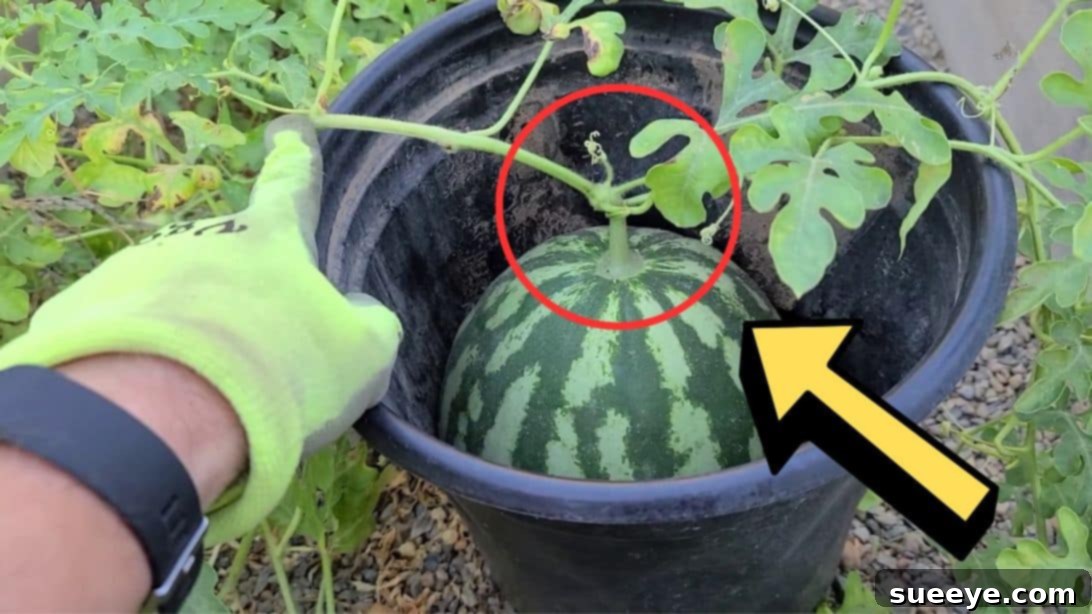
For gardeners harvesting their own watermelons, or for those who can inspect the vine attachment point, the tendril offers a precise clue about ripeness. The tendril is the small, curly green vine that grows off the main stem, closest to where the watermelon is attached.
- Green Tendril: If the tendril connected to the fruit is still vibrant green, it signifies that the watermelon is still actively receiving nutrients and water from the vine. In this state, the melon is not yet ripe and will benefit from more time on the vine to develop its full flavor and sweetness.
- Browning Tendril (Partial): A tendril that has started to turn brown but still retains some green at its base indicates that the watermelon is getting close to ripeness. It’s in the process of maturing, but might still need a few more days.
- Completely Brown or Dead Tendril: The golden rule for tendrils is to look for one that has turned completely brown and dried up, all the way to its base. A dead or shriveled tendril means the vine has stopped supplying nutrients to that particular fruit, signaling that the watermelon has reached its peak ripeness and is ready for harvest. This is the most reliable visual cue for many growers.
3. The Field Spot (Ground Spot): A Sun-Kissed Signal
Every watermelon has a “field spot” or “ground spot” – the area where it rested on the ground while ripening. This spot is one of the most accurate indicators of ripeness and is often overlooked.
- Pale or White Spot: If the field spot is pale white, light green, or barely noticeable, the watermelon was likely picked too early and hasn’t had enough time to ripen on the vine. It will probably lack sweetness and flavor.
- Creamy Yellow to Deep Orange-Yellow Spot: A truly ripe watermelon will have a prominent field spot that is a creamy yellow, butter yellow, or even deep orange-yellow color. The deeper and darker the yellow, the longer the melon spent ripening on the vine, accumulating sugars and developing its characteristic flavor. This rich color is a strong indication of sweetness.
4. Skin Appearance and Texture: Visual Cues
Beyond the field spot, the overall appearance of the watermelon’s skin can provide valuable clues:
- Dull vs. Shiny: Ripe watermelons tend to have a dull, matte appearance, whereas underripe ones are often shiny and glossy. As a watermelon ripens, the chlorophyll breaks down, and the skin loses its waxy sheen.
- Darker, Deeper Colors: Look for watermelons with distinct, rich green stripes and deeper, consistent colors. Faded or pale colors can indicate immaturity.
- “Webbing” or “Sugar Spots”: These are rough, brown, web-like streaks or small brown dots on the surface of the melon. While some might mistake them for blemishes, they are actually signs that bees have visited the flower multiple times for pollination. More pollination leads to higher sugar content, meaning a sweeter, tastier watermelon. Don’t be afraid of these “scars” – they’re badges of sweetness!
- Avoid Blemishes: While webbing is good, avoid watermelons with soft spots, deep cuts, or bruises, as these can indicate internal damage or spoilage.
5. Weight for Its Size: A Heavy Hint
Pick up the watermelon and feel its weight. A ripe watermelon should feel surprisingly heavy for its size. This is because a ripe melon is packed with water and sugar. If a melon feels light for its dimensions, it might be dry, underripe, or hollow inside due to overripeness.
6. The Smell Test: Aromatic Sweetness
While not as definitive as the other methods, the smell test can offer a final confirmation. Gently sniff the stem end of the watermelon (the end where it was attached to the vine).
- Sweet, Fruity Aroma: A ripe watermelon will emit a subtly sweet, fresh, and fruity aroma. This indicates that the sugars inside are fully developed.
- No Smell or Chemical Smell: If there’s no scent at all, the watermelon is likely underripe. If it has a chemical, sour, or pungent smell, it might be overripe or beginning to spoil.
Why Does Ripeness Matter?
Beyond the obvious flavor difference, eating a perfectly ripe watermelon offers numerous benefits. Ripe watermelons are not only sweeter and more flavorful but also contain higher concentrations of vitamins, antioxidants (like lycopene, which gives watermelon its red color), and essential nutrients. They are also incredibly hydrating, making them an excellent choice for staying refreshed during warm weather. An unripe watermelon will be bland and watery, while an overripe one can have a mealy texture and a less appealing flavor profile.
Harvesting and Storage Tips
If you’re growing your own watermelons, timing the harvest is crucial. Wait until all the ripeness indicators, especially the tendril and field spot, point to maturity. When harvesting, use a sharp knife or shears to cut the stem, leaving about an inch attached to the fruit. This helps prevent rot and extends shelf life.
Whole, uncut ripe watermelons can be stored at room temperature for about 1-2 weeks, or in the refrigerator for up to 2-3 weeks. Once cut, wrap the unused portions tightly in plastic wrap or place them in an airtight container and refrigerate. Consume cut watermelon within 3-5 days for the best quality and flavor.
Conclusion: Mastering Watermelon Selection
Armed with these tried-and-true methods, you no longer have to guess when picking a watermelon. Whether you’re at the farmer’s market, supermarket, or your own garden, you can confidently identify a perfectly ripe, sweet, and juicy specimen. Remember to use a combination of these tests – the thump, the tendril, the field spot, and the overall appearance – for the most accurate assessment. With a little practice, you’ll become a watermelon whisperer, ensuring every slice is a burst of summer perfection. Enjoy the fruits of your keen observation!
Thanks to Dirty Gnomes Gardens via YouTube for inspiration and images used here. If you found these tips helpful, we encourage you to visit his channel for more gardening insights and subscribe!