
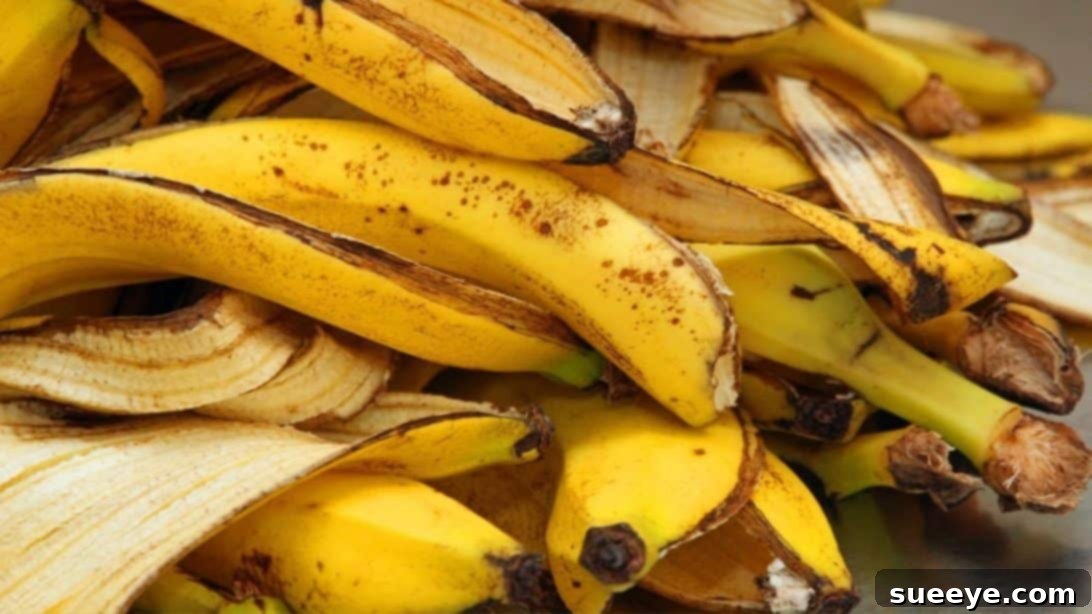
Bananas are much more than just a delicious and convenient snack; they are a global phenomenon, cherished for their sweet flavor, soft texture, and incredible versatility. Found in virtually every grocery store year-round, these yellow delights are a staple in kitchens worldwide. From classic breakfast smoothies to delightful desserts, the culinary possibilities are endless. Imagine the comforting aroma of a freshly baked Easy-to-Make Blueberry Banana Bread filling your home, or indulging in the sophisticated sweetness of a Salted Caramel Banana Cake. While we often savor the fruit itself, a significant part of the banana, its peel, is typically discarded without a second thought. But what if we told you that these seemingly worthless peels are packed with hidden potential, offering a treasure trove of benefits that extend far beyond the kitchen?
If you’re like most people, once you’ve enjoyed your banana, the peel usually heads straight for the trash bin. However, this common practice overlooks an amazing opportunity for sustainability and resourcefulness. The next time you peel a banana, pause before you throw that peel away. You’re about to discover a world of ingenious uses for banana peels, transforming what was once waste into valuable assets for your home, garden, and even beyond. It’s time to rethink your relationship with banana peels and unlock their surprising power.
RELATED: 5 Ways to Reuse Coffee Grounds
As an avid gardener and baker, I frequently find myself with a surplus of banana peels after making my favorite banana-based treats. Over time, I’ve learned to view these peels not as waste, but as a precious resource, especially for my thriving garden. The wisdom shared by Natural Ways has been particularly inspiring, revealing a wealth of practical and eco-friendly applications. These innovative ideas are especially beneficial if you possess a green thumb or simply wish to enhance the health and vitality of your plants. Utilizing banana peels is a simple yet effective way to nourish your garden naturally, promoting robust growth and overall plant well-being. Don’t keep these fantastic tips to yourself; share this article with friends and family who share a love for gardening and sustainable living!
Unlock the Potential: Surprising Things You Can Do With Banana Peels
Often overlooked, banana peels are incredibly rich in essential nutrients, particularly potassium, phosphorus, calcium, and magnesium. These minerals are vital for plant health, contributing to everything from strong root development to vibrant foliage and abundant fruiting. By repurposing banana peels, you’re not only reducing household waste but also providing your plants with a natural, slow-release source of nourishment. Let’s explore six ingenious ways to put those banana peels to work.
1. Supercharge Your Compost Pile
Composting is a cornerstone of organic gardening, and banana peels are an exceptional addition to any compost pile. Did you know that integrating banana peels can significantly promote root development, improve soil structure, and bolster the overall health of your plants? This is primarily due to their high concentration of potassium and phosphorus, two macronutrients crucial for vigorous growth and flowering. When added to compost, banana peels decompose, releasing these nutrients slowly and steadily into the soil, creating a rich, nutrient-dense environment for your garden. They also contribute valuable organic matter, enhancing soil aeration and water retention, and fostering a thriving microbial ecosystem.
2. Brew a Nutrient-Rich Banana Peel Compost Tea
No dedicated compost pile? No problem! You can still harness the power of banana peels to feed your garden with a potent liquid fertilizer known as “compost tea.” This method offers a readily available nutrient boost for your plants. To prepare this nourishing brew, simply collect your banana peels and place them into a bucket filled with water. Allow the peels to steep for several days, preferably in a warm spot, to encourage the release of their beneficial minerals. The water will gradually turn murky as the nutrients infuse into the liquid. Once ready, dilute this concentrated banana peel compost tea by mixing one part tea with five parts fresh water. Use this diluted solution to water your plants approximately once a week, effectively replacing one of your regular watering sessions. This gentle, yet powerful, liquid feed will provide a consistent supply of easily absorbed nutrients, leading to healthier and more resilient plants.
3. Create Your Own Dried Peel Fertilizer
For a more concentrated and long-lasting form of plant nutrition, consider making dried banana peel fertilizer. This method offers a convenient way to store and apply banana nutrients directly to your garden soil. Begin by thoroughly drying your banana peels. This can be achieved in several ways: spreading them out in direct sunlight for a few days, using a food dehydrator, or even placing them on a baking sheet in a very low oven until they are brittle. Once completely dry, grind the peels into a fine powder. A coffee grinder or a powerful blender works perfectly for this task. The resulting powder is a fantastic source of potassium and phosphorus. To apply, simply sprinkle this nutrient-rich powder around the base of your plants or gently incorporate it into the top layer of your garden soil. This slow-release fertilizer will gradually break down, providing continuous nourishment and encouraging robust root development and overall plant vigor throughout the growing season.
4. Mix a Revitalizing Banana Peel Plant Spray
Take your plant care to the next level with a homemade banana peel spray, a concoction designed to deliver essential nutrients and potentially deter pests. This powerful spray combines several beneficial ingredients for a comprehensive plant tonic. To make this spray, you will need dried banana peels, eggshells, Epsom salt, and water. First, dry the banana peels and eggshells completely, then grind them into a fine powder. Eggshells provide valuable calcium, which strengthens plant cell walls and prevents issues like blossom end rot, while Epsom salt supplies magnesium and sulfur, crucial for photosynthesis and overall plant health. Combine the ground peels and shells with Epsom salt in a spray bottle. Fill the bottle to the top with water and shake well to ensure the ingredients are thoroughly mixed. Spray your plants as needed, focusing on the foliage and soil. This gentle yet effective spray will nourish your plants from the outside in, promoting vibrant growth and resilience against environmental stressors.
5. Supplement Livestock Feed with Banana Peels
Beyond the garden, banana peels can also serve as a beneficial supplement in livestock feed, offering a cost-effective and nutritious addition to an animal’s diet. These peels contain various vitamins and minerals that can contribute to the overall health of certain farm animals. When considering banana peels for livestock, it is paramount to ensure their cleanliness and safety. Before drying and grinding them for feed, thoroughly clean the peels to remove any traces of wax, pesticides, or other chemical residues that might be present on the fruit’s skin. Once cleaned and dried, the ground banana peels can be mixed into the regular feed rations for animals such such as chickens, pigs, and even cattle, depending on their specific dietary needs and your local agricultural guidelines. This practice not only provides an additional source of nutrients but also helps in reducing food waste on the farm, aligning with sustainable agricultural practices.
6. Craft Your Own Banana Peel Vinegar
For those interested in fermentation and natural solutions, banana peels can be transformed into a versatile vinegar. This homemade vinegar can have various applications, from a gentle soil acidifier to a natural cleaning agent. The process is simple, albeit requiring patience. Begin by placing your banana peels into a clean mason jar, ensuring they are fully submerged in water. This prevents mold growth and allows for proper fermentation. Cover the jar opening with a breathable cloth, secured with a rubber band, to allow air circulation while keeping contaminants out. Set the jar aside in a cool, dark place and let it sit undisturbed for about one week. During this initial phase, beneficial microbes will begin to convert the sugars in the peels into alcohol. After a week, remove the peels from the jar. Allow the liquid to continue sitting, still covered with the cloth, for an additional 4 to 6 weeks. During this secondary fermentation, acetic acid bacteria will convert the alcohol into acetic acid, resulting in vinegar. The exact time frame can vary depending on ambient weather conditions and temperature. Once fermented, taste the vinegar; if it seems too potent, dilute it with water before using. This natural banana peel vinegar offers an exciting way to repurpose peels and create a useful product for your home and garden.
Embrace Sustainability: Transform Banana Peels into Valuable Resources
The journey from delicious fruit to resourceful garden aid demonstrates the incredible potential hidden within everyday waste. By implementing these six creative uses for banana peels, you’re not just preventing them from ending up in a landfill; you’re actively contributing to a more sustainable lifestyle and nurturing your environment. Whether you choose to enrich your compost, brew a nourishing plant tea, create a potent fertilizer, mix a protective spray, supplement livestock feed, or even craft homemade vinegar, each method offers a unique way to harness the natural goodness of banana peels.
These simple yet effective practices are perfect for anyone looking to reduce waste, save money on garden supplies, and provide their plants with organic, chemical-free nutrition. So, the next time you enjoy a banana, remember its full life cycle doesn’t have to end in the trash. Give those peels a second chance to shine, and watch as your garden flourishes and your sustainable efforts make a tangible difference. It’s an easy, eco-friendly step towards a greener home and a healthier planet.