
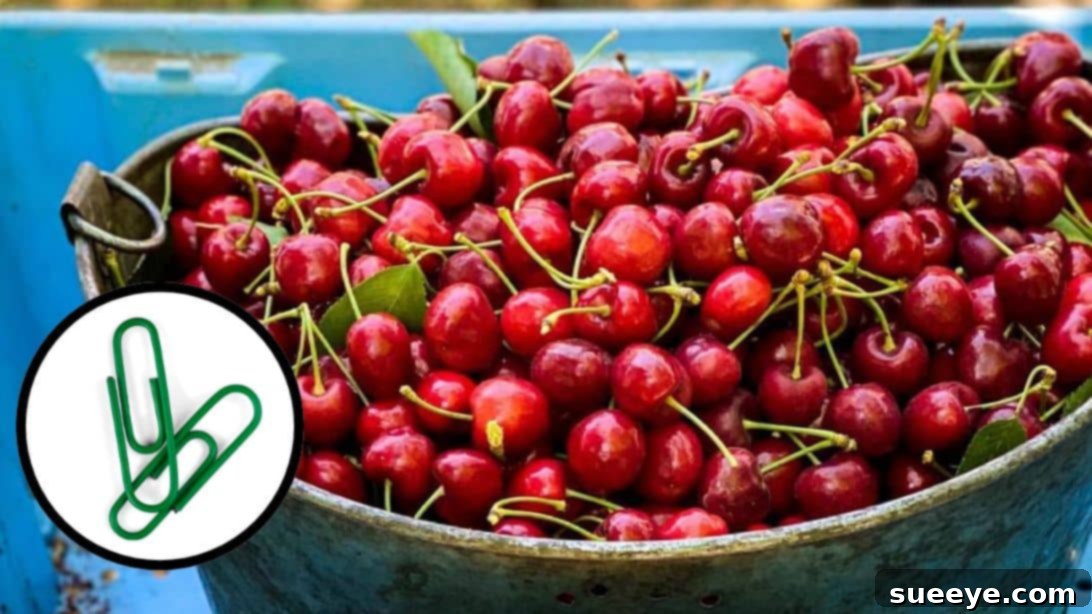
Cherries, with their vibrant colors and luscious sweetness (or delightful tartness), are a true seasonal treat. While their peak season traditionally runs from mid-April to late July, the magic of global trade now allows us to savor these delightful stone fruits year-round. Whether you’re enjoying them fresh, baking them into a pie, or blending them into a smoothie, cherries add a touch of elegance and flavor to any dish. This comprehensive guide will walk you through everything you need to know about cherries, from selecting the perfect fruit to mastering an ingenious DIY pitting method and discovering mouth-watering recipes.
The Ultimate Guide to Cherries: Selection, Pitting with a Paperclip, and Delicious Recipes
The Wonderful World of Cherries: A Sweet and Tart Overview
Exploring Cherry Varieties: Sweet vs. Tart
The cherry family is diverse, but broadly, varieties fall into two main categories: sweet and tart (or sour) cherries. Each type boasts unique characteristics and culinary uses.
- Sweet Cherries: These are the most commonly consumed fresh cherries, known for their firm texture and rich, sugary flavor. The iconic Bing cherry stands out with its distinct heart shape, deep mahogany color, and crisp bite. Other popular sweet varieties include Rainier (yellow with a red blush, exceptionally sweet), Chelan, and Lambert. Sweet cherries are fantastic for snacking, fruit salads, and desserts where their natural sweetness can shine.
- Tart Cherries: Also known as sour cherries, these varieties, like Montmorency and Balaton, have a brighter, more acidic flavor profile. While some enjoy them fresh, tart cherries are primarily prized for their culinary versatility, especially in baking and preserves. Their acidity balances sweetness beautifully in pies, tarts, jams, sauces, and even savory dishes.
Selecting the Freshest Cherries: A Buyer’s Guide
To ensure you get the best cherries, a few simple tips can make all the difference. When browsing at your local market, keep these pointers in mind:
- Color is Key for Sweetness: For sweet cherries, the general rule is: the darker the color, the sweeter the taste. Look for deep red, almost black hues in varieties like Bing. Tart cherries will be a brighter red.
- Check the Stems: Fresh cherries will have bright green, pliable stems still attached. Avoid cherries with dry, shriveled, or missing stems, as this can indicate older fruit.
- Firmness and Plumpness: Gently feel the cherries. They should be firm and plump to the touch, not soft, mushy, or shriveled. A firm cherry signifies freshness and good texture.
- Shiny Skins: Look for cherries with smooth, shiny skins that are free from blemishes, cuts, or soft spots. Any signs of mold or decay mean you should pass on that bunch.
The Nutritional Powerhouse: Health Benefits of Cherries
Beyond their delicious taste, cherries offer a wealth of health benefits, making them a smart addition to any diet. They are packed with antioxidants, particularly anthocyanins (which give them their red color), known for their anti-inflammatory properties. Studies suggest cherries can aid in muscle recovery, improve sleep quality due to their natural melatonin content, and contribute to heart health. They are also a good source of fiber, vitamin C, and potassium.
Why Pit Cherries? Understanding the Importance of Seed Removal
You might be wondering, “Do all cherries have pits?” The answer is a resounding yes. You won’t find naturally seedless cherries on the market. While the pit itself isn’t meant for consumption, removing it is crucial for both safety and culinary enjoyment.
Safety First: The Hidden Dangers of Cherry Pits
Cherry pits contain a compound called amygdalin, which belongs to a group of chemicals called cyanogenic glycosides. When these compounds are metabolized in the body, they can convert into hydrogen cyanide, a toxic substance. While accidentally swallowing a whole pit is unlikely to cause harm (as it generally passes through undigested), chewing or crushing multiple pits and ingesting the contents can be dangerous. Therefore, always make sure to remove pits, especially when preparing cherries for children or in recipes where they might be crushed.
Enhancing the Culinary Experience
Beyond safety, pitting cherries significantly enhances their usability and enjoyment in recipes. Imagine biting into a delicious cherry pie only to encounter a hard pit – it’s an unwelcome surprise! Pitted cherries offer a smooth, consistent texture that’s perfect for:
- Baking pies, tarts, cobblers, and cakes.
- Making jams, preserves, and sauces.
- Blending into smoothies, juices, or cocktails.
- Adding to salads (both fruit and savory).
- Serving fresh to guests or children.
RELATED: How to Keep Avocados On Your Shelf For Years
Beyond the Cherry Picker: Simple Tools for Pitting
While dedicated cherry pitters are readily available and efficient, you don’t need a specialized gadget to get the job done. Many kitchen items can serve as effective DIY cherry pitters. One of the most ingenious and accessible methods involves a common household item: a paperclip. This simple trick, often shared by clever cooks and found on channels like Chowhound’s YouTube, proves that resourcefulness can be your best kitchen tool.
What You Need to Remove Cherry Seeds Easily
- A standard metal paperclip
- Fresh cherries
- A bowl for pitted cherries
- A separate bowl for pits
- Optional: Kitchen gloves to prevent staining
- Optional: A plastic placemat or newspaper to protect your countertop
Mastering the Paperclip Method: A Step-by-Step Guide to Pitting Cherries
This method is surprisingly effective and a fantastic hack when you don’t have a specialized pitter on hand. Follow these simple steps to easily remove cherry pits:
Step 1: Prepare Your Workspace and Paperclip
First, gather your supplies. Take your paperclip and gently bend it open. You want to create a hook or a small loop at one end while keeping the other end straight. The goal is to have a shape that can effectively hook around the pit. It should lay relatively flat or have a gentle curve, resembling a small letter ‘S’ or an open loop.
To keep your hands and surfaces clean, especially when pitting a large batch, consider wearing kitchen gloves. Cherry juice can be quite staining! Lay down a plastic mat, newspaper, or an old towel in front of you to protect your countertop or wooden table from any errant splashes.
Step 2: Position the Cherry and Insert the Paperclip
Take one cherry and hold it firmly between your thumb and forefinger. Identify the stem end – this is where the stem was attached. Carefully push the curved or hooked end of the bent paperclip into the top center of the cherry, precisely where the stem used to be. You’ll feel the paperclip encounter the pit inside the fruit.
Step 3: Hook, Rotate, and Pop Out the Pit
Once the paperclip tip is in contact with the pit, gently maneuver it to hook around one side of the pit. With the pit secured, gently rotate the paperclip a little bit. This motion will help loosen the pit from the surrounding flesh. Then, with a steady but gentle push, “pop” the pit right out of the cherry. It should emerge from the same hole where you inserted the paperclip.
Repeat these steps with the remaining cherries, collecting the pits in a separate bowl. This technique creates minimal damage to the cherry’s flesh, making it ideal for recipes where presentation matters.
Tips for a Seamless Pitting Experience:
- Be Gentle: Avoid using excessive force, as this can crush the cherry. The goal is to separate the pit cleanly.
- Practice Makes Perfect: Don’t get discouraged if the first few aren’t perfect. You’ll quickly get a feel for the right amount of pressure and rotation.
- Protect Your Clothing: Cherry juice stains are notoriously difficult to remove. Wear an apron or old clothes if you’re not using gloves.
- Batch Process: Set up an assembly line: one bowl for whole cherries, one for pitted, and one for pits. This makes the process more efficient.
Maximizing Your Cherry Experience: Storage, Recipes, and More
Storing Your Fresh Cherries for Longevity
Proper storage is crucial for keeping your cherries fresh and delicious for as long as possible:
- Refrigeration is Key: Store unwashed cherries in a breathable bag (like a perforated plastic bag or a container lined with a paper towel) in the coldest part of your refrigerator. Washing them before storage can promote spoilage due to excess moisture. They typically last 5-7 days this way.
- Washing Before Use: Always wash cherries thoroughly just before you plan to eat or use them in a recipe.
- Freezing for Long-Term: If you have an abundance of cherries, freezing is an excellent option. Wash and pit the cherries first. Then, spread them in a single layer on a baking sheet and freeze until solid (this prevents them from clumping together). Once frozen, transfer them to a freezer-safe bag or container. Frozen cherries are perfect for smoothies, baked goods, and sauces for up to a year.
Delicious Cherry Recipes to Try
Now that you’re an expert at selecting and pitting cherries, it’s time to put them to good use! Here are some delightful dessert recipes you might want to try, along with other creative ideas:
- Baked Goods: Cherries are a star in pies, crumbles, tarts, and muffins. Their flavor intensifies beautifully with baking.
- For a quick and easy treat, try these No-Bake Cherry Cheesecake Bars.
- Another fantastic option is a Yogurt Cake with Cherry Filling Recipe, offering a lighter alternative.
- Refreshing Desserts: Cherries are perfect for chilled desserts.
- Indulge in a Cherry Delight with Pineapple Fluff Recipe for a truly unique flavor combination.
- Consider making cherry clafoutis, sorbets, or even homemade cherry ice cream.
- Jams and Sauces: Preserve the taste of fresh cherries by making homemade jam or a rich cherry sauce that can be drizzled over pancakes, ice cream, or roasted meats.
- Beverages: Add pitted cherries to smoothies, muddle them into cocktails (like a cherry mojito or old fashioned), or infuse them into water for a refreshing drink.
- Savory Applications: Don’t limit cherries to just desserts! They pair wonderfully with pork, duck, or chicken, especially in glazes or savory sauces.
Frequently Asked Questions About Cherries
Q: Can you eat cherry pits?
A: No, cherry pits should not be eaten. They contain a compound called amygdalin, which can be toxic if chewed or crushed. While accidentally swallowing a whole pit is generally harmless, it’s best to remove them before consuming cherries, especially if you plan to chew them or use them in recipes.
Q: How long do fresh cherries last?
A: When stored properly in the refrigerator (unwashed, in a breathable bag), fresh cherries typically last for 5 to 7 days. Always check for signs of spoilage like mold or soft spots before consuming.
Q: What’s the best way to store cherries long-term?
A: Freezing is the best method for long-term storage. Wash and pit the cherries, then spread them in a single layer on a baking sheet to freeze solid. Once frozen, transfer them to a freezer-safe bag or container. They can be stored for up to a year and are perfect for baking or smoothies.
Q: What’s the main difference between sweet and tart cherries?
A: The primary difference lies in their flavor profile and culinary uses. Sweet cherries (like Bing) are firm, juicy, and very sweet, ideal for fresh eating. Tart cherries (like Montmorency) have a brighter, more acidic flavor and are predominantly used in baking, jams, and juices, where their tartness provides balance.
Q: Are cherries good for you?
A: Absolutely! Cherries are a powerhouse of nutrition. They are rich in antioxidants, particularly anthocyanins, which contribute to anti-inflammatory benefits. They also contain melatonin, which can aid in sleep, and provide fiber, vitamin C, and potassium, supporting overall health.
How to Pit a Cherry With a Paper Clip
As demonstrated, pitting cherries with a simple paperclip is not only possible but surprisingly efficient. This ingenious method ensures that every cherry you prepare is safe, enjoyable, and ready for your favorite recipes. So next time you find yourself with a bounty of fresh cherries, don’t shy away from the pitting process. Grab a paperclip, follow these steps, and unlock a world of delicious possibilities!
Enjoy your cherries!