
Is your toilet bowl plagued by unsightly hard water stains that just won’t budge? You’re not alone. These stubborn mineral deposits can make even the cleanest bathroom look less than pristine, creating a frustrating challenge for homeowners everywhere. While regular cleaning helps, hard water often leaves behind stubborn rings and streaks that demand a more specialized approach. Fortunately, achieving a sparkling clean toilet is simpler than you might think, thanks to an ingenious deep-cleaning hack inspired by RJ the Bike Guy on YouTube. This guide will walk you through a highly effective method using common household supplies, promising a toilet bowl that looks brand new.
We understand the endless quest for effective cleaning solutions. Many commercial products promise miracles but often fall short, especially when tackling embedded mineral stains. Our rigorous testing and research continually lead us to discover and share practical tips that truly work. This particular method, centered around the often-underestimated power of cleaning vinegar, stands out for its simplicity, affordability, and remarkable efficacy. Even those who meticulously clean their toilets weekly can attest to the relentless nature of hard water build-up. This demonstration offers a tried-and-true solution that we’re thrilled to share, revealing a secret ingredient you might not have considered for your toughest toilet cleaning woes.
Transform Your Toilet: The Ultimate Guide to Removing Stubborn Hard Water Stains with Vinegar
Hard water, prevalent in many regions, is rich in dissolved minerals like calcium and magnesium. When this water evaporates, these minerals are left behind, accumulating over time to form the dreaded hard water stains or limescale. These deposits are not only aesthetically displeasing but can also harbor bacteria and, if left untreated, potentially impact the efficiency of your toilet’s flushing mechanism. Traditional scrubbing with general cleaners often proves ineffective against these mineral bonds, requiring a chemical reaction to dissolve them. This is where the magic of cleaning vinegar comes into play.
The Unsung Hero: Why Cleaning Vinegar Works Wonders
Cleaning vinegar is a powerful, natural, and environmentally friendly alternative to harsh chemical cleaners. Its secret lies in its higher acetic acid content, typically 6% compared to the 5% found in standard white vinegar used for cooking. This increased acidity makes it exceptionally effective at breaking down alkaline mineral deposits like calcium carbonate, the primary component of hard water stains and limescale. When applied, the acetic acid reacts with these minerals, dissolving them and making them much easier to scrub away. Beyond its effectiveness, cleaning vinegar is also non-toxic, biodegradable, and far more gentle on your plumbing and the environment than many commercial products.
Essential Materials for a Spotless Toilet
Before embarking on your toilet transformation journey, gather the following simple materials. Having everything at hand will ensure a smooth and efficient cleaning process.
- Plunger: Essential for efficiently removing water from the toilet bowl, allowing the cleaning vinegar to concentrate on the stains.
- Rubber Gloves: Always recommended for hygiene and to protect your hands from prolonged contact with cleaning solutions, even natural ones like vinegar.
- Cleaning Vinegar: The star of our show. Opt for cleaning vinegar for its enhanced acidity, ensuring maximum effectiveness against tough mineral stains.
- Old Towels (Optional but Recommended): Useful for absorbing any remaining water after plunging, or for wiping up spills. They can also be used to create additional vinegar compresses for particularly stubborn upper rim stains.
- Toilet Paper: Plays a crucial role in creating a “vinegar compress” to keep the cleaning solution in direct contact with vertical stains.
- Toilet Bowl Brush: Your primary tool for scrubbing away the softened stains. A sturdy brush with strong bristles will yield the best results.
Step-by-Step Guide: Banishing Stubborn Toilet Stains
Follow these detailed instructions to effectively remove hard water stains and restore your toilet bowl to its sparkling best. This method maximizes the contact time and potency of the cleaning vinegar for optimal results.
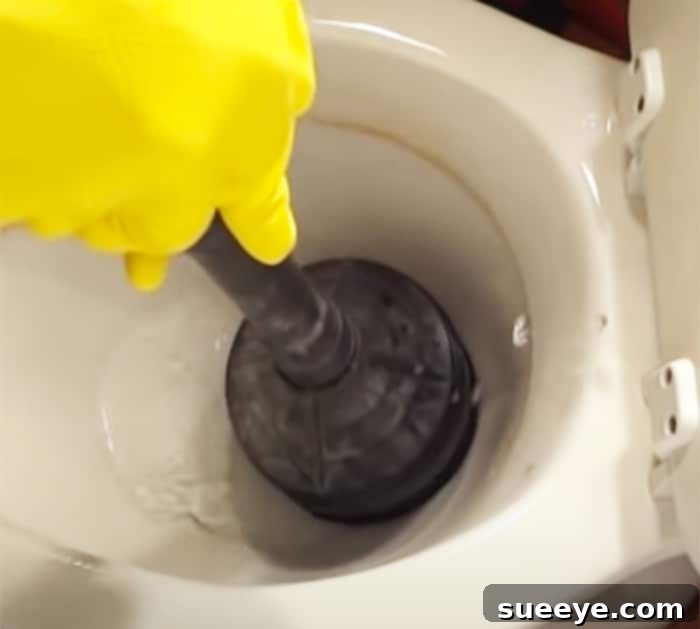
Step 1: Drain the Water from the Toilet Bowl
The first and most critical step is to reduce the amount of water in your toilet bowl. This allows the cleaning vinegar to come into direct, undiluted contact with the hard water stains. To do this, vigorously pump a plunger several times into the toilet bowl’s drain hole. This action will force most of the water out and down the drain. For best results, try to remove as much water as possible. If necessary, you can use an old towel or sponge to soak up any residual water, ensuring that the vinegar is not diluted and can work at its full strength.
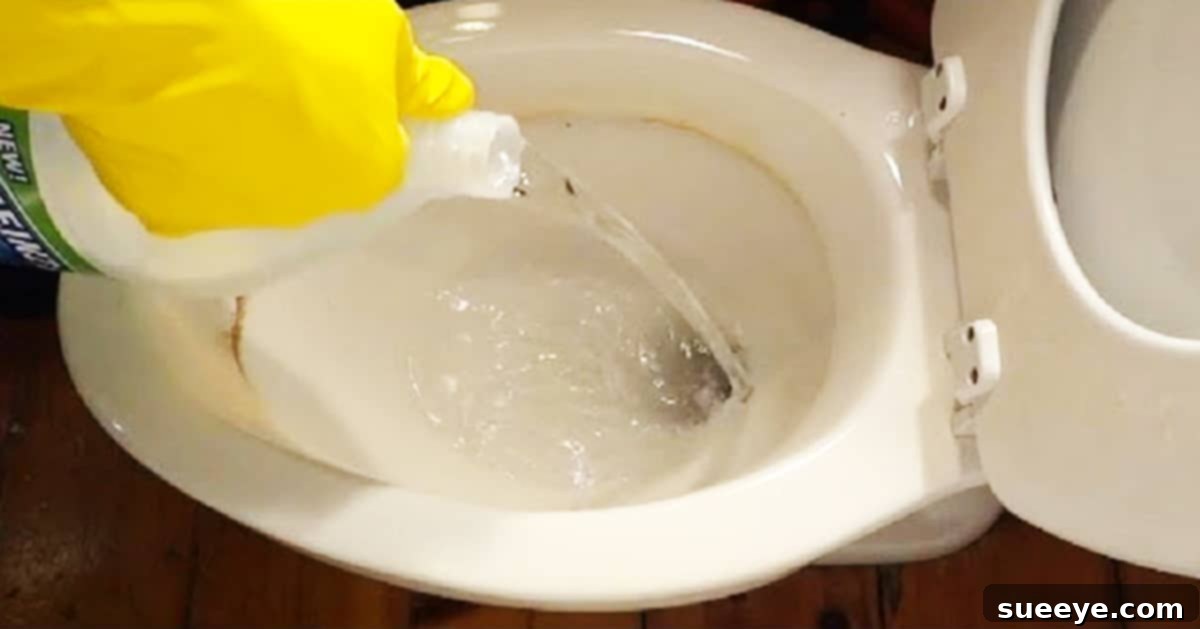
Step 2: Pour in the Cleaning Vinegar
Once the bowl is mostly empty, carefully pour the cleaning vinegar directly into the toilet bowl. Aim to fill the bowl up to a level that completely covers all the hard water stains. It’s important to ensure that the entire stained area, especially the stubborn ring at the waterline, is fully submerged in the vinegar. Don’t be shy with the amount; adequate coverage is key for the acetic acid to effectively penetrate and dissolve the mineral deposits. The stronger the concentration and the more direct contact, the better the outcome.
Step 3: Create and Apply Toilet Paper Compresses
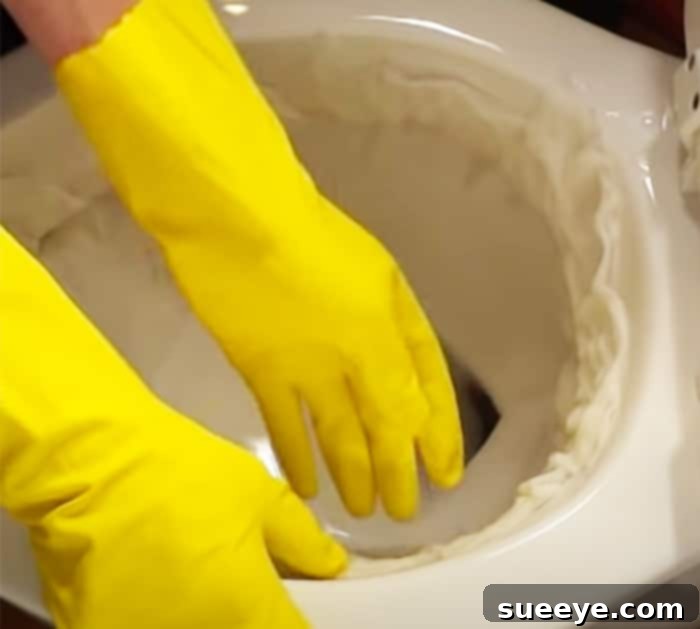
For stains that are above the waterline or on the vertical sides of the bowl, a simple trick dramatically increases the vinegar’s effectiveness. Take several sheets of toilet paper and soak them thoroughly in the cleaning vinegar you just poured into the bowl. Once saturated, carefully apply these vinegar-soaked toilet paper strips directly onto any hard stains above the waterline. Press them firmly against the porcelain to ensure they adhere and remain in place. This “compress” method ensures continuous, direct contact between the vinegar and the mineral deposits, allowing the acetic acid more time to work its magic and break down the grime.
Step 4: Allow Everything to Soak Overnight
Patience is a virtue, especially when tackling tough hard water stains. Once the vinegar is in place and the toilet paper compresses are applied, allow everything to sit and soak overnight, or for a minimum of 6-8 hours. This extended contact time is crucial for the acetic acid to thoroughly penetrate and dissolve the deep-seated mineral buildup. Resist the urge to flush or disturb the solution during this period. Let the chemistry do the hard work for you while you sleep or go about your day. The longer the soak, the easier the stains will be to remove.
Step 5: Scrub Away the Stains
The following morning, or after the recommended soaking period, don your gloves and retrieve your toilet bowl cleaning brush. Begin to vigorously scrub the areas where the hard water stains were present. You should notice that the stains have softened considerably and will come off much more easily than they would have without the vinegar treatment. Focus on the waterline ring and any areas where the toilet paper compresses were applied. Apply firm pressure and circular motions to dislodge any remaining residue. Once satisfied, remove the toilet paper and give the entire bowl a final scrub.
Step 6: Flush and Reveal Your Sparkling Toilet
After scrubbing, flush the toilet several times to rinse away the loosened stains and the vinegar solution. You’ll be amazed at the transformation! Your toilet bowl should now be free of those stubborn hard water stains, revealing a clean, bright, and refreshed porcelain surface. For full instructions and additional details, you can always refer back to the original RJ the Bike Guy tutorial on YouTube, which inspired this effective method.
Troubleshooting and Prevention Tips
While this vinegar method is highly effective, some extremely stubborn stains might require a bit more attention. Here’s what to do if the stains persist and how to prevent them from returning.
What if Stains Don’t Come Off the First Time?
If, after the first treatment, some stubborn hard water stains remain, don’t despair. The beauty of this method is its simplicity and safety. Simply repeat the entire process: drain the water, reapply fresh cleaning vinegar, use new toilet paper compresses, and let it soak overnight once more. For truly extreme build-up, you might need to repeat the process two or three times. Each soak will progressively break down the layers of mineral deposits, making them easier to remove.
Considering a Pumice Stone (Use with Caution)
For the absolute toughest, deeply ingrained stains that resist even repeated vinegar treatments, a pumice stone designed for toilet cleaning can be an option. However, use it with extreme caution and only as a last resort. Always ensure the pumice stone and the toilet surface are wet to prevent scratching the porcelain. Gently rub the stone over the stained areas; avoid aggressive scrubbing. Test a small, inconspicuous area first to ensure it doesn’t damage your toilet’s finish. For most stains, the vinegar method will suffice without needing abrasive tools.
Preventative Measures for a Lasting Shine
Once your toilet bowl is sparkling clean, implementing a few preventative measures will help keep those hard water stains at bay:
- Regular Cleaning: Make it a habit to clean your toilet bowl at least once a week with a good toilet cleaner or a mixture of baking soda and vinegar for maintenance.
- Weekly Vinegar Rinse: Pour a cup of cleaning vinegar into the toilet bowl once a week and let it sit for an hour before flushing. This helps to dissolve any new mineral deposits before they can harden.
- Address Leaks Promptly: A constantly trickling toilet can exacerbate hard water stain formation. If you notice a leak, replace the flapper or repair the mechanism to stop the continuous water flow.
- Consider a Water Softener: If hard water is a pervasive problem throughout your home, investing in a whole-house water softening system can significantly reduce mineral buildup in all your fixtures, not just the toilet.
- Flush After Cleaning: Always flush immediately after use to prevent minerals from sitting and drying in the bowl.
Why This Method Stands Out
Overall, this detailed tutorial offers specific, easy-to-follow instructions on how to achieve a remarkably clean toilet bowl. The strength of this approach lies in its effectiveness against the specific challenge of hard water stains, which often defeat conventional cleaning products. The extended soaking time is crucial; the longer you allow the cleaning vinegar to work, the easier and more complete the stain removal will be. This method is not only incredibly cost-effective, utilizing an inexpensive and readily available household item, but it’s also a much more eco-friendly alternative to harsh chemical cleaners, protecting both your home’s environment and the planet.
Embrace the power of cleaning vinegar and say goodbye to those unsightly toilet bowl stains forever. With a little patience and these proven steps, you can maintain a hygienic and sparkling bathroom effortlessly. Give this method a try, and prepare to be impressed by the dramatic transformation!