
Revolutionize Your Cat’s Litter Experience: The Ultimate DIY Top-Entry Litter Box Solution for Under $10
Are you constantly battling with scattered cat litter across your floors? Do your beloved canine companions have an unhealthy fascination with the cat’s litter box, often turning it into an unwelcome snack bar? These common frustrations plague many pet owners, creating messy homes and potential health hazards for dogs. While commercially available top-entry litter boxes offer a popular solution to these dilemmas, their price tags can be intimidating, frequently ranging from $40 to an astounding $100. But imagine if you could achieve the same superior functionality – keeping dogs out and litter contained – for an incredibly modest investment of as little as $7. This comprehensive guide will empower you to construct your own efficient, cost-effective top-entry litter box, transforming your living space into a cleaner, more harmonious haven for all your furry family members.
The Perennial Pet Owner Predicament: Dogs vs. Litter Boxes
For households blessed with both cats and dogs, the litter box often becomes a point of contention. Dogs, driven by their innate curiosity and sometimes indiscriminate eating habits, are notorious for raiding the cat’s litter box. This behavior is not only deeply unpleasant and unhygienic for human observers but can also pose significant health risks to your dog. Ingesting cat feces can expose dogs to various parasites, while consuming clumping cat litter, in particular, can lead to severe gastrointestinal upset, painful blockages, and other serious digestive complications that often necessitate costly veterinary intervention. Beyond the grave health concerns, there’s the pervasive issue of litter tracking. Cats, upon exiting traditional open litter boxes, inadvertently carry litter granules on their paws, scattering them throughout your home, sticking to carpets, furniture, and bare feet. This perpetual cycle of cleaning transforms the joy of pet ownership into an endless chore, detracting from the peaceful coexistence we all desire.
Why Traditional Litter Boxes Fall Short in Modern Homes
Despite numerous innovations, many conventional litter box designs continue to fall short in addressing the practical challenges faced by contemporary pet owners. Open litter trays offer zero deterrence for curious dogs, leaving contents exposed and contributing significantly to widespread litter tracking. While hooded or covered litter boxes provide some measure of privacy for cats and help contain odors, their front-entry designs often remain easily accessible to determined dogs. Furthermore, these designs frequently fail to effectively prevent litter from being kicked out during enthusiastic digging or tracked from the entrance. High-tech, self-cleaning automatic litter boxes, though appealing in concept, come with a prohibitive price tag, can be noisy and potentially frightening for sensitive felines, and still occasionally present design flaws that allow for litter tracking or canine access. These shortcomings leave many pet owners feeling frustrated, caught between expensive, often imperfect commercial solutions and their sincere desire for a clean, odor-free, and pet-friendly home environment.
The “Aha!” Moment: Discovering the Simplicity of Top-Entry Design
The fundamental concept of a top-entry litter box is not groundbreaking; its efficacy in simultaneously deterring dogs and containing litter is widely acknowledged. However, the true revelation often occurs when one closely examines the construction of commercial versions. It’s a moment of clarity, much like the one experienced by resourceful DIY enthusiasts: you look at a sleek, store-bought top-entry box priced at $40, $70, or even $100, and a profound realization dawns upon you – “This is essentially just a robust plastic storage tub with a precisely cut hole in the lid!” This elegantly simple insight is the key to unlocking incredible savings without making any compromises on functionality or effectiveness. Imagine the satisfaction of transforming a basic $5 plastic tub into a superior litter solution that would otherwise demand ten to twenty times that amount in a retail store. This brilliant, accessible hack serves as a powerful testament to how ingenuity and a willingness to embrace the do-it-yourself spirit can yield professional-grade, highly effective results for an unbelievably small fraction of the cost.
Unleashing the DIY Spirit: Your Step-by-Step Guide to a Better Litter Box
Embarking on the creation of your own top-entry litter box is a surprisingly straightforward and rewarding endeavor, demanding minimal tools, time, and expertise. This project not only offers substantial financial savings but also instills a profound sense of accomplishment, knowing you’ve crafted a practical and innovative solution for your beloved pets and your home.
Materials You’ll Need:
- Large Plastic Storage Tub with a Secure Lid: Select a sturdy, durable plastic tub, ideally with a capacity of 20-30 gallons. Opaque sides are generally preferred to offer your cat a greater sense of privacy. The lid is an absolutely critical component for establishing the top-entry mechanism.
- Utility Knife or Sturdy Exacto Knife: A new, sharp, heavy-duty utility knife or a robust exacto knife is indispensable for making clean, precise cuts through the plastic lid.
- Marker: Any standard permanent marker will suffice for accurately outlining the intended entry hole.
- Fine-Grit Sandpaper (Optional but Highly Recommended): A piece of fine-grit sandpaper (around 120-220 grit) will be used to meticulously smooth out any rough or sharp edges created during the cutting process, ensuring your cat’s absolute safety and comfort.
- Non-Slip Mat or Rug (Optional): A small non-slip mat, a piece of artificial turf, or a textured fabric remnant placed at the bottom of the tub can provide extra grip for your cat and help dislodge lingering litter from their paws upon exit.
Step-by-Step Construction Process:
- Selecting the Perfect Tub:
The foundation of your DIY top-entry litter box is the plastic storage tub itself. Choose a tub that possesses ample depth to accommodate at least 4-5 inches of litter comfortably, allowing your cat sufficient space for digging and burying. Crucially, the tub must also be tall enough to effectively deter most dogs from attempting to peer into or jump over the sides. A standard 20-30 gallon storage tub typically proves ideal for an average-sized adult cat. Prioritize tubs with a snug, secure-fitting lid to maximize odor containment and prevent any accidental displacement. Opaque tubs are generally favored by cats as they provide a more private, den-like environment, which can reduce anxiety. Finally, ensure the plastic material is robust and resilient enough to withstand the repeated impacts of a cat jumping in and out multiple times daily without cracking or deforming. - Marking the Entry Point:
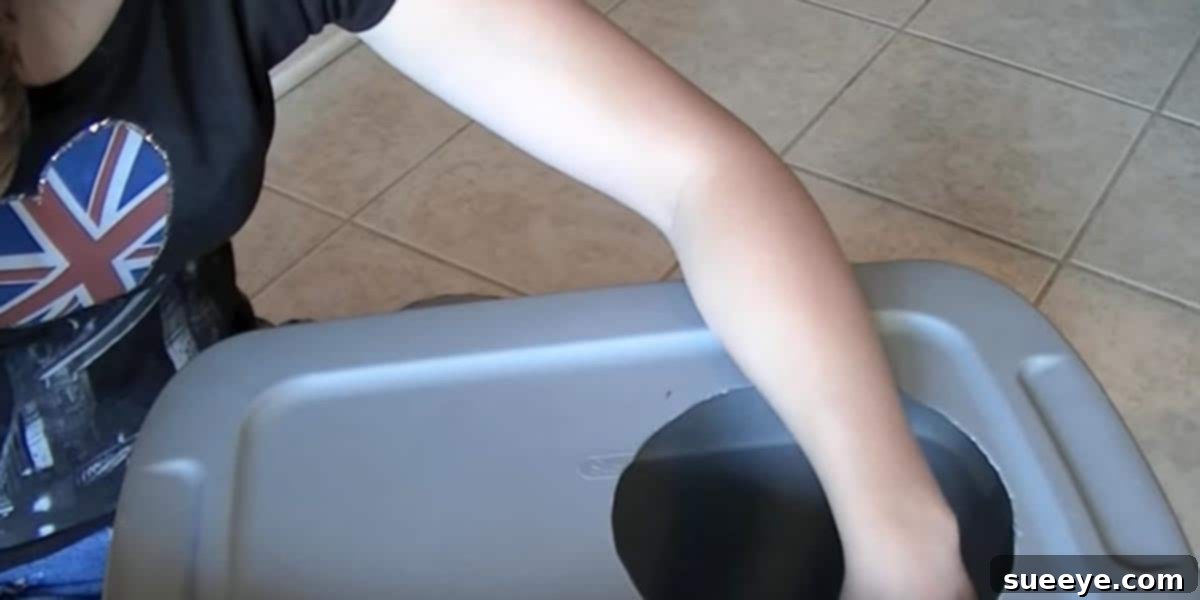
With the lid firmly seated on the chosen tub, use your permanent marker to carefully outline the desired entry hole on the top surface. For most adult cats, an ideal circular or oval opening measures approximately 7 to 9 inches in diameter. It is vital to ensure this hole is sufficiently generous to allow your cat to comfortably jump through without feeling cramped or restricted, yet not so excessively large that it compromises the structural integrity of the lid or inadvertently facilitates litter expulsion. Strategically position the hole either centrally or slightly off-center on the lid, taking care to avoid placing it too close to the very edges where the plastic may be weaker or more prone to cracking during the cutting phase. - The Art of the Cut:
This step demands particular caution and a steady hand. Place the lid securely on a stable, flat surface that can withstand potential scratches or minor damage. Employing your sharp utility knife or exacto knife, meticulously cut along the marked outline. Instead of attempting to slice through the plastic in a single pass, make multiple, controlled, shallow scores. This technique offers superior control, resulting in a cleaner, more precise cut and significantly reducing the risk of slippage. Always direct the blade away from your body and maintain a clear distance between your fingers and the cutting path. For exceptionally thick plastic, you might find it beneficial to create several small pilot holes with a drill bit before connecting them with your knife, or very carefully and briefly warm the blade with a heat gun to ease the cutting process (exercise extreme caution if using heat). - Finishing Touches (Optional but Highly Recommended):
Once the entry hole has been successfully cut, conduct a thorough inspection of all the newly exposed edges. Cut plastic often leaves sharp, abrasive, or jagged edges that could potentially scratch or injure your cat as they enter and exit. Using fine-grit sandpaper, diligently smooth down every aspect of the opening until the edges are completely smooth and safe to touch. This seemingly minor additional step profoundly enhances your cat’s comfort and significantly bolsters their safety. As an optional but valuable enhancement, consider placing a small, textured non-slip mat, a piece of artificial grass, or a ribbed rubber liner inside the tub, directly beneath the entry hole. This additional surface can effectively dislodge any lingering litter granules from your cat’s paws as they jump out, providing an extra layer of defense against tracking.
Cat Comfort & Curation: Ensuring a Smooth Transition
A frequent concern among pet owners is whether their cat will readily accept and consistently use a new litter box, particularly one featuring the distinct top-entry design. The encouraging news is that the vast majority of cats, propelled by their inherent curiosity and adaptable nature, transition to these boxes with remarkable ease. Here are proven strategies to facilitate a seamless adoption process:
- Gradual Introduction: Initially, position your newly constructed DIY top-entry litter box directly alongside your cat’s existing, familiar litter box. Grant your cat ample time and space to explore the new addition at their own pace. They may cautiously sniff around it, jump on top for observation, or even peer inside before making their first confident leap.
- Lure with Familiarity: To gently encourage initial investigation and use, you can strategically transfer a small amount of scooped, soiled litter from their old box into the new top-entry setup. The familiar scent acts as a powerful signal to your cat, clearly indicating that the new box is a designated and appropriate area for their bathroom needs.
- Patience is Paramount: It is crucial to allow your cat several days, or even up to a week, to fully acclimate to the new arrangement. Refrain from forcing them into the new box. Observe their behavior closely. Once you consistently notice your cat confidently and regularly utilizing the new top-entry box for all their needs over a period of a few days, you can then comfortably remove the old litter box entirely.
- Intrinsic Benefits for Your Cat: Many felines inherently prefer top-entry litter boxes due to the heightened sense of privacy and security they inherently offer. The enclosed design can foster a feeling of safety and comfort while they attend to their business. Furthermore, the elevated sides significantly reduce the likelihood of accidental misses or “spraying” over the edge, a common issue with some cats who stand to urinate.
The Ripple Effect: Benefits Beyond Dog Deterrence
The advantages of implementing a DIY top-entry litter box extend far beyond its primary function of keeping curious dogs out. This ingenious design ushers in a multitude of benefits that profoundly enhance both your home environment and the overall well-being of your cherished feline companion.
Impeccable Litter Containment:
This feature is arguably the most universally lauded benefit, closely following the dog-proofing aspect. With a top-entry design, cats must execute a small jump both into and out of the box. This action naturally dislodges and brushes off the majority of litter particles clinging to their paws, sending them back into the confines of the tub. Additionally, the high, enclosing walls of the storage tub effectively prevent litter from being vigorously kicked out during enthusiastic digging sessions. The cumulative effect is a dramatic reduction in the amount of litter tracked throughout your home, culminating in noticeably cleaner floors, a significant decrease in airborne allergens, and a markedly more hygienic living space. Finally, bid farewell to that irritating gritty sensation underfoot!
Superior Odor Control:
While no litter box can unequivocally eliminate all odors, the semi-enclosed nature of a top-entry tub, coupled with its snug-fitting lid, performs an exceptional job of trapping and containing unpleasant smells. In stark contrast to open litter boxes where odors freely disperse into the air, the clever design of the top-entry system largely contains most odors within the box itself until the time of scooping. This substantial reduction in ambient odor significantly contributes to a fresher-smelling home, a particularly valuable benefit if the litter box must be situated in a high-traffic area or a smaller living space.
Enhanced Home Aesthetics:
Let’s be candid: a traditional, open litter box, with its exposed contents, is rarely considered a desirable interior design element; it’s often an outright eyesore. A top-entry box, especially one crafted from an opaque storage tub, is remarkably more discreet and visually unobtrusive. It subtly blends into your home décor, appearing as a simple, functional storage container rather than an overt pet necessity. You no longer have to contend with the unsightly view of soiled litter, thereby providing a cleaner, more aesthetically pleasing, and less obvious solution for your cat’s essential needs.
Significant Cost Savings:
The financial advantage offered by this DIY solution cannot be overemphasized. By choosing to craft your own top-entry litter box, you realize a substantial saving compared to the retail price of a commercial equivalent. This immediate initial saving, coupled with the potential for reduced litter consumption due to significantly decreased tracking, translates into tangible long-term financial benefits that every prudent pet owner will undoubtedly appreciate. This newfound savings allows you to allocate more of your budget towards other vital pet care necessities, such as premium quality food, preventative veterinary check-ups, or engaging new toys.
Environmental Friendliness:
Repurposing a plastic storage tub for this project actively contributes to reducing household waste and promotes a more sustainable lifestyle. Instead of purchasing yet another specialized, often single-purpose, plastic item, you are ingeniously giving a common household container a vital second life. This small yet meaningful act of sustainable living not only benefits our planet but also positively impacts your personal finances.
Why DIY Reigns Supreme Over Commercial Alternatives
While numerous commercial top-entry litter boxes are undoubtedly effective in their design and function, the resourceful DIY approach offers several distinct and compelling advantages that firmly establish it as a superior choice for many households:
- Unparalleled Customization: The DIY method allows you the unique flexibility to select a tub that perfectly matches your cat’s individual size and comfortably fits within your available living space – a level of precise tailoring often unavailable with standardized, off-the-shelf options.
- Superior Durability: Many mass-produced commercial litter boxes are constructed from thinner, more brittle plastic. A sturdy, industrial-grade storage tub, conversely, is often made from significantly more robust and resilient plastic, promising a far longer lifespan.
- Effortless Cleaning: The smooth, often seamless interior of most high-quality storage tubs simplifies the cleaning process immensely, preventing waste from stubbornly adhering to corners and crevices, which can be a persistent problem in some molded litter box designs.
- Unbeatable Value Proposition: For an incredibly small fraction of the cost, you can achieve the same, if not often superior, functionality and aesthetic appeal as premium-priced commercial models.
- Profound Sense of Accomplishment: There is an undeniable and deeply satisfying sense of pride and accomplishment that comes from personally creating a highly functional, problem-solving item with your own two hands.
Optimizing Your DIY Top-Entry Setup for Longevity and Effectiveness
To fully maximize the comprehensive benefits and ensure the longevity of your newly crafted DIY top-entry litter box, consider integrating these additional practical tips into your pet care routine:
- Strategic Placement: Always position the litter box in a quiet, easily accessible location within your home that affords your cat a sense of privacy and security. Crucially, avoid placing it directly adjacent to their food and water bowls, as cats are naturally averse to eating and eliminating in the same immediate vicinity.
- Diligent Regular Maintenance: Adhere to a strict schedule of scooping the litter box at least once daily to maintain optimal hygiene and odor control. Furthermore, plan for a complete litter change and thorough deep cleaning of the entire tub regularly, ideally every 2-4 weeks, adjusted according to usage and the number of cats.
- Consider Multi-Cat Households: For homes with multiple feline residents, it is generally recommended to provide one litter box per cat, plus an additional extra box, if space permits. This strategy helps to minimize territorial disputes, ensures each cat has a clean and accessible option, and prevents inappropriate elimination behaviors.
- Optimal Litter Type: While any good quality clumping or non-clumping litter can be effectively used, some owners find that ultra-fine litters might be slightly more prone to tracking. However, the inherent top-entry design significantly mitigates tracking regardless of the specific litter type chosen, making it a versatile solution.
Embark on Your DIY Journey Today!
The remarkable transformation of a humble plastic storage tub into a highly effective, dog-proof, and meticulously litter-containing haven for your cat is a powerful testament to resourceful problem-solving and simple ingenuity. This project stands as an exceptionally easy, low-cost endeavor that consistently delivers outstanding results, sparing you from the relentless mess, alleviating your anxieties concerning your dog’s health, and freeing you from the unnecessary expense of overpriced store-bought alternatives. If you are poised to significantly enhance your home environment and offer your cherished feline a cleaner, more private, and stress-free space, do not hesitate any longer. Follow these clear, concise steps and prepare to experience the immediate and profound benefits. For those who learn best visually, countless step-by-step tutorials are readily available online, much like the clever, illustrative guide originally shared by “Sara,” unequivocally demonstrating just how effortless and gratifying this practical transformation truly is.
Conclusion: A Cleaner Home, Happier Pets, and a Smarter You
It’s time to definitively bid farewell to the frustrating cycle of litter messes and the constant vigilance required to guard against canine curiosity. By investing a remarkably minimal amount of both your time and money, you possess the power to create a superior litter box solution that offers an unparalleled array of benefits: invaluable peace of mind, an impeccably cleaner home, and a significantly more pleasant and harmonious living environment for every cherished member of your family – both your beloved two-legged and four-legged companions alike. Embrace the profound simplicity and undeniable effectiveness of the DIY top-entry litter box; it is unequivocally a game-changer for cat owners everywhere, revolutionizing the way you manage your pet’s needs.