
Grow Your Own Fresh Green Onions at Home: Simple & Sustainable Methods
The dream of cultivating your own food at home often feels out of reach. We frequently encounter limiting beliefs: the need for vast plots of land, the absence of a dedicated garden, the perceived demands of extensive labor, or a lack of horticultural expertise. These preconceived notions often stifle our creative potential and prevent us from experiencing the profound satisfaction of growing our own produce. I, too, have been swayed by such thoughts. However, upon discovering a truly ingenious YouTube tutorial that unveiled three remarkably simple methods for growing green onions at home, something significant shifted in my perspective. It became clear that these common hurdles were, in fact, insignificant, and the joy of homegrown food was entirely within my grasp. This comprehensive guide, inspired by those brilliant insights, will empower you to cultivate your own abundant supply of green onions, ensuring fresh flavor is always just a snip away, right from the comfort of your kitchen.
Why Grow Green Onions at Home? Unlocking a World of Benefits
Beyond the sheer novelty, growing your own green onions offers a multitude of advantages that extend far beyond simply having a fresh garnish. It’s a journey into sustainable living, culinary excellence, and personal well-being.
- Unmatched Freshness and Flavor: Imagine stepping into your kitchen and snipping vibrant, crisp green onions just moments before they hit your plate. The difference in taste and texture compared to store-bought varieties, which often lose their potency during transit and storage, is truly remarkable. Homegrown green onions burst with a more intense, authentic flavor that elevates any dish.
- Significant Cost Savings: Green onions are a staple in many cuisines, and regularly purchasing them can add up. By growing your own, especially from scraps, you eliminate this recurring expense. It’s a small change that contributes to a more frugal and self-sufficient lifestyle, stretching your grocery budget further.
- Reduced Food Waste: Many of the methods we’ll explore utilize the root ends of green onions that would typically be discarded. This transforms kitchen waste into a continuous source of fresh produce, embodying a truly circular and eco-conscious approach to cooking and gardening. It’s a small but impactful step towards a zero-waste kitchen.
- Sustainability and Environmental Impact: Growing food at home, even on a small scale, reduces your carbon footprint. You cut down on packaging, transportation, and the energy associated with large-scale agriculture. It’s a tangible way to connect with your food source and contribute to a healthier planet.
- Rewarding and Therapeutic Hobby: There’s immense satisfaction in watching something grow under your care. Gardening, even a simple indoor setup, provides a mindful escape, reduces stress, and offers a sense of accomplishment. It’s a gentle, accessible hobby for all ages and skill levels.
- Educational for All Ages: For families, growing green onions can be a fantastic educational tool. Children can learn about plant life cycles, the importance of sunlight and water, and where their food comes from. It fosters curiosity and an appreciation for nature.
- Always On Hand: No more last-minute runs to the grocery store for that missing ingredient. With a continuous supply of green onions growing in your home, you’ll always have them ready to enhance salads, stir-fries, soups, eggs, or any dish that calls for a fresh, oniony kick.
Getting Started: Essential Tips for Thriving Green Onions
Before diving into the specific growing methods, understanding a few universal principles will ensure your green onion venture is a resounding success. These simple guidelines apply to all techniques and will help you cultivate healthy, vibrant plants.
- Sunlight is Key: Green onions, like most plants, thrive on sunlight. Aim for a location that receives at least 4-6 hours of bright, indirect sunlight per day. A south-facing window is often ideal, but an east or west-facing window can also work. If natural light is limited, a small grow light can provide the necessary illumination.
- Consistent Watering (or Water Changes): Whether growing in soil or water, consistent moisture is crucial. For water-based methods, change the water every 1-2 days to prevent stagnation and mold growth. For soil-based methods, keep the soil consistently moist but not waterlogged. Good drainage is essential to prevent root rot.
- Starting Material Matters: If you’re using the root ends of store-bought green onions, choose ones that look fresh and have a healthy, intact root base. For methods using small yellow onions, select firm, healthy bulbs without any signs of rot or sprouting.
- Harvesting for Continuous Growth: The beauty of green onions is their “cut and come again” nature. Instead of pulling the entire plant, simply snip off the green tops about an inch above the root base. This encourages the plant to regrow new shoots, providing you with a continuous harvest for weeks, or even months.
- Temperature and Airflow: Green onions prefer moderate room temperatures (around 60-75°F or 15-24°C). Ensure good air circulation to prevent fungal issues, especially in humid environments. Avoid placing them directly next to drafty windows or heat vents.
- Patience and Observation: While quick to sprout, gardening still requires a touch of patience. Observe your plants daily for signs of growth, or any potential issues. Adjust watering or light as needed. It’s a continuous learning process that becomes intuitive over time.
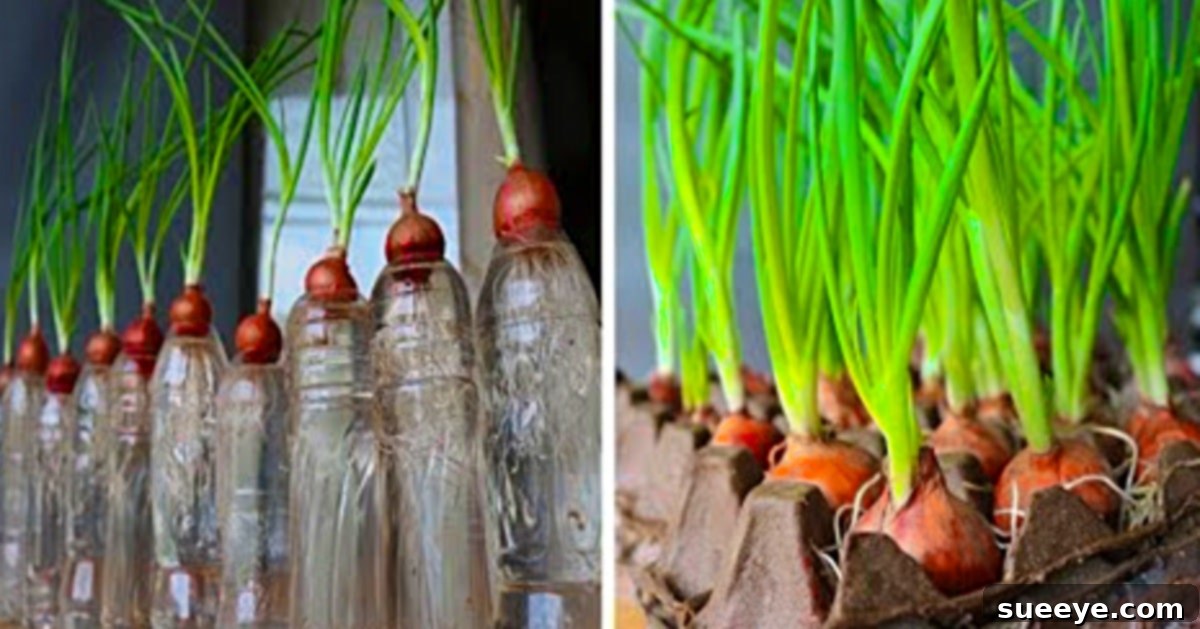
The First Method: Simple Sprouting with an Egg Carton
This incredibly straightforward method is perfect for beginners and utilizes small yellow onions to produce fresh green shoots. It’s an excellent way to transform existing pantry items into a living food source.
Materials You’ll Need:
- An old cardboard egg carton
- Plastic wrap or a plastic bag liner
- Several small yellow onions (pearl onions or smaller shallots also work well)
- Water
- A warm, sunlit location
Step-by-Step Instructions:
- Prepare the Egg Carton: Take an empty cardboard egg carton and line it completely with plastic wrap. This prevents the cardboard from becoming soggy and helps retain moisture. Ensure the plastic wrap creates a shallow basin in each cup.
- Place the Onions: Gently place one small yellow onion into each compartment of the lined egg carton. Position them so the root end (the flatter, often slightly discolored end) is facing down and the pointed sprout end is facing up.
- Add Water: Pour a small amount of water into each compartment, just enough so that the very bottom of each onion bulb is submerged. You don’t need to completely cover the onion; the goal is to provide moisture to encourage root development.
- Find a Sunny Spot: Place your prepared egg carton in a warm, sunlit area. A windowsill that receives direct sunlight for several hours a day is ideal. Warmth and light are crucial for initiating growth.
- Maintain and Observe: Check the water levels daily and top them up as needed, ensuring the onion bases remain moist. Within a few days, you should start to see roots emerging from the bottom of the onions and green shoots pushing up from the top. After a couple of weeks, you will have vibrant green onion stalks ready for harvesting.
This method is wonderfully simple and a fantastic visual demonstration of how readily plants can grow with minimal intervention. You can continue to harvest the green shoots by snipping them, and the onions will keep regrowing for a period, providing multiple yields.
The Second Method: Hydroponic Re-growth in a Plastic Egg Carton
This innovative and incredibly sustainable method transforms kitchen scraps into a continuous supply of fresh green onions. It’s a perfect example of zero-waste gardening, utilizing the very parts of the plant you might typically discard.
Materials You’ll Need:
- A clear plastic egg carton (recycled is best!)
- A tool to make holes (a small drill bit, a heated skewer, or even sturdy scissors)
- The root ends of leftover green onions (from store-bought bunches)
- Water
- A warm, sunlit space
Step-by-Step Instructions:
- Prepare the Green Onion Roots: When you use green onions from the grocery store, save the bottom 1-2 inches of the white and light green parts, including the root base. Ensure the roots are intact and healthy.
- Modify the Plastic Egg Carton: Take the plastic egg carton and carefully burn or drill small, circular holes into the top of each egg cup. The holes should be just large enough to snugly hold the root portion of your green onion scraps, preventing them from falling all the way through but allowing the roots to be suspended in water. Exercise caution if using heat to create holes, ensuring proper ventilation and safety.
- Insert the Root Ends: Slip the saved green onion root portions into the holes you’ve created. The goal is for the white root end to be submerged in water, while the green tip (where new growth will emerge) remains above the water line.
- Fill with Water: Fill the bottom of the egg carton with water, ensuring that the root ends of all the green onions are comfortably submerged. The water acts as the nutrient delivery system for new growth.
- Position for Growth: Place your plastic egg carton setup in a warm, sunlit space. A kitchen windowsill is often ideal. Consistent sunlight will fuel rapid new growth.
- Maintain and Harvest: Change the water every 1-2 days to keep it fresh and prevent the growth of mold or bacteria. Within a few days, you’ll notice new green shoots emerging rapidly. Once they reach a desired height, simply snip off the green tops as needed. The plant will continue to regrow from the base, offering multiple harvests.
This method brilliantly showcases the regenerative power of plants and is an incredibly satisfying way to reduce food waste while enjoying an endless supply of fresh green onions. It’s a fantastic starter project for anyone interested in hydroponics or sustainable living.
The Third Method: Upcycling Plastic Bottles for Onion Regeneration
This method cleverly repurposes discarded plastic soda bottles, transforming them into simple, effective planters for growing green onions from small bulbs. It’s an excellent choice for those looking for a slightly larger setup with good water retention.
Materials You’ll Need:
- Old recycled plastic soda bottles (1.5L or 2L work well)
- Sharp scissors or a utility knife (exercise extreme caution)
- Small yellow onions (similar to Method 1)
- Water
- A sunny location
Step-by-Step Instructions:
- Prepare the Plastic Bottles: Carefully cut the top portion off each plastic soda bottle. You’ll want to cut about one-third to one-quarter of the way down from the top, creating a stable “cup” or “vase” for your onions. Ensure the cut edge is as smooth as possible to avoid sharp edges. You can choose to invert the top portion into the bottom as a self-watering system if desired, but for this method, simply using the bottom half as a container is sufficient.
- Place the Onions: Set your small yellow onions inside the prepared plastic bottle containers. You can place one or two onions in each bottle, depending on its width. Position them so the root end is facing down towards the bottom of the bottle.
- Fill with Water: Pour water into the bottle, ensuring that the bottom of the onion bulbs are submerged. Again, you don’t need to completely cover the onions, just provide enough water for the roots to access it.
- Ensure Sunlight: Place the bottles in a location where they can receive ample sunlight throughout the day. Windowsills, a bright kitchen counter, or even a protected outdoor patio are suitable spots.
- Maintain Water Levels: It’s crucial to keep the water topped up consistently. Check the water level daily and add more as needed. The water acts as the sole source of hydration and nutrients for the growing onions. Within a couple of weeks, you will observe robust green shoots emerging from your onions, ready for harvest.
This method is not only effective but also promotes environmental responsibility by giving a new purpose to plastic waste. The bottles provide good stability and a decent water reservoir, making maintenance relatively easy. It’s a practical and visually appealing way to integrate gardening into your home decor.
Maximizing Your Green Onion Harvest: Beyond the Basics
While the methods above are incredibly effective for quick regeneration, you can extend the life and productivity of your green onions with a few advanced tips:
- Transition to Soil: After a few cycles of re-growth in water, the onions may start to lose vigor. To give them a boost, you can transplant the rooted onion bases into small pots filled with good quality potting mix. This provides more stable nutrients and allows for more extensive root development, leading to larger, more robust green onions.
- Gentle Fertilization: If you’re growing in soil or want to enhance your water-grown onions, a very diluted liquid fertilizer (an organic option is ideal) can be introduced. For water-based methods, add just a few drops to the water every couple of water changes. For soil-based plants, fertilize sparingly according to product instructions.
- Succession Planting: To ensure a continuous supply, start new batches of green onions every few weeks. As older plants slow down in production, you’ll have younger ones ready to take their place, guaranteeing an uninterrupted harvest.
- Optimal Harvesting: For the best flavor and to encourage regrowth, harvest the outer leaves first, leaving the inner ones to continue growing. Avoid over-harvesting; always leave at least an inch or two of green growth to allow the plant to photosynthesize and regenerate.
- Preventing Problems: Keep an eye out for any signs of mold in water-based systems – this is why regular water changes are crucial. For soil-based plants, ensure good drainage to prevent root rot. Green onions are generally quite resilient, especially indoors, but good care will prevent most issues.
Bringing Your Homegrown Green Onions to the Table
Once you begin harvesting your fresh green onions, you’ll find countless ways to incorporate their mild, zesty flavor into your cooking. They are incredibly versatile and can elevate a wide range of dishes.
- Garnish Galore: Finely chopped green onions are the ultimate garnish for soups, stews, chilis, tacos, and baked potatoes, adding a fresh burst of color and flavor.
- Stir-fries and Asian Cuisine: A staple in stir-fries, noodle dishes, and fried rice. Add them towards the end of cooking to retain their crispness and vibrant taste.
- Salads and Dressings: Chop them into your favorite green salads, potato salad, or pasta salad. They can also be blended into homemade salad dressings for a subtle oniony kick.
- Eggs and Breakfast Dishes: Fold them into scrambled eggs, omelets, frittatas, or sprinkle over avocado toast for a gourmet touch.
- Dips and Spreads: Mix into cream cheese, sour cream, or yogurt for delicious homemade dips and sandwich spreads.
- Salsa and Guacamole: Enhance the freshness and flavor of your homemade salsa or guacamole with a generous addition of chopped green onions.
Embracing these simple, sustainable ideas will undoubtedly transform the way you think about gardening and fresh produce. The satisfaction of growing your own food, especially something as accessible and rewarding as green onions, is truly profound. So, gather your materials, choose your preferred method, and embark on your journey to a more flavorful, sustainable, and self-sufficient kitchen. Happy growing!