
Mastering Kitchen Organization: Clever Storage Hacks for a Tidy & Efficient Home
A well-organized kitchen is far more than just visually appealing; it’s a cornerstone for efficient cooking, stress-free meal preparation, and significantly easier cleaning. Imagine a culinary space where every ingredient, every utensil, and every piece of cookware has its designated spot, easily accessible precisely when you need it. Gone are the days of frantic searches for that elusive spice jar or digging through a chaotic pile of plastic containers. By investing a little time and effort into smart organization, you can transform your kitchen from a source of daily frustration into a truly functional and inspiring sanctuary, saving precious minutes and boosting your overall well-being.
The journey to a perfectly organized kitchen might seem overwhelming, especially if clutter has accumulated over time. However, achieving order doesn’t require an expensive renovation or custom-built solutions. Often, the most effective strategies involve repurposing everyday items and rethinking how we utilize existing space. This comprehensive guide, drawing inspiration from ingenious tips by HGTV Handmade on YouTube, will equip you with practical, budget-friendly hacks to bring lasting order and efficiency to your kitchen. Get ready to discover clever, simple ways to store your food, tools, and essentials, making every moment spent in your kitchen a genuinely enjoyable experience.
The Profound Impact of an Organized Kitchen on Your Daily Life
Before we delve into specific hacks, it’s worth highlighting the numerous benefits a tidy kitchen brings. Beyond the immediate visual appeal, an organized kitchen profoundly impacts various aspects of your daily routine and overall home environment:
- Saves Invaluable Time: With everything in its designated place, you eliminate wasted minutes searching for items, leading to quicker and smoother cooking and meal prep.
- Reduces Stress and Anxiety: A cluttered environment can subconsciously contribute to stress and overwhelm. A clean, organized kitchen fosters a sense of calm, control, and mental clarity.
- Boosts Culinary Efficiency: When ingredients, tools, and equipment are readily accessible and logically grouped, the entire cooking process becomes more fluid, enjoyable, and less prone to mistakes.
- Minimizes Food Waste: A clear view of your pantry and refrigerator contents helps prevent duplicate purchases and ensures that food items are used before they expire, saving money and reducing waste.
- Enhances Overall Cleanliness: An organized space is inherently easier to clean and maintain on a daily basis, preventing grime and mess from accumulating.
- Optimizes Space Utilization: Smart storage solutions help you make the most of every inch, a crucial advantage in kitchens of all sizes, especially those with limited square footage.
- Improves Safety: A decluttered kitchen reduces the risk of accidents, such as tripping over items or encountering unstable stacks of dishes.
These tangible benefits are well within your reach. With the practical strategies outlined below, you can begin to experience a more harmonious and functional kitchen almost immediately, transforming your relationship with your cooking space.
Ingenious and Affordable Kitchen Storage Hacks to Transform Your Space
The secret to a sustainably clutter-free kitchen often lies in maximizing often-overlooked spaces and finding creative, unconventional uses for common household items. Here are four brilliant and actionable tips that can revolutionize your kitchen storage, turning previously chaotic areas into zones of impeccable order and streamlined efficiency. Each of these ideas prioritizes practicality, affordability, and intelligent space utilization, making them accessible to everyone.
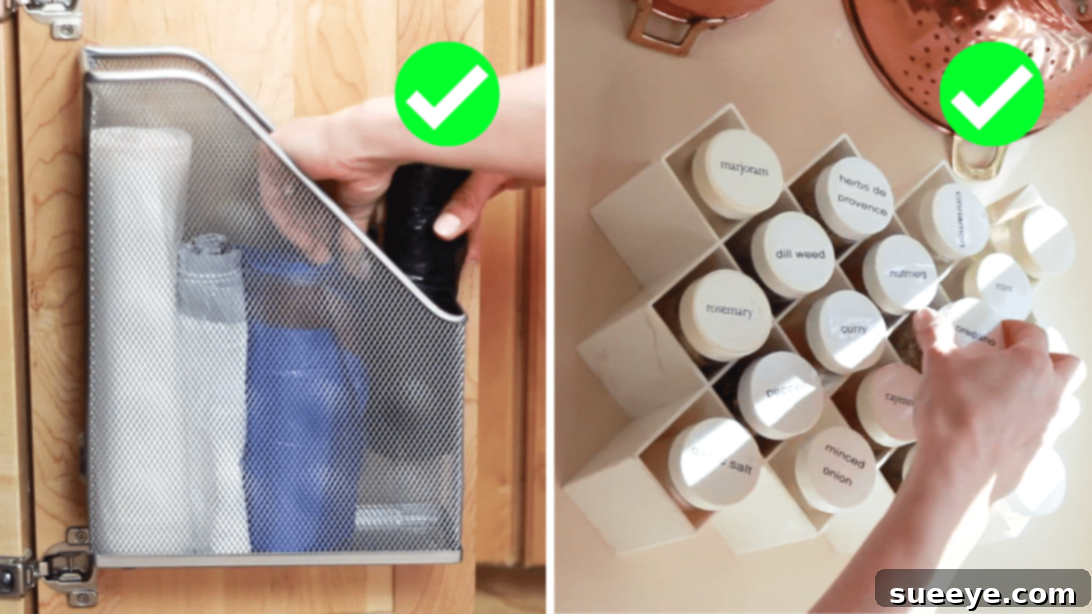
Hack #1: Repurpose Magazine Holders for Vertical Cabinet Storage
One of the most persistent sources of kitchen clutter stems from frequently used, yet awkward-to-store items that lack a proper, easily accessible home. Consider your rolls of aluminum foil, plastic wrap, parchment paper, or even slim cutting boards and baking sheets. These items often end up stacked precariously in deep drawers or cabinets, making it a frustrating ordeal to retrieve just one without causing an avalanche. This is precisely where the unassuming magazine holder emerges as an unsung hero, offering a remarkably effective and inexpensive vertical storage solution.
How to Implement This Clever Hack:
Instead of discarding old magazine holders or letting them gather dust, recognize their hidden potential within your kitchen. You can creatively integrate them in several ways:
- Mount on Cabinet Doors: Affix a sturdy magazine holder to the inside of a cabinet door using strong adhesive strips (like Command strips), small screws for a more permanent fixture, or over-the-door hooks if the design permits. This genius move instantly transforms otherwise unused vertical space into prime storage real estate.
- Utilize Inside Deep Cabinets: For larger, flatter items such as baking sheets, muffin tins, cooling racks, or larger cutting boards, simply place magazine holders upright inside a deep cabinet or pantry shelf. They act as perfect, self-contained dividers, keeping items separated, stable, and easily reachable without dislodging others.
- On Countertops or Pantry Shelves: For items you access daily, a visually appealing magazine holder can sit neatly on your countertop or a pantry shelf, housing small cookbooks, recipe binders, or even a collection of neatly rolled reusable shopping bags.
Ideal Items to Store Using This Method:
- Rolls of Kitchen Wraps: Aluminum foil, plastic wrap, parchment paper, wax paper, freezer paper, and even larger rolls of butcher paper fit snugly and are easy to pull out.
- Thin Cutting Boards: Keep thinner plastic or bamboo cutting boards upright and perfectly separated.
- Baking Sheets & Wire Racks: Magazine holders are excellent for organizing flat bakeware, preventing them from scratching each other.
- Pot and Pan Lids: These notoriously awkward items can be neatly stored vertically, preventing cabinet clatter.
- Reusable Bags: Neatly roll or fold your reusable grocery bags and store them for quick grabs before a shopping trip.
- Small Cookbooks/Recipe Binders: Keep your most-used recipes upright and organized.
The Multifaceted Benefits of This Hack:
This deceptively simple trick immediately declutters chaotic drawers and cabinets, making these frequently used items both visible and readily accessible. It effectively frees up valuable horizontal shelf space, prevents items from getting bent or damaged, and makes your kitchen feel significantly more organized without requiring a substantial investment in specialized organizers. The vertical orientation is a game-changer for maximizing every available inch, proving especially beneficial in compact kitchen layouts where space is at a premium.
Hack #2: Utilize Sponge Holders for Small Bottles and Condiments
Following the same principle of repurposing common household items, humble sponge holders (the kind often designed to hang inside a kitchen sink) offer an unexpected yet remarkably effective solution for managing an array of smaller bottles, condiment packets, and various kitchen odds and ends. These compact organizers are typically designed with drainage holes and come equipped with suction cups or hooks, making them incredibly versatile for attachment to cabinet doors, refrigerator walls, or even the side of a pantry shelf.
How to Implement This Nifty Hack:
Sponge holders are widely available and incredibly inexpensive, often costing just a few dollars. Their small, unobtrusive size makes them perfectly suited for tackling clutter in tight or awkward spaces:
- Inside Cabinet Doors: The most popular application involves attaching them to the inside of cabinet doors. Depending on the holder’s design and your cabinet material, you can use built-in suction cups (on smooth surfaces), strong adhesive hooks, or small screws for a more secure fixture.
- Under the Sink: This area is notoriously prone to disarray. Sponge holders are perfect for containing cleaning sponges, small brushes, or even a bottle of dish soap, keeping them upright and preventing spills.
- Refrigerator Walls: Some sponge holders with strong suction can adhere to the inside of your refrigerator, creating instant mini-shelves for small items like tubes of tomato paste, ginger paste, or small jars of specialty condiments.
- Pantry Shelf Dividers: Place them on pantry shelves to act as mini bins or dividers for small packets, single-serve snack items, or delicate tea bags, preventing them from getting lost amongst larger items.
An Array of Items Perfect for Sponge Holder Storage:
- Small Condiment Bottles: Hot sauce bottles, Worcestershire sauce, soy sauce, small specialty oils, food colorings, and various culinary extracts.
- Spice & Seasoning Packets: Taco seasoning mixes, gravy packets, soup bases, and other small seasoning sachets that tend to get buried.
- Single-Serve & Sample Items: Ketchup packets, sugar packets, small sample sizes of ingredients, or individual servings of energy gels.
- Cleaning Tools: Keep your actual sponges, scrubbing brushes, small bottle brushes, and dishcloths tidy and dry under the sink.
- Small Kitchen Gadgets: Lighters, bottle openers, wine stoppers, or even small measuring spoons that often go missing in drawers.
- Snacks for Kids: Individual snack bags, fruit pouches, or granola bars can be neatly organized within reach.
The Unbeatable Benefits of This Hack:
This ingenious hack is a game-changer for organizing those pesky small items that frequently get lost, tip over, or contribute significantly to visual clutter. It prevents bottles from toppling, keeps packets from scattering, and makes the contents of your cabinets or refrigerator immediately visible and effortlessly retrievable. By utilizing the inside of cabinet doors or even refrigerator walls, you unlock another layer of vertical storage, keeping your countertops and main shelves clear, tidy, and aesthetically pleasing. This strategy is particularly invaluable for maximizing every inch of space in kitchens with limited storage options, proving that even the smallest items can have a big impact on organization.
Hack #3: Store Dry Goods in Clear Containers for Ultimate Visibility and Freshness
The pantry, if not managed with intentionality, can quickly devolve into a chaotic black hole where forgotten ingredients languish and expire. Bulky original packaging, half-empty bags, and inconsistent labeling contribute to a frustrating system where finding what you need feels less like cooking and more like an archaeological dig. Transitioning to clear, airtight containers is perhaps one of the most transformative organization strategies you can employ, instantly upgrading your pantry from cluttered to meticulously curated and highly functional.
Why Clear Containers are an Indispensable Pantry Solution:
- Instant Visual Inventory: You can see exactly what you have at a glance, eliminating guesswork, preventing duplicate purchases, and ensuring you use items before they spoil.
- Superior Space Efficiency: Uniform, stackable containers maximize both vertical and horizontal shelf space far more effectively than irregularly shaped boxes and floppy bags, creating a neat and compact look.
- Enhanced Freshness Preservation: Airtight containers are crucial for keeping dry goods fresher for significantly longer, protecting them from moisture, air, and pantry pests.
- Elevated Aesthetic Appeal: A pantry filled with neat, uniformly clear containers looks incredibly clean, organized, and inviting, making the entire space a joy to behold and work in.
- Effortless Accessibility and Use: Scooping out ingredients like flour or rice is far simpler and cleaner from a wide-mouthed container than from a clumsy bag, reducing spills and mess.
How to Implement This Game-Changing Hack:
Begin by undertaking a thorough pantry purge. Remove all expired items, consolidate any duplicates, and wipe down shelves. Then, proceed with selecting and filling your containers:
- Choosing the Right Containers: Opt for high-quality glass, durable acrylic, or BPA-free plastic containers. Look specifically for designs that are stackable to optimize vertical space. Invest in a variety of sizes to accommodate different items – tall ones for pasta, wider ones for flour, smaller ones for spices or baking powder.
- What to Decant: This method works wonders for most dry goods: cereals, various types of pasta, rice, flour (all-purpose, bread, almond), sugar (granulated, brown, powdered), oats, nuts, dried fruits, beans, lentils, crackers, cookies, coffee beans/grounds, and tea bags. Even snack items like granola bars or fruit snacks can be consolidated into larger, accessible containers.
- Crucial Labeling: While clear containers offer excellent visibility, labels provide an essential additional layer of organization, especially for similar-looking items (e.g., different types of flour, sugar, or rice). Always include the item name and, importantly, the expiration or “best by” date from the original packaging. A dry-erase marker on plastic or glass is also a convenient option.
- Strategic Placement: Employ the “first-in, first-out” rule: place newer items at the back and older ones at the front. Store frequently used items at eye level for easy access. Group similar categories together – create dedicated zones for baking supplies, breakfast items, snacks, or grains.
Extending the Clear Container Principle Beyond the Pantry:
The philosophy of clear containment isn’t limited to dry goods. Apply this principle to other areas: use clear, smaller containers for items in your refrigerator (e.g., pre-cut vegetables, deli meats, leftovers) or in drawers for organizing cutlery, small gadgets, or baking tools. The core benefits remain visibility, order, and efficient space utilization.
Whether you choose elegant glass fishbowl containers for a stylish display of snacks on a kitchen cart or robust, uniform plastic bins for deep pantry shelves, the impact of clear storage on both functionality and aesthetic appeal is undeniable. It’s an investment that significantly pays off in daily convenience, long-term food preservation, and a profound sense of kitchen harmony.
Hack #4: Condense Bulky Packaging to Reclaim Valuable Space
Take a peek into almost any pantry, and you’re likely to find a familiar scene: a collection of half-empty cereal boxes, oversized cracker boxes, and various bags of snacks, all occupying far more space than their actual contents warrant. Original packaging is frequently bulky and cumbersome, designed more for eye-catching marketing on store shelves than for efficient storage in your home. Condensing these items is a remarkably simple yet incredibly potent way to reclaim significant, valuable pantry or cabinet real estate, instantly making your kitchen feel more spacious and orderly.
How to Implement This Highly Effective Space-Saving Hack:
This hack is particularly effective for items that come in bags housed within larger cardboard boxes:
- Liberate from Bulky Boxes: The first step is to remove the inner bags of cereals, crackers, cookies, pretzels, pasta, or even certain dry mixes from their oversized cardboard containers. The box itself is often mostly empty space, serving little purpose once opened.
- Trim Excess Bag Material: Once the inner bag is freed, you’ll often notice a substantial amount of excess plastic material. Carefully cut off any unnecessary portions of the bag, leaving just enough to comfortably seal it. Be mindful not to cut too close to the contents.
- Roll Down and Securely Seal: Tightly roll down the top of the bag to expel as much air as possible. Secure it firmly with a robust clip – sturdy binder clips, traditional chip clips, or specialized bag clips all work exceptionally well. For some items, a piece of strong tape can also provide an effective seal.
- Essential Labeling: If you’ve removed the item from its original, informative packaging and it’s not being transferred into a clear, labeled container, it’s crucial to label the condensed bag. Use a permanent marker to write the product name and, most importantly, the expiration or “best by” date directly onto the bag or on a small sticker.
- Store Compactly: These newly condensed, securely sealed bags can now be stored much more compactly and efficiently in bins, on shelves, in drawers, or on a kitchen cart. You’ll be astonished at how much less room they consume compared to their original, bulky boxed counterparts.
Tangible Benefits of This Ingenious Hack:
- Dramatic Space Saving: This is the most immediate and impactful benefit. You’ll be amazed at the sheer volume of extra room you instantly create in your pantry, cabinets, or even refrigerator (for items like cheese or frozen goods).
- Significant Reduction in Visual Clutter: A shelf filled with uniformly clipped and tidy bags looks infinitely more organized and aesthetically pleasing than a haphazard jumble of mismatched, half-open boxes.
- Enhanced Food Freshness: Tightly rolling and sealing bags helps to keep contents fresher for longer by minimizing exposure to air and moisture, which can lead to staleness or spoilage.
- Streamlined Access and Visibility: Without bulky boxes obstructing your view, it becomes much easier to see and reach the specific items you need, reducing rummaging time.
For the ultimate in kitchen organization, consider combining this hack with the clear container strategy (Hack #3). Decant your staple dry goods into airtight containers, and condense other items that don’t fit the decanting model. Customizing your approach based on the type of food, its frequency of use, and your aesthetic preferences will lead to a truly personalized and efficient kitchen storage system.
General Principles for Sustaining Long-Term Kitchen Organization
While implementing these specific hacks provides an excellent starting point, true and lasting kitchen organization is an ongoing endeavor, not a one-time fix. To maintain your newly tidy and efficient space, it’s beneficial to adopt these overarching principles as part of your regular routine:
- Always Start with a Thorough Purge: Before you even begin organizing, commit to a comprehensive decluttering session. Ruthlessly remove expired food, broken tools, duplicate items, or anything you haven’t used in a year. If you don’t love it or use it, let it go.
- Zone Your Kitchen Strategically: Group similar items together to create intuitive “zones.” Establish areas for baking supplies, cooking ingredients, breakfast essentials, snacks, cleaning products, and even dishware. This makes finding and putting away items incredibly efficient.
- Maximize Vertical Space at Every Opportunity: This is a recurring and crucial theme in effective organization. Utilize shelf risers, stackable bins, over-the-door organizers, and wall-mounted solutions to leverage the full height and depth of your cabinets, pantry, and walls.
- Utilize Cabinet Doors and Sides: As brilliantly demonstrated by the magazine and sponge holder hacks, the inside surfaces of cabinet doors and even the often-overlooked sides of cabinets or islands are prime real estate for additional storage.
- Embrace the “One In, One Out” Rule: To prevent future clutter accumulation, adopt this simple yet powerful rule. When you purchase a new item, commit to removing an old, similar item that is no longer needed or used.
- Implement Regular, Quick Maintenance: Dedicate a brief 10-15 minutes once a week (or even daily) to a quick tidy-up. Straighten items, wipe down visible surfaces, and ensure everything is returned to its proper home. Consistency is key.
- Custom Fit Your Solutions: Remember that every kitchen is unique. Adapt these hacks and principles to perfectly suit your specific layout, personal cooking habits, and individual storage needs. Don’t be afraid to experiment with different organizers and arrangements until you discover what genuinely works best for you and your family.
Your Journey to a More Efficient and Joyful Kitchen
A functional, organized, and inviting kitchen is not merely a luxury; it is an indispensable component of a harmonious and stress-free home environment. By wholeheartedly embracing these clever storage tips and adopting a mindful, intentional approach to how you store your kitchen essentials, you are doing far more than simply tidying up a physical space; you are profoundly enhancing your entire cooking experience and, by extension, your daily life.
From ingeniously repurposing magazine holders to meticulously decanting your pantry staples into clear, airtight containers, each small, deliberate step contributes significantly to creating a more efficient, aesthetically pleasing, and genuinely enjoyable culinary environment. Remember, organization is a continuous journey, not a singular destination. Start small, implement one hack at a time, and celebrate each victory, no matter how minor. You will undoubtedly be amazed at the transformative impact these simple, practical changes can have on your daily routine, your mood, and your overall sense of peace. So, roll up your sleeves, draw inspiration from these brilliant ideas generously shared by HGTV Handmade, and embark on your rewarding path to a beautifully organized and exceptionally functional kitchen today!
*All images featured in this article are credited to HGTV Handmade via YouTube. We enthusiastically encourage you to visit their channel and subscribe for a wealth of additional inspiring home, DIY, and organizational content!