
Mastering Microwave Safety: Essential Foods and Items You Should Never Heat
The microwave oven has revolutionized modern kitchens, offering unparalleled convenience for quickly reheating leftovers, defrosting ingredients, and preparing meals. Yet, despite its common presence, many users remain unaware of crucial safety protocols that govern its operation. Beyond merely understanding how to clean this indispensable appliance, knowing precisely which foods and materials are permissible inside is paramount. Ignoring these guidelines can lead to anything from minor clean-up headaches to significant appliance damage, electrical fires, and even personal injury. This comprehensive guide, inspired by valuable insights from Natural Cures on YouTube, will equip you with the knowledge to use your microwave safely and effectively, transforming your kitchen into a safer space for everyone.
A fundamental rule of microwave operation, often overlooked, is to **never turn on an empty microwave**. Operating the appliance without any food or liquid to absorb the microwave energy can cause the magnetron (the component that generates microwaves) to overheat rapidly, potentially leading to irreversible damage or even self-destruction of the machine. Always ensure there’s something inside, even if it’s just a cup of water, if you’re testing its functionality.
The Ultimate Guide to Microwave No-Nos: Foods and Items to Strictly Avoid
To ensure your safety and the longevity of your appliance, familiarize yourself with this critical list of items and foods that should never enter your microwave:
1. Water: The Peril of Superheating
Heating plain water in a microwave can be deceptively dangerous due to a phenomenon known as superheating. Unlike stovetop heating, where bubbles typically form on the bottom of the pot, providing nucleation sites for boiling, microwave-heated water can reach temperatures well above its boiling point (212°F or 100°C) without visibly bubbling. The moment this superheated water is disturbed – by removing the container, adding a spoon, or even a slight vibration – it can rapidly flash into steam, causing a violent eruption. This sudden burst can scald your hands, face, and other body parts, leading to severe burns. To safely heat water in a microwave, consider placing a non-metallic item, like a wooden stirrer or a ceramic spoon, into the cup before heating. This provides a nucleation site, allowing bubbles to form safely. Always use microwave-safe glass or ceramic containers and exercise extreme caution when handling.
2. Frozen Meat: A Recipe for Bacterial Growth and Uneven Cooking
Attempting to defrost large cuts of frozen meat in the microwave is a practice fraught with both culinary and health risks. Microwaves notoriously heat food unevenly, often overcooking the outer edges of the meat while leaving the center stubbornly frozen or dangerously cold. This uneven heating creates a “danger zone” where bacteria can rapidly multiply. Pathogens like Salmonella and E. coli thrive in temperatures between 40°F (4°C) and 140°F (60°C). By heating the meat unevenly, you create pockets where bacteria can flourish before the entire piece reaches a safe internal temperature. The safest methods for defrosting meat are either slowly in the refrigerator, under cold running water (changing the water every 30 minutes), or as part of the cooking process itself. If you must use a microwave for defrosting, ensure the meat is cooked immediately afterward, breaking it into smaller pieces to promote more even heating.
3. Whole Eggs: A Ticking Time Bomb
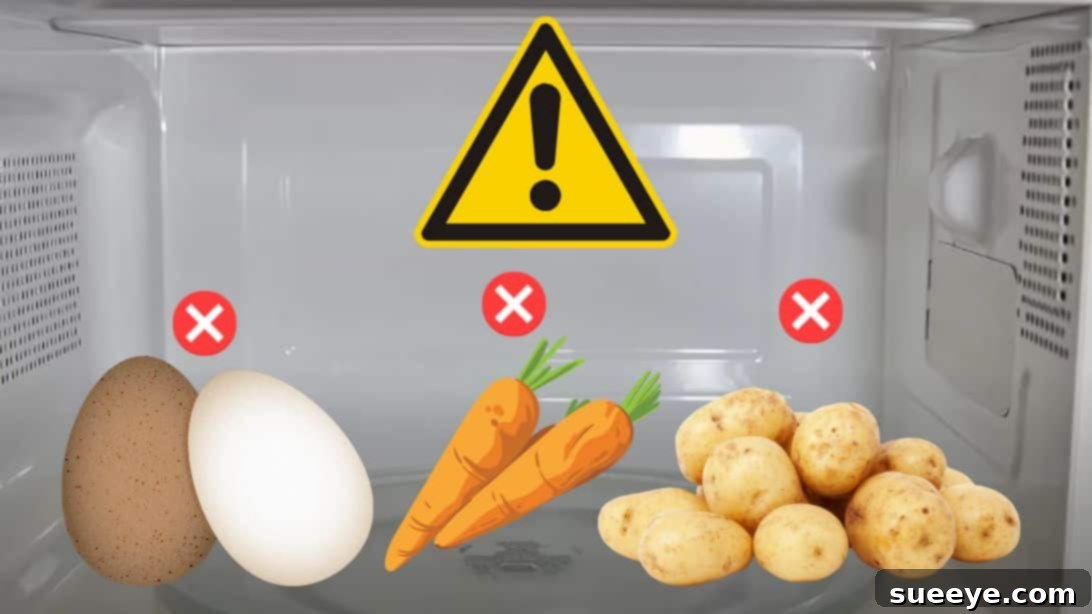
Putting a whole, uncracked egg in the microwave is a common mistake with potentially explosive consequences. The rapid heating generated by microwave energy quickly turns the moisture inside the egg into steam. Because the eggshell is impermeable, this steam has nowhere to escape, causing pressure to build up rapidly. Once the internal pressure exceeds the shell’s structural integrity, the egg will violently explode, either inside your microwave or, more dangerously, in your hand or on your face when you try to remove it. The resulting mess is difficult to clean, and the risk of injury from hot egg shrapnel is significant. If you wish to cook eggs in the microwave, always crack them into a microwave-safe bowl, pierce the yolk (if applicable) to allow steam to escape, and cover loosely.
4. Spicy Peppers: Fire Hazards and Irritating Vapors
Certain peppers, especially those with high capsaicin content (like jalapeños, habaneros, or ghost peppers), should never be microwaved. When heated, these peppers can release their potent capsaicin oils into the air as a fine mist. This aerosolized capsaicin can act as an irritant, causing severe burning sensations in your eyes, throat, and lungs, similar to pepper spray. Furthermore, the high natural oil content and relatively low water content in some dried or very ripe peppers can make them susceptible to catching fire within the microwave, posing a serious fire risk to your kitchen. Stick to traditional cooking methods for peppers.
5. Fresh Fruits & Root Vegetables: Pressure Cookers in Miniature
Similar to whole eggs, many fresh fruits and certain root vegetables contain high water content encased in a relatively thick or impermeable skin. Microwaving items like grapes, apples, peaches, or even carrots and unpeeled potatoes and tomatoes can lead to a dangerous buildup of steam pressure beneath their skins. As the internal temperature rises, the trapped steam will eventually cause the fruit or vegetable to explode, creating a sticky, hot mess inside your microwave and potentially causing burns. For unpeeled potatoes, sweet potatoes, or tomatoes, it is crucial to poke several holes into their skin with a fork or knife before microwaving. This allows steam to escape safely. For delicate fruits, consider alternative heating methods or consume them fresh. When heating tomato sauce, ensure it’s in a covered, microwave-safe dish, as it can splatter aggressively.
6. Sausages: Exploding Casings and Grease Splatters
Sausages, particularly those encased in natural or synthetic skins, also fall into the category of potential microwave explosions. The thin casing traps steam as the sausage heats, leading to a rapid pressure increase that can cause the sausage to burst open. This not only creates an unsightly and difficult-to-clean splatter of hot grease and meat all over your microwave interior but can also result in burns if the explosion occurs while you are handling it. To safely heat sausages in the microwave, it’s best to pierce them all over with a fork before cooking. Alternatively, cover them with a paper towel or microwave-safe lid to contain any splatters and protect your microwave from excessive grease buildup.
7. Tableware with Metallic Details: Sparks and Scorch Marks
Before placing any dinnerware in the microwave, always inspect it for metallic accents. Many decorative plates, bowls, and mugs feature intricate designs, rims, or logos made with metallic paint, gold leaf, or silver trim. Even seemingly small metallic details can cause a dangerous reaction in the microwave. When exposed to microwave energy, metal can act as an antenna, causing electrical currents to flow and generate sparks, a phenomenon known as “arcing.” This arcing can damage your microwave’s interior, create scorch marks, and, in severe cases, ignite nearby flammable materials, leading to a fire. Always use dishes explicitly labeled “microwave-safe” or those made entirely of glass, ceramic, or plastic without any metallic embellishments.
8. Aluminum Foil and Other Metals: The Ultimate No-Go
This point cannot be stressed enough: **never put any form of metal into your microwave.** This includes aluminum foil, metal twist ties, metal cutlery, food containers with metal handles, or any packaging containing hidden metal components. Even the smallest piece of metal can cause intense arcing, leading to sparks and potentially a full-blown electrical fire within seconds. Microwaves work by generating electromagnetic waves that cause water molecules in food to vibrate and heat up. Metals, however, reflect these waves, causing them to bounce around inside the oven, concentrating energy in specific spots and creating electrical discharges. The resulting sparks can damage your microwave beyond repair and pose an immediate fire hazard to your kitchen. Always transfer food from metallic packaging to a microwave-safe container before heating.
9. Plastic and Styrofoam Containers: Leaching Chemicals and Melting Hazards
While some plastics are designed for microwave use, many are not. Non-microwave-safe plastic containers, particularly thin ones like butter tubs, yogurt cups, or cottage cheese containers, can melt, warp, or leach harmful chemicals into your food when heated. These chemicals, such as BPA or phthalates, can pose potential health risks over time. Styrofoam containers, commonly used for takeout, are even more problematic. They can easily melt and deform when exposed to microwave heat, contaminating your food with chemicals and creating a sticky, unsightly mess. Always look for the “microwave-safe” label on plastic containers, typically indicated by a symbol of a microwave or three wavy lines. If in doubt, transfer your food to a glass or ceramic dish.
10. Paper Bags and Takeout Containers: Hidden Dangers
While paper itself generally doesn’t pose a risk, brown paper bags, grocery bags, and many cardboard takeout containers should be kept out of the microwave. Brown paper bags, like those from fast food restaurants, are not designed for microwave heat and can emit toxic fumes, melt, or even catch fire due to high heat and their often greasy nature. Many takeout containers, even if they appear to be cardboard, often contain a thin plastic or wax lining that can melt or leach chemicals. Furthermore, some might even have hidden metal handles, staples, or metallic decorative elements that would cause arcing, as discussed previously. Always transfer food from such containers to a proper microwave-safe dish before heating.
General Microwave Safety Practices for Your Kitchen
Beyond knowing what not to microwave, adhering to general safety practices will further enhance your kitchen safety:
- Read the Manual: Familiarize yourself with your specific microwave model’s instructions and warnings.
- Keep it Clean: Regularly clean the inside of your microwave. Food splatters can absorb microwave energy, leading to hotspots, uneven cooking, and even smoke.
- Use Microwave-Safe Cookware: Always ensure your dishes are labeled “microwave-safe.” Glass, ceramic, and specific plastics are generally safe.
- Cover Food Loosely: Covering food helps retain moisture, cooks more evenly, and prevents splatters. Use a microwave-safe lid, plastic wrap (vented), or paper towel.
- Vent Containers: If using a sealed container, ensure it has a vent or lift the lid slightly to allow steam to escape and prevent pressure buildup.
- Stir and Rotate: For larger food items, stir halfway through cooking or rotate the dish to promote more even heating.
- Check Temperature: Always check the internal temperature of cooked food, especially meat, to ensure it has reached a safe temperature and eliminated bacteria.
- Stand Back: When heating superheated liquids, stand back slightly when opening the microwave door to avoid potential scalding from sudden steam release.
- Never Operate Empty: As mentioned, never turn on your microwave without food or liquid inside to absorb the energy.
Conclusion: Prioritizing Safety in Your Kitchen
The microwave is an indispensable tool in our busy lives, but its convenience should never come at the expense of safety. By understanding which foods and materials are strictly off-limits, and by adopting good microwave habits, you can prevent dangerous accidents like fires, explosions, and exposure to harmful chemicals. Remember, a little knowledge goes a long way in creating a safer and more efficient kitchen environment. Always double-check your containers, inspect your food, and when in doubt, opt for an alternative heating method. Stay safe, cook smart, and enjoy the many benefits your microwave has to offer!
*All image credit belongs to Natural Cures via YouTube. Follow and subscribe to their channel for more informative content!