
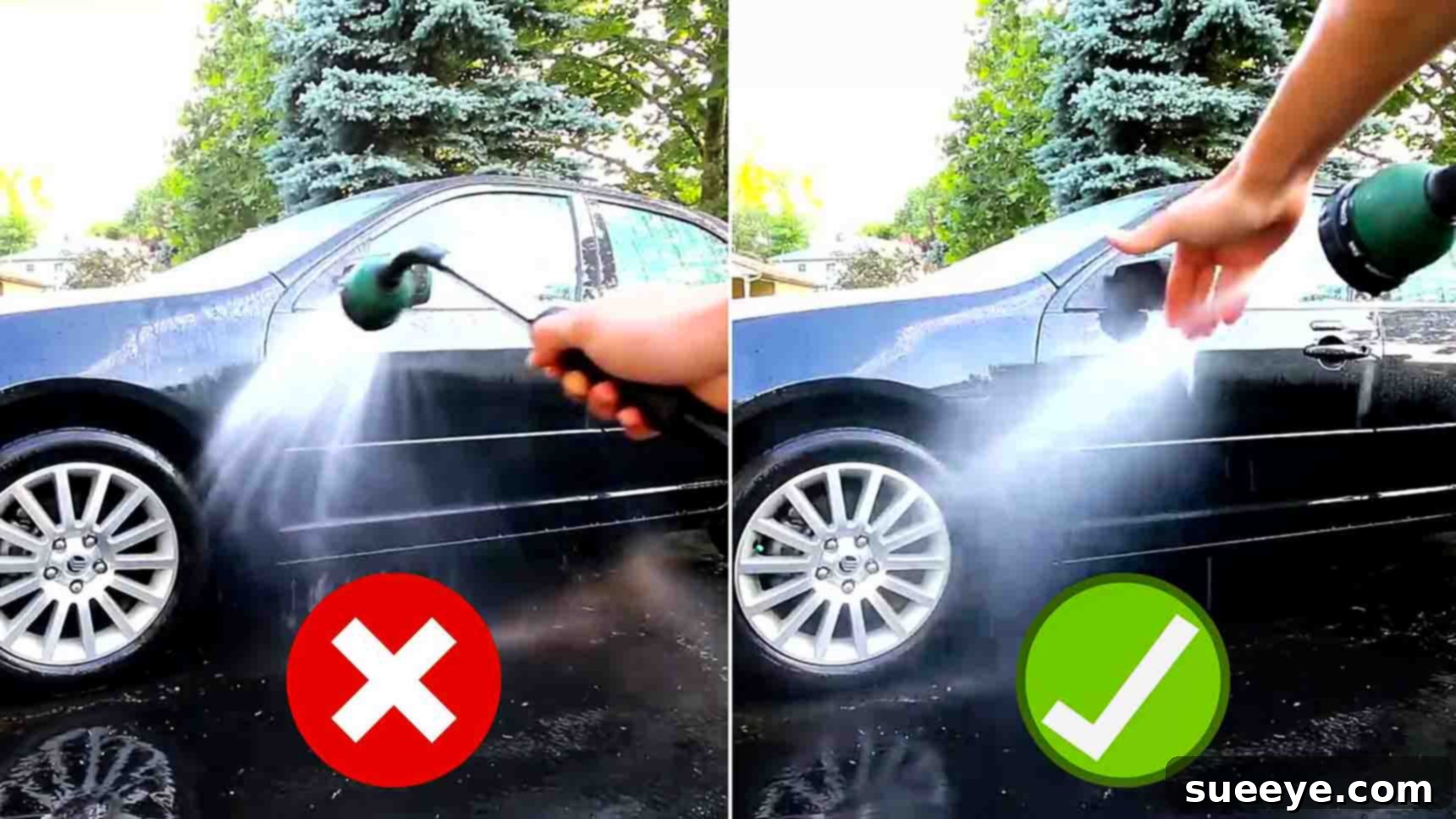
Mastering Scratch-Free Car Washing: Avoid These Common Mistakes for a Pristine Finish
Achieving a showroom-quality shine for your car often feels like a daunting task, especially when the smallest misstep can lead to unsightly scratches and swirl marks on your precious paintwork. Many car owners unknowingly inflict damage during what they believe is a routine cleaning. But what if we told you that even the most seemingly innocent washing habits could be sabotaging your car’s finish? Fortunately, expert insights from detailing pros like ChrisFix on YouTube can guide you toward flawless car care. He’s outlined crucial cleaning mistakes to avoid, ensuring your vehicle remains protected and gleaming. Let’s delve into these critical tips to safeguard your car’s paint and share this invaluable knowledge with fellow car enthusiasts.
The Top 10 Car Washing Mistakes That Cause Paint Damage
From automated car washes to incorrect product choices, the pitfalls in car cleaning are numerous. Understanding these common errors is the first step toward adopting a truly paint-friendly car washing regimen. Avoid these practices to ensure your car maintains its luster and value.
1. Relying on Automated Car Washes (Even “Touchless” Ones)
While convenient, commercial car washes, particularly those with rotating brushes, are notorious for inflicting significant damage on your vehicle’s paint finish. These aggressive brushes often trap dirt and grit from previous vehicles, acting like sandpaper against your car’s delicate clear coat. The result? A myriad of unsightly swirl marks and scratches that dull your car’s shine over time, diminishing its aesthetic appeal and resale value.
Even “touchless” car washes, often perceived as a safer alternative, are not without their risks. To compensate for the lack of physical contact, these systems typically employ powerful, highly concentrated detergents and high-pressure water jets. These potent chemicals can strip away your car’s protective wax or sealant layers, leaving the paint vulnerable to environmental contaminants. Furthermore, the intense water pressure can sometimes force dirt particles across the surface, causing microscopic abrasions. For true paint preservation, a meticulous hand wash remains the superior choice.
2. Washing Your Car in Direct Sunlight or on a Hot Surface
The sun can be your car’s worst enemy during a wash. Attempting to clean your vehicle in direct sunlight or when its surface is scorching hot leads to rapid evaporation of water and soap solutions. This premature drying leaves behind unsightly water spots, mineral deposits, and soap residue that can etch into your paint, creating stubborn blemishes that are difficult to remove without abrasive polishing. The high temperatures can also cause car shampoo to dry prematurely on the paint, leaving streaks and compromising its cleaning effectiveness.
To avoid this common blunder, always wash your car in the shade, ideally during the cooler parts of the day, such as early morning or late afternoon. If a shaded area isn’t available, work on smaller sections at a time, rinsing thoroughly and immediately drying each section before moving on. This approach minimizes the chance of water spots and ensures a streak-free finish, allowing your car care products to work as intended.
3. Opting for Household Soaps or Harsh Degreasers
It might seem tempting to grab the dish soap from your kitchen cabinet for a quick car wash, but resist the urge! Household detergents, like dish soap or general-purpose degreasers, are formulated to break down grease and oil on dishes, not to gently clean automotive paint. These products contain harsh chemicals that are highly alkaline and designed to aggressively strip away protective layers.
When used on your car, they will aggressively remove any wax, sealant, or ceramic coating that protects your paint from UV rays, environmental contaminants, and oxidation. This leaves your clear coat exposed and vulnerable, accelerating its degradation and leading to premature fading and damage. Always invest in a high-quality, pH-neutral car-specific shampoo designed to effectively clean without stripping your paint’s vital protection. These specialized formulas are gentle on your finish while still providing excellent cleaning power and lubrication.
4. Wiping Dry Surfaces Without Proper Lubrication
One of the quickest ways to induce scratches into your paint is by wiping dry or semi-dry surfaces without adequate lubrication. This is particularly crucial when dealing with isolated contaminants like bird droppings, tree sap, or bug splatters. A dry towel, even a microfiber one, will simply drag these abrasive particles across the paint, creating fine scratches and swirl marks as the friction between the dirt and the paint increases.
Instead, always pre-treat the affected area with a quick detailer, spray wax, or a dedicated lubricating spray. Allow the product to dwell for a moment, softening the contaminant and providing a slick barrier. This lubrication encapsulates the dirt, allowing your microfiber towel to glide safely across the surface, lifting the debris without causing friction-induced damage. For tougher spots, a gentle touch and multiple applications are far better than aggressive scrubbing, which almost guarantees paint marring.
5. Inadequate Pre-Rinse & Improper Power Washer Use
Before any wash mitt touches your car’s surface, a thorough pre-rinse is absolutely essential. The goal is to remove as much loose dirt, dust, and grime as possible, preventing these abrasive particles from being dragged across your paint during the washing phase. Simply getting the car “soaking wet” isn’t enough; you need to effectively flush away surface contaminants to minimize physical contact with abrasive elements.
While a garden hose is sufficient, many opt for a power washer for its efficiency. However, improper use of a power washer can be highly detrimental. Holding the nozzle too close to the paint, especially with a concentrated stream, can chip paint, damage trim, or even peel off clear coat, particularly on older or repainted vehicles. Always maintain a safe distance (at least 12-18 inches) and use a wide fan-pattern nozzle (e.g., 40-degree) to gently lift and rinse away dirt. Never aim directly at seals, emblems, or vulnerable body gaps. Consider using a foam cannon during your pre-soak phase to help loosen dirt before rinsing, providing an extra layer of lubrication and chemical dwell time.
6. Employing the Wrong Washing Tools: Sponges, Old T-Shirts, and Bath Towels
The type of material you use to physically wash your car is paramount to preventing scratches. Traditional kitchen sponges, old t-shirts, and even standard bath towels are entirely unsuitable for car paint. These materials typically have a flat, closed-cell structure that traps dirt and grit against the paint surface, essentially turning your wash tool into an abrasive block that grinds contaminants into your clear coat. This is a primary cause of those dreaded swirl marks and fine scratches that become visible in direct sunlight.
The only materials that should make contact with your car’s delicate paint are high-quality, plush microfiber wash mitts or towels. Microfiber possesses a unique split-fiber construction that allows it to effectively lift and trap dirt particles away from the surface, isolating them within its fibers rather than pushing them around. This significantly reduces the risk of scratching. Always ensure your microfiber tools are clean, soft, and specifically designed for automotive use. Replace them regularly as they wear out or become compromised by embedded grit that cannot be thoroughly washed out.
7. Disregarding the “Top-to-Bottom” Washing Principle
The logical flow of gravity dictates that dirt and grime will always migrate downwards. Ignoring this fundamental principle during car washing can lead to reintroducing contaminants onto already cleaned sections. Starting from the bottom of the car, which is typically the dirtiest, and then moving upwards means you’re dragging the heaviest concentration of grit and road film over the cleaner upper panels. This dramatically increases the likelihood of scratches and swirl marks as dirt is moved from dirty to cleaner areas.
The correct approach is to always start at the cleanest part of the car – the roof – and systematically work your way downwards through the windows, upper panels, and finally the lower bodywork. This ensures that dirt and dirty water are rinsed away from clean areas, preventing cross-contamination. The only exception to this rule is often the wheels and tires, which are usually the dirtiest components. Many detailers prefer to clean wheels first, using separate tools and buckets, to prevent transferring their extreme grime to the bodywork. Once wheels are done, then proceed with the top-to-bottom method for the rest of the car.
8. Using Circular or Swirling Motions While Washing
It’s an intuitive motion to wash in circles, but this common practice is a primary culprit behind those ubiquitous swirl marks visible under direct sunlight or bright lights. When you move your wash mitt in a circular motion, any minute dirt particles that aren’t fully encapsulated by the soap are dragged in varying directions across the paint. This creates a spiderweb-like pattern of micro-scratches that are incredibly difficult to remove without professional paint correction, requiring compounding and polishing.
The professional technique involves washing in straight, overlapping lines. Whether you’re moving horizontally or vertically, pick a direction and stick to it for each panel. This way, if any scratches are inadvertently created, they will be uniform and less noticeable, as light will reflect off them in a consistent manner. More importantly, this methodical approach helps guide you through the process, ensuring no spots are missed and dirt is efficiently lifted and rinsed away.
9. The Single-Bucket Method and Contaminating Wash Media
One of the easiest ways to introduce scratches during a hand wash is by using a single bucket or by allowing your wash media (mitts and towels) to become contaminated. When you use only one bucket, all the dirt rinsed off your car gets mixed back into your wash solution, turning your clean soap into an abrasive soup. Each time you re-load your mitt, you’re essentially picking up fresh grit and rubbing it back onto your paint, negating the purpose of lubrication.
The essential “two-bucket method” mitigates this risk: one bucket for soapy water, and a separate one filled with plain, clean water solely for rinsing your dirty wash mitt. This keeps the wash solution clean. After cleaning a section of the car, dunk your mitt into the rinse bucket, agitating it against a grit guard placed at the bottom to release embedded dirt. Squeeze out the dirty water, then re-load your now-clean mitt into the soapy wash bucket. Beyond the two-bucket method, another critical mistake is dropping your wash mitt or drying towel on the ground. A dropped towel instantly picks up microscopic debris, stones, and sand, turning it into a dangerous scratching tool. If a mitt or towel falls to the ground, immediately set it aside for laundry; never use it on your car’s paint again without a thorough wash. Maintaining sterile cleaning tools is paramount for a scratch-free finish.
10. Applying Harsh Chemicals to Gripping Surfaces
While the exterior of your car demands specific care, the interior also has its unique considerations. A crucial mistake, particularly concerning safety and longevity, is applying strong chemical cleaners like leather or vinyl protectants, or general-purpose degreasers, to surfaces you need to grip firmly. This includes your steering wheel, gear shifter, handbrake, and especially the accelerator and brake pedals.
Many interior cleaning products can leave behind a slippery or greasy residue. On a steering wheel or shifter, this residue can compromise your grip, leading to a loss of control, which is a serious safety hazard, especially during sudden maneuvers. On pedals, a slippery surface is even more dangerous, potentially causing your foot to slip during crucial braking or acceleration. For these high-contact areas, it’s best to use a damp microfiber cloth for routine cleaning or a very mild, non-slippery, dedicated interior cleaner sparingly, ensuring any residue is thoroughly wiped away. Prioritize safety over an overly glossy finish in these critical areas.
Elevate Your Car Care: The Path to a Flawless Finish
Car washing is far more than just getting your vehicle wet and soapy; it’s an art and a science, especially when the goal is to preserve its aesthetic appeal and protect its value. By understanding and actively avoiding these ten common car washing mistakes, you can drastically reduce the risk of paint damage, swirl marks, and premature wear. Each step, from choosing the right products to employing systematic washing methods, contributes significantly to maintaining your car’s factory-fresh appearance.
Adopting proper detailing techniques – from choosing the right pH-neutral products and high-quality microfiber tools to employing systematic washing methods like the two-bucket approach and washing in the shade – will ensure your car’s finish remains pristine and vibrant for years to come. Remember, a little extra care and attention during your wash routine can make a world of difference, keeping your beloved vehicle looking as stunning as the day you first drove it off the lot. Take these insights, transform your car washing habits, and enjoy the satisfaction of a truly scratch-free, gleaming ride that stands out on any road.